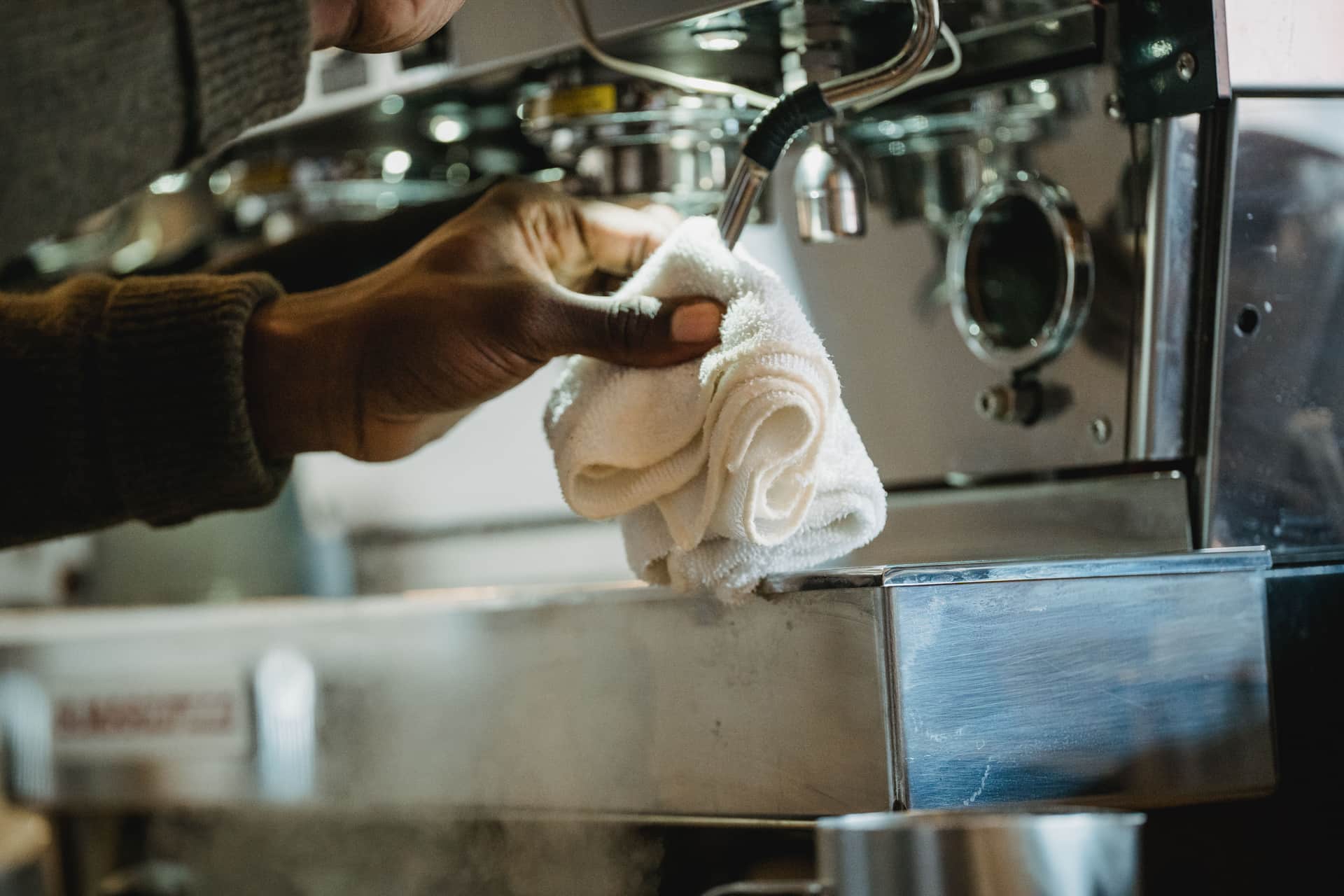
The short answer
You usually need both. Cafiza removes the coffee oils that build up in the group head, portafilter and baskets; Dezcal removes the limescale that builds up in the boiler and water lines. Neither substitutes for the other.
Side by side
Scroll the table sideways to see every column.
Quick picks
The answer first. Tap any row to jump to the full reasoning for that pick.
Prices shown are checked daily against the retailer, as of October 25, 2026. We never write a price into the text of a page.
| # | Product | Best for | Award | Price |
|---|---|---|---|---|
| 1 | 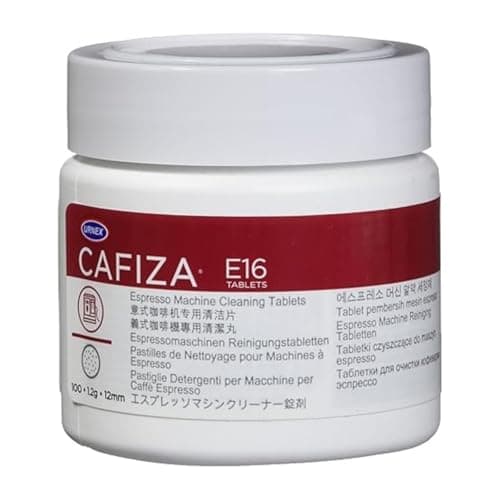 | Machines with a three-way solenoid valve | For coffee oils | |
| 2 | 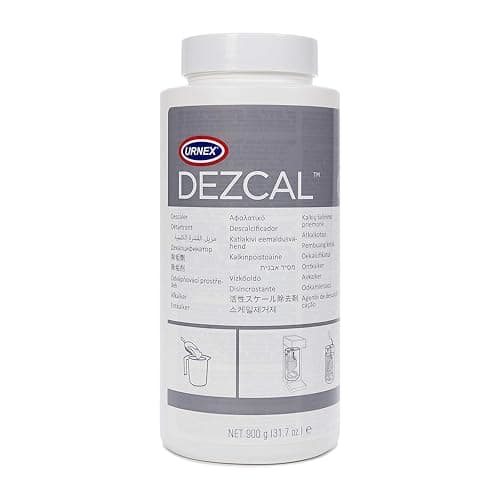 | Every machine that heats water | For limescale |
1. For coffee oils
Urnex Cafiza Cleaning Tablets
Entry tier · The industry-standard backflush detergent for stripping coffee oils from a group head.
The industry-standard backflush detergent for the group head.
Cafiza removes coffee oils and residue from group heads, portafilters and baskets; its active ingredient is tri-sodium phosphate.
Every shot leaves oil that goes rancid within days, and this is what removes it.
You need a machine with a three-way solenoid valve to backflush; on others, soak the portafilter and baskets instead.
It is phosphate-based, so rinse thoroughly, and it does nothing about limescale.
Specification
- Job
- Cleaning - removes coffee oils and residue
- Active ingredient
- Tri-sodium phosphate
- Used on
- Group heads, portafilters and baskets
- Requires
- A machine with a three-way solenoid valve to backflush
What it does well
- The cafe standard, and it removes oils nothing else touches
- Every shot leaves oil that goes rancid within days - this is the only fix
- Also soaks portafilters and baskets, which need it regardless of machine type
Where it gives ground
- You cannot backflush a machine without a three-way solenoid valve
- Phosphate-based, so it needs rinsing thoroughly
- Does nothing about limescale - that is a descaler's job
Skip it if
Skip backflushing if your machine lacks a three-way solenoid valve - soak the removable parts instead.
2. For limescale
Urnex Dezcal Descaler
Entry tier · A citric-acid descaling powder for removing limescale from boilers and water lines.
A phosphate-free descaler for boilers and water lines.
Dezcal removes mineral scale; it is citric acid, sulfamic acid and aluminum sulfate, and phosphate-free.
It is safe on brass, stainless and aluminum internals, and does the job vinegar is wrongly used for without attacking seals or leaving a smell.
How often you need it depends on your water.
It needs a thorough rinse afterwards, and does nothing about coffee oils.
Specification
- Job
- Descaling - removes mineral scale
- Composition
- Citric acid, sulfamic acid, aluminum sulfate; phosphate-free
- Safe on
- Brass, stainless and aluminum internals
- Applies to
- Any machine that heats water
What it does well
- Does the job vinegar is wrongly used for, without attacking seals or leaving a smell
- Phosphate-free and safe across the metals used in home machines
- Every machine that heats water needs this eventually - it is not optional
Where it gives ground
- Descaling frequency depends on your water, so the pack size you need varies
- Requires a thorough rinse afterwards or the next few drinks taste of it
- Does nothing about coffee oils - that is a different product
Skip it if
Skip it only if your machine never heats water - every one that does needs descaling eventually.
Two kinds of buildup
Coffee oils come from every shot and collect wherever coffee touches the machine. Limescale comes from water and builds wherever water is heated. That is why one product cannot do both jobs - see how to descale an espresso machine.