The short answer
An espresso grinder needs one thing above all: fine enough adjustment steps to land inside espresso's narrow window. Compare microns per click, not total settings. Twenty microns per click or finer is genuine espresso resolution; a grinder that publishes only a step count is usually avoiding the question.
Why espresso is a precision problem
Espresso forces water through a compacted bed of very fine coffee at around nine bars. The resistance that bed offers is enormously sensitive to particle size, which is why a small grind change swings a shot from 18 seconds to 32. Filter brewing is far more forgiving because water moves through under gravity - a small particle-size change alters the cup subtly rather than transforming it.
That is why grinders that are excellent for filter are often useless for espresso, and why the useful specification is microns per click rather than the number printed on the dial.
Quick picks
The answer first. Tap any row to jump to the full reasoning for that pick.
Prices shown are checked daily against the retailer, as of October 23, 2026. We never write a price into the text of a page.
| # | Product | Best for | Award | Price |
|---|---|---|---|---|
| 1 | 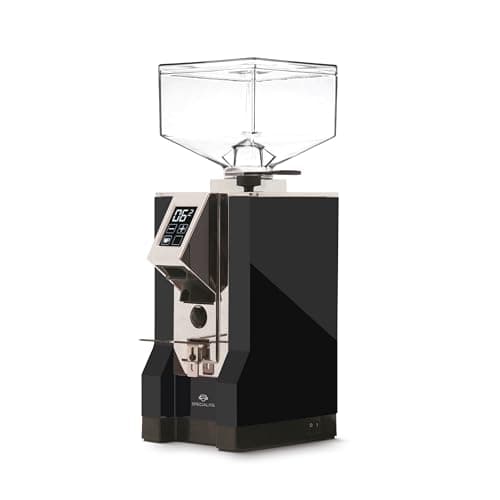 | A dedicated espresso setup that will not be replaced soon | Top pick | |
| 2 | 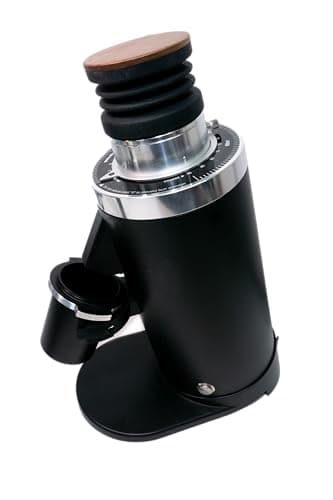 | Enthusiasts who want to keep tuning | Best flat burrs for the money | |
| 3 | 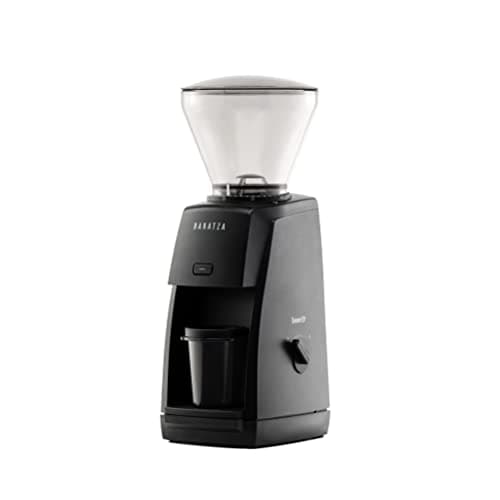 | A first real espresso grinder | Best entry espresso grinder | |
| 4 | 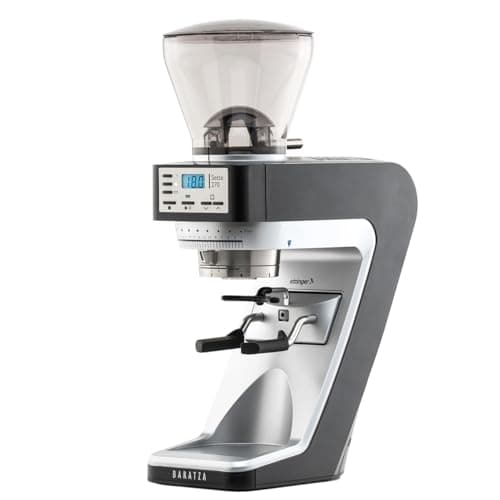 | Espresso-only setups where speed and cleanliness matter | Fastest, lowest retention | |
| 5 | 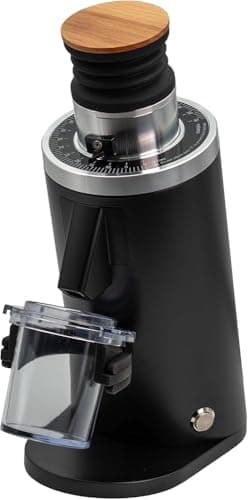 | Small counters that still want flat burrs | Best small footprint | |
| 6 | 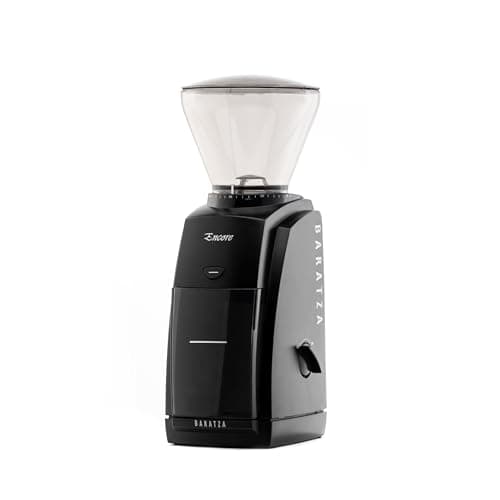 | Filter brewing, where it is genuinely a top pick | Skip this for espresso |
1. Top pick
Eureka Mignon Specialita
Upper-mid tier · An Italian 55 mm flat-burr espresso grinder with stepless micrometric adjustment.
Stepless micrometric adjustment and 55 mm Italian flats, quiet enough to use at 6am.
The Specialita is the grinder to buy if espresso is the point and you want to stop thinking about grinders. Fifty-five millimeter flat hardened steel burrs made in Italy, with stepless micrometric adjustment on the lower burr.
Stepless is the specification that matters for espresso. Stepped grinders make you choose between two settings, one too fast and one too slow; stepless lets you land exactly where the shot wants to be. The micrometric mechanism holds that setting through a strip-down clean, which stepless grinders often do not.
Eureka publishes output up to 1.8 g per second, which means an 18 g dose in about ten seconds - fast enough that grinding is not the slow part of your routine. Dosing is digital and timed, adjustable in tenths of a second.
It is genuinely quiet. Eureka's sound insulation is not a marketing claim you should discount, and in a household with someone asleep it is a real feature.
Specification
- Burrs
- 55 mm flat hardened steel, made in Italy
- Adjustment
- Stepless micrometric on the lower burr
- Output
- Up to 1.8 g per second
- Dosing
- Digital timed, adjustable in tenths of a second
What it does well
- Genuinely quiet - the sound insulation is not marketing
- Micrometric adjustment holds its setting through a strip-down clean
- Fast enough that an 18 g dose is a ten-second job
Where it gives ground
- Hopper-fed by design; single dosing it is a workaround
- No weight-based dosing
- Espresso-focused - the coarse end is not its strength
Skip it if
Skip it if you brew mostly filter. It is hopper-fed and espresso-focused, and the coarse end is not where its strengths are.
2. Best flat burrs for the money
DF64 Gen 2
Upper-mid tier · The 64 mm flat-burr single-dose grinder that made the format mainstream at home.
64 mm flats and single dosing, with burrs you can swap when you want a different cup.
The DF64 gives you the burr size the espresso world benchmarks against - 64 mm flats - along with stepless adjustment and retention under 0.1 g, driven by a 250 W motor at 1400 rpm.
Sub-0.1 g retention is what makes single dosing work properly. Weigh 18 g in, get 18 g out, with nothing from yesterday mixed in. For anyone who keeps several bags open, that is the difference between a clean cup and a muddled one.
The swappable burrs are the long-term argument. Stock stainless flats can be replaced with coated or differently-geometried sets, which means the grinder can be re-tuned toward clarity or body rather than replaced.
It is a large object: 13 cm wide, 22.5 cm deep, 30 cm tall and 6.8 kg. Measure your cabinet clearance, and expect stepless adjustment with no detents to require your own reference marks.
Specification
- Burrs
- 64 mm flat stainless; aftermarket sets available
- Adjustment
- Stepless
- Retention
- Under 0.1 g
- Motor
- 250 W, 1400 rpm at 110/120 V
- Hopper
- 50 g
- Size
- 13 cm W x 22.5 cm D x 30 cm H, 6.8 kg
What it does well
- 64 mm flats are the burr size the espresso world benchmarks against
- Burrs are swappable, so the grinder can be re-tuned rather than replaced
- Ionizer probes in the chute keep static manageable
Where it gives ground
- Heavy and tall for a home counter
- Stepless adjustment with no detents demands note-keeping
- Version numbering across sellers is genuinely confusing
Skip it if
Skip it if you want to switch on and go. Single dosing means a bellows, a dosing cup and about twenty extra seconds every time.
3. Best entry espresso grinder
Baratza Encore ESP
Entry tier · The Encore re-geared for espresso: the same 40 mm burrs on a dual-resolution collar.
The cheapest grinder here with genuine espresso resolution, and the numbers to prove it.
The Encore ESP is where espresso grinding becomes affordable without becoming imaginary. Baratza publishes 20 microns per click across steps 1 to 20, with steps 21 to 40 at roughly 90 microns for filter.
That 20-micron figure is the number to compare against, because it is the actual measure of whether a grinder can dial a shot. Many grinders with far higher step counts do worse at the fine end.
The burrs are 40 mm M2 hardened alloy steel conical, made by Etzinger, running at 550 rpm to limit heat and static. The burr housing was redesigned specifically to make removal, cleaning and shimming straightforward, and shims come in the box.
It is stepped rather than stepless, so you cannot land between clicks, and retention is ordinary. At this level neither matters much.
Specification
- Burrs
- 40 mm M2 steel conical (Etzinger)
- Settings
- 40 stepped, dual resolution
- Espresso range
- Steps 1-20, 20 microns per click
- Filter range
- Steps 21-40, 90 microns per click
- Burr speed
- 550 rpm
What it does well
- 20 microns per click in the espresso range is real dialing resolution
- Redesigned burr housing makes cleaning and shimming easy
- Shims included in the box
Where it gives ground
- Still a stepped grinder - you cannot land between clicks
- Retention is normal-for-the-class, not low
- Same plastic body and noise as the Encore
Skip it if
Skip it if you want the last few percent of shot control. Stepped adjustment eventually becomes the limit, though it will take a while.
4. Fastest, lowest retention
Baratza Sette 270
Upper-mid tier · A straight-through espresso grinder with 270 adjustment steps and very low retention.
A straight-through path means almost nothing stays behind - and it is very loud.
The Sette 270 solves the retention problem structurally rather than with bellows and knockers: the grounds fall straight through rather than around a chute, so almost nothing is left behind between doses.
Adjustment is 270 steps - 30 macro by 9 micro - which is a hybrid of stepped and stepless. You lock a macro setting and micro-tune within it, which gives real resolution without the note-keeping that pure stepless demands.
Baratza publishes output of 3.5 to 5.5 g per second from 40 mm conical burrs made in Liechtenstein, driven by a 290 W motor. That is very fast for a home grinder.
The noise is the honest problem. This grinder is loud in a way owners consistently mention, and the macro/micro system takes a while to think in.
Specification
- Burrs
- 40 mm conical, made in Liechtenstein
- Settings
- 270 steps (30 macro x 9 micro)
- Output
- 3.5-5.5 g per second
- Power
- 290 W
- Hopper
- 10 oz
What it does well
- Straight-through path means almost nothing is left behind between doses
- 270 steps is enough resolution to chase a shot properly
- Very fast for a home grinder
Where it gives ground
- Loud - genuinely loud, not grinder-loud
- The macro and micro system takes a while to think in
- Filter range is a compromise; this is an espresso tool
Skip it if
Skip it if you also brew filter regularly, or if noise matters. It is an espresso tool and it announces itself.
5. Best small footprint
DF54
Upper-mid tier · A single-dose grinder with 54 mm flat burrs and stepless adjustment.
Flat burrs and stepless adjustment in a grinder that actually fits.
The DF54 is the compact answer to the same question the DF64 asks. Fifty-four millimeter flat burrs, stepless adjustment, retention under 0.1 g, a 150 W motor at 1400 rpm and a 25 g single-dose hopper.
Fifty-four millimeter flats sit between the 40 mm conical entry tier and the 64 mm benchmark, and in practice they behave much more like the latter - a narrower particle distribution and the clarity that comes with it.
An ionizer in the exit chute handles static, and a bellows with a lid is included for clearing residual grounds.
At 11 cm wide, 19 cm deep and 29.7 cm tall this is meaningfully smaller than a DF64 while giving up little. If counter space is the constraint that has kept you off flat burrs, this is the grinder that removes it.
Specification
- Burrs
- 54 mm flat
- Adjustment
- Stepless
- Retention
- Under 0.1 g
- Motor
- 150 W, 1400 rpm
- Hopper
- 25 g single-dose
- Anti-static
- Ionizer in the exit chute
What it does well
- Flat burrs and stepless adjustment at a price that used to buy neither
- Near-zero retention means the dose you weigh is the dose you get
- Small footprint for a flat-burr grinder
Where it gives ground
- Stepless with no reference marks is fiddly until you make your own
- Single-dose only - no hopper workflow for a busy household
- Bellows and a dosing cup are part of the routine, not optional extras
Skip it if
Skip it if you want a hopper workflow. The 25 g bin is single-dose only and there is no way around that.
6. Skip this for espresso
Baratza Encore
Entry tier · The standard entry burr grinder for filter brewing.
An excellent filter grinder that physically does not reach espresso.
The standard Encore appears in espresso shopping constantly, largely because it shares a name with the ESP model, and it is worth being precise about the difference.
Baratza publishes the Encore's grind range as 250 to 1200 microns. Espresso needs finer than the bottom of that range, so this is not a matter of resolution or technique - the grinder does not physically go there.
Its 40 mm conical burrs and 40 stepped settings, running at roughly 450 to 550 rpm, make it one of the best filter grinders you can buy, and we recommend it as exactly that on the main grinder list.
If you own one and want espresso, the answer is the Encore ESP - same burr platform, re-geared collar - not a modification to this one.
Specification
- Burrs
- 40 mm conical, made in Europe
- Settings
- 40 stepped
- Grind range
- 250-1200 microns
- Burr speed
- Roughly 450-550 rpm to limit heat and static
What it does well
- The reference answer for pour-over, drip and French press
- Fully serviceable, with parts sold individually for years
- Low burr speed keeps static and heat down
Where it gives ground
- Bottom of its range is too coarse for espresso - that is the ESP model job
- Stepped settings only
- Plastic body and a loud motor
Skip it if
Skip it for espresso, without exception. Buy it happily for pour-over, drip and French press.
How we picked
Every grinder here was chosen from published specifications - burr size and material, adjustment mechanism and resolution, motor speed, retention - and from what large numbers of owners consistently report. We have not tested them and we do not claim to. Our method is here.
Resolution, side by side
Scroll the table sideways to see every column.
Stepped, stepless or hybrid
Stepped grinders click between fixed positions. Easy to record and repeat, and you cannot land between two clicks. Stepless grinders move continuously, so you can land anywhere - at the cost of never being able to write down exactly where you were. Hybrid systems like the Sette's macro-plus-micro give you repeatable coarse positions with fine adjustment inside each. For a first espresso grinder, stepped is easier to live with; for a setup you intend to keep, stepless is where you end up.
What else the grinder needs to do
- Low retention, so the dose you weigh is the dose you get. Under 0.1 g is genuinely low.
- Low static, or the grounds go everywhere. Ionizers and low burr speeds both help.
- Repeatable setting after cleaning. Micrometric adjustment holds; some stepless mechanisms do not.
- A path into the portafilter without decanting through three vessels.
The order to buy in
If you are building a setup from scratch and have a fixed total, buy the grinder first and let it set the machine budget rather than the other way round. A Bambino with a serious grinder beats an expensive machine with an entry one, every time. If a single brand has your attention rather than a price bracket, which Eureka Mignon to buy decodes the model names in that line.