The short answer
Buy the Fellow Ode Gen 2 if pour-over is your main method - its flat burrs are profiled for exactly this. Buy the Baratza Encore if you brew several methods and want something repairable. Buy the 1Zpresso K-Ultra if you brew one or two cups.
Fines are the enemy
Pour-over is percolation: water passes continuously through a bed of coffee and drains away. That makes the bed's permeability the single most important physical property of the brew, and fine particles destroy permeability.
Fines migrate downward as water flows and collect at the bottom of the cone, where they form a dense layer that slows drainage. The brew takes longer, the coffee above over-extracts, and water starts finding faster routes around the blockage - channeling through some parts of the bed while barely touching others.
That is why a badly ground pour-over tastes bitter and sour at the same time: parts of the bed were over-extracted and parts were barely touched, in the same cup.
Quick picks
The answer first. Tap any row to jump to the full reasoning for that pick.
Prices shown are checked daily against the retailer, as of October 25, 2026. We never write a price into the text of a page.
| # | Product | Best for | Award | Price |
|---|---|---|---|---|
| 1 | 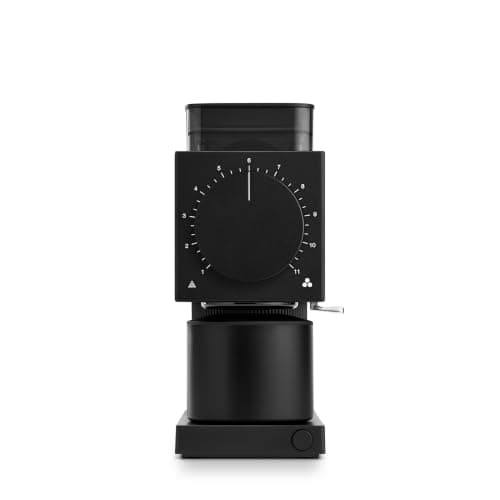 | Anyone who brews pour-over as their main method | Top pick | |
| 2 | 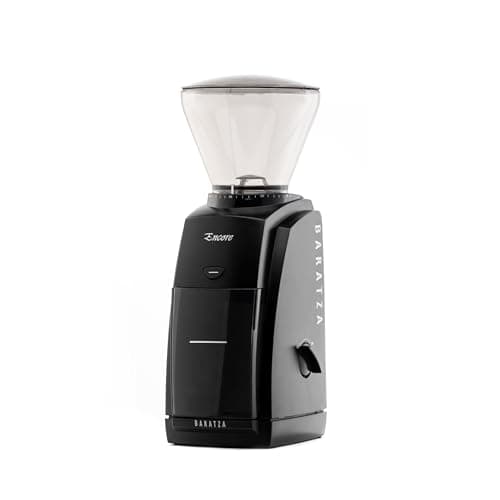 | A household brewing several different methods | Best all-rounder | |
| 3 | 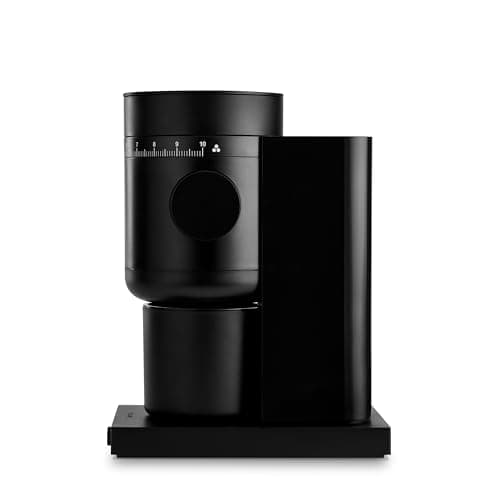 | One grinder that has to cover everything, including occasional espresso | Best range | |
| 4 | 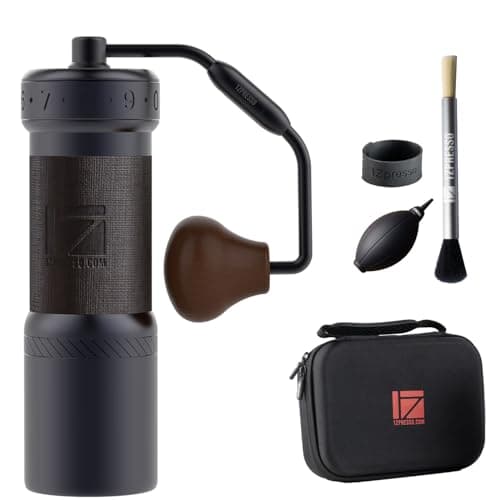 | One or two cups, or anyone who takes pour-over traveling | Best hand grinder | |
| 5 | 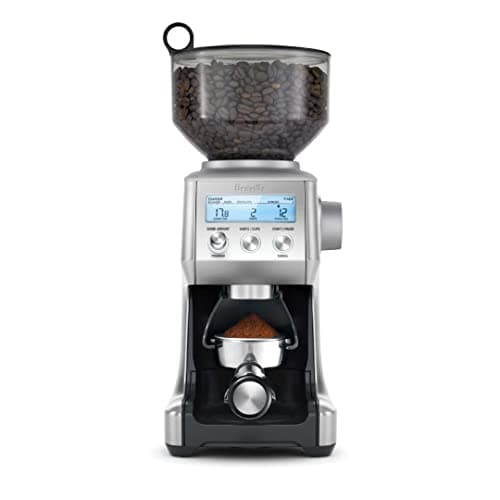 | Espresso, where it is genuinely capable | Skip this for pour-over |
1. Top pick
Fellow Ode Brew Grinder Gen 2
Upper-mid tier · A 64 mm flat-burr grinder built only for filter coffee - it does not do espresso.
Flat burrs built specifically for filter, and it shows in how clean the bed drains.
The Ode is one of the few grinders designed around filter brewing rather than adapted to it, and that focus is the reason to buy it. Its flat burrs are profiled for the filter range instead of covering espresso through French press adequately and nothing brilliantly.
In practice that means a narrow particle distribution: most of the grounds come out near the target size, with unusually little dust. In a cone dripper that is exactly what you want, because fines are what turn a clean brew into a slow, muddy one.
It is single dose by design. You put in what you are about to brew rather than filling a hopper, which means the grinder holds no stale coffee and you can change beans between cups without purging.
It cannot do espresso, and Fellow does not claim it can. That is the trade for the filter-specific burr profile, and it is the right trade if pour-over is what you brew.
Specification
- Burrs
- 64 mm uncoated stainless flat
- Settings
- 31
- Load bin
- Single dose, up to 100 g
- Motor
- PID-held 1400 rpm
- Size
- 9.4 x 4.1 x 9.8 in
- Espresso
- No - bottoms out around 250-300 microns
What it does well
- 64 mm flats aimed squarely at clarity in filter brewing
- Single-dose bin, magnetic catch cup and a knocker to clear retention
- One of the quietest electric grinders you can buy
Where it gives ground
- Cannot grind fine enough for espresso, by design
- 31 settings is modest if you brew many methods
- Buying it and then wanting espresso means buying a second grinder
Skip it if
Skip it if you also pull espresso. One grinder cannot serve both ranges well and this one does not try.
2. Best all-rounder
Baratza Encore
Entry tier · The standard entry burr grinder for filter brewing.
40 settings, a repairable design, and the grinder most people should own.
The Encore is the default filter grinder recommendation and it deserves the position. Forty settings cover French press through to the fine end of filter with enough resolution to adjust deliberately.
The important thing about it is not the grind but the design philosophy. Baratza sells individual parts and publishes repair guides, so a worn burr set or a stripped gear is a cheap component rather than a new grinder. Very few grinders at any price are built that way.
It handles a household brewing pour-over on Saturday, French press on Sunday and drip on weekdays without complaint, and it does all three well.
It produces more fines than the Ode does. For a Kalita Wave or a drip machine that barely shows; in a V60, where the bed's drainage is the whole brew, it is the difference between a good cup and an excellent one.
Specification
- Burrs
- 40 mm conical, made in Europe
- Settings
- 40 stepped
- Grind range
- 250-1200 microns
- Burr speed
- Roughly 450-550 rpm to limit heat and static
What it does well
- The reference answer for pour-over, drip and French press
- Fully serviceable, with parts sold individually for years
- Low burr speed keeps static and heat down
Where it gives ground
- Bottom of its range is too coarse for espresso - that is the ESP model job
- Stepped settings only
- Plastic body and a loud motor
Skip it if
Skip it if pour-over is your only method. A filter-specific flat burr grinder gives a cleaner cup for the same money.
3. Best range
Fellow Opus 2
Mid tier · The Opus rebuilt around 48 mm burrs and a stepless dial, with espresso in range.
Covers cold brew through espresso, and pour-over sits comfortably in the middle.
The Opus is Fellow's answer to the objection that the Ode cannot do espresso. It is a conical burr grinder with a range wide enough to cover cold brew at one end and espresso at the other.
For pour-over specifically it sits in the comfortable middle of its range, which is where any grinder performs best - the extremes of a range are always where consistency suffers.
It is single dose, so no stale coffee sits in a hopper, and it accepts a hopper attachment if you would rather load a batch.
The compromise is inherent in the design brief. A grinder covering that much range is not optimized anywhere, so it makes more fines than the Ode in the filter range and is not the equal of a dedicated espresso grinder at the fine end.
Specification
- Burrs
- 48 mm stainless steel conical
- Adjustment
- Stepless side dial, marked, about 48 settings
- Grind range
- Espresso through cold brew
- Motor
- 300 W; about 9 seconds for an espresso shot
- Capacity
- 100 g single-dose load bin; 100 g catch cup, 30 g espresso cup
- Retention
- Near-zero, with an internal impeller
- Size
- 206 x 130 x 267 mm (8.1 x 5.1 x 10.5 in), 2.3 kg
- Warranty
- 2 years, extendable
What it does well
- 48 mm burrs and a stepless dial at a price where stepped 40 mm is the norm
- Automatic shutoff and near-zero retention make single dosing genuinely clean
- Ships with an espresso dosing cup that fits 54 mm and 58 mm portafilters
Where it gives ground
- Conical burrs, so it trades some clarity for body against a flat-burr grinder
- Stepless with markings still means keeping your own notes for each brew method
- No weight-based dosing - a scale is still part of the routine
Skip it if
Skip it if you only brew filter. The Ode's filter-specific burrs produce a cleaner cup and you would be paying for espresso range you never use.
4. Best hand grinder
1Zpresso K-Ultra
Manual tier · A 48 mm hand grinder with external adjustment, built as an all-rounder.
External adjustment with numbered clicks, and grind quality that beats most electrics.
Hand grinders punch above their price because there is no motor absorbing the budget, and the K-Ultra is a clear example. Its grind consistency in the filter range compares with electric grinders costing considerably more.
Its external adjustment ring is the practical feature. You change grind size without disassembling anything, and the clicks are numbered, so you can return to a known setting rather than approximating one.
It needs no power and makes almost no noise, which makes it the obvious choice for travel and for early mornings in a quiet house.
It is a hand grinder, so it scales poorly. One or two cups is a pleasant ninety seconds; a large batch is a genuine chore, and that is the whole decision.
Specification
- Burrs
- 48 mm heptagonal conical stainless (K burr)
- Adjustment
- External ring, 100 clicks per rotation
- Resolution
- 20 microns per click
- Weight
- 685 g
- Catch cup
- Magnetic, 35-40 g
What it does well
- External adjustment - you change grind without opening anything
- Seven cutting edges rather than six speeds the grind up noticeably
- Genuinely good across espresso, filter and French press
Where it gives ground
- 20 microns per click is coarser than the JX-Pro espresso resolution
- Heavier than a travel grinder should be
- Premium price for a hand grinder
Skip it if
Skip it if you brew for several people. Grinding by hand for a full Chemex every morning wears thin quickly.
5. Skip this for pour-over
Breville Smart Grinder Pro
Mid tier · A hopper-fed conical grinder that doses straight into a portafilter cradle.
A good espresso-oriented grinder being asked to do the opposite job.
The Smart Grinder Pro appears in pour-over shopping constantly, usually because someone already owns it for espresso and wonders whether it covers filter too.
It is a capable grinder and its priorities are espresso priorities: fine resolution at the fine end, a dosing system built around portafilters, and a burr set profiled for fine grinding.
Run coarse for pour-over, it produces more fines than a filter-oriented grinder does, and its steps at the coarse end are wider than you want for dialing a cone dripper.
If you own one, use it - it will make perfectly good pour-over and this is not a reason to replace it. If you are buying specifically for pour-over, it is the wrong instrument.
Specification
- Burrs
- Stainless steel conical, adjustable upper burr
- Settings
- 60
- Dosing
- Digital timer in 0.2-second increments
- Hopper
- 450 g
- Cradles
- 50-54 mm and 58 mm portafilter
What it does well
- Hands-free grinding into the portafilter
- 60 settings covers espresso through French press in one machine
- Big hopper suits a household that drinks a lot of coffee
Where it gives ground
- Large hopper means stale beans unless you actually get through them
- Timed dosing drifts as beans age
- Espresso end is usable rather than precise
Skip it if
Skip it only for a pour-over-first purchase. For espresso it is a good grinder - see espresso grinders under $300.
Flat or conical burrs
Scroll the table sideways to see every column.
Neither is better in the abstract. Flat burrs suit pour-over because clarity and even drainage are what the method is for; conical burrs suit French press and drip, where a little more body is welcome and the bed's permeability matters much less.
How much resolution you need
Less than espresso and more than most people assume. Pour-over does not need the microscopic steps espresso needs, but a grinder with only a dozen settings across its whole range gives you jumps too large to dial in a dripper properly.
What you want is enough steps that changing by one produces a noticeable but not dramatic difference in drawdown time. If a single click takes your brew from two minutes to four, the grinder is too coarse-stepped for the method.
Step 1
Start in the middle
Begin at the middle of the grinder's filter range rather than at an extreme. Consistency is always worst at the ends of a range.
Step 2
Time the drawdown
Note how long the bed takes to drain fully. That number is your feedback signal, more useful than taste at first.
Step 3
Adjust one click
Change one step and brew again with everything else identical. Two changes at once tells you nothing.
Step 4
Read the taste
Bitter and drying means too fine or too slow. Sour and thin means too coarse or too fast.
Step 5
Write it down
Record the setting per bean. Different roasts want different grinds and you will not remember.
What a better grinder actually changes
It does not make coffee taste stronger. It makes the bed drain evenly, which means all of the coffee extracts at a similar rate, which means the cup tastes like one thing rather than several things at once.
That is the whole benefit and it is a large one. It also makes your kettle technique worth practicing, because with an even bed the pour becomes the variable that matters rather than a fight against a blocked filter.