The short answer
Choose the Fellow Opus 2 if espresso is, or might become, part of your brewing - it covers espresso through cold brew. Choose the Ode Gen 2 if you only brew filter and want 64 mm flat burrs aimed at clarity. The Ode cannot grind for espresso.
Side by side
Scroll the table sideways to see every column.
Quick picks
The answer first. Tap any row to jump to the full reasoning for that pick.
Prices shown are checked daily against the retailer, as of October 26, 2026. We never write a price into the text of a page.
| # | Product | Best for | Award | Price |
|---|---|---|---|---|
| 1 | 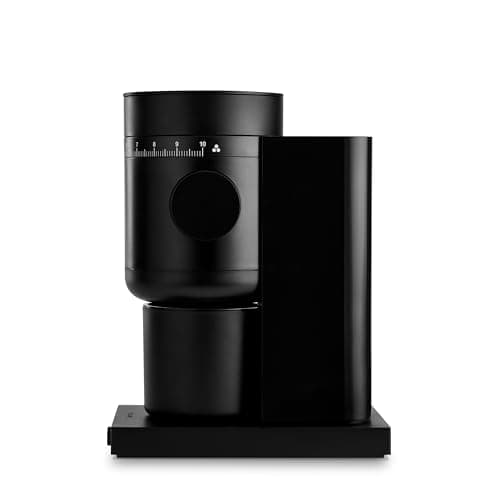 | One grinder from cold brew to espresso | Choose this if espresso is in the picture | |
| 2 | 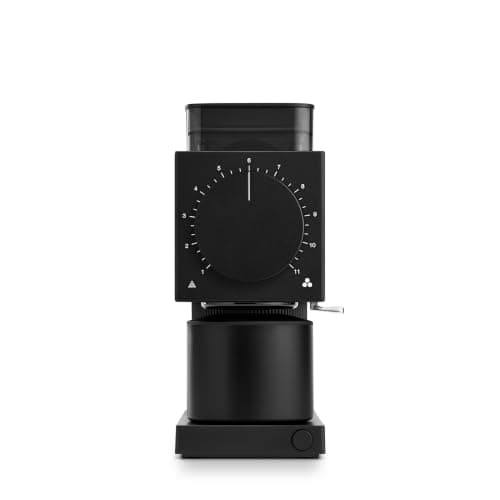 | Pour-over and drip, with no espresso plans | Choose this for filter only |
1. Choose this if espresso is in the picture
Fellow Opus 2
Mid tier · The Opus rebuilt around 48 mm burrs and a stepless dial, with espresso in range.
An all-purpose conical grinder that reaches espresso-fine.
The Opus 2 has 48 mm stainless conical burrs, a stepless marked dial with about 48 reference points, and a published range from espresso through cold brew.
It actually reaches espresso range, which most all-rounders at this level do not.
An integrated ionizer keeps static down, and it loads 100 g single-dose with near-zero retention.
Espresso resolution is workable rather than precise, and conical burrs at this size trade some clarity for body in filter.
Specification
- Burrs
- 48 mm stainless steel conical
- Adjustment
- Stepless side dial, marked, about 48 settings
- Grind range
- Espresso through cold brew
- Motor
- 300 W; about 9 seconds for an espresso shot
- Capacity
- 100 g single-dose load bin; 100 g catch cup, 30 g espresso cup
- Retention
- Near-zero, with an internal impeller
- Size
- 206 x 130 x 267 mm (8.1 x 5.1 x 10.5 in), 2.3 kg
- Warranty
- 2 years, extendable
What it does well
- 48 mm burrs and a stepless dial at a price where stepped 40 mm is the norm
- Automatic shutoff and near-zero retention make single dosing genuinely clean
- Ships with an espresso dosing cup that fits 54 mm and 58 mm portafilters
Where it gives ground
- Conical burrs, so it trades some clarity for body against a flat-burr grinder
- Stepless with markings still means keeping your own notes for each brew method
- No weight-based dosing - a scale is still part of the routine
Skip it if
Skip it if you only brew filter and want the clearest cup. The Ode is built for that.
2. Choose this for filter only
Fellow Ode Brew Grinder Gen 2
Upper-mid tier · A 64 mm flat-burr grinder built only for filter coffee - it does not do espresso.
64 mm flat burrs aimed squarely at clarity in filter brewing.
The Ode Gen 2 uses 64 mm uncoated stainless flat burrs with 31 settings and a PID-held 1400 rpm motor.
It single-doses up to 100 g, with a magnetic catch cup and a knocker to clear retention.
It is one of the quietest electric grinders you can buy.
It cannot grind fine enough for espresso - it bottoms out around 250 to 300 microns - and 31 settings is modest if you brew many methods.
Specification
- Burrs
- 64 mm uncoated stainless flat
- Settings
- 31
- Load bin
- Single dose, up to 100 g
- Motor
- PID-held 1400 rpm
- Size
- 9.4 x 4.1 x 9.8 in
- Espresso
- No - bottoms out around 250-300 microns
What it does well
- 64 mm flats aimed squarely at clarity in filter brewing
- Single-dose bin, magnetic catch cup and a knocker to clear retention
- One of the quietest electric grinders you can buy
Where it gives ground
- Cannot grind fine enough for espresso, by design
- 31 settings is modest if you brew many methods
- Buying it and then wanting espresso means buying a second grinder
Skip it if
Skip it if espresso might come later. You would need a second grinder.
Clarity or range
Flat burrs at the Ode's size are aimed squarely at clarity in filter brewing, while the Opus's conical burrs trade some of that clarity for body - and for reach into espresso. Decide whether espresso will ever be on your counter.