Under $300 is the bracket where espresso grinding becomes genuinely possible rather than theoretically possible. Below it, grinders either cannot reach espresso-fine or cannot adjust precisely enough within it. Here, several can - and the ones that cannot are usually the ones with the most impressive-sounding step counts.
Quick picks
The answer first. Tap any row to jump to the full reasoning for that pick.
Prices shown are checked daily against the retailer, as of October 23, 2026. We never write a price into the text of a page.
| # | Product | Best for | Award | Price |
|---|---|---|---|---|
| 1 | 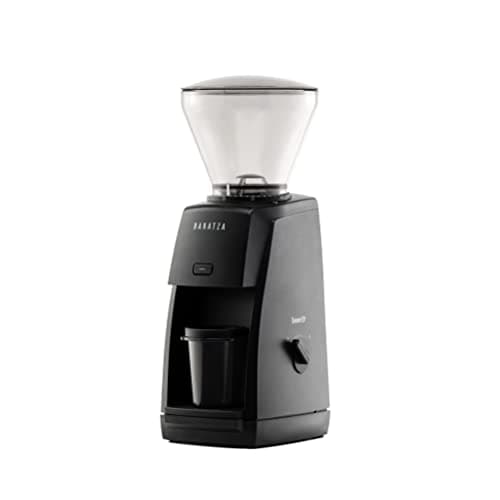 | A first real espresso grinder | Top pick | |
| 2 | 1Zpresso JX-Pro12.5 microns per click, by hand, for less than most electric grinders. | Someone who values precision over convenience | Best resolution in the bracket | |
| 3 | 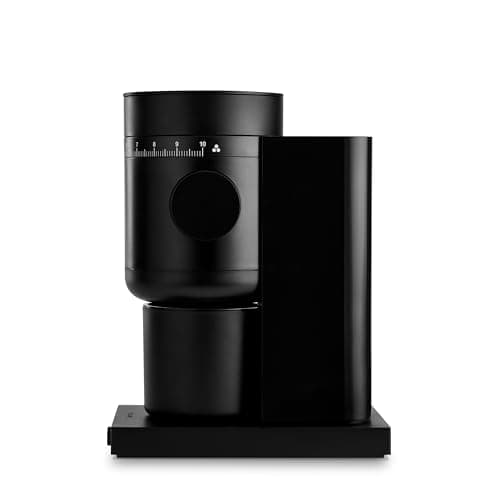 | One grinder for several brew methods | Best all-rounder | |
| 4 | 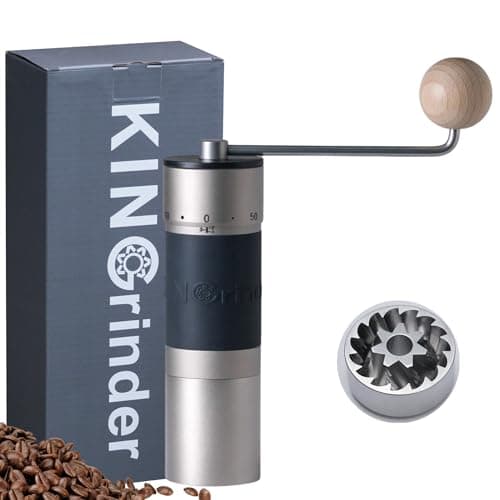 | Maximum specification per dollar | Best value | |
| 5 | 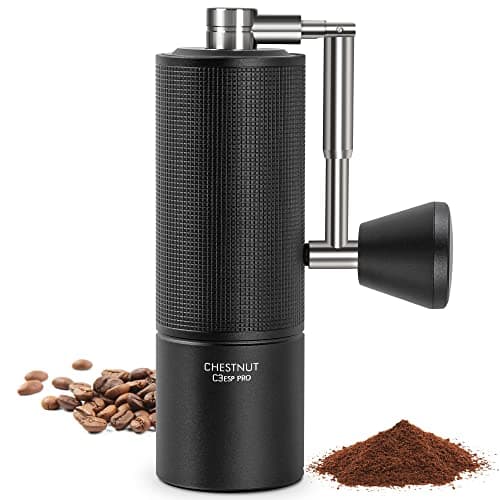 | Filter brewing with occasional espresso | Best budget option | |
| 6 | 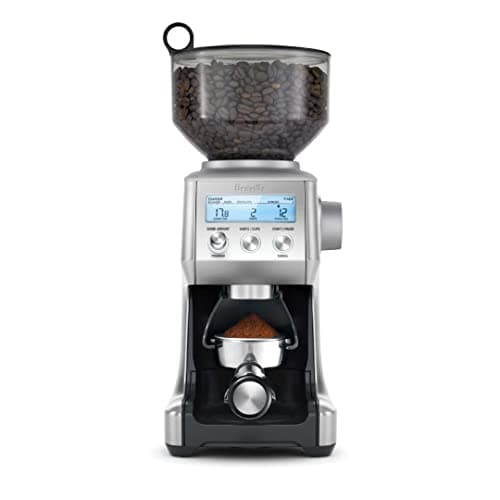 | High-volume drip, not espresso | Skip this |
1. Top pick
Baratza Encore ESP
Entry tier · The Encore re-geared for espresso: the same 40 mm burrs on a dual-resolution collar.
The default answer in this bracket, and the numbers explain why.
Twenty microns per click across steps 1 to 20 is the figure that puts this grinder at the top of the bracket. That is genuine espresso resolution, published by the manufacturer rather than inferred, and it is finer than most grinders costing considerably more manage at the fine end.
The burrs are 40 mm M2 hardened alloy steel conicals from Etzinger, held at 550 rpm to limit heat and static. Steps 21 to 40 shift roughly 90 microns each for filter, so one grinder covers both jobs without either being an afterthought.
Baratza redesigned the burr housing for this model so that removing the burrs to clean or to shim is quick rather than a project, and the shims come in the box.
It is stepped, so you cannot land between clicks - which occasionally means choosing between a shot slightly too fast and one slightly too slow. At this price that is an entirely reasonable limitation.
Specification
- Burrs
- 40 mm M2 steel conical (Etzinger)
- Settings
- 40 stepped, dual resolution
- Espresso range
- Steps 1-20, 20 microns per click
- Filter range
- Steps 21-40, 90 microns per click
- Burr speed
- 550 rpm
What it does well
- 20 microns per click in the espresso range is real dialing resolution
- Redesigned burr housing makes cleaning and shimming easy
- Shims included in the box
Where it gives ground
- Still a stepped grinder - you cannot land between clicks
- Retention is normal-for-the-class, not low
- Same plastic body and noise as the Encore
Skip it if
Skip it if you never make espresso. The standard Encore does filter for less.
2. Best resolution in the bracket
1Zpresso JX-Pro
Manual tier · A 48 mm hand grinder with internal adjustment fine enough for espresso.
12.5 microns per click, by hand, for less than most electric grinders.
The JX-Pro publishes 12.5 microns per click over 40 clicks per rotation, which is finer adjustment than almost anything electric at this price and finer than several grinders costing three times more.
The burrs are 48 mm steel conicals - large for a hand grinder, and large enough that an espresso dose does not take an unreasonable amount of cranking.
The trade is effort and workflow. The adjustment dial sits inside the hopper, so changing grind means lifting the lid, and there is no dosing aid: you weigh in and you weigh out.
For someone dialing in a new coffee, that 12.5-micron resolution is genuinely transformative - it lets you make the small change you actually want rather than the smallest change your grinder allows.
Specification
- Burrs
- 48 mm steel conical
- Adjustment
- Internal, 40 clicks per rotation
- Resolution
- 12.5 microns per click
What it does well
- 12.5 microns per click is finer resolution than most electric grinders
- 48 mm burrs make short work of an espresso dose
- No power, no static, nothing to break
Where it gives ground
- The adjustment dial sits inside the hopper - you lift the lid to change it
- Grinding espresso by hand every morning gets old for some people
- No dosing aid: you weigh in, you weigh out
Skip it if
Skip it if you make several espressos every morning, or if anyone else in the household will need to use it. Hand grinding a fine dose daily is a real commitment.
3. Best all-rounder
Fellow Opus 2
Mid tier · The Opus rebuilt around 48 mm burrs and a stepless dial, with espresso in range.
Reaches espresso and covers everything coarser, in one small machine.
The Opus is the best answer in this bracket if espresso is one of several things you brew rather than the only thing. Fellow publishes its range as espresso through cold brew, and quotes about nine seconds for an espresso dose.
Forty-eight millimeter stainless conical burrs are unusual at this price, and a 300 W motor clears an espresso dose in about nine seconds.
Adjustment is a stepless side dial with about 48 printed reference points, so you can land between them - though Fellow does not publish a micron figure.
It loads 100 g single-dose, ships with both a brewed and a 30 g espresso catch cup, and stops automatically when the bin is empty.
Specification
- Burrs
- 48 mm stainless steel conical
- Adjustment
- Stepless side dial, marked, about 48 settings
- Grind range
- Espresso through cold brew
- Motor
- 300 W; about 9 seconds for an espresso shot
- Capacity
- 100 g single-dose load bin; 100 g catch cup, 30 g espresso cup
- Retention
- Near-zero, with an internal impeller
- Size
- 206 x 130 x 267 mm (8.1 x 5.1 x 10.5 in), 2.3 kg
- Warranty
- 2 years, extendable
What it does well
- 48 mm burrs and a stepless dial at a price where stepped 40 mm is the norm
- Automatic shutoff and near-zero retention make single dosing genuinely clean
- Ships with an espresso dosing cup that fits 54 mm and 58 mm portafilters
Where it gives ground
- Conical burrs, so it trades some clarity for body against a flat-burr grinder
- Stepless with markings still means keeping your own notes for each brew method
- No weight-based dosing - a scale is still part of the routine
Skip it if
Skip it if espresso is your main method. Its espresso resolution is workable rather than precise, and a dedicated grinder will frustrate you less.
4. Best value
Kingrinder K6
Manual tier · A 48 mm hand grinder with external adjustment and a hex shaft you can drive with a drill.
48 mm burrs and external adjustment at a price that undercuts everything comparable.
The K6 publishes 48 mm heptagonal stainless conical burrs with external adjustment at 60 clicks per rotation and 16 microns per click - specifications that put it alongside hand grinders costing considerably more.
External adjustment is the ergonomic feature that matters: you change grind without opening the grinder or removing the catch cup, which makes dialing in far less tedious.
The quarter-inch hex drive shaft is the genuinely clever part. Drop a hex bit into a cordless drill and the K6 becomes an electric grinder for as long as you want it to be, which removes the main objection to hand grinding for espresso.
Capacity is 30 to 35 g at 630 g of grinder. Fit and finish sits below the premium Taiwanese and German options, the aluminum body marks, and spare-part support is thinner.
Specification
- Burrs
- 48 mm heptagonal stainless conical
- Adjustment
- External, 60 clicks per rotation
- Resolution
- 16 microns per click
- Capacity
- 30-35 g
- Weight
- 630 g
- Shaft
- Quarter-inch hex drive
What it does well
- Big burrs and external adjustment for a fraction of the premium options
- The hex shaft turns it into an electric grinder with any cordless drill
- 16 microns per click is genuine espresso resolution
Where it gives ground
- Fit and finish is a step below the premium Taiwanese and German grinders
- Aluminum body picks up marks
- Support and spare parts are thinner than Comandante or 1Zpresso
Skip it if
Skip it if long-term support matters to you. Comandante and 1Zpresso have much deeper parts and service networks.
5. Best budget option
Timemore Chestnut C3
Manual tier · The budget hand grinder that made stainless conical burrs cheap.
Excellent for filter, marginal for espresso - and honest about which is which.
The C3 made stainless conical burrs cheap, and for filter brewing it is genuinely excellent. Thirty-eight millimeter S2C stainless conical burrs at 55-58 HRC, in an aluminum body with a double-bearing axis and no plastic internals.
Adjustment is roughly 36 settings at about 0.0233 mm - 23 microns - per click, which is finer than many electric grinders in this bracket.
The limitation is the burr size rather than the resolution. Thirty-eight millimeter burrs grinding an 18 g espresso dose is slow, effortful work, and the 25 g capacity means one brew at a time.
As a first burr grinder for pour-over, or as a travel grinder that can manage espresso in a pinch, it is hard to beat. As a daily espresso grinder it will wear you down.
Specification
- Burrs
- 38 mm S2C stainless conical, 55-58 HRC
- Settings
- Roughly 36, about 0.0233 mm per click
- Capacity
- 25 g
- Weight
- About 530 g
- Build
- Aluminum body, double-bearing axis, no plastic internals
What it does well
- Filter-grade grind quality at a genuinely low price
- Metal internals and double bearings, not a toy
- Small and light enough to travel with
Where it gives ground
- 38 mm burrs make an espresso dose slow work
- Espresso resolution is marginal
- 25 g capacity limits you to one brew at a time
Skip it if
Skip it as a daily espresso grinder. The resolution is there and the burr size is not.
6. Skip this
Breville Smart Grinder Pro
Mid tier · A hopper-fed conical grinder that doses straight into a portafilter cradle.
Sixty settings spread too wide, and a hopper that stales your beans.
The Smart Grinder Pro is the most-purchased grinder in this bracket for espresso and one of the more common regrets, so it is worth being specific.
Sixty grind settings sounds like precision. Spread from espresso through French press, the steps at the fine end remain large relative to what espresso needs, and Breville does not publish a micron figure to check it against.
The 450 g hopper is the second problem. Beans in a hopper are staling, and unless a household truly gets through 450 g quickly, you are grinding old coffee. Timed dosing in 0.2-second increments compounds it, because as beans age and change density the dose drifts.
The portafilter cradles for 50-54 mm and 58 mm are genuinely convenient, and the LCD interface is well made. For grinding drip coffee in volume this is a perfectly good machine.
Specification
- Burrs
- Stainless steel conical, adjustable upper burr
- Settings
- 60
- Dosing
- Digital timer in 0.2-second increments
- Hopper
- 450 g
- Cradles
- 50-54 mm and 58 mm portafilter
What it does well
- Hands-free grinding into the portafilter
- 60 settings covers espresso through French press in one machine
- Big hopper suits a household that drinks a lot of coffee
Where it gives ground
- Large hopper means stale beans unless you actually get through them
- Timed dosing drifts as beans age
- Espresso end is usable rather than precise
Skip it if
Skip it if espresso is the goal. Spend the same money on an Encore ESP and get published resolution instead of a step count.
The number to compare
Scroll the table sideways to see every column.
Notice how many of the grinders with genuine published resolution in this bracket are manual. That is not a coincidence: hand grinders spend their entire budget on burrs and an adjustment mechanism, with no motor, no housing and no electronics to pay for.
Electric or manual in this bracket
At this price the honest trade is that a hand grinder gives you better burrs and finer adjustment, and an electric grinder gives you your mornings back. Grinding 18 g of espresso-fine coffee by hand takes real effort and around 30 to 60 seconds depending on the grinder and the bean. Some people find that a pleasant ritual and some find it the reason they stopped making espresso.
If you are unsure, the Kingrinder K6's hex drive shaft is a genuine hedge - hand crank when you want to, cordless drill when you do not.
What this bracket will not get you
- Flat burrs. Those start above this bracket - see under $500.
- Stepless adjustment on an electric grinder. The stepless options here are all manual.
- Very low retention. Sub-0.1 g retention is a single-dose-grinder feature and it costs more.
- Grinding by weight. Everything here doses by time or by hand.
This purchase before the machine
If you are building a setup and have a fixed total, spend here first. A Bambino with an Encore ESP makes better coffee than a much more expensive machine with a sixteen-step integrated grinder, and it upgrades in halves.