Three things become available at once in this bracket, and they tend to arrive together: flat burrs, stepless adjustment, and retention low enough that single dosing genuinely works. Below this, you get one of the three at best. Above it, the returns shrink quickly.
Quick picks
The answer first. Tap any row to jump to the full reasoning for that pick.
Prices shown are checked daily against the retailer, as of October 23, 2026. We never write a price into the text of a page.
| # | Product | Best for | Award | Price |
|---|---|---|---|---|
| 1 | 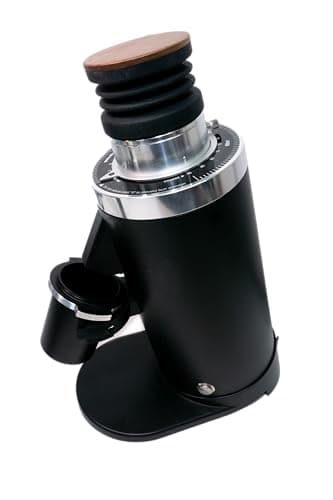 | Anyone who wants the enthusiast burr standard without leaving this bracket | Top pick | |
| 2 | 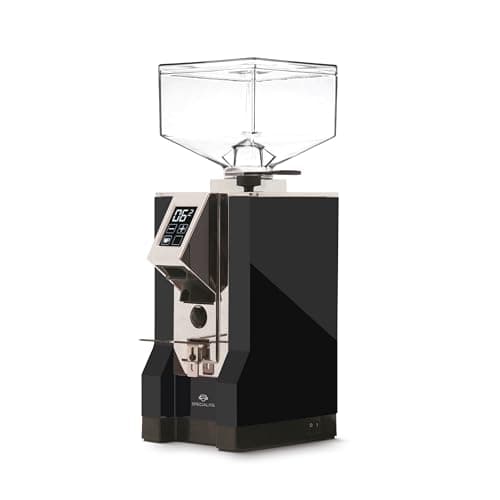 | One coffee at a time, ground fast, without a single-dose ritual | Best for a hopper workflow | |
| 3 | 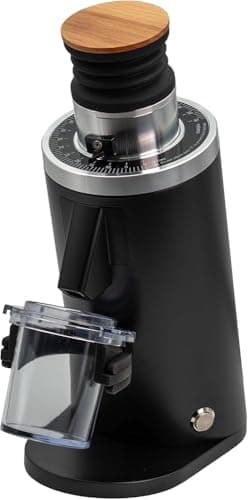 | Small kitchens that still want flat burrs | Best compact flat burr | |
| 4 | 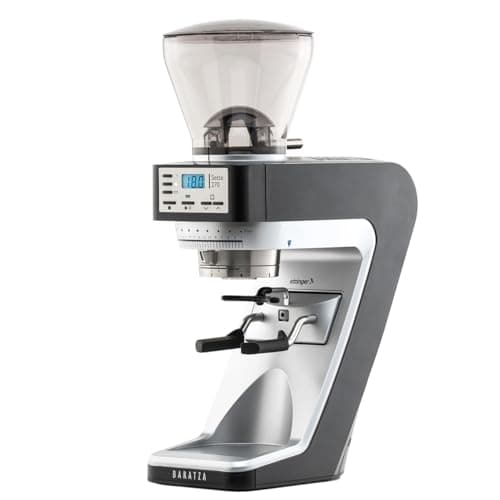 | Espresso-only setups that value speed | Fastest workflow | |
| 5 | 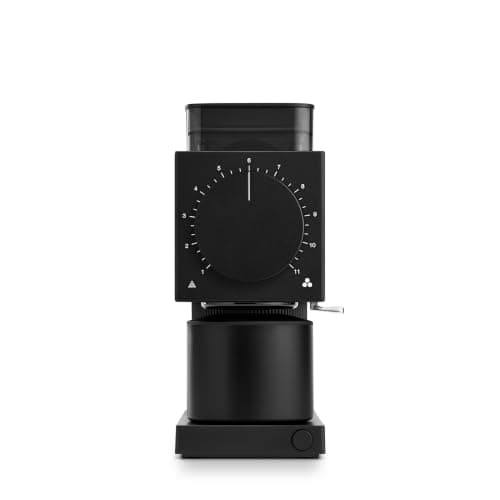 | Filter brewers in this bracket | Best for filter, not espresso | |
| 6 | 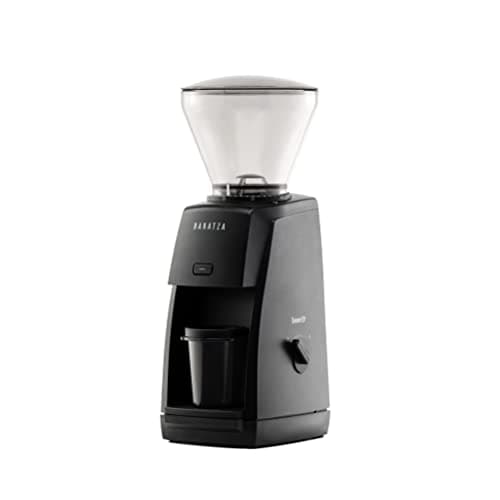 | The under-$300 bracket, where it is our top pick | Skip this at this price |
1. Top pick
DF64 Gen 2
Upper-mid tier · The 64 mm flat-burr single-dose grinder that made the format mainstream at home.
64 mm flat burrs, stepless, sub-0.1 g retention - the specification the tier is defined by.
Sixty-four millimeter flat burrs are the size the espresso world benchmarks against, and the DF64 is what made them a normal home purchase. The published specification is unusually complete for the money: stepless adjustment, retention under 0.1 g, a 250 W motor at 1400 rpm on 110/120 V, and a 50 g hopper.
Sub-0.1 g retention is the specification that makes the workflow work. Weigh 18 g in, get 18 g out, with nothing from a previous bean mixed in - which matters if you keep more than one bag open.
Ionizer probes built into the inner chute wall keep static under control, which is the practical problem single-dose grinders otherwise have.
The swappable burrs give it a longer life than most grinders: the stock stainless flats can be replaced with different sets to move the cup toward clarity or body without replacing the machine.
Specification
- Burrs
- 64 mm flat stainless; aftermarket sets available
- Adjustment
- Stepless
- Retention
- Under 0.1 g
- Motor
- 250 W, 1400 rpm at 110/120 V
- Hopper
- 50 g
- Size
- 13 cm W x 22.5 cm D x 30 cm H, 6.8 kg
What it does well
- 64 mm flats are the burr size the espresso world benchmarks against
- Burrs are swappable, so the grinder can be re-tuned rather than replaced
- Ionizer probes in the chute keep static manageable
Where it gives ground
- Heavy and tall for a home counter
- Stepless adjustment with no detents demands note-keeping
- Version numbering across sellers is genuinely confusing
Skip it if
Skip it if counter space is tight. At 13 x 22.5 x 30 cm and 6.8 kg it is a serious presence.
2. Best for a hopper workflow
Eureka Mignon Specialita
Upper-mid tier · An Italian 55 mm flat-burr espresso grinder with stepless micrometric adjustment.
Italian flat burrs, stepless micrometric adjustment, and genuinely quiet.
If the single-dose workflow does not appeal, the Specialita is the alternative that gives up nothing on grind quality. Fifty-five millimeter flat hardened steel burrs made in Italy, with stepless micrometric adjustment on the lower burr.
The micrometric mechanism is the practical advantage over other stepless designs: it holds its setting through a strip-down clean, so servicing the grinder does not mean re-dialing every coffee afterwards.
Eureka publishes output up to 1.8 g per second, which puts an 18 g dose at roughly ten seconds. Dosing is digital and timed to a tenth of a second, with single and double presets.
The sound insulation is a real feature rather than a marketing line, and in a shared household at six in the morning it is worth more than it looks on paper.
Specification
- Burrs
- 55 mm flat hardened steel, made in Italy
- Adjustment
- Stepless micrometric on the lower burr
- Output
- Up to 1.8 g per second
- Dosing
- Digital timed, adjustable in tenths of a second
What it does well
- Genuinely quiet - the sound insulation is not marketing
- Micrometric adjustment holds its setting through a strip-down clean
- Fast enough that an 18 g dose is a ten-second job
Where it gives ground
- Hopper-fed by design; single dosing it is a workaround
- No weight-based dosing
- Espresso-focused - the coarse end is not its strength
Skip it if
Skip it if you switch between coffees constantly. It is hopper-fed by design and single dosing it is a workaround.
3. Best compact flat burr
DF54
Upper-mid tier · A single-dose grinder with 54 mm flat burrs and stepless adjustment.
Most of the DF64 in a grinder that fits under a cabinet.
The DF54 answers the DF64's one real weakness. Fifty-four millimeter flat burrs, stepless adjustment, retention under 0.1 g, a 150 W motor at 1400 rpm, a 25 g single-dose hopper and an ionizer in the exit chute.
At 11 cm wide, 19 cm deep and 29.7 cm tall it is meaningfully smaller than the DF64 while keeping the flat-burr character and the single-dose workflow.
Fifty-four millimeter flats sit between the entry conical tier and the 64 mm benchmark, and behave much closer to the latter - a narrower particle distribution and more separation in the cup.
A bellows with a lid is included for clearing residual grounds, and a 58 mm dosing cup comes in the box.
Specification
- Burrs
- 54 mm flat
- Adjustment
- Stepless
- Retention
- Under 0.1 g
- Motor
- 150 W, 1400 rpm
- Hopper
- 25 g single-dose
- Anti-static
- Ionizer in the exit chute
What it does well
- Flat burrs and stepless adjustment at a price that used to buy neither
- Near-zero retention means the dose you weigh is the dose you get
- Small footprint for a flat-burr grinder
Where it gives ground
- Stepless with no reference marks is fiddly until you make your own
- Single-dose only - no hopper workflow for a busy household
- Bellows and a dosing cup are part of the routine, not optional extras
Skip it if
Skip it if you want to load a hopper and forget about it. The 25 g bin is single-dose only.
4. Fastest workflow
Baratza Sette 270
Upper-mid tier · A straight-through espresso grinder with 270 adjustment steps and very low retention.
Straight-through grinding and 270 adjustment steps, at the cost of serious noise.
The Sette solves retention architecturally: grounds fall straight through rather than around a chute, so almost nothing is left behind between doses. There is no bellows, no knocking, no ritual.
Adjustment is 270 steps - 30 macro positions with 9 micro positions inside each - which gives you repeatable coarse settings with real fine adjustment, a genuinely well-judged hybrid.
Baratza publishes output at 3.5 to 5.5 g per second from 40 mm conical burrs made in Liechtenstein, driven by a 290 W motor. That is faster than most grinders at any price.
The noise is the price. Owners consistently describe it as loud rather than grinder-loud, and the macro-micro system takes time to internalize.
Specification
- Burrs
- 40 mm conical, made in Liechtenstein
- Settings
- 270 steps (30 macro x 9 micro)
- Output
- 3.5-5.5 g per second
- Power
- 290 W
- Hopper
- 10 oz
What it does well
- Straight-through path means almost nothing is left behind between doses
- 270 steps is enough resolution to chase a shot properly
- Very fast for a home grinder
Where it gives ground
- Loud - genuinely loud, not grinder-loud
- The macro and micro system takes a while to think in
- Filter range is a compromise; this is an espresso tool
Skip it if
Skip it if you brew filter regularly - it is an espresso tool - or if a loud grinder is a problem in your household.
5. Best for filter, not espresso
Fellow Ode Brew Grinder Gen 2
Upper-mid tier · A 64 mm flat-burr grinder built only for filter coffee - it does not do espresso.
64 mm flats aimed entirely at filter, and Fellow says outright it does not do espresso.
The Ode Gen 2 is in this bracket and it is not an espresso grinder, which Fellow publishes plainly: the range bottoms out around 250 to 300 microns.
It is included because people shopping this bracket encounter it constantly, and the distinction matters. What it does offer is 64 mm uncoated stainless flat burrs with two-stage geometry, 31 settings, and a PID-held motor at a steady 1400 rpm.
The single-dose load bin holds up to 100 g, with a magnetic catch cup and a built-in knocker to clear retention. It is also one of the quietest electric grinders available.
For someone who brews V60, Chemex, AeroPress and French press and will genuinely never make espresso, this is arguably the best grinder in the bracket. For anyone who might, it is the wrong purchase.
Specification
- Burrs
- 64 mm uncoated stainless flat
- Settings
- 31
- Load bin
- Single dose, up to 100 g
- Motor
- PID-held 1400 rpm
- Size
- 9.4 x 4.1 x 9.8 in
- Espresso
- No - bottoms out around 250-300 microns
What it does well
- 64 mm flats aimed squarely at clarity in filter brewing
- Single-dose bin, magnetic catch cup and a knocker to clear retention
- One of the quietest electric grinders you can buy
Where it gives ground
- Cannot grind fine enough for espresso, by design
- 31 settings is modest if you brew many methods
- Buying it and then wanting espresso means buying a second grinder
Skip it if
Skip it if espresso is even a possibility. It cannot grind fine enough and no adjustment changes that.
6. Skip this at this price
Baratza Encore ESP
Entry tier · The Encore re-geared for espresso: the same 40 mm burrs on a dual-resolution collar.
An excellent grinder that you should buy in the tier below, not this one.
There is nothing wrong with the Encore ESP. It is our top pick in the bracket below, and its published 20 microns per click across the espresso range is genuine precision.
It is on this list as the pick to avoid here, because in this bracket the money buys something the ESP structurally cannot offer: flat burrs, stepless adjustment, and retention under 0.1 g.
Forty millimeter conical burrs at 550 rpm with stepped adjustment is an entry-tier specification. That is a compliment at its own price and a limitation at this one.
If your budget genuinely reaches this bracket, spend it here. If it does not, the ESP is an excellent place to land and you are not missing much.
Specification
- Burrs
- 40 mm M2 steel conical (Etzinger)
- Settings
- 40 stepped, dual resolution
- Espresso range
- Steps 1-20, 20 microns per click
- Filter range
- Steps 21-40, 90 microns per click
- Burr speed
- 550 rpm
What it does well
- 20 microns per click in the espresso range is real dialing resolution
- Redesigned burr housing makes cleaning and shimming easy
- Shims included in the box
Where it gives ground
- Still a stepped grinder - you cannot land between clicks
- Retention is normal-for-the-class, not low
- Same plastic body and noise as the Encore
Skip it if
Skip it at this price point only. At its own price it is the best entry espresso grinder available.
What the flat burr actually changes
Flat burrs produce a narrower particle-size distribution than conical burrs. In the cup that reads as clarity and separation - individual flavors distinguishable rather than blended - where conical burrs produce more body and sweetness.
Neither is better. If you drink espresso with milk, or you like a heavy, syrupy shot, conical burrs may genuinely suit you more. If you drink light-roast espresso straight, or brew filter and want origin character, flats are the direction. Conical versus flat burrs covers the mechanism properly.
Single dose or hopper
Scroll the table sideways to see every column.
Where the diminishing returns begin
This bracket is roughly where the audible improvements stop being obvious. Going from an entry conical grinder to a 64 mm flat is a real, describable change. Going from a 64 mm flat to a larger or exotically-geometried set above this price is a change most drinkers cannot reliably identify, particularly in milk drinks.
That is worth saying plainly because the next tier up is where a lot of money gets spent on very small differences. If your espresso machine is a single-boiler home machine, a grinder from this bracket is not the limiting factor in your cup.