Something changes in this bracket. Below it, the money buys features - a grinder in the box, an automatic milk wand, a tamping lever. Here it buys architecture: brass instead of aluminum, two boilers instead of one, a commercial group head, a repair path. Features are added; architecture is not, and that is the whole reason to shop here.
Quick picks
The answer first. Tap any row to jump to the full reasoning for that pick.
Prices shown are checked daily against the retailer, as of October 23, 2026. We never write a price into the text of a page.
| # | Product | Best for | Award | Price |
|---|---|---|---|---|
| 1 | 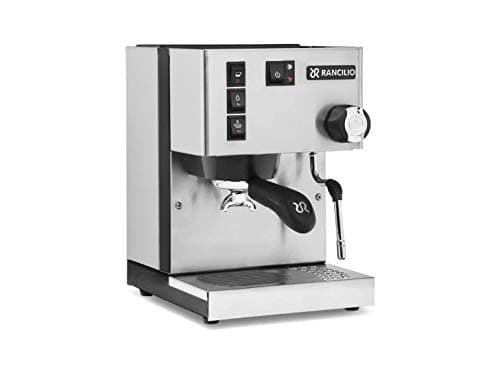 | Anyone buying one machine and keeping it | Top pick | |
| 2 | 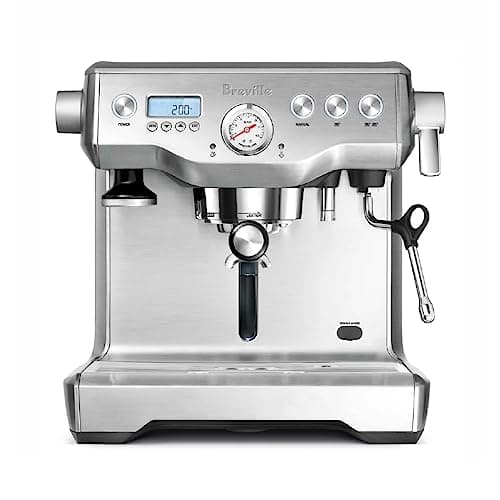 | Households making several milk drinks each morning | Best for milk drinks | |
| 3 | Flair 58The only way to shape the pressure curve yourself at this price. | Straight-espresso drinkers who want to control the shot | Best manual | |
| 4 | 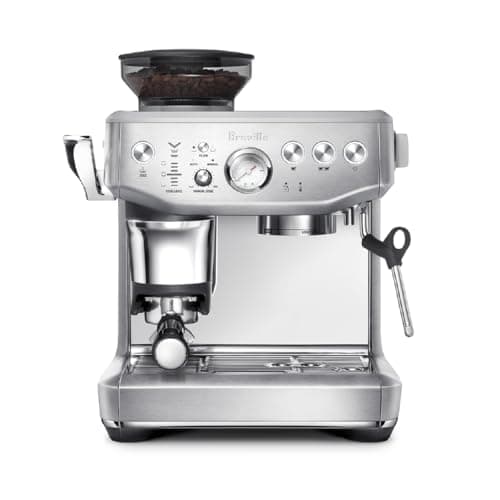 | Multi-user households where consistency matters more than ceiling | Best all-in-one | |
| 5 | 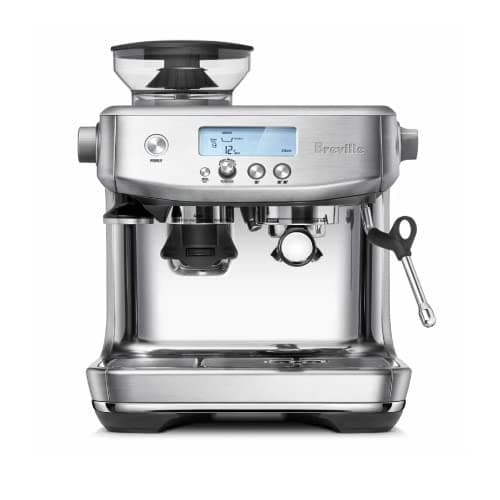 | Nobody, at the top of this bracket | Skip this at this price |
1. Top pick
Rancilio Silvia
Prosumer tier · A single-boiler 58 mm machine built from commercial-line parts.
Commercial parts, a brass boiler, and a service life measured in decades.
Under $1,000 is the point at which construction starts to matter more than features, and the Silvia is the clearest expression of that. A 58 mm commercial group head, a chrome-plated brass portafilter and a 12 oz brass boiler are the specification, and they are the whole argument.
Brass has thermal mass. Thermal mass is what holds temperature steady while water flows through the group, and it is why a machine with no electronics can outperform a thermoblock machine with several. It is also why Silvias twenty years old are still working: there is very little in one that can fail in a way that cannot be repaired.
The 1000 W element and brass boiler produce steam well beyond the class, and the 2 L tank means you are not refilling every third drink.
The absence is deliberate and total: no PID, no display, no programming. Brew temperature moves within a thermostat band, which is why temperature surfing exists as a technique. Many owners add a PID controller; we would suggest living with the machine as designed for a few months first, because the routine is less onerous than the internet suggests and you may find you do not need it.
Specification
- Group
- Brass brewing group, 58 mm commercial basket standard
- Portafilter
- Chrome-plated brass; takes filters up to 21 g
- Baskets
- 8/16 g and 14/18 g
- Boiler
- 0.3 L single boiler, brew and steam (Rancilio does not publish the material)
- Water tank
- 2 L
- Element
- 120 V, 950-1000 W
- Pump
- Single vibration pump
- Temperature
- Manual regulation by thermostat - no PID
- Dimensions
- 235 x 340 x 290 mm
- Weight
- 14 kg / 30.8 lb
What it does well
- A brass brewing group and chrome-plated brass portafilter hold heat like far more expensive machines
- Commercial parts and a repair path measured in decades
- Steam power well beyond its price class
Where it gives ground
- No PID; temperature surfing is part of the routine unless you add one
- Single boiler means waiting between brewing and steaming
- Unforgiving of a bad grinder - it will show you every flaw
Skip it if
Skip it if you want a machine that requires nothing from you, or if your grinder is not up to the job - the Silvia shows you every flaw rather than hiding it.
2. Best for milk drinks
Breville Dual Boiler
Prosumer tier · A true dual-boiler 58 mm machine: brew and steam at once, PID on the brew boiler.
Two boilers, a 58 mm basket and no waiting - the only one here that brews and steams at once.
This is the machine that ends the brew-then-wait-then-steam routine, and if that routine is what frustrates you, nothing else in this bracket solves it. A stainless espresso boiler under PID control and a separate steam boiler mean both operations happen at once.
The 58 mm portafilter with a 22 g dose capacity is the second reason to buy it. Commercial basket size means the accessories you buy now - tamper, distribution tool, bottomless portafilter - carry forward to whatever you own in ten years.
Low-pressure pre-infusion followed by 9 bar extraction is programmable rather than fixed, which is the kind of control that separates this tier from the one below.
The costs are size and power. At 37.9 x 40.3 x 37.1 cm this is a substantial appliance, and two boilers draw serious current. It also demands a grinder to match; a dual boiler fed by a coarse-stepped grinder is money spent in the wrong order.
Specification
- Portafilter
- 58 mm stainless, 22 g dose
- Boilers
- Dual stainless steel, separate espresso and steam
- Control
- PID on the espresso boiler
- Extraction
- Low-pressure pre-infusion, then 9 bar
- Footprint
- 37.9 x 40.3 x 37.1 cm
What it does well
- Brew and steam simultaneously - the actual reason to buy dual boiler
- 58 mm commercial basket size opens the whole accessory market
- PID plus programmable pre-infusion
Where it gives ground
- Big, heavy and power-hungry
- Overkill if you drink one straight espresso a day
- Still needs a grinder at a matching level to be worth it
Skip it if
Skip it if you drink straight espresso. You would be buying steam capacity you will never touch.
3. Best manual
Flair 58
Manual tier · A manual lever press using a full 58 mm basket, with an electric group preheater.
The only way to shape the pressure curve yourself at this price.
Every pump machine in this bracket gives you a fixed pressure profile. The Flair 58 gives you the lever, which means the profile is whatever your arm does - a gentle pre-infusion, a held plateau, a declining finish.
The 58 mm portafilter system with a 16-20 g dose means it uses commercial accessories, so a tamper or basket bought for it fits anything else you own. The pressure gauge shows you what you are actually doing, which turns the lever from a guess into a control.
The integrated preheat controller with three settings for dark, medium and light roasts addresses the practical weakness of unheated lever presses: a cold group steals heat from the shot. This is the specification that makes the Flair 58 a daily machine rather than a weekend one.
Published capacity is 90 ml of water per shot for a yield up to 55 ml. One drink at a time, with real work between shots, and no steam wand at all.
Specification
- Portafilter
- 58 mm system, 16-20 g dose
- Water capacity
- 90 ml per shot, up to 55 ml yield
- Preheat
- Integrated controller, three roast settings
- Gauge
- Pressure gauge included
- Weight
- 12 lb
What it does well
- You control the pressure profile by hand - nothing at this price does that
- 58 mm basket, so commercial accessories fit
- Nothing to descale and almost nothing to break
Where it gives ground
- No steam wand at all - milk drinks need a separate solution
- One shot at a time, with a real workflow between shots
- Demands a very good grinder to be worth the effort
Skip it if
Skip it if you drink milk-based coffee or make drinks for more than one person. There is no steam wand and no way to add one.
4. Best all-in-one
Breville Barista Express Impress
Mid tier · The Barista Express with assisted tamping and dose correction added.
Automates the two steps beginners get wrong, on unchanged espresso hardware.
The Impress takes the Barista Express and adds two automations: intelligent dosing, which adjusts grind time based on the previous shot's puck depth, and assisted tamping, which applies a consistent 10 kg (22 lb) with a 7-degree finishing twist via a lever.
Those two automations target the exact steps that vary most between people, which is why this is the right machine for a household where several people make coffee and only one of them has practiced. Consistency across users is a genuine problem and this genuinely solves it.
The grinder is also improved: 25 settings against the Barista Express's 16, feeding a double basket taking up to 19 g.
What has not changed is the espresso hardware underneath. This is the same architecture, and the automation is the product. It is also worth knowing that a calibrated tamper solves the tamping half for a small fraction of the difference - the Impress is buying convenience, not capability.
Specification
- Grinder
- Conical burr, 25 settings
- Basket
- Double basket, up to 19 g
- Tamping
- Assisted lever, 10 kg / 22 lb, 7-degree twist
- Dosing
- Adjusts grind time from the previous shot puck depth
What it does well
- Removes tamp pressure as a variable, which is the hardest one to keep consistent
- 25 grind settings against the Barista Express 16
- Dose feedback on the front panel tells you when you are out of range
Where it gives ground
- Solves a problem a calibrated tamper also solves, for far less
- Same integrated-grinder ceiling as the Barista Express
- The automation is the product; the espresso hardware is unchanged
Skip it if
Skip it if you are the only person using the machine and you are willing to learn. A calibrated tamper does the same job for a small fraction of the premium.
5. Skip this at this price
Breville Barista Pro
Mid tier · All-in-one with the fast ThermoJet heater and finer grind adjustment than the Express.
A good machine, but it is the tier below wearing this tier's price tag.
This is not a bad machine and we recommend it elsewhere. It is on this list as the pick to avoid specifically at the top of this bracket, because of what it costs you relative to the alternatives here.
The Barista Pro is a single-thermoblock all-in-one: a ThermoJet heater with a three-second heat-up, a Baratza-sourced burr set with 30 grind settings, in a 16.1 inch wide body. Against the Barista Express, that is a real upgrade and worth the money.
Against the machines above it in this list, it is not. For similar money you can have a brass boiler and commercial parts, or two boilers and a 58 mm basket, or full manual pressure control. All three of those are architectural advantages the Barista Pro cannot match, and none of them can be added later.
It is still a single thermoblock, so there is no simultaneous brew and steam. And the grinder, however improved, remains bonded to the machine.
Specification
- Grinder
- Baratza European precision burrs, 30 settings
- Heating
- ThermoJet, 3-second heat-up
- Footprint
- 16.1 x 13.8 x 13.1 in
What it does well
- 30 grind settings - nearly double the Barista Express
- Three-second heat-up in an all-in-one body
- Burrs sourced from Baratza rather than a generic set
Where it gives ground
- Still a single thermoblock: no simultaneous brew and steam
- Large footprint
- Grinder is fixed to the machine lifespan
Skip it if
Skip it in this bracket. If a Barista Pro is what you want, buy it in the under-$500 conversation where it competes well, not here.
How we picked
Every machine below was selected from published manufacturer specifications - portafilter size, heating system, boiler architecture, tank capacity, stated pre-infusion behavior - and from what large numbers of owners consistently report. We have not tested any of these machines and we do not claim to have. What we can do is read the spec sheets properly, do the arithmetic on what each one will cost you once the grinder is included, and tell you who each machine is genuinely wrong for. Our full method is here.
The three architectures on offer
Scroll the table sideways to see every column.
Where the money should actually go
A blunt observation about this bracket: for most people, spending the top of it on the machine is a mistake. A machine at the lower end of this list paired with a serious flat-burr grinder will make better coffee than the best machine here fed by an entry grinder. The machine controls temperature and pressure. The grinder controls whether the water can pass through the coffee evenly at all, and no amount of thermal mass compensates for a grind that channels.
What this bracket does not get you
It does not get you an E61 group, flow control, or the rotary-pump plumbed machines that dominate enthusiast forums. Those start above this range and are largely sold through specialist dealers rather than the retailer we link to. We have written about what an E61 group actually buys you rather than pretending we can recommend one you can buy here.