There is no best espresso machine. There is a machine that fixes the specific thing wrong with your setup, and seven that fix something else. This list is organized that way: each pick is matched to a problem, and the problem is stated before the machine.
Quick picks
The answer first. Tap any row to jump to the full reasoning for that pick.
Prices shown are checked daily against the retailer, as of October 23, 2026. We never write a price into the text of a page.
| # | Product | Best for | Award | Price |
|---|---|---|---|---|
| 1 | 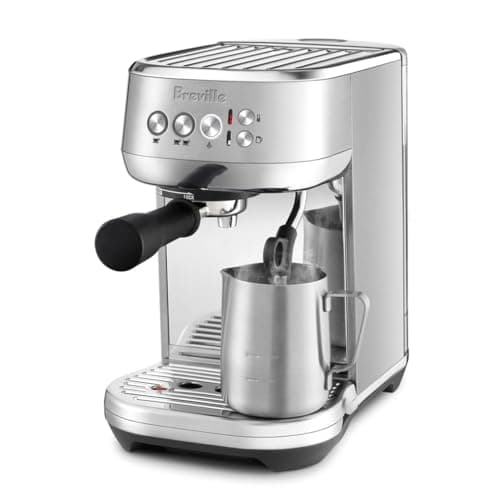 | Most people buying their first serious machine | Top pick | |
| 2 | 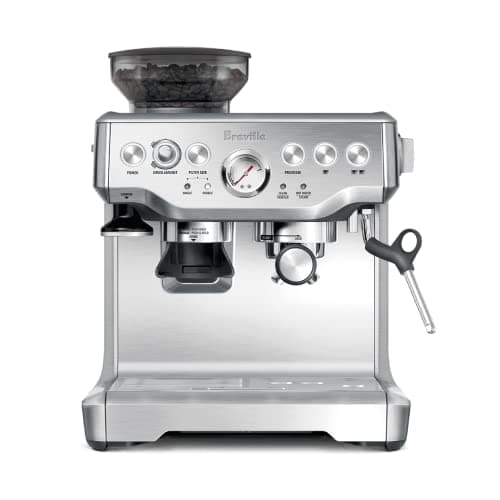 | Buyers who want nothing else to buy | Best all-in-one | |
| 3 | 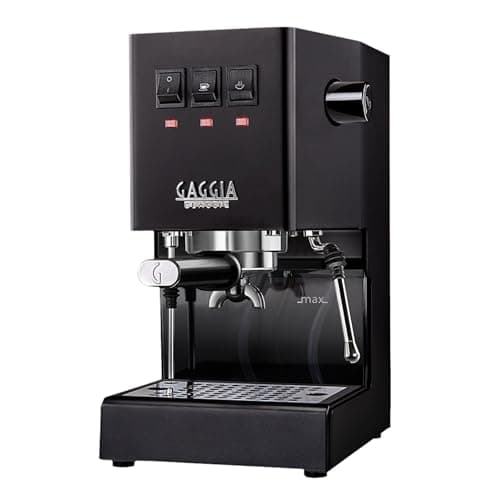 | Someone who wants a machine they can work on | Best for tinkerers | |
| 4 | 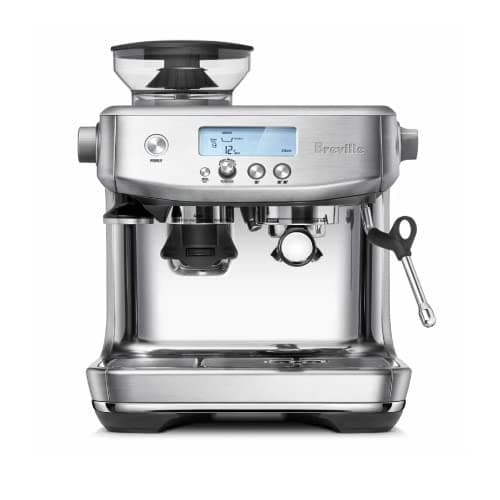 | All-in-one buyers who want the grinder to be less of a bottleneck | Best all-in-one upgrade | |
| 5 | 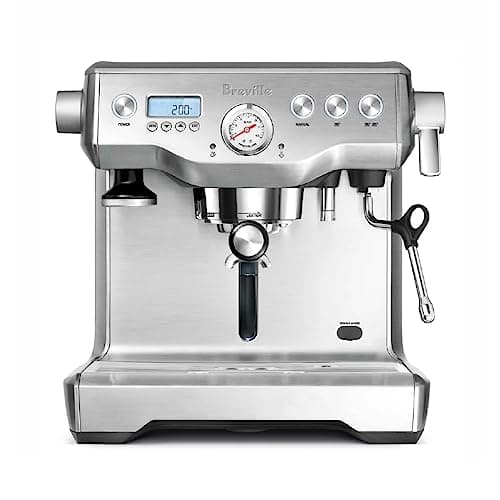 | Households making several milk drinks every morning | Best for milk drinks | |
| 6 | 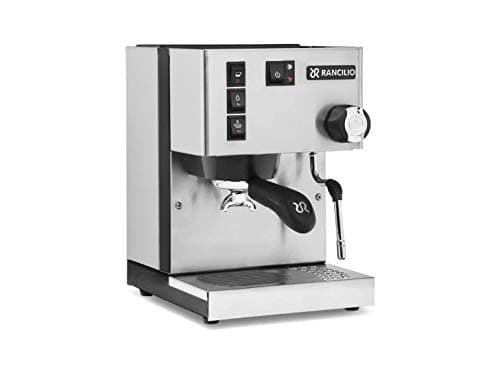 | Someone buying a machine to keep for a decade | Best build quality | |
| 7 | Flair 58Full control of the pressure profile, and no steam wand at all. | Straight-espresso drinkers who want to shape the shot themselves | Best manual | |
| 8 | 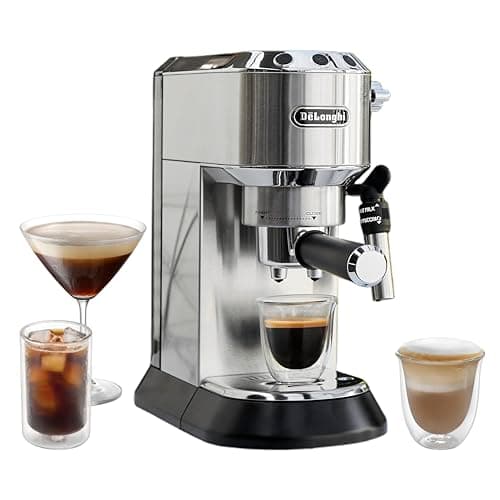 | A galley kitchen where nothing else fits | Skip this |
1. Top pick
Breville Bambino Plus
Entry tier · The Bambino with automatic milk texturing added.
The right machine for most people, precisely because it does less.
The Bambino Plus wins this list on a technicality that turns out to be the whole argument. It is a 54 mm machine with a ThermoJet heater that reaches extraction temperature in three seconds, low-pressure pre-infusion, a 15 bar pump delivering 9 bar at the puck, and automatic milk texturing. It has no grinder. That omission is the reason to buy it.
Every all-in-one machine in this price range bundles a grinder that is the weakest component in the box, cannot be upgraded independently, and dies with the machine. The Bambino Plus leaves that decision to you, which means a Bambino Plus plus a dedicated espresso grinder is a setup where each half can be replaced on its own schedule. It is also the setup that gets better as your grinder gets better, which an all-in-one fundamentally cannot.
The three-second heat-up matters more than it sounds. A machine that needs fifteen minutes to stabilize is a machine you use on weekends. A machine that is ready before you have weighed your dose is one you use on a Tuesday, and the number of shots you actually pull is the largest single factor in how good you get.
The automatic milk texturing is the one place we would push back on the marketing. It produces genuinely usable microfoam without practice, which is the right call if latte art is not your goal. If it is, you will eventually want the manual wand on the standard Bambino, because auto-steam takes the control away. Consider carefully which of those two people you are before paying the difference - the full comparison is here.
Specification
- Portafilter
- 54 mm stainless, 18 g dose
- Heating
- ThermoJet, ready in 3 seconds
- Pump
- 15 bar Italian pump, 9 bar extraction
- Milk
- Automatic texturing, 16 fl oz / 480 ml jug
- Footprint
- 11.9 x 7.4 x 14.3 in
What it does well
- Automatic milk texturing gets a usable microfoam without practice
- Same three-second heat-up as the standard Bambino
- Fits a narrow counter with a grinder beside it
Where it gives ground
- You are paying for the milk automation, not better espresso
- Still no grinder
- Auto-steam removes the control an enthusiast eventually wants
Skip it if
Skip it if you do not already own, and are not about to buy, a grinder that can adjust finely enough for espresso. Without one, an all-in-one will make better coffee for the same total outlay.
2. Best all-in-one
Breville Barista Express
Mid tier · The all-in-one: espresso machine with a conical burr grinder built into the case.
One box, one plug, one ceiling - and the ceiling is the grinder.
The Barista Express is the most-owned serious home espresso machine in the United States, and its appeal is entirely legitimate: a 54 mm machine with a thermocoil running at 200 F under PID control, plus a conical burr grinder in the same case, for one price. Nothing else to research, nothing else to buy, nothing else to find counter space for.
PID temperature control at this level is not a given, and it is the specification that separates this from the machines a tier below. It is what allows a repeatable shot rather than a lucky one.
The limit is published in the spec sheet: sixteen grind settings. Espresso lives in a narrow band of particle size, and sixteen steps spread across espresso through French press cannot land precisely inside it. In practice that means you will find a setting that is close and live with it, rather than dialing in the way you would with a grinder that offers real resolution. If that sounds like a reasonable trade, this is a very good machine. If it sounds like a limit you will resent in a year, buy the Bambino Plus and a separate grinder instead.
One more consideration: it is wide. At 15.9 inches across it takes serious counter space, which is worth measuring before ordering rather than after.
Specification
- Portafilter
- 54 mm stainless
- Grinder
- Integrated conical burr, 16 settings
- Heating
- Thermocoil, 200 F, PID controlled
- Footprint
- 15.9 x 13.1 x 12.4 in
What it does well
- One box, one price, one plug - nothing else to buy
- PID temperature control at this level is not a given
- Enormous owner base, so parts and answers are easy to find
Where it gives ground
- 16 grind settings is coarse resolution for espresso dialing
- The built-in grinder is the weakest component and cannot be upgraded
- Wide footprint for a single-boiler machine
Skip it if
Skip it if you already own a capable grinder. You would be paying roughly a grinder's worth of money for a second one that is worse than the one on your counter.
3. Best for tinkerers
Gaggia Classic Evo Pro
Mid tier · A 58 mm single-boiler machine with commercial parts and a large modification community.
58 mm commercial parts and a solenoid valve, with no PID and no apologies.
The Gaggia Classic Evo Pro is the machine to buy if you regard the espresso machine as an object to be understood rather than an appliance to be operated. It runs a full 58 mm portafilter, so every commercial basket, tamper, distribution tool and bottomless portafilter fits from day one. It has a 3-way solenoid valve, which releases pressure after the shot and leaves a dry puck - a genuinely useful feature that cheap machines omit. The tank is a generous 2.1 liters and the two-hole steam wand is the professional kind rather than a Panarello sleeve.
The published power figures tell you where the compromises are: 1425 W total, of which 1375 W goes to the boiler, and a boiler with a 140 ml maximum capacity and around 105 ml operating volume. That is a small thermal mass heated hard, which is exactly why brew temperature drifts with the thermostat and why recovery between brewing and steaming takes real time.
There is no PID as shipped. The enormous modification community around this machine exists because of that omission, and the machine is designed in a way that makes those modifications practical. Whether that is a feature or a warning depends entirely on whether you enjoy that sort of thing. We would not recommend buying it planning to modify it - buy it because the base machine, with a good grinder and attention to timing, already makes excellent espresso.
Specification
- Portafilter
- 58 mm
- Power
- 1425 W total; 1375 W to the boiler
- Boiler
- 140 ml max capacity, 105 ml operating
- Water tank
- 2.1 L / 72 fl oz
- Steam
- Two-hole professional wand
- Valve
- 3-way solenoid
What it does well
- 58 mm from the start - every basket, tamper and portafilter fits
- The 3-way solenoid gives a dry puck, which cheap machines do not
- Serviceable and heavily documented; parts are everywhere
Where it gives ground
- No PID as shipped; brew temperature drifts with the thermostat
- Long recovery between brewing and steaming
- The modification path is a hobby, not a feature
Skip it if
Skip it if you want to press a button and get a consistent result without thinking. This machine rewards attention and punishes inattention, and no amount of practice removes that.
4. Best all-in-one upgrade
Breville Barista Pro
Mid tier · All-in-one with the fast ThermoJet heater and finer grind adjustment than the Express.
The Barista Express with the two things it was missing: speed and grind resolution.
The Barista Pro takes the all-in-one format and addresses its two most-cited weaknesses. The thermocoil is replaced by a ThermoJet heater with a three-second heat-up, and the grinder is upgraded to a Baratza-sourced burr set with 30 grind settings instead of 16.
Thirty settings is very nearly double the resolution, and it changes the experience of dialing in from picking the least-wrong option to actually finding the setting. It is still a stepped grinder inside an appliance, so it is not the equal of a standalone unit, but it moves the ceiling meaningfully upward.
The three-second heat-up matters in the same way it does on the Bambino: a machine that is ready when you are gets used far more often than one you have to plan around.
What it does not change is the underlying architecture. This is still a single thermoblock, so there is no simultaneous brewing and steaming, and the grinder is still bonded to the machine's lifespan. At 16.1 inches wide it also has the same counter-space problem as the Express.
Specification
- Grinder
- Baratza European precision burrs, 30 settings
- Heating
- ThermoJet, 3-second heat-up
- Footprint
- 16.1 x 13.8 x 13.1 in
What it does well
- 30 grind settings - nearly double the Barista Express
- Three-second heat-up in an all-in-one body
- Burrs sourced from Baratza rather than a generic set
Where it gives ground
- Still a single thermoblock: no simultaneous brew and steam
- Large footprint
- Grinder is fixed to the machine lifespan
Skip it if
Skip it if the thing you actually want is a better grinder. The money saved by buying a Bambino instead, put into a standalone grinder, buys more grinder than the Pro contains.
5. Best for milk drinks
Breville Dual Boiler
Prosumer tier · A true dual-boiler 58 mm machine: brew and steam at once, PID on the brew boiler.
The only machine here that brews and steams at the same time.
Everything else on this list makes you choose between brewing and steaming and then wait. The Breville Dual Boiler does not, because it has two: a stainless espresso boiler under PID control and a separate steam boiler. That is the entire argument for it, and if it does not apply to you, nothing else on the spec sheet justifies the price.
It applies to more people than they expect. Two lattes in the morning on a single-boiler machine means pull, wait, steam, pull, wait, steam - and the waits are where the routine collapses on a weekday. On a dual boiler that sequence takes as long as the physical actions take.
The other significant specification is the 58 mm portafilter with a 22 g dose capacity. That is a commercial basket size, which opens the entire accessory market and means the distribution tools and tampers you buy will still fit whatever you upgrade to next.
At 37.9 x 40.3 x 37.1 cm it is a large appliance, and it is a serious power draw. It also still needs a grinder at a matching level; buying a dual boiler and feeding it from a sixteen-step grinder is spending money in exactly the wrong order.
Specification
- Portafilter
- 58 mm stainless, 22 g dose
- Boilers
- Dual stainless steel, separate espresso and steam
- Control
- PID on the espresso boiler
- Extraction
- Low-pressure pre-infusion, then 9 bar
- Footprint
- 37.9 x 40.3 x 37.1 cm
What it does well
- Brew and steam simultaneously - the actual reason to buy dual boiler
- 58 mm commercial basket size opens the whole accessory market
- PID plus programmable pre-infusion
Where it gives ground
- Big, heavy and power-hungry
- Overkill if you drink one straight espresso a day
- Still needs a grinder at a matching level to be worth it
Skip it if
Skip it if you drink straight espresso. Every dollar of the premium over a single-boiler machine buys steam capacity you will never use.
6. Best build quality
Rancilio Silvia
Prosumer tier · A single-boiler 58 mm machine built from commercial-line parts.
Commercial-line parts in a home-sized box, with all the demands that implies.
The Silvia is built from parts that come off Rancilio's commercial line: a 58 mm commercial group head, a chrome-plated brass portafilter, and a 12 oz brass boiler. Brass has thermal mass, and thermal mass is what keeps temperature stable through a shot. This is a fundamentally different construction philosophy from a thermoblock machine, and it is why Silvias from twenty years ago are still in daily service.
The steam capacity from a 1000 W element and a brass boiler is well beyond what the price suggests, and the 2 L tank means it is genuinely usable for more than two drinks.
The cost of that construction is that there is no PID and no electronic assistance of any kind. Brew temperature is governed by a thermostat with a wide band, which is why the practice of temperature surfing - watching the heating light and timing the shot against it - exists at all. You can add a PID controller, and many owners do, but out of the box this is a machine that asks you to pay attention.
It is also completely unforgiving of a poor grinder. A brass boiler and a commercial group will show you every flaw in your grind rather than smoothing it over, which is a virtue if your grinder is good and a punishment if it is not.
Specification
- Group
- Brass brewing group, 58 mm commercial basket standard
- Portafilter
- Chrome-plated brass; takes filters up to 21 g
- Baskets
- 8/16 g and 14/18 g
- Boiler
- 0.3 L single boiler, brew and steam (Rancilio does not publish the material)
- Water tank
- 2 L
- Element
- 120 V, 950-1000 W
- Pump
- Single vibration pump
- Temperature
- Manual regulation by thermostat - no PID
- Dimensions
- 235 x 340 x 290 mm
- Weight
- 14 kg / 30.8 lb
What it does well
- A brass brewing group and chrome-plated brass portafilter hold heat like far more expensive machines
- Commercial parts and a repair path measured in decades
- Steam power well beyond its price class
Where it gives ground
- No PID; temperature surfing is part of the routine unless you add one
- Single boiler means waiting between brewing and steaming
- Unforgiving of a bad grinder - it will show you every flaw
Skip it if
Skip it if you want convenience. Single boiler, no PID, and a real routine - this machine gives back exactly what you put in.
7. Best manual
Flair 58
Manual tier · A manual lever press using a full 58 mm basket, with an electric group preheater.
Full control of the pressure profile, and no steam wand at all.
The Flair 58 is a lever press, not a pump machine, and that difference is the point. You apply the pressure with your arm, which means you decide the pressure profile - a slow ramp, a long low-pressure pre-infusion, a declining finish. Nothing else at this price gives you that, and on most pump machines it is not available at any price.
It uses a full 58 mm portafilter system with a 16-20 g dose, so commercial accessories fit. The integrated preheat controller has three settings mapped to dark, medium and light roasts, which addresses the biggest practical problem with unheated lever presses. There is a pressure gauge so you can see what your arm is actually doing rather than guessing.
The published capacity is 90 ml of water per shot with a yield of up to 55 ml. That is one drink at a time, and the workflow between shots is real: dose, preheat, pull, disassemble, rinse.
There is no steam wand. If you drink milk-based coffee, you need a separate solution - either a standalone frother or a different machine. This is not a limitation to work around; it is a different product.
Specification
- Portafilter
- 58 mm system, 16-20 g dose
- Water capacity
- 90 ml per shot, up to 55 ml yield
- Preheat
- Integrated controller, three roast settings
- Gauge
- Pressure gauge included
- Weight
- 12 lb
What it does well
- You control the pressure profile by hand - nothing at this price does that
- 58 mm basket, so commercial accessories fit
- Nothing to descale and almost nothing to break
Where it gives ground
- No steam wand at all - milk drinks need a separate solution
- One shot at a time, with a real workflow between shots
- Demands a very good grinder to be worth the effort
Skip it if
Skip it if you make lattes, if you make more than two drinks in a sitting, or if your grinder cannot hold a very fine setting consistently. A lever press amplifies grinder quality rather than compensating for it.
8. Skip this
De Longhi Dedica EC685
Budget tier · A six-inch-wide thermoblock machine with a pressurized 51 mm portafilter.
Buy it as a small appliance, not as a step into home espresso.
We are including the Dedica specifically to explain why we would not recommend it to the reader this site is written for, because it appears at the top of a great many best-espresso-machine lists and the reason is almost always its price rather than its capability.
The specifications are honest about what it is: a 51 mm pressurized portafilter, a 1 L tank, a 15 bar pump and a 1350 W thermoblock in a body just 5.9 inches wide. That footprint is genuinely remarkable and it is the machine's real selling point.
The pressurized basket is the problem. A pressurized basket creates back-pressure artificially through a restricted second wall, which means almost any grind produces something crema-topped. That is useful with pre-ground supermarket coffee. It is actively counterproductive once you own a grinder, because it hides what your grind is doing and removes the feedback loop you need to improve. You cannot learn espresso on a machine that cannot show you when you are wrong.
The 51 mm basket size compounds it. Where 54 mm has a healthy accessory market and 58 mm has the entire commercial one, 51 mm is close to a dead end - so the usual upgrade path of adding a bottomless portafilter and a better basket is largely unavailable.
Specification
- Portafilter
- 51 mm, pressurized
- Water tank
- 35 oz / 1 L
- Pump
- 15 bar
- Power
- 1350 W thermoblock
- Footprint
- 5.9 in W x 13 in D x 13 in H
What it does well
- Genuinely tiny - fits where nothing else will
- Forgiving with supermarket beans thanks to the pressurized basket
- Fast to heat
Where it gives ground
- The pressurized basket manufactures crema; it hides grind quality rather than rewarding it
- 51 mm is an accessory dead end compared with 54 mm or 58 mm
- Panarello-style frother, not a bare steam wand
Skip it if
Skip it unless the 5.9-inch width is a hard requirement. If you want to actually learn espresso, the money is better spent on almost anything else on this list.
How we picked
Every machine below was selected from published manufacturer specifications - portafilter size, heating system, boiler architecture, tank capacity, stated pre-infusion behavior - and from what large numbers of owners consistently report. We have not tested any of these machines and we do not claim to have. What we can do is read the spec sheets properly, do the arithmetic on what each one will cost you once the grinder is included, and tell you who each machine is genuinely wrong for. Our full method is here.
We have also weighted this list toward machines that are actually available through the retailer we link to. The prosumer tier that home-barista forums argue about - Lelit, Profitec, ECM, La Marzocco - is largely sold through specialist dealers, and we would rather name that gap than write recommendations you cannot act on.
The specification comparison
Scroll the table sideways to see every column.
How to choose: a decision tree that actually terminates
- 1Do you make milk drinks for more than one person, most mornings? If yes, you want a dual boiler and the rest of this list is a compromise. If no, continue.
- 2Do you already own a grinder that adjusts finely enough for espresso? If yes, buy a grinder-less machine - the Bambino Plus, the Gaggia or the Silvia depending on how much you enjoy fiddling. If no, continue.
- 3Are you willing to buy a grinder as a separate purchase? If yes, do that: it is the better setup and it upgrades in halves. See espresso grinders under $300. If no, continue.
- 4Then buy an all-in-one, and buy the Barista Pro over the Barista Express if the budget allows, because 30 grind settings against 16 is the difference that will matter in six months.
The number nobody puts on the box
Five of the eight machines here have no grinder. That is not an omission in the listing, it is half the purchase. A grinder-less machine paired with an inadequate grinder will underperform a cheaper all-in-one, every time, and the total cost of the good setup is roughly double the sticker price of the machine. We have put the full arithmetic - beans, filters, descaler, burrs, the grinder itself - in what an espresso machine actually costs to own, because it changes which machine is the right one more often than any feature does.
What we are not telling you
We have not tasted a shot from any of these machines side by side, and no site that publishes a ranking of eight machines has done so under controlled conditions either. What we have done is read the published specifications, understand what each architecture can and cannot do, and be explicit about who each machine is wrong for. Where a claim on this page depends on a number, that number came from the manufacturer and is cited at the bottom.