The short answer
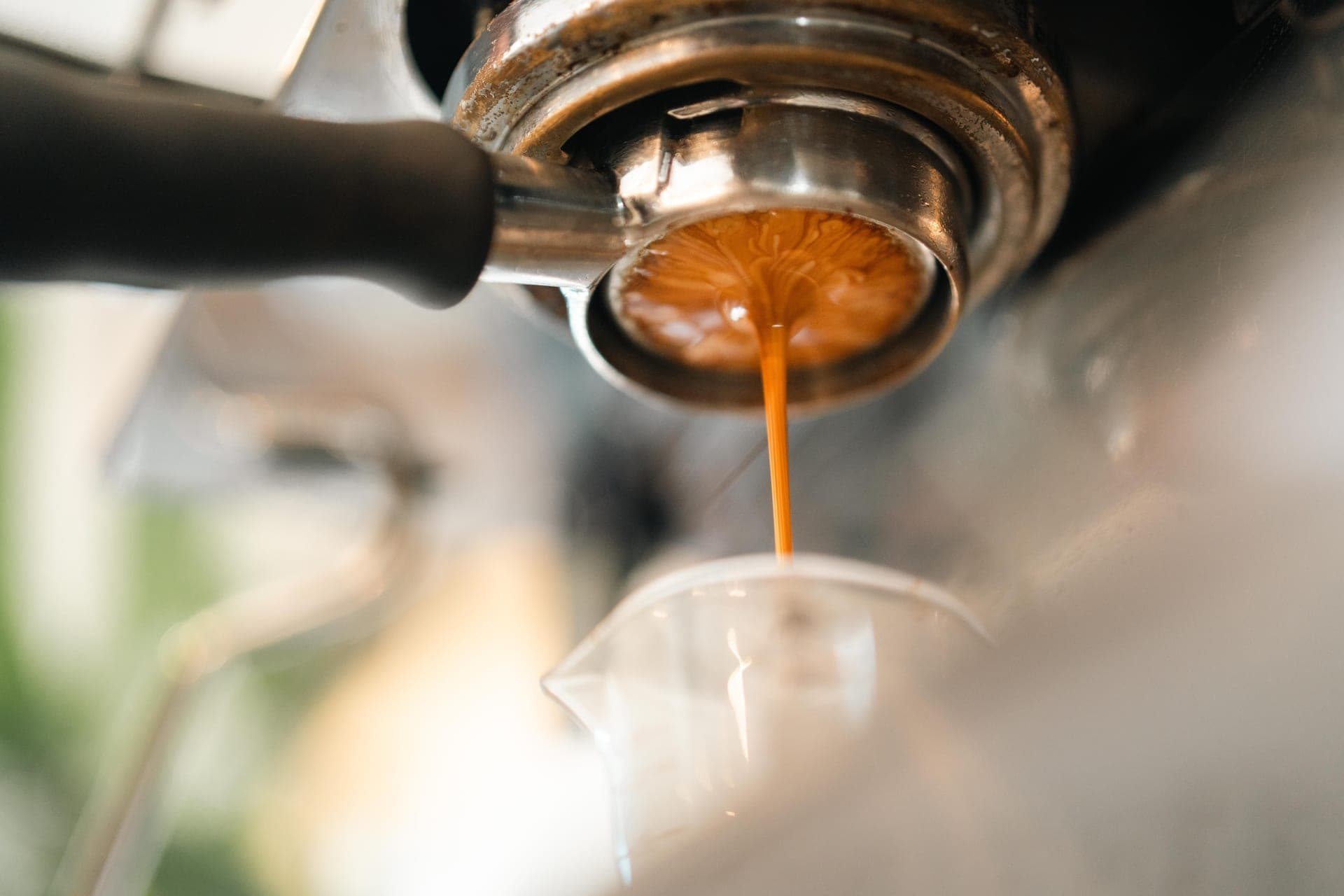
Espresso is a brewing method, not a type of bean or a roast level. It forces hot water through finely ground coffee at around nine bars of pressure for roughly 25 to 30 seconds. Filter coffee passes water through a coarser bed under gravity over several minutes. The same beans can be used for either.
Side by side
Scroll the table sideways to see every column.
What espresso beans actually are
There is no such thing as an espresso bean botanically. A bag labeled for espresso is usually a blend roasted a little darker and built to be sweet and forgiving under pressure - a recommendation about roast profile rather than a different product.
You can pull espresso with a light-roast Ethiopian single origin, and plenty of people do. It is harder to dial in because it is denser and less soluble, which is the practical reason espresso blends exist. Our beans section covers the choice properly.
Quick picks
The answer first. Tap any row to jump to the full reasoning for that pick.
Prices shown are checked daily against the retailer, as of October 23, 2026. We never write a price into the text of a page.
| # | Product | Best for | Award | Price |
|---|---|---|---|---|
| 1 | 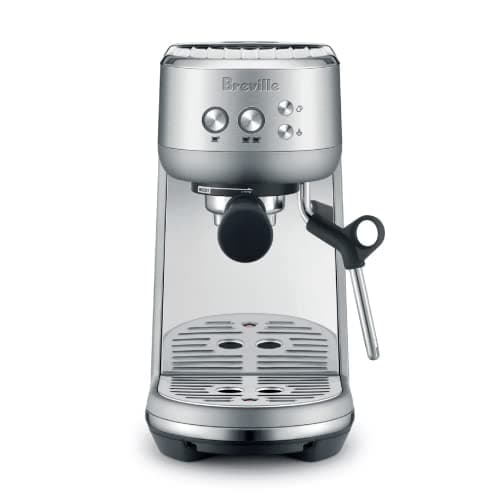 | Making actual espresso at home | If you want espresso | |
| 2 | 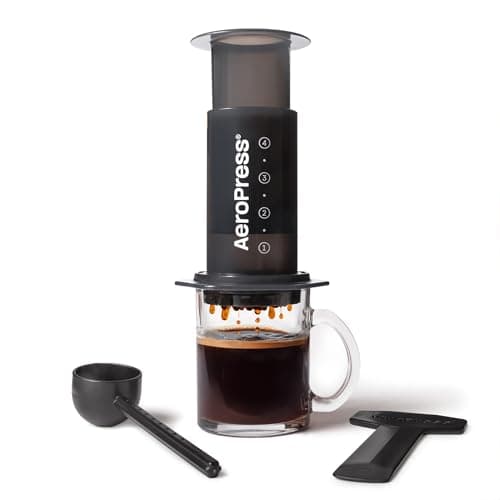 | Anyone who wants intensity without a machine | If you want strong coffee, not espresso | |
| 3 | 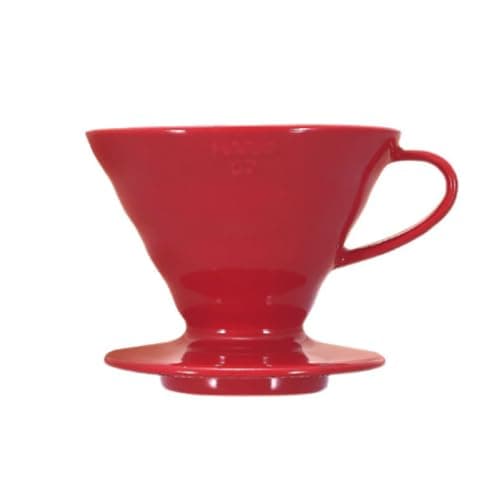 | Clarity and origin character | If you want filter coffee |
1. If you want espresso
Breville Bambino
Entry tier · A compact 54 mm espresso machine with a manual steam wand and no grinder.
Real 9 bar extraction in the smallest serious machine available.
Espresso is defined by pressure, so making it requires a machine that generates it. The Bambino publishes low-pressure pre-infusion followed by 9 bar extraction, through a 54 mm portafilter taking an 18 g dose.
The ThermoJet heater reaches extraction temperature in three seconds, and the whole machine measures 11.9 x 6.1 x 13.5 inches.
The basket is unpressurized, which means the resistance comes from the coffee rather than from a restriction in the hardware - that is what makes it espresso rather than a simulation of it.
There is no grinder, and one capable of espresso-fine adjustment is required rather than optional.
Specification
- Portafilter
- 54 mm, 18 g dose
- Heating
- ThermoJet, ready in 3 seconds
- Extraction
- Low-pressure pre-infusion, then 9 bar
- Footprint
- 11.9 x 6.1 x 13.5 in
- Grinder
- None - buy separately
What it does well
- Three-second heat-up means it is genuinely usable on a weekday
- The narrowest footprint of any machine here
- Real steam wand you control yourself
Where it gives ground
- No grinder, so the real budget is machine plus grinder
- Manual milk texturing has a learning curve
- Small tank means frequent refills if you pull several drinks
Skip it if
Skip it if you do not own and will not buy a grinder. Espresso needs a grind you cannot get from a bag.
2. If you want strong coffee, not espresso
AeroPress Original
Manual tier · A hand-pressed immersion brewer using a paper or metal filter.
Concentrated, clean and quick, without pretending to be a shot.
A lot of people searching for espresso actually want strong coffee, and there is a much cheaper answer to that.
The AeroPress brews up to 10 oz, makes 1 to 3 cups, weighs about 6.5 oz, brews in under two minutes and cleans in about ten seconds.
Brewed at a tight ratio it produces a genuinely concentrated cup - not espresso, because the pressure is a fraction of nine bars, but intense and clean.
Because it is immersion, it is forgiving of an inconsistent grinder in a way that no pressure-based method is.
Specification
- Capacity
- 10 oz, 1-3 cups
- Weight
- About 6.5 oz
- Filters
- Paper or metal mesh
What it does well
- Almost impossible to brew a bad cup with
- Forgiving of grinder inconsistency in a way pour-over is not
- Cleans up in about ten seconds
Where it gives ground
- Not espresso, whatever the marketing around it says
- One or two cups at a time
- Plunging takes real hand pressure
Skip it if
Skip it if you specifically want espresso for milk drinks. Without real crema, a latte built on it is a different drink.
3. If you want filter coffee
Hario V60 Ceramic Dripper 02
Manual tier · The 60-degree cone dripper that defines modern pour-over.
Gravity, a paper filter and a long extraction - the opposite end from espresso.
The other side of the comparison is worth naming properly. Filter coffee passes water through a bed under gravity, over minutes rather than seconds.
The V60 is a 60-degree cone with inner spiral ribs and a single large hole, in Arita-yaki ceramic, size 02 at W140 x D120 x H102 mm, brewing 1 to 4 cups.
That long, low-pressure extraction through paper produces a clean, light-bodied cup where the origin character of the bean is most visible.
It needs a gooseneck kettle to be worth owning, because the single large hole hands flow control to you.
Specification
- Geometry
- 60-degree cone, single large hole
- Ribs
- Inner spiral ribs
- Capacity
- 1-4 cups
- Material
- Arita-yaki ceramic, made in Japan
- Size
- W140 x D120 x H102 mm
What it does well
- The single large hole hands flow control to you rather than the dripper
- Ceramic holds heat far better than plastic
- More published recipes exist for the V60 than for any other brewer
Where it gives ground
- Unforgiving: an uneven pour shows up in the cup
- Ceramic needs preheating and can chip
- Needs a gooseneck kettle to be worth owning
Skip it if
Skip it if you have no gooseneck kettle. A flat-bed dripper or an immersion brewer is more forgiving.
Why pressure changes the drink
Nine bars is roughly nine times atmospheric pressure, and forcing water through coffee at that pressure does two things gravity cannot.
It extracts a great deal in a very short time, which is why a 25-second shot can be as intense as a five-minute filter brew - and why espresso needs a much tighter ratio to avoid being overwhelming.
It also emulsifies oils and dissolves carbon dioxide into the liquid, which is what produces crema. Crema is a pressure artefact; no filter method makes it, and no amount of technique in a dripper will.
Caffeine, briefly, because it is always asked
A shot of espresso contains less caffeine than a mug of filter coffee, because it is a much smaller volume. Per ounce, espresso is far more concentrated; per serving, a large filter coffee usually wins.
Roast level makes very little difference to caffeine either way, despite persistent claims otherwise. Dose and volume are what matter.
Which one you should make at home
- Milk drinks - lattes, cappuccinos, flat whites - need espresso. Filter coffee does not stand up to milk.
- Tasting origin character favors filter. The long, gentle extraction through paper is where a coffee's specific flavors are most legible.
- Speed and low equipment cost favor filter, comfortably. Espresso needs a machine and a grinder; filter needs a dripper and a kettle.
- Intensity in a small cup is espresso's alone.
Many households end up doing both, and the two do not compete - they are different drinks that happen to share an ingredient.