
The short answer
Choose pour-over for a clean, bright cup that shows off distinct flavors, if you will learn a pour and own a gooseneck kettle. Choose a moka pot for strong, heavy coffee from the stove, especially with milk. Neither is espresso.
Side by side
Scroll the table sideways to see every column.
Quick picks
The answer first. Tap any row to jump to the full reasoning for that pick.
Prices shown are checked daily against the retailer, as of October 26, 2026. We never write a price into the text of a page.
| # | Product | Best for | Award | Price |
|---|---|---|---|---|
| 1 | 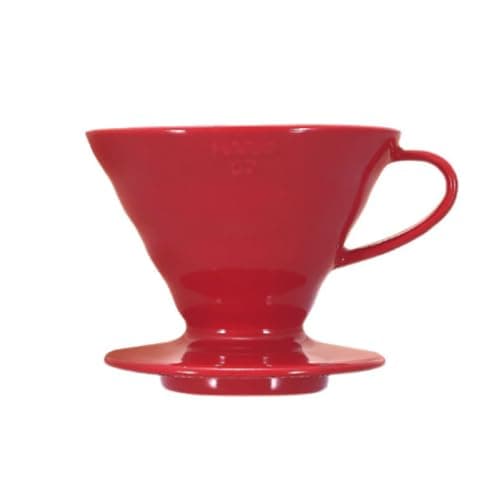 | Black coffee with distinct flavors | Choose this for a clean, bright cup | |
| 2 | 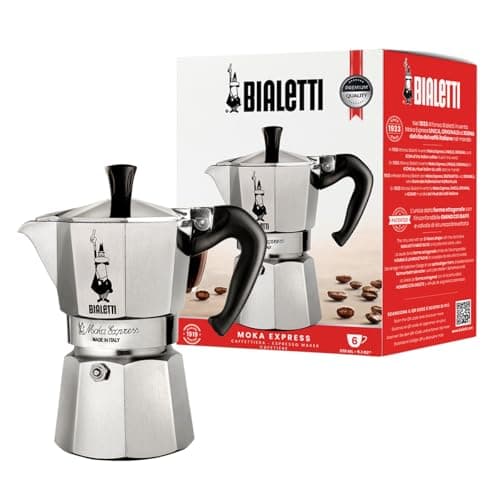 | Strong coffee, often with milk | Choose this for strong coffee |
1. Choose this for a clean, bright cup
Hario V60 Ceramic Dripper 02
Manual tier · The 60-degree cone dripper that defines modern pour-over.
The 60-degree cone that defines modern pour-over.
The V60 02 has a 60-degree cone, inner spiral ribs and a single large hole, in Arita-yaki ceramic made in Japan, brewing 1 to 4 cups.
The single large hole hands flow control to you, so the cup reflects your pour.
Paper filtering removes oils and sediment, which keeps the cup clean and bright.
It is unforgiving, needs preheating, and is worth owning only with a gooseneck kettle.
Specification
- Geometry
- 60-degree cone, single large hole
- Ribs
- Inner spiral ribs
- Capacity
- 1-4 cups
- Material
- Arita-yaki ceramic, made in Japan
- Size
- W140 x D120 x H102 mm
What it does well
- The single large hole hands flow control to you rather than the dripper
- Ceramic holds heat far better than plastic
- More published recipes exist for the V60 than for any other brewer
Where it gives ground
- Unforgiving: an uneven pour shows up in the cup
- Ceramic needs preheating and can chip
- Needs a gooseneck kettle to be worth owning
Skip it if
Skip it if you want strong coffee for milk. The moka pot's cup stands up to it.
2. Choose this for strong coffee
Bialetti Moka Express
Budget tier · The octagonal aluminum stovetop pot that defines the category.
Strong, heavy stovetop coffee in sizes from 1 to 12 cup.
The Moka Express brews by steam pressure - around 1 to 2 bar - pushing water up through the coffee. The result is strong and heavy.
It is cast aluminum, sold from 1 to 12 cup, and each size must be brewed at its rated volume.
It works on gas and electric stoves, and needs an adapter plate for induction.
It produces little or no crema - it is not espresso.
Specification
- Material
- Cast aluminum (a stainless line is also sold)
- Sizes
- 1 to 12 cup
- Cooktops
- Gas and electric; needs an adapter plate for induction
What it does well
- Sizes from 1 to 12 cup - by far the widest range in the category
- No paper, no capsules, no electronics, and almost nothing to break
- Parts and gaskets are stocked everywhere and cost very little
Where it gives ground
- Aluminum will not work on an induction cooktop without a separate adapter
- You must fill the basket and boiler properly, so a big pot cannot make a small brew
- Produces little or no crema - it is not espresso
Skip it if
Skip it if you drink your coffee black and like it bright. Pour-over shows off that side of a coffee.
Technique
Pour-over puts the result in your hands: grind, pour and pace all show in the cup. A moka pot asks for less judgment but more attention to heat - use a moderate flame and take it off as it starts to sputter, or it scorches.