The short answer
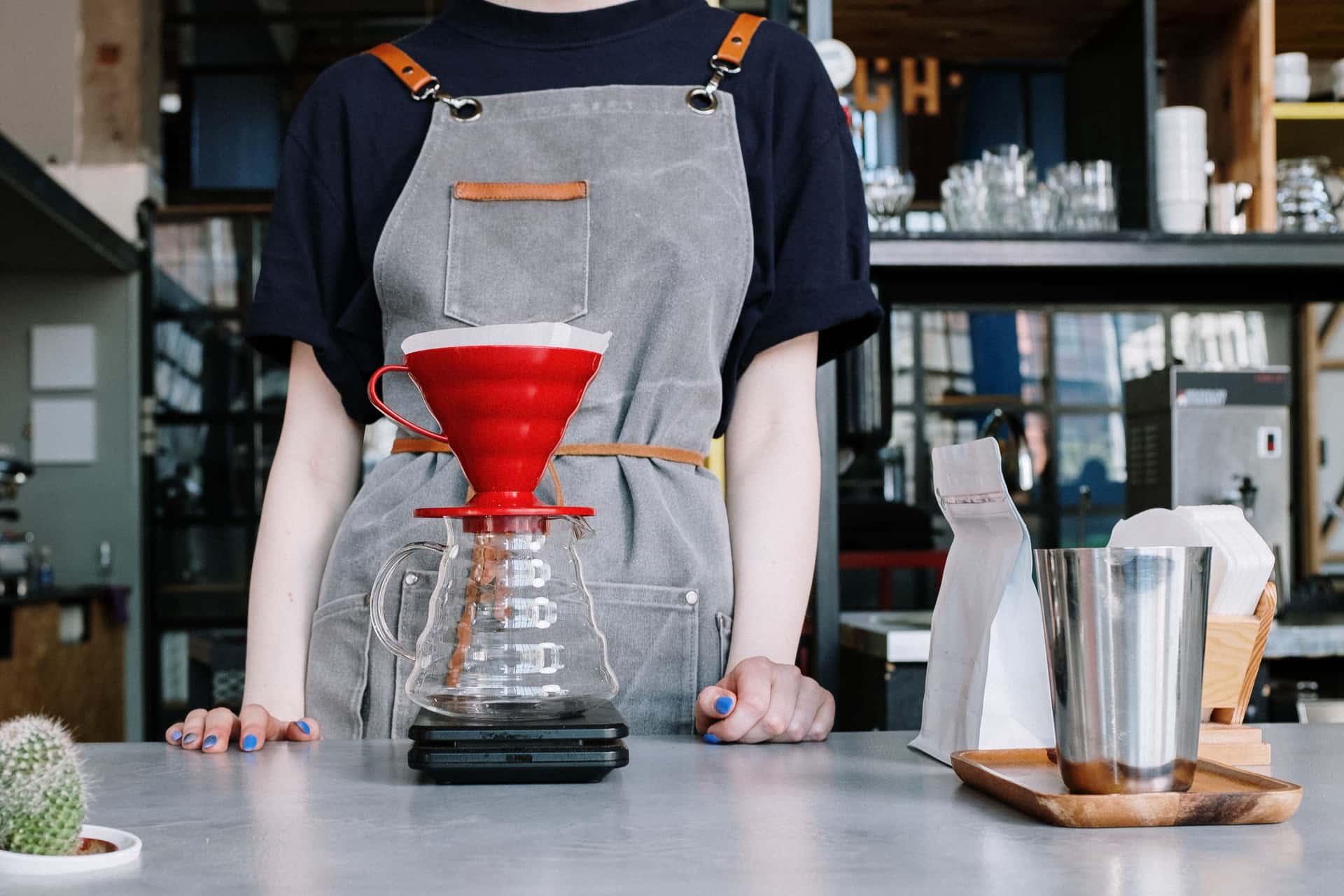
Cup quality between a good drip machine and a good pour-over is close - both are percolation through a paper filter at similar temperatures. The real differences are batch size, attention and repeatability. Drip makes eight cups with no attention; pour-over makes one or two with total control. Most households genuinely want both.
What is actually the same
Both methods are percolation: water passes through a bed of ground coffee held in a paper filter and leaves. Both target roughly the same brew temperature, around 195 to 205 F. Both use similar grind sizes and similar ratios.
That is why the cup quality is closer than the internet suggests. A certified drip machine and a well-executed V60 are doing the same physics, and the difference is in how precisely each controls it.
What is actually different
Scroll the table sideways to see every column.
That last pair of rows is the honest summary. A drip machine narrows the range of outcomes; pour-over widens it in both directions.
Quick picks
The answer first. Tap any row to jump to the full reasoning for that pick.
Prices shown are checked daily against the retailer, as of October 23, 2026. We never write a price into the text of a page.
| # | Product | Best for | Award | Price |
|---|---|---|---|---|
| 1 | 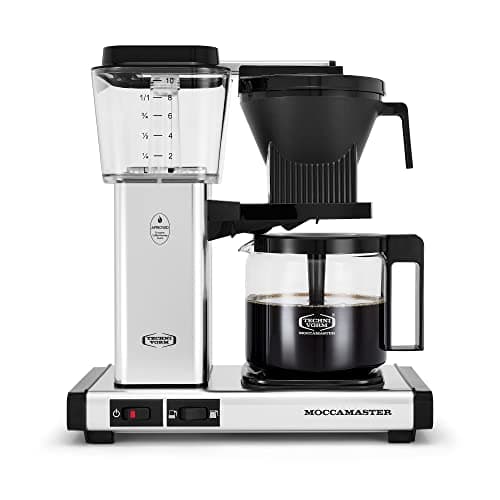 | Households, and mornings that are already busy | Choose drip for volume | |
| 2 | 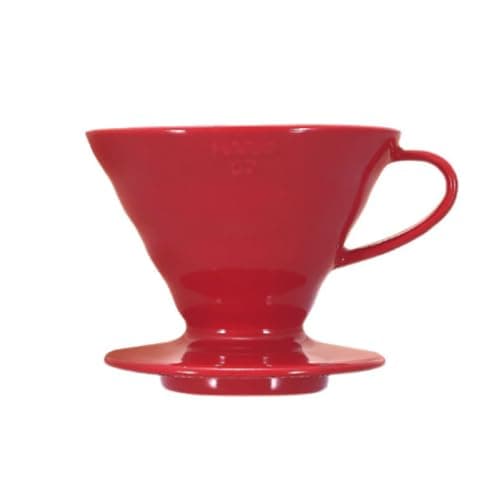 | One or two cups, with attention | Choose pour-over for control | |
| 3 | 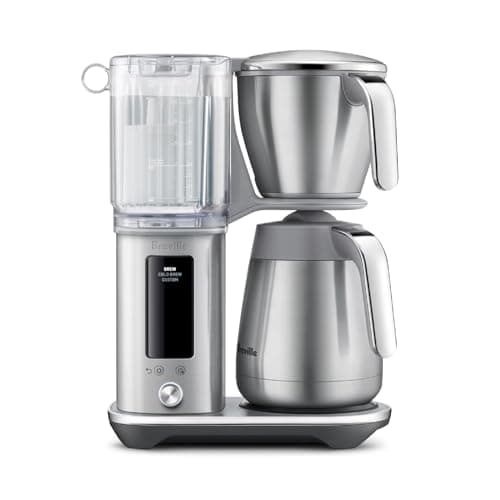 | Not choosing | The machine that does both |
1. Choose drip for volume
Technivorm Moccamaster KBGV Select
Upper-mid tier · A hand-assembled drip brewer certified by the SCA, with a copper heating element.
A certified machine brewing 40 oz in four to six minutes, with no attention required.
The argument for drip is simple: a good machine brews a carafe for four people while you do something else, at a temperature you can verify.
The Moccamaster is SCA certified, publishes a brew temperature of 196 to 205 F held through the cycle by a copper heating element, and brews a full 1.25 L / 40 oz / 10-cup carafe in four to six minutes.
The half-carafe selector adjusts saturation time and hotplate temperature rather than simply brewing less, which is the sort of detail that separates a well-designed machine from a cheap one.
It is hand-assembled in the Netherlands with every part replaceable, so it is a machine that gets repaired rather than replaced.
Specification
- Certification
- SCA Certified Home Brewer
- Brew temperature
- 196-205 F
- Capacity
- 1.25 L / 40 oz / 10 cups
- Brew time
- 4-6 minutes for a full carafe
- Build
- Hand-assembled in the Netherlands, metal and glass
What it does well
- Reaches and holds real brewing temperature, which most drip machines do not
- Every part is replaceable - these get repaired, not landfilled
- Half-carafe setting adjusts saturation time rather than just volume
Where it gives ground
- No timer, no programming, no app
- Tall enough to be awkward under a low cabinet
- Costs more than several espresso machines
Skip it if
Skip it if you brew one cup at a time. A 40 oz machine making 12 oz is a machine used badly.
2. Choose pour-over for control
Hario V60 Ceramic Dripper 02
Manual tier · The 60-degree cone dripper that defines modern pour-over.
You set the flow rate, which is the whole reason the ceiling is higher.
The argument for pour-over is control. A 60-degree cone with inner spiral ribs and one large hole means the dripper restricts almost nothing - flow is set by your grind and your pour.
That means you can change the outcome deliberately, which no automatic machine offers. It also means you have to, which is the cost.
The ceramic 02 measures W140 x D120 x H102 mm and brews 1 to 4 cups. In practice most people use it for one or two, and that is where it is best.
It needs a gooseneck kettle and a grinder that does not produce many fines. With both, it will show you more of a coffee than a drip machine will.
Specification
- Geometry
- 60-degree cone, single large hole
- Ribs
- Inner spiral ribs
- Capacity
- 1-4 cups
- Material
- Arita-yaki ceramic, made in Japan
- Size
- W140 x D120 x H102 mm
What it does well
- The single large hole hands flow control to you rather than the dripper
- Ceramic holds heat far better than plastic
- More published recipes exist for the V60 than for any other brewer
Where it gives ground
- Unforgiving: an uneven pour shows up in the cup
- Ceramic needs preheating and can chip
- Needs a gooseneck kettle to be worth owning
Skip it if
Skip it for the household morning brew. Three minutes of standing attention for one cup does not scale to four people.
3. The machine that does both
Breville Luxe Brewer Thermal
Upper-mid tier · The Precision Brewer's successor: SCA-approved drip with a saved custom profile and a cold brew mode.
Certified drip with adjustable, saveable brew variables - and a cold brew mode.
If the answer is genuinely both, this is the machine that comes closest to being both. Breville describes its Golden Standard mode as SCA approved, and Custom Brew exposes bloom volume, bloom time, brew temperature and flow rate.
Those are the same variables a pour-over hands you manually, offered as settings you can save and repeat - which is arguably the best of both.
It holds 60 fl oz / 12 cups, and its Cold Brew mode takes a steep from 30 minutes to 36 hours for up to 4 cups.
What it no longer offers is the pour-over adapter the previous generation had, which sat a V60 or Kalita Wave above the carafe - so this is an automated drip machine with pour-over control, not a robot dripper.
Specification
- Capacity
- 60 fl oz / 12 cups; 1.8 L reservoir
- Certification
- Golden Standard mode, SCA approved
- Modes
- Golden Standard, Cold Brew, Custom Brew
- Custom control
- Bloom volume, bloom time, brew temperature and flow rate
- Cold brew
- Up to 4 cups (600 ml), steep adjustable from 30 minutes to 36 hours
- Carafe
- Dual-wall thermal; above 150 F / 65 C for up to 4 hours
- Power
- 1650 W
- Size
- 16.1 x 10.2 x 6.8 in
What it does well
- The custom profile exposes bloom volume, bloom time, temperature and flow rate, and remembers them
- Cold brew in as little as 30 minutes, or up to 36 hours if you want a long steep
- A thermal carafe that holds above 150 F for up to four hours, so there is no hotplate
Where it gives ground
- Three modes rather than the longer preset list the Precision Brewer carried
- Breville no longer lists a pour-over adapter for this line
- All of that control is wasted if you only ever press the Golden Standard button
Skip it if
Skip it if you will only ever press one button. All that adjustability is expensive and it is only worth it if you use it.
Which one your grinder suits
Both are percolation, so both punish a grinder that produces a lot of fines - but pour-over punishes it more, because the bed is deeper and the flow is slower.
A drip machine's shorter contact time and shallower bed are more forgiving. If your pour-over tastes muddy and your drip coffee does not, that is your grinder rather than your technique. Our grinder picks are where to look.
The cost comparison, honestly
A complete pour-over setup - dripper, gooseneck kettle, scale - costs meaningfully less than a certified drip machine, and it makes better coffee in skilled hands. That is a genuine argument for it, especially for one or two people.
The drip machine's cost buys you back your attention every morning, which for a household with a school run is not a small thing.
The answer most people arrive at
Both, eventually. A drip machine for weekday mornings and volume, a pour-over for weekends and for coffees worth paying attention to. They cost different amounts, they suit different days, and there is no reason to treat it as a competition.
If you can only have one and you are choosing on how you actually live rather than on how you would like to: count how many cups get made in your kitchen before 9am. If the answer is more than two, buy the drip machine.