The short answer
Single dosing means weighing exactly the beans you are about to brew, grinding them, and leaving nothing in the machine. It only works if retention is genuinely low - under 0.1 g is the standard to look for. Above that, yesterday's coffee mixes into today's, and the dose you weighed is not the dose you brewed.
What single dosing is actually for
- 1Freshness. Beans stay in a sealed bag until the moment you brew, rather than sitting in a hopper losing aromatics.
- 2Switching coffees. Two bags open at once is trivial. On a hopper grinder it means emptying and purging.
- 3Dose accuracy. With near-zero retention the grams you weigh in are the grams that come out.
- 4Not stocking up. A hopper grinder implicitly wants a large volume of one coffee. Single dosing does not.
Quick picks
The answer first. Tap any row to jump to the full reasoning for that pick.
Prices shown are checked daily against the retailer, as of October 23, 2026. We never write a price into the text of a page.
| # | Product | Best for | Award | Price |
|---|---|---|---|---|
| 1 | 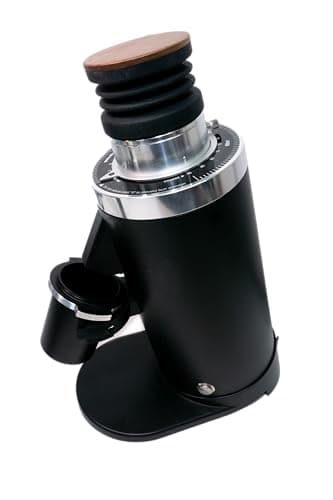 | Anyone who keeps more than one coffee open | Top pick | |
| 2 | 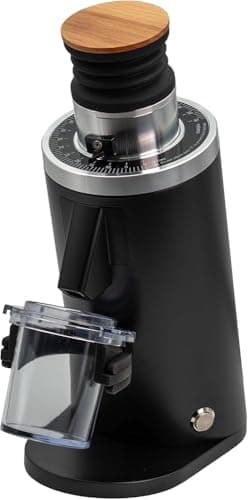 | Single dosing in a small kitchen | Best compact | |
| 3 | 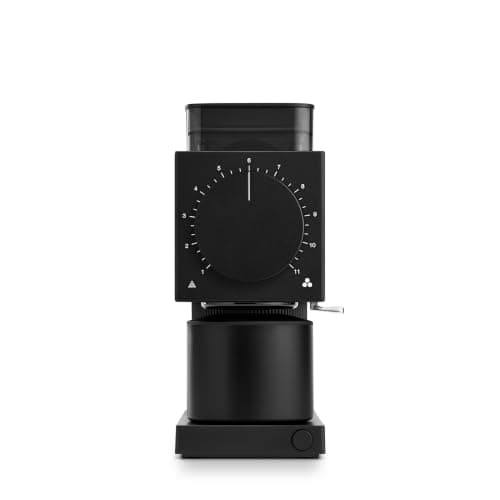 | Filter brewers who switch coffees often | Best for filter | |
| 4 | 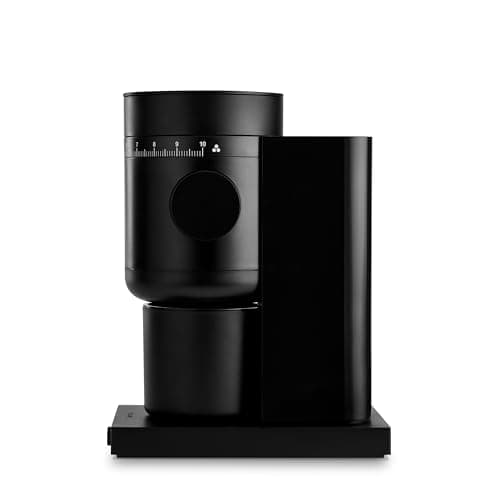 | Single dosing without the flat-burr budget | Best budget single dose | |
| 5 | 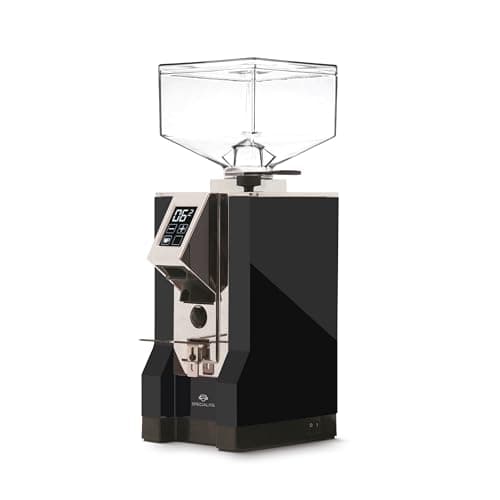 | One coffee, ground fast, from a hopper | Skip this for single dosing |
1. Top pick
DF64 Gen 2
Upper-mid tier · The 64 mm flat-burr single-dose grinder that made the format mainstream at home.
Sub-0.1 g retention with 64 mm flats - the specification single dosing was invented for.
Retention under 0.1 g is the number that makes single dosing worthwhile rather than a ritual, and the DF64 publishes it. Weigh 18 g in, get 18 g out, with nothing from the previous bean carried over.
The burrs are 64 mm stainless flats, stepless, driven by a 250 W motor at 1400 rpm with a 50 g hopper. Ionizer probes in the inner chute wall handle the static that single-dose grinders otherwise struggle with.
The swappable burrs matter more here than elsewhere: the whole point of single dosing is being able to switch coffees freely, and being able to switch burr sets extends that flexibility to the grinder itself.
At 13 x 22.5 x 30 cm and 6.8 kg, it is a large thing to have on a counter, and stepless adjustment with no detents means keeping your own reference marks.
Specification
- Burrs
- 64 mm flat stainless; aftermarket sets available
- Adjustment
- Stepless
- Retention
- Under 0.1 g
- Motor
- 250 W, 1400 rpm at 110/120 V
- Hopper
- 50 g
- Size
- 13 cm W x 22.5 cm D x 30 cm H, 6.8 kg
What it does well
- 64 mm flats are the burr size the espresso world benchmarks against
- Burrs are swappable, so the grinder can be re-tuned rather than replaced
- Ionizer probes in the chute keep static manageable
Where it gives ground
- Heavy and tall for a home counter
- Stepless adjustment with no detents demands note-keeping
- Version numbering across sellers is genuinely confusing
Skip it if
Skip it if you drink one coffee in volume. A hopper grinder is faster every morning and you gain nothing from the freshness advantage.
2. Best compact
DF54
Upper-mid tier · A single-dose grinder with 54 mm flat burrs and stepless adjustment.
The same workflow and retention figure in a grinder that fits under a cabinet.
The DF54 publishes the same sub-0.1 g retention as its larger sibling with 54 mm flat burrs, stepless adjustment, a 150 W motor at 1400 rpm and a 25 g single-dose hopper.
At 11 cm wide, 19 cm deep and 29.7 cm tall it is a genuinely different proposition on a counter, and it is the answer for someone who wants the single-dose workflow but does not have the space for a DF64.
The included bellows with lid clears residual grounds, and the ionizer handles static.
Fifty-four millimeter flats give up a little throughput to 64 mm but retain the flat-burr character in the cup - narrower particle distribution, more separation.
Specification
- Burrs
- 54 mm flat
- Adjustment
- Stepless
- Retention
- Under 0.1 g
- Motor
- 150 W, 1400 rpm
- Hopper
- 25 g single-dose
- Anti-static
- Ionizer in the exit chute
What it does well
- Flat burrs and stepless adjustment at a price that used to buy neither
- Near-zero retention means the dose you weigh is the dose you get
- Small footprint for a flat-burr grinder
Where it gives ground
- Stepless with no reference marks is fiddly until you make your own
- Single-dose only - no hopper workflow for a busy household
- Bellows and a dosing cup are part of the routine, not optional extras
Skip it if
Skip it if you want maximum burr size for the money. The DF64 is the better grinder if the space exists.
3. Best for filter
Fellow Ode Brew Grinder Gen 2
Upper-mid tier · A 64 mm flat-burr grinder built only for filter coffee - it does not do espresso.
A single-dose workflow built entirely around filter brewing, with the knocker to match.
The Ode Gen 2 is a single-dose grinder in the fullest sense - the load bin holds up to 100 g, the catch cup aligns magnetically, and there is a built-in knocker specifically to clear retention between doses.
The burrs are 64 mm uncoated stainless flats with two-stage geometry, across 31 settings, driven by a PID-held motor at a steady 1400 rpm.
It is also one of the quietest electric grinders you can buy, which matters when the single-dose ritual means standing at it for longer.
The constraint is published plainly by Fellow: the range bottoms out around 250 to 300 microns, so this grinder does not do espresso. That is a design decision, not a defect.
Specification
- Burrs
- 64 mm uncoated stainless flat
- Settings
- 31
- Load bin
- Single dose, up to 100 g
- Motor
- PID-held 1400 rpm
- Size
- 9.4 x 4.1 x 9.8 in
- Espresso
- No - bottoms out around 250-300 microns
What it does well
- 64 mm flats aimed squarely at clarity in filter brewing
- Single-dose bin, magnetic catch cup and a knocker to clear retention
- One of the quietest electric grinders you can buy
Where it gives ground
- Cannot grind fine enough for espresso, by design
- 31 settings is modest if you brew many methods
- Buying it and then wanting espresso means buying a second grinder
Skip it if
Skip it if espresso is anywhere in your plans. It physically cannot reach espresso fineness.
4. Best budget single dose
Fellow Opus 2
Mid tier · The Opus rebuilt around 48 mm burrs and a stepless dial, with espresso in range.
Single-dose loading and espresso capability, at a fraction of the flat-burr tier.
The Opus 2 loads 100 g single-dose with near-zero retention and an integrated ionizer, and unlike the Ode it reaches espresso - Fellow publishes its range as espresso through cold brew.
The burrs are 48 mm stainless conicals, and an integrated ionizer keeps static down instead of leaving grounds clinging to the catch cup.
A stepless side dial with printed reference points lets you land between marks, though Fellow does not publish a micron figure.
An automatic shutoff ends the grind when the bin empties, so there is no timer to set - though the dose is still what you weighed in, not what the grinder measures out.
Specification
- Burrs
- 48 mm stainless steel conical
- Adjustment
- Stepless side dial, marked, about 48 settings
- Grind range
- Espresso through cold brew
- Motor
- 300 W; about 9 seconds for an espresso shot
- Capacity
- 100 g single-dose load bin; 100 g catch cup, 30 g espresso cup
- Retention
- Near-zero, with an internal impeller
- Size
- 206 x 130 x 267 mm (8.1 x 5.1 x 10.5 in), 2.3 kg
- Warranty
- 2 years, extendable
What it does well
- 48 mm burrs and a stepless dial at a price where stepped 40 mm is the norm
- Automatic shutoff and near-zero retention make single dosing genuinely clean
- Ships with an espresso dosing cup that fits 54 mm and 58 mm portafilters
Where it gives ground
- Conical burrs, so it trades some clarity for body against a flat-burr grinder
- Stepless with markings still means keeping your own notes for each brew method
- No weight-based dosing - a scale is still part of the routine
Skip it if
Skip it if espresso is your main brew and you want precision. Its espresso range is real but its resolution there is workable rather than fine.
5. Skip this for single dosing
Eureka Mignon Specialita
Upper-mid tier · An Italian 55 mm flat-burr espresso grinder with stepless micrometric adjustment.
An excellent grinder built around a hopper, which is the opposite workflow.
The Specialita is a very good grinder that people regularly try to single-dose, and it is worth explaining why that fights the design.
It is hopper-fed by architecture. The burr chamber and chute are shaped for a continuous feed of beans from above, not for 18 g dropped in and cleared out. Single dosing it means bellows, tapping, and accepting that retention is not in the sub-0.1 g class these other grinders publish.
What it does offer is genuinely excellent: 55 mm Italian flat hardened steel burrs, stepless micrometric adjustment that survives a strip-down clean, output up to 1.8 g per second, and sound insulation that makes it usable early in the morning.
If you drink one coffee and want it ground fast and quietly, this is arguably a better grinder than anything above. It is just not a single-dose grinder.
Specification
- Burrs
- 55 mm flat hardened steel, made in Italy
- Adjustment
- Stepless micrometric on the lower burr
- Output
- Up to 1.8 g per second
- Dosing
- Digital timed, adjustable in tenths of a second
What it does well
- Genuinely quiet - the sound insulation is not marketing
- Micrometric adjustment holds its setting through a strip-down clean
- Fast enough that an 18 g dose is a ten-second job
Where it gives ground
- Hopper-fed by design; single dosing it is a workaround
- No weight-based dosing
- Espresso-focused - the coarse end is not its strength
Skip it if
Skip it if switching between coffees freely is the reason you are shopping this list. Buy it if the hopper workflow suits you.
The workflow you are committing to
Single dosing adds roughly twenty seconds and three objects to every brew: a scale to weigh the beans, a dosing cup or the catch cup, and usually a bellows to puff the last grounds out of the chute. Some grinders add a knocker instead.
That is a small ritual and it is a genuine daily cost. People who enjoy it find it a pleasant part of the routine. People who want coffee quickly find it an irritation, and they are not wrong. Be honest about which you are before buying.
Retention figures, compared
Scroll the table sideways to see every column.
Static is the practical problem
Single dosing generates more static than hopper grinding, because there is no continuous mass of beans to ground the charge. The result is coffee clinging to the chute and jumping off the counter. Manufacturers address it with ionizers in the chute or anti-static treatments; the traditional home fix is a drop of water on the beans before grinding, which works and is widely used.
Do you actually need this
If you drink one coffee, buy it in quantity and get through it inside a couple of weeks, a hopper grinder is faster and the freshness argument is largely theoretical. Single dosing earns its ritual when you keep several bags open, when you buy small bags of specialty coffee, or when you are dialing in and need the dose to be exact. Our under $500 list covers both workflows.