The short answer
Both are stepless, low-retention single-dose grinders. Buy the DF64 Gen 2 if you want 64 mm burrs and the option to swap in aftermarket sets later. Buy the DF54 if you want a smaller grinder with an ionizer for static.
Side by side
Scroll the table sideways to see every column.
Quick picks
The answer first. Tap any row to jump to the full reasoning for that pick.
Prices shown are checked daily against the retailer, as of October 25, 2026. We never write a price into the text of a page.
| # | Product | Best for | Award | Price |
|---|---|---|---|---|
| 1 | 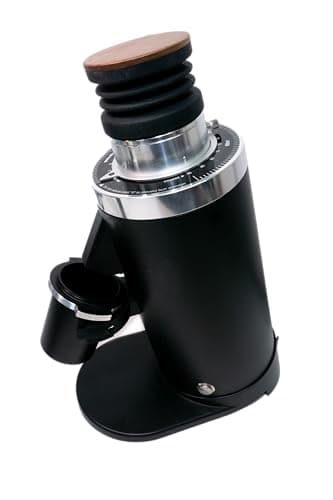 | Enthusiasts who want room to experiment | Choose this for burr upgrades | |
| 2 | 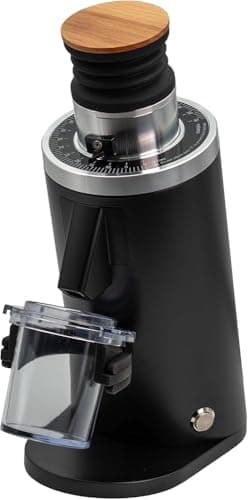 | A compact espresso setup | Choose this for a smaller footprint |
1. Choose this for burr upgrades
DF64 Gen 2
Upper-mid tier · The 64 mm flat-burr single-dose grinder that made the format mainstream at home.
64 mm flat burrs with an aftermarket of replacements - a grinder whose character you can change.
The DF64 Gen 2 uses 64 mm flat stainless burrs with stepless adjustment and retention listed at under 0.1 g. A 250 W motor turns them at 1400 rpm at 110/120 V.
The 64 mm burr size is the headline. Aftermarket burr sets are available for it, which means the grinder's cup character can be changed later by swapping burrs rather than buying a new grinder.
It is the larger and heavier of the two at 13 x 22.5 x 30 cm and 6.8 kg, with a 50 g hopper.
Stepless adjustment means there are no fixed settings: you can set any point in the range, which suits espresso dialing and asks you to note where you are.
Specification
- Burrs
- 64 mm flat stainless; aftermarket sets available
- Adjustment
- Stepless
- Retention
- Under 0.1 g
- Motor
- 250 W, 1400 rpm at 110/120 V
- Hopper
- 50 g
- Size
- 13 cm W x 22.5 cm D x 30 cm H, 6.8 kg
What it does well
- 64 mm flats are the burr size the espresso world benchmarks against
- Burrs are swappable, so the grinder can be re-tuned rather than replaced
- Ionizer probes in the chute keep static manageable
Where it gives ground
- Heavy and tall for a home counter
- Stepless adjustment with no detents demands note-keeping
- Version numbering across sellers is genuinely confusing
Skip it if
Skip it if counter space is tight or you will never swap burrs. The DF54 is smaller and the upgrade path would go unused.
2. Choose this for a smaller footprint
DF54
Upper-mid tier · A single-dose grinder with 54 mm flat burrs and stepless adjustment.
54 mm flat burrs, an ionizer for static, and a 25 g single-dose hopper.
The DF54 uses 54 mm flat burrs with stepless adjustment and retention listed at under 0.1 g, driven by a 150 W motor at 1400 rpm.
Its standout feature is an ionizer in the exit chute to reduce static. Static makes grounds cling and scatter, and it is one of the most common annoyances in single-dose grinding.
The 25 g single-dose hopper holds one dose rather than a batch, which is the whole premise of the design: grind exactly what you are about to brew.
The 54 mm format has a narrower aftermarket than 64 mm, so what you buy is largely what you keep.
Specification
- Burrs
- 54 mm flat
- Adjustment
- Stepless
- Retention
- Under 0.1 g
- Motor
- 150 W, 1400 rpm
- Hopper
- 25 g single-dose
- Anti-static
- Ionizer in the exit chute
What it does well
- Flat burrs and stepless adjustment at a price that used to buy neither
- Near-zero retention means the dose you weigh is the dose you get
- Small footprint for a flat-burr grinder
Where it gives ground
- Stepless with no reference marks is fiddly until you make your own
- Single-dose only - no hopper workflow for a busy household
- Bellows and a dosing cup are part of the routine, not optional extras
Skip it if
Skip it if you want to experiment with different burr sets over the years. The DF64's 64 mm format has far more options.
What burr size really decides
On day one, burr size tells you less about the cup than you might expect. What it mainly decides is the upgrade path: the 64 mm format has an aftermarket of replacement burr sets, and the 54 mm format has far fewer.
If changing your grinder's character with a burr swap appeals, that is a real argument for the DF64. If you want a grinder that simply works and stays as it is, it is not.
Stepless adjustment, briefly
Neither grinder has click stops. You can set any point in the range, which suits espresso, where the ideal grind often sits between where a stepped grinder's clicks would fall.
The discipline it asks for is noting your setting. Without clicks to count, returning to yesterday's grind means marking the dial - see single-dose grinders for the rest of this category.