The short answer
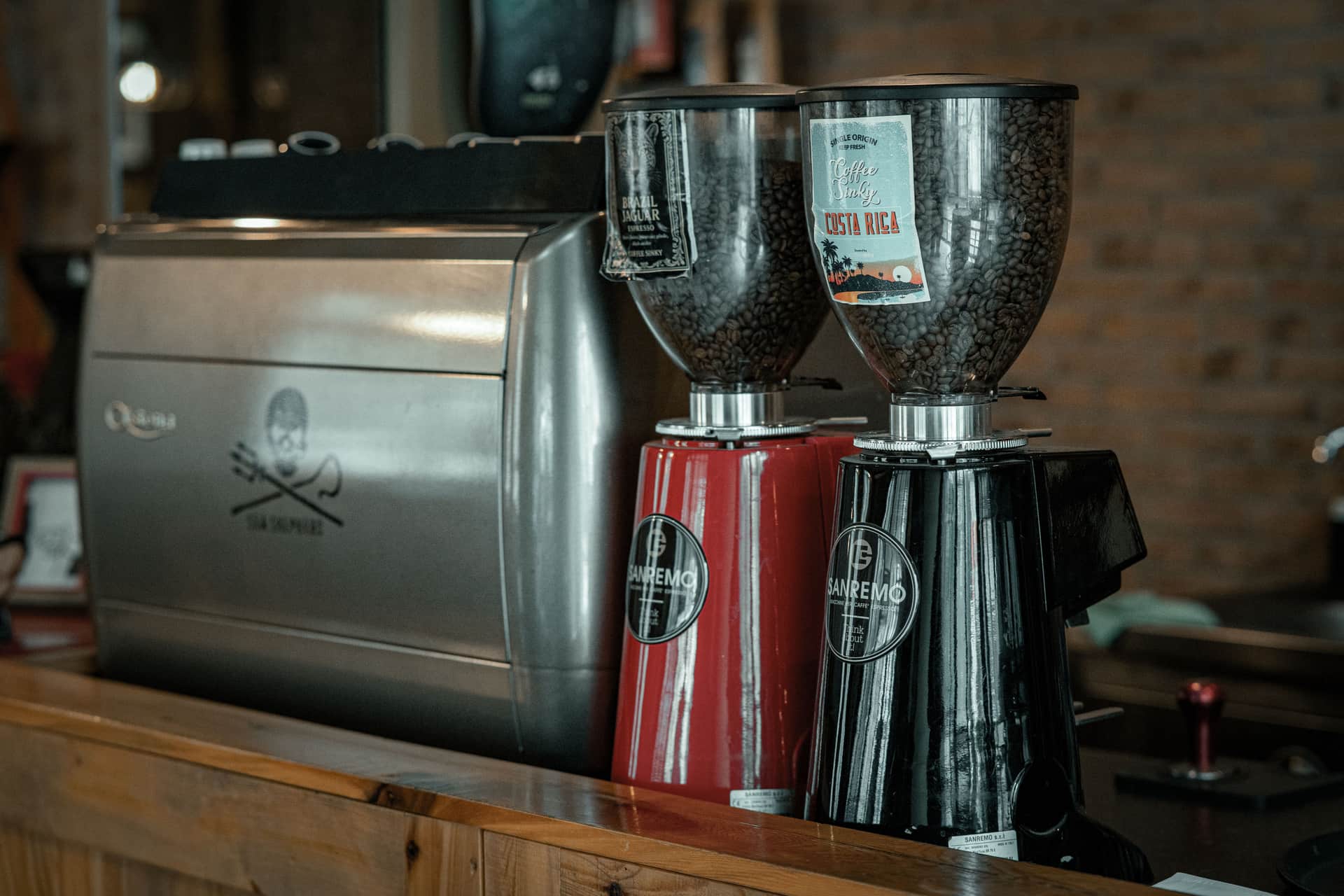
Choose a single-dose grinder if you weigh every dose, change beans often and want near-zero retention. Choose a hopper grinder if you drink one coffee most of the time and want to grind on demand without weighing beans first.
The two workflows
Scroll the table sideways to see every column.
Quick picks
The answer first. Tap any row to jump to the full reasoning for that pick.
Prices shown are checked daily against the retailer, as of October 25, 2026. We never write a price into the text of a page.
| # | Product | Best for | Award | Price |
|---|---|---|---|---|
| 1 | 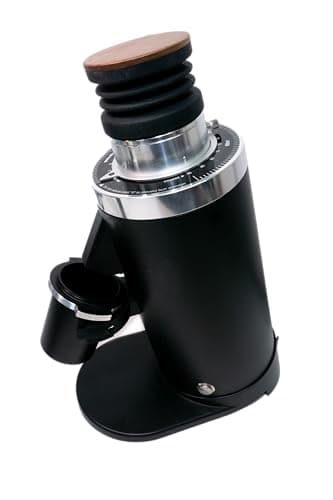 | Changing beans often, and weighing every dose | Single dose: the benchmark | |
| 2 | 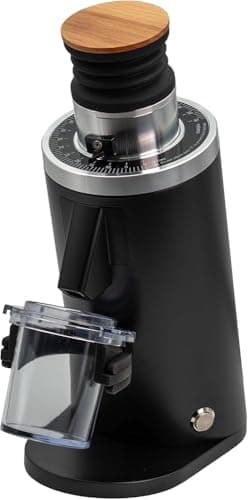 | Single dosing on a smaller counter | Single dose: compact | |
| 3 | 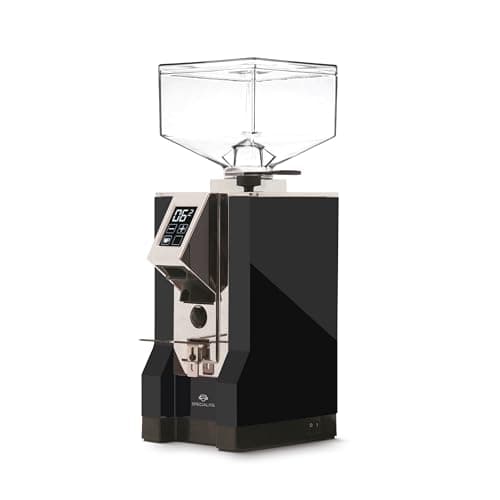 | One espresso most of the time, ground on demand | Hopper: the espresso workhorse | |
| 4 | 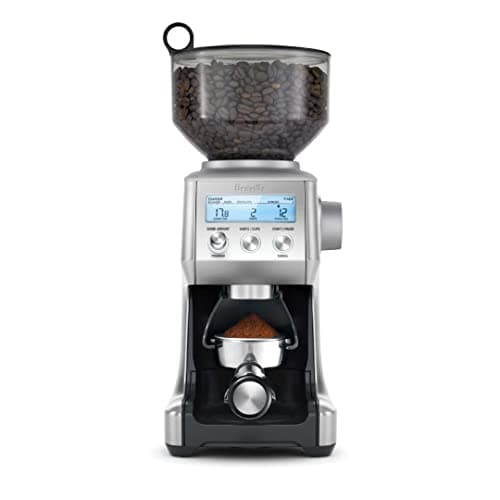 | A household that drinks a lot of coffee | Hopper: the all-rounder |
1. Single dose: the benchmark
DF64 Gen 2
Upper-mid tier · The 64 mm flat-burr single-dose grinder that made the format mainstream at home.
64 mm flat burrs with retention under 0.1 g.
The DF64 Gen 2 is the 64 mm flat-burr single-dose grinder that made the format mainstream at home, with retention under 0.1 g.
You weigh a dose, grind it, and the grinder is left nearly empty - so switching beans costs almost nothing.
Its 50 g hopper and stepless adjustment suit dialing in shot by shot.
It is heavy and tall, and stepless adjustment means keeping notes.
Specification
- Burrs
- 64 mm flat stainless; aftermarket sets available
- Adjustment
- Stepless
- Retention
- Under 0.1 g
- Motor
- 250 W, 1400 rpm at 110/120 V
- Hopper
- 50 g
- Size
- 13 cm W x 22.5 cm D x 30 cm H, 6.8 kg
What it does well
- 64 mm flats are the burr size the espresso world benchmarks against
- Burrs are swappable, so the grinder can be re-tuned rather than replaced
- Ionizer probes in the chute keep static manageable
Where it gives ground
- Heavy and tall for a home counter
- Stepless adjustment with no detents demands note-keeping
- Version numbering across sellers is genuinely confusing
Skip it if
Skip it if several people grind throughout the day. A hopper is quicker.
2. Single dose: compact
DF54
Upper-mid tier · A single-dose grinder with 54 mm flat burrs and stepless adjustment.
54 mm flat burrs in a small footprint.
The DF54 has 54 mm flat burrs, stepless adjustment and retention under 0.1 g, with a 25 g single-dose hopper.
An ionizer in the exit chute tackles static.
Its footprint is small for a flat-burr grinder.
Bellows and a dosing cup are part of the routine, not optional extras.
Specification
- Burrs
- 54 mm flat
- Adjustment
- Stepless
- Retention
- Under 0.1 g
- Motor
- 150 W, 1400 rpm
- Hopper
- 25 g single-dose
- Anti-static
- Ionizer in the exit chute
What it does well
- Flat burrs and stepless adjustment at a price that used to buy neither
- Near-zero retention means the dose you weigh is the dose you get
- Small footprint for a flat-burr grinder
Where it gives ground
- Stepless with no reference marks is fiddly until you make your own
- Single-dose only - no hopper workflow for a busy household
- Bellows and a dosing cup are part of the routine, not optional extras
Skip it if
Skip it if you want a hopper workflow for a busy household. It is single-dose only.
3. Hopper: the espresso workhorse
Eureka Mignon Specialita
Upper-mid tier · An Italian 55 mm flat-burr espresso grinder with stepless micrometric adjustment.
55 mm flat burrs, stepless micrometric adjustment and timed dosing.
The Specialita uses 55 mm flat hardened steel burrs made in Italy, with stepless micrometric adjustment and digital timed dosing in tenths of a second.
It is hopper-fed by design, and fast - up to 1.8 g per second, so an 18 g dose is a ten-second job.
It is genuinely quiet.
Single dosing it is a workaround, and there is no weight-based dosing.
Specification
- Burrs
- 55 mm flat hardened steel, made in Italy
- Adjustment
- Stepless micrometric on the lower burr
- Output
- Up to 1.8 g per second
- Dosing
- Digital timed, adjustable in tenths of a second
What it does well
- Genuinely quiet - the sound insulation is not marketing
- Micrometric adjustment holds its setting through a strip-down clean
- Fast enough that an 18 g dose is a ten-second job
Where it gives ground
- Hopper-fed by design; single dosing it is a workaround
- No weight-based dosing
- Espresso-focused - the coarse end is not its strength
Skip it if
Skip it if you change beans daily. A hopper grinder is built around one coffee at a time.
4. Hopper: the all-rounder
Breville Smart Grinder Pro
Mid tier · A hopper-fed conical grinder that doses straight into a portafilter cradle.
A 450 g hopper, 60 settings and a portafilter cradle.
The Smart Grinder Pro holds 450 g of beans, with 60 settings from espresso through French press and a digital timer in 0.2-second increments.
Cradles for 50-54 mm and 58 mm portafilters let it grind hands-free into the portafilter.
Its espresso end is usable rather than precise.
A large hopper means stale beans unless you get through them.
Specification
- Burrs
- Stainless steel conical, adjustable upper burr
- Settings
- 60
- Dosing
- Digital timer in 0.2-second increments
- Hopper
- 450 g
- Cradles
- 50-54 mm and 58 mm portafilter
What it does well
- Hands-free grinding into the portafilter
- 60 settings covers espresso through French press in one machine
- Big hopper suits a household that drinks a lot of coffee
Where it gives ground
- Large hopper means stale beans unless you actually get through them
- Timed dosing drifts as beans age
- Espresso end is usable rather than precise
Skip it if
Skip it if espresso precision is the goal. The Specialita is the espresso-first hopper grinder.
Which suits you
- Single dose if you weigh everything anyway, buy small bags of different coffees, or share a grinder between espresso and filter.
- Hopper if you drink the same coffee every day, several people grind, or you want timed dosing without a scale in the loop.