The short answer
Buy the size that matches your basket exactly - 51 mm, 54 mm, 58 mm and 58.5 mm are different, and a tamper a fraction too small leaves an untamped ring at the edge. After that, a calibrated tamper with a leveling plate removes both tamp pressure and tamp angle as variables, which is what most people are actually trying to fix.
Fitment first, and it is not close
More tampers are returned for size than for quality. The sizes in common use are not interchangeable and the gaps are small enough to be easy to get wrong.
Scroll the table sideways to see every column.
Measure the inside of your basket before ordering. A tamper that is a millimeter too small leaves a ring of untamped coffee at the edge, and that ring is exactly where water will run.
Quick picks
The answer first. Tap any row to jump to the full reasoning for that pick.
Prices shown are checked daily against the retailer, as of October 23, 2026. We never write a price into the text of a page.
| # | Product | Best for | Award | Price |
|---|---|---|---|---|
| 1 | 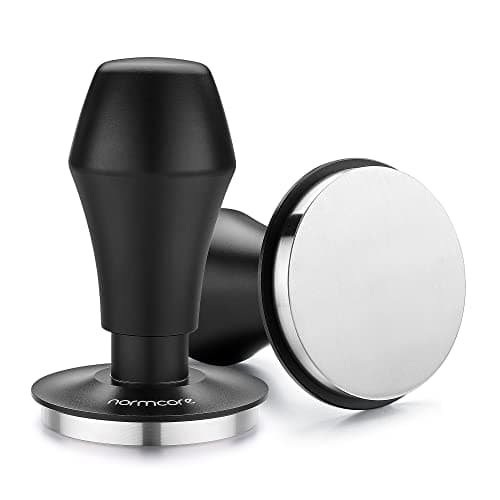 | Anyone whose shots vary for no obvious reason | Top pick | |
| 2 | 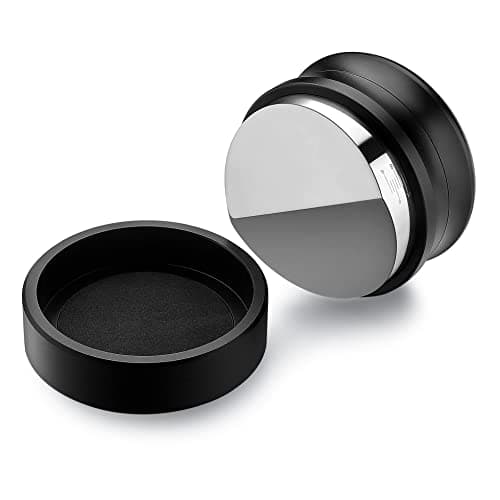 | Anyone tamping an uneven bed without realizing | Buy this alongside, not instead | |
| 3 | 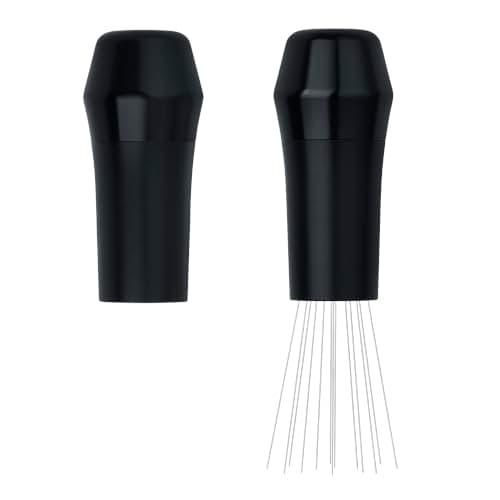 | Anyone who has not yet bought either | The one to buy first | |
| 4 | 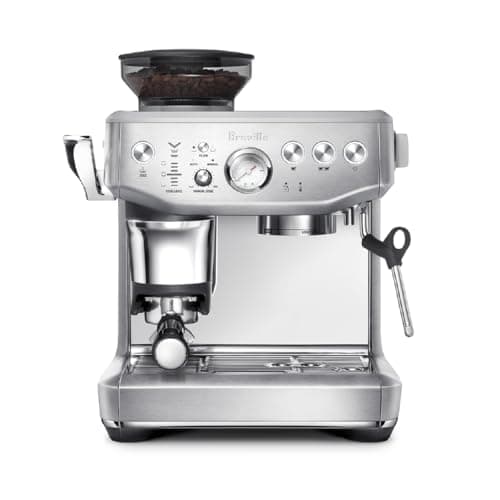 | Households where several people make coffee | Skip this as a tamping fix |
1. Top pick
Normcore Spring-Loaded Tamper V4
Mid tier · A calibrated tamper with interchangeable springs and a self-leveling plate.
Removes tamp pressure and tamp angle in one purchase, with three springs to choose from.
The V4 is a calibrated spring-loaded tamper available in 51 mm, 53.3 mm, 58 mm and 58.5 mm, shipping with 15 lb, 25 lb and 30 lb springs so you can match the pressure to your setup.
The leveling plate is the part that matters most and gets discussed least. It rests on the rim of the basket while you press, so the tamp is square to the basket every time. An angled tamp creates a thin side and a thick side in the puck, and water finds the thin side - which is channeling.
Three interchangeable springs mean you can actually experiment. Most people settle around the 25 lb spring, but a coarser grind or a bigger basket may prefer something else.
The base is 304 stainless in flat or ripple. It is heavier and clunkier than a plain tamper, and the click that signals correct pressure is easy to mistake for the end of the stroke until you are used to it.
Specification
- Sizes
- 51 mm, 53.3 mm, 58 mm, 58.5 mm
- Springs
- 15 lb, 25 lb and 30 lb included
- Base
- 304 stainless, flat or ripple
- Leveling
- Plate rests on the basket rim as you press
What it does well
- Removes tamp pressure and tamp angle as variables in one purchase
- Three springs let you find the pressure your machine likes
- Costs a fraction of the machines that automate the same thing
Where it gives ground
- Heavier and clunkier than a plain tamper
- The click can be mistaken for the end of the stroke
- You must buy the size that matches your basket exactly
Skip it if
Skip it if you already tamp level and consistently. A calibrated tamper adds very little for someone with settled technique.
2. Buy this alongside, not instead
Normcore Coffee Distribution Tool
Entry tier · A depth-adjustable leveler that flattens the grounds before tamping.
Levels the bed before you tamp, which is a different problem from tamping evenly.
A calibrated tamper makes the tamp square to the basket. It does nothing about the surface of the coffee being uneven before you start, and tamping a sloped bed flat just compresses one side more than the other.
The Normcore distribution tool is 58.5 mm, fits standard 58 mm baskets, and has an adjustable depth from 4 mm to 12 mm so it works with whatever dose you actually use.
The base is food-grade 304 stainless with two angled planes: place it on the un-tamped grounds straight from the grinder, twist two or three times, and the bed is level.
It fits essentially every 58 mm machine, and the wrong depth setting makes it useless in a way that is invisible - set it so it just touches the grounds at your normal dose.
Specification
- Size
- 58.5 mm, fits standard 58 mm baskets
- Depth
- Adjustable 4 mm to 12 mm
- Base
- Food-grade 304 stainless, two angled planes
- Handle
- Anodized aluminum
What it does well
- Levels the bed in two or three twists with no technique to learn
- Adjustable depth means it works with your dose, not a fixed one
- Fits essentially every 58 mm machine
Where it gives ground
- Levels the surface; it does not fix clumping underneath - that is the WDT tool job
- One more thing to clean
- Wrong depth setting makes it useless, and the failure is invisible
Skip it if
Skip it if you can only buy one tool. A WDT tool fixes the more important problem - clumping below the surface.
3. The one to buy first
Normcore WDT Tool V4
Entry tier · A retractable needle tool for breaking up clumps in the basket before tamping.
Cheaper than a tamper and fixes a bigger problem.
If you are buying espresso tools in order, the needle tool comes before the tamper. Clumps of coffee inside the bed create low-resistance channels, and no amount of even tamping removes a clump.
The Normcore WDT V4 has nine needles, with 0.3 mm and 0.4 mm sets both included, in 304 stainless with an anodized aluminum handle. It comes in 54 mm and 58 mm.
The needles retract into the body with a twist, which sounds like a gimmick and is the reason the tool survives living in a drawer rather than arriving bent.
Two needle gauges cover different grinds - finer needles for finer grinds, which is a genuine distinction rather than packaging.
Specification
- Needles
- 9 needles; 0.3 mm and 0.4 mm sets included
- Material
- 304 stainless needles, anodized aluminum handle
- Mechanism
- Twist to extend or retract
- Sizes
- 54 mm and 58 mm
What it does well
- The cheapest meaningful improvement to an espresso shot, by some distance
- Retracting needles means it lives in a drawer without bending
- Two needle gauges cover fine and coarser grinds
Where it gives ground
- Adds a step to every single shot
- Needles will eventually bend whatever you do
- Does nothing at all for filter coffee
Skip it if
Skip it if you only brew filter. WDT does nothing outside espresso.
4. Skip this as a tamping fix
Breville Barista Express Impress
Mid tier · The Barista Express with assisted tamping and dose correction added.
A machine that automates tamping costs enormously more than a tamper that does the same thing.
The Impress automates tamping with a lever applying a consistent 10 kg - 22 lb - with a 7-degree finishing twist, alongside intelligent dosing that adjusts grind time from the previous shot's puck depth.
That is a genuine solution to a genuine problem, and it costs the price of an espresso machine.
A calibrated tamper delivers consistent pressure and a square tamp for a very small fraction of that. If tamping consistency is the specific thing you are trying to fix, buy the tamper.
The Impress makes sense for a different reason: a household where several people make coffee and only one has practiced. Consistency across users is a real problem and a tamper does not solve it, because people still have to use it properly.
Specification
- Grinder
- Conical burr, 25 settings
- Basket
- Double basket, up to 19 g
- Tamping
- Assisted lever, 10 kg / 22 lb, 7-degree twist
- Dosing
- Adjusts grind time from the previous shot puck depth
What it does well
- Removes tamp pressure as a variable, which is the hardest one to keep consistent
- 25 grind settings against the Barista Express 16
- Dose feedback on the front panel tells you when you are out of range
Where it gives ground
- Solves a problem a calibrated tamper also solves, for far less
- Same integrated-grinder ceiling as the Barista Express
- The automation is the product; the espresso hardware is unchanged
Skip it if
Skip it if you are buying a machine to fix your tamping. Buy a calibrated tamper and keep the difference.
What a calibrated tamper actually fixes
Two things. Pressure, which people worry about, and angle, which matters more and gets less attention.
Consistent pressure means the puck offers the same resistance every time, so shot times are comparable. But the received wisdom that you must apply exactly 30 lb is largely folklore - what matters is applying the same pressure each time, whatever it is, once the puck is fully compressed.
Angle is the real problem. A tamp that is a couple of degrees off produces a puck that is thicker on one side, and water goes through the thin side preferentially. That is channeling, and it tastes bitter and sour at once. A leveling plate that rests on the basket rim eliminates it entirely.
The order to buy these tools in
- 1A [WDT needle tool](/accessories/best-wdt-tools). Breaks up clumps through the depth of the bed. Cheapest, largest effect.
- 2A calibrated tamper. Removes pressure and angle.
- 3A [distribution tool](/accessories/best-distribution-tools). Levels the surface before tamping.
- 4A [bottomless portafilter](/accessories/best-bottomless-portafilters). Shows you whether any of it worked.
Buying in the reverse order - which is common, because tampers look like the obvious purchase - means fixing the smaller problem first and wondering why nothing changed.
Flat, convex or ripple base
Flat is the default and the right choice for almost everyone. Convex bases were popular on the theory that they compensate for edge channeling; ripple bases are said to grip the puck surface. Neither difference is large, and neither will matter until distribution and grind are sorted.