Under $500 is the bracket where the real decision is made, and most buyers make it by accident. The decision is not which machine. It is whether the money buys one machine that includes a grinder, or one machine that does not - because a machine without a grinder needs one, and that purchase is not optional.
Quick picks
The answer first. Tap any row to jump to the full reasoning for that pick.
Prices shown are checked daily against the retailer, as of October 23, 2026. We never write a price into the text of a page.
| # | Product | Best for | Award | Price |
|---|---|---|---|---|
| 1 | 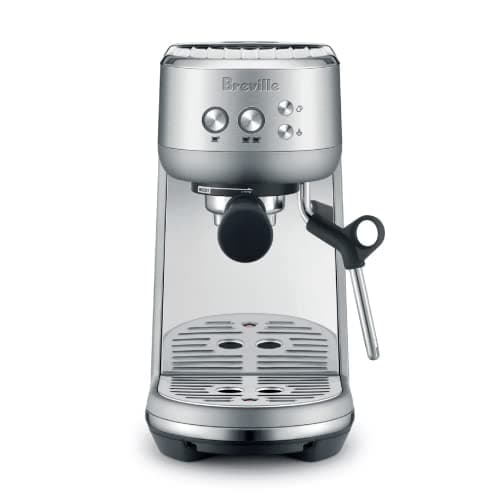 | Buyers who already have, or will buy, a real grinder | Top pick | |
| 2 | 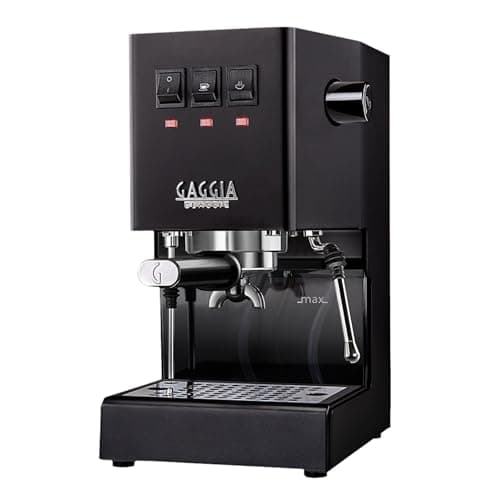 | Buyers who want the accessory market open from day one | Best 58 mm option | |
| 3 | 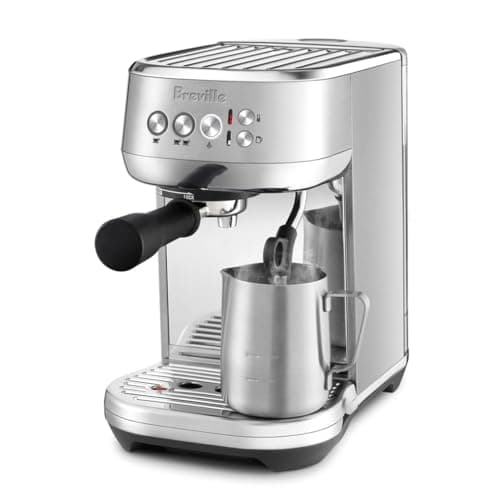 | Households where more than one person makes drinks | Best for milk without practice | |
| 4 | 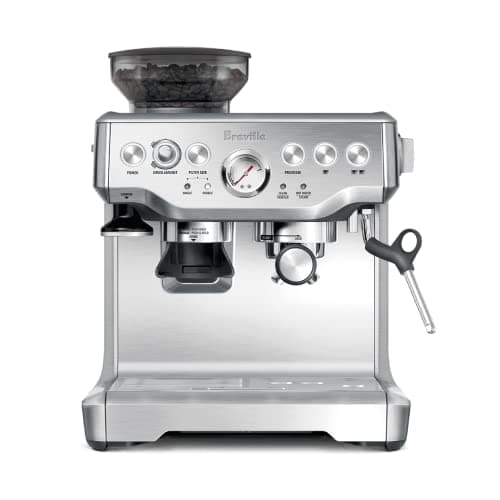 | Buyers who do not want to make a second purchase | Best all-in-one under $500 | |
| 5 | 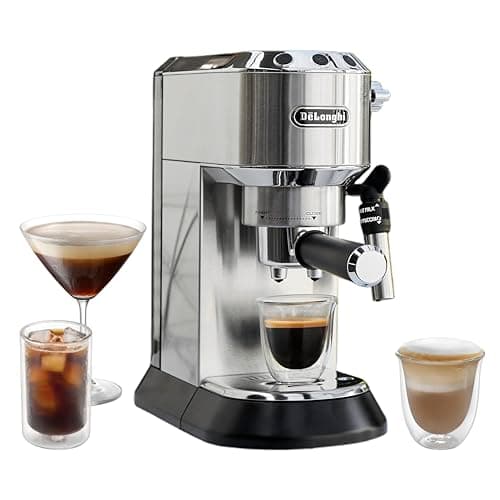 | A kitchen with under six inches of counter to spare | Skip this |
1. Top pick
Breville Bambino
Entry tier · A compact 54 mm espresso machine with a manual steam wand and no grinder.
The most machine per dollar in this bracket, on the condition that you own a grinder.
The standard Bambino is the Bambino Plus with the automatic milk texturing removed and a manual steam wand in its place. Everything that makes the Plus good is still here: a 54 mm portafilter taking an 18 g dose, the ThermoJet heater that reaches temperature in three seconds, low-pressure pre-infusion followed by 9 bar extraction.
At 11.9 x 6.1 x 13.5 inches it is the narrowest serious machine you can buy, which matters more than it sounds in a kitchen where the grinder also needs a home.
The manual wand is an advantage rather than a downgrade if you care about milk. Automatic texturing produces a usable result without practice and a ceiling you cannot raise; a bare wand produces a poor result until you learn and then a better one than the automation can. If latte art is anywhere on your horizon, this is the version to buy.
The catch is unchanged from the Plus: there is no grinder, and the machine is only as good as what feeds it. Budget for both or buy something else.
Specification
- Portafilter
- 54 mm, 18 g dose
- Heating
- ThermoJet, ready in 3 seconds
- Extraction
- Low-pressure pre-infusion, then 9 bar
- Footprint
- 11.9 x 6.1 x 13.5 in
- Grinder
- None - buy separately
What it does well
- Three-second heat-up means it is genuinely usable on a weekday
- The narrowest footprint of any machine here
- Real steam wand you control yourself
Where it gives ground
- No grinder, so the real budget is machine plus grinder
- Manual milk texturing has a learning curve
- Small tank means frequent refills if you pull several drinks
Skip it if
Skip it if the total budget including a grinder does not exist. A Bambino fed by a blade grinder is worse than a cheaper machine fed properly.
2. Best 58 mm option
Gaggia Classic Evo Pro
Mid tier · A 58 mm single-boiler machine with commercial parts and a large modification community.
The cheapest route to a commercial basket size and a dry puck.
If you expect to accumulate accessories, this is the machine in the bracket that makes that possible. A 58 mm portafilter means every basket, tamper, distribution tool and bottomless portafilter made for commercial machines fits.
The 3-way solenoid valve is the other specification worth paying for here. It releases pressure from the group after the shot, which leaves a dry puck you can knock out cleanly rather than a wet slurry. Almost nothing else at this price has one.
The 2.1 L tank is genuinely large for the class, and the two-hole steam wand is a professional design rather than a Panarello sleeve, so it can texture milk properly rather than just aerating it.
What you give up is temperature stability. The boiler is small - 140 ml maximum, around 105 ml operating - and there is no PID, so brew temperature moves within the thermostat's band. Owners manage this by timing the shot against the heating light, and it works, but it is a routine rather than a setting.
Specification
- Portafilter
- 58 mm
- Power
- 1425 W total; 1375 W to the boiler
- Boiler
- 140 ml max capacity, 105 ml operating
- Water tank
- 2.1 L / 72 fl oz
- Steam
- Two-hole professional wand
- Valve
- 3-way solenoid
What it does well
- 58 mm from the start - every basket, tamper and portafilter fits
- The 3-way solenoid gives a dry puck, which cheap machines do not
- Serviceable and heavily documented; parts are everywhere
Where it gives ground
- No PID as shipped; brew temperature drifts with the thermostat
- Long recovery between brewing and steaming
- The modification path is a hobby, not a feature
Skip it if
Skip it if you want to press a button and walk away. This machine is a participant in your morning, not an appliance.
3. Best for milk without practice
Breville Bambino Plus
Entry tier · The Bambino with automatic milk texturing added.
Buy this instead of the standard Bambino only if you want the milk solved for you.
The Plus differs from the standard Bambino in exactly one respect that matters: automatic milk texturing, with a 480 ml stainless jug included. Everything else - the 54 mm basket, the 18 g dose, the three-second ThermoJet heat-up, the 15 bar pump delivering 9 bar - is identical.
That single difference is worth paying for in one specific situation: a household where several people make drinks and only one of them is willing to learn to steam milk. Automatic texturing means everyone gets a drinkable cappuccino, which is a real and underrated benefit.
It is worth nothing at all if you intend to learn. The automation removes the control that milk texturing depends on, and there is no path from automatic to manual on the same machine.
We have written the two up head to head in Bambino versus Bambino Plus, because the choice is unusually clean once you know which of the two situations you are in.
Specification
- Portafilter
- 54 mm stainless, 18 g dose
- Heating
- ThermoJet, ready in 3 seconds
- Pump
- 15 bar Italian pump, 9 bar extraction
- Milk
- Automatic texturing, 16 fl oz / 480 ml jug
- Footprint
- 11.9 x 7.4 x 14.3 in
What it does well
- Automatic milk texturing gets a usable microfoam without practice
- Same three-second heat-up as the standard Bambino
- Fits a narrow counter with a grinder beside it
Where it gives ground
- You are paying for the milk automation, not better espresso
- Still no grinder
- Auto-steam removes the control an enthusiast eventually wants
Skip it if
Skip it if you want to learn to steam milk yourself, or if you drink your espresso straight. In both cases you are paying for a feature you will turn off.
4. Best all-in-one under $500
Breville Barista Express
Mid tier · The all-in-one: espresso machine with a conical burr grinder built into the case.
The one-box answer, with the grinder as the permanent ceiling.
The Barista Express is the default recommendation in this bracket for a reason: it is a genuinely capable 54 mm machine with PID temperature control at 200 F, and it has a conical burr grinder built into the case. There is nothing else to buy.
For a household that wants espresso without a project, this is the right machine, and the enormous owner base means every question you have has already been answered somewhere.
The sixteen grind settings are the ceiling and they are permanent. Sixteen steps spread from espresso to French press cannot land precisely in the narrow band espresso needs, so dialing in becomes choosing the least-wrong setting and adjusting dose around it. That is a workable way to make coffee and it is not a way to keep improving.
It is also 15.9 inches wide, which is worth measuring against your actual counter before ordering.
Specification
- Portafilter
- 54 mm stainless
- Grinder
- Integrated conical burr, 16 settings
- Heating
- Thermocoil, 200 F, PID controlled
- Footprint
- 15.9 x 13.1 x 12.4 in
What it does well
- One box, one price, one plug - nothing else to buy
- PID temperature control at this level is not a given
- Enormous owner base, so parts and answers are easy to find
Where it gives ground
- 16 grind settings is coarse resolution for espresso dialing
- The built-in grinder is the weakest component and cannot be upgraded
- Wide footprint for a single-boiler machine
Skip it if
Skip it if you already own a capable grinder - you would be buying a worse second one - or if you know you will want to keep improving the shot.
5. Skip this
De Longhi Dedica EC685
Budget tier · A six-inch-wide thermoblock machine with a pressurized 51 mm portafilter.
A good small appliance and a poor first espresso machine.
The Dedica dominates the under-$300 half of this bracket in most listings, and the specifications explain both why it sells and why we would not buy it: a 51 mm pressurized portafilter, a 1 L tank, a 15 bar pump and a 1350 W thermoblock in a body 5.9 inches wide.
That width is a genuine achievement and the reason to buy one. If your counter space is measured in inches rather than feet, this may be the only espresso machine that physically fits, and a compromised espresso machine you own beats a better one you cannot house.
For everyone else, the pressurized basket is disqualifying. It generates back-pressure through a restricted wall rather than through the coffee, so it produces crema regardless of whether your grind is right. That is precisely the feedback you need in order to get better, and this machine removes it.
The 51 mm size then closes the usual escape route. Where a 54 mm Breville owner can fit a bottomless portafilter and a proper basket and start learning, the 51 mm accessory market barely exists.
Specification
- Portafilter
- 51 mm, pressurized
- Water tank
- 35 oz / 1 L
- Pump
- 15 bar
- Power
- 1350 W thermoblock
- Footprint
- 5.9 in W x 13 in D x 13 in H
What it does well
- Genuinely tiny - fits where nothing else will
- Forgiving with supermarket beans thanks to the pressurized basket
- Fast to heat
Where it gives ground
- The pressurized basket manufactures crema; it hides grind quality rather than rewarding it
- 51 mm is an accessory dead end compared with 54 mm or 58 mm
- Panarello-style frother, not a bare steam wand
Skip it if
Skip it unless the footprint is a hard constraint. If you want to learn espresso rather than dispense it, spend the money elsewhere.
How we picked
Every machine below was selected from published manufacturer specifications - portafilter size, heating system, boiler architecture, tank capacity, stated pre-infusion behavior - and from what large numbers of owners consistently report. We have not tested any of these machines and we do not claim to have. What we can do is read the spec sheets properly, do the arithmetic on what each one will cost you once the grinder is included, and tell you who each machine is genuinely wrong for. Our full method is here.
The arithmetic that decides this bracket
An all-in-one machine at this price contains a grinder with coarse adjustment - sixteen steps on the Barista Express. A grinder-less machine at this price leaves you to buy one. The relevant comparison is therefore not machine against machine; it is all-in-one against machine-plus-grinder at the same total. Once you frame it that way, the grinder-less route usually wins on capability and always wins on upgrade path, because you can replace either half without replacing both.
The exception is genuine and worth naming: if the total budget really is fixed at the machine price and there is no second purchase coming, the all-in-one is the better buy. A capable machine fed by an inadequate grinder makes worse coffee than a modest all-in-one used properly.
What you cannot get in this bracket
- Simultaneous brewing and steaming. Every machine here is single-boiler or single-thermoblock. Making two milk drinks means waiting between them.
- Deep temperature control. The Barista Express has PID; the Gaggia does not. Neither offers the kind of programmable temperature control that appears a tier up.
- A grinder that will not become the bottleneck. Whether it is built in or bought separately, the grinder is where this bracket runs out of road first.
The upgrade that costs almost nothing
Whichever machine you buy here, the two purchases that most improve it are a scale and a WDT tool, and together they cost a small fraction of the machine. Espresso is a ratio measured over time, and puck preparation decides whether the water passes through the coffee evenly. Both are upstream of anything the machine does.