The grinder is the component that decides whether coffee is good. The machine controls temperature and pressure; the grinder controls the particle size those act on. Get this purchase right and a modest brewer makes excellent coffee. Get it wrong and no machine compensates.
Quick picks
The answer first. Tap any row to jump to the full reasoning for that pick.
Prices shown are checked daily against the retailer, as of October 23, 2026. We never write a price into the text of a page.
| # | Product | Best for | Award | Price |
|---|---|---|---|---|
| 1 | 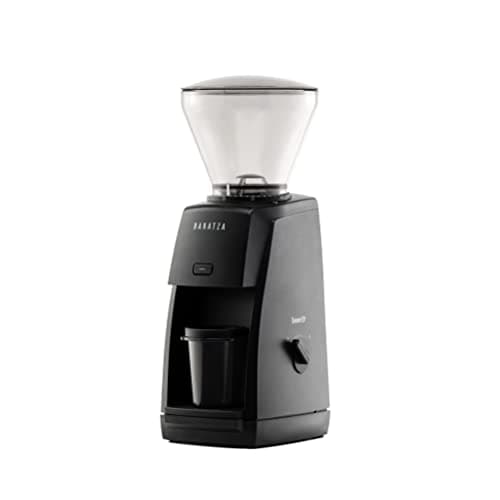 | Most home setups, especially espresso plus something else | Top pick | |
| 2 | 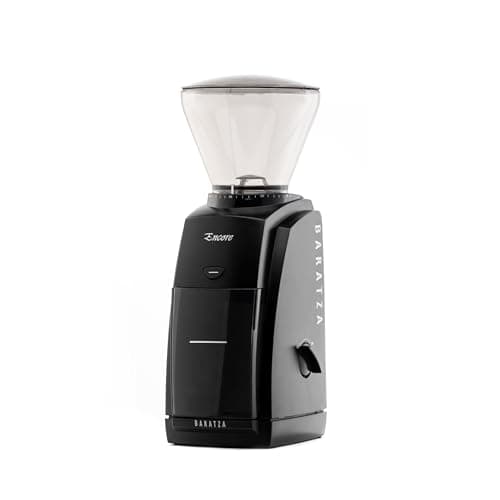 | Anyone who does not make espresso | Best for filter only | |
| 3 | 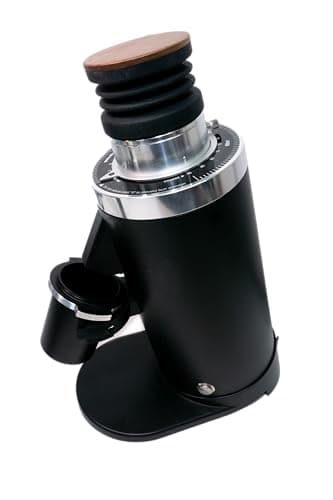 | Enthusiasts who want clarity and single dosing | Best flat burrs | |
| 4 | 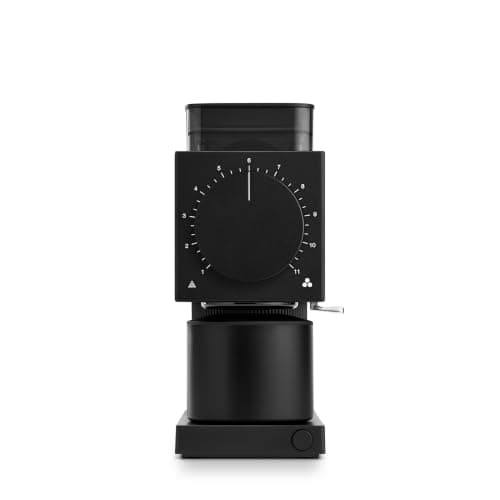 | Serious filter brewers who will never make espresso | Best filter-only flat burr | |
| 5 | 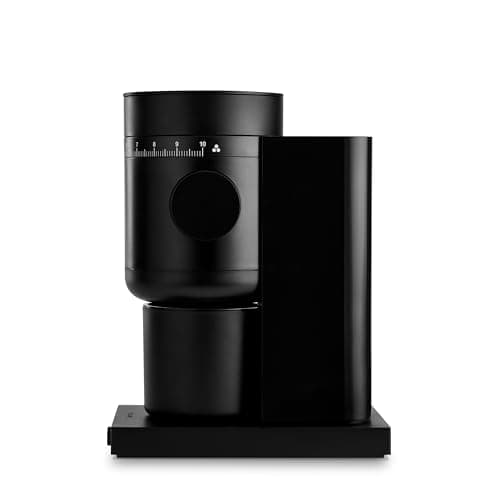 | One grinder, several brew methods, modest budget | Best all-rounder under the flat-burr tier | |
| 6 | 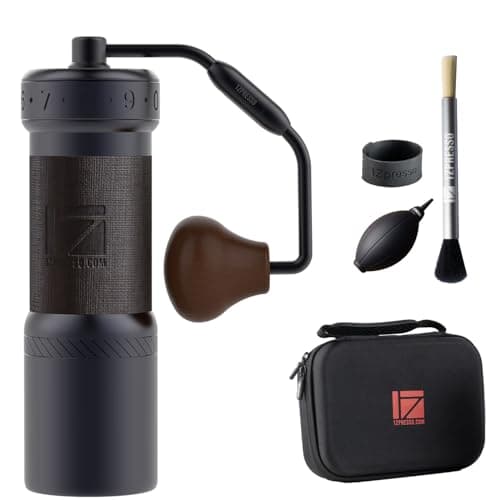 | No counter space, no outlet, or travel | Best hand grinder | |
| 7 | 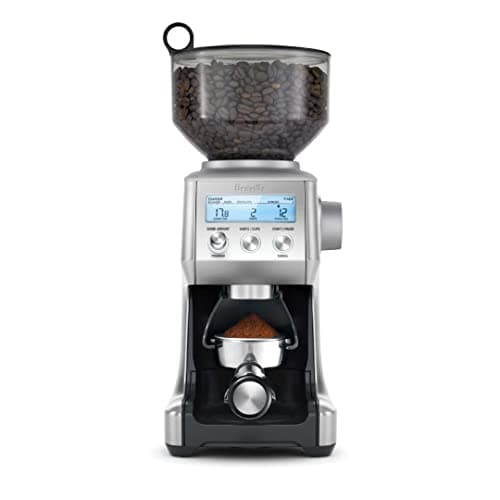 | A high-volume household brewing drip | Skip this for espresso |
1. Top pick
Baratza Encore ESP
Entry tier · The Encore re-geared for espresso: the same 40 mm burrs on a dual-resolution collar.
The one grinder here that genuinely handles both espresso and filter properly.
The Encore ESP takes the most-recommended entry burr grinder and solves the single thing it could not do. Its 40 mm M2 steel conical burrs, made by Etzinger, sit on a dual-resolution collar: steps 1 to 20 move the burrs roughly 20 microns per click, and steps 21 to 40 move roughly 90 microns.
That split is the design decision that matters. Espresso lives in a narrow band, so the fine end gets high resolution; filter needs range, so the coarse end gets big steps. A conventional 40-step grinder spreads a single step size across everything and lands precisely nowhere.
Burr speed is held at 550 rpm, which limits heat and static, and the burr housing was redesigned to make removal for cleaning - or for shimming, with shims included - genuinely easy rather than a project.
It remains a stepped grinder, so you cannot land between clicks, and retention is ordinary for the class rather than low. Neither is a problem at this level, and for a household that pulls espresso in the morning and brews a V60 at the weekend, this is the most useful grinder on the page.
Specification
- Burrs
- 40 mm M2 steel conical (Etzinger)
- Settings
- 40 stepped, dual resolution
- Espresso range
- Steps 1-20, 20 microns per click
- Filter range
- Steps 21-40, 90 microns per click
- Burr speed
- 550 rpm
What it does well
- 20 microns per click in the espresso range is real dialing resolution
- Redesigned burr housing makes cleaning and shimming easy
- Shims included in the box
Where it gives ground
- Still a stepped grinder - you cannot land between clicks
- Retention is normal-for-the-class, not low
- Same plastic body and noise as the Encore
Skip it if
Skip it if you only ever brew filter. The standard Encore does that job for less, and you would be paying for espresso resolution you never use.
2. Best for filter only
Baratza Encore
Entry tier · The standard entry burr grinder for filter brewing.
The reference answer for pour-over, drip and French press - and only those.
The standard Encore is the grinder most often recommended to someone starting with filter coffee, and the recommendation is correct. Forty millimeter conical burrs made in Europe, 40 stepped settings, and a published grind range of 250 to 1200 microns.
That range is the whole story. 1200 microns at the coarse end covers French press and cold brew comfortably; 250 microns at the fine end is filter-fine and not espresso-fine. It is not that the Encore does espresso badly - it does not reach it.
Burr speed is limited to roughly 450 to 550 rpm, which keeps heat transfer and static generation down. That matters more on a grinder used daily than the spec sheet suggests.
The other reason it is recommended so consistently is serviceability: Baratza sells the parts individually and has done for years, so an Encore is a grinder you repair rather than replace.
Specification
- Burrs
- 40 mm conical, made in Europe
- Settings
- 40 stepped
- Grind range
- 250-1200 microns
- Burr speed
- Roughly 450-550 rpm to limit heat and static
What it does well
- The reference answer for pour-over, drip and French press
- Fully serviceable, with parts sold individually for years
- Low burr speed keeps static and heat down
Where it gives ground
- Bottom of its range is too coarse for espresso - that is the ESP model job
- Stepped settings only
- Plastic body and a loud motor
Skip it if
Skip it if espresso is anywhere in your plans. Buy the ESP version instead - same burrs, espresso-capable geometry.
3. Best flat burrs
DF64 Gen 2
Upper-mid tier · The 64 mm flat-burr single-dose grinder that made the format mainstream at home.
64 mm flats, stepless adjustment and near-zero retention at a price that used to buy none of them.
The DF64 is the grinder that made 64 mm flat burrs a normal home purchase. Its published specification is unusually strong for the money: 64 mm stainless flat burrs, stepless adjustment, retention under 0.1 g, a 250 W motor at 1400 rpm on 110/120 V, and a 50 g hopper.
Flat burrs produce a narrower particle-size distribution than conical burrs, which reads in the cup as clarity and separation rather than body. If you brew light-roast filter or want to taste origin character in espresso, that is the direction you want.
Retention under 0.1 g is what makes single dosing genuinely work: the dose you weigh in is the dose that comes out, with no yesterday's coffee mixed into it. Ionizer probes in the exit chute keep static manageable.
The burrs are swappable, which is the underrated part - a DF64 can be re-tuned with a different burr set rather than replaced.
Specification
- Burrs
- 64 mm flat stainless; aftermarket sets available
- Adjustment
- Stepless
- Retention
- Under 0.1 g
- Motor
- 250 W, 1400 rpm at 110/120 V
- Hopper
- 50 g
- Size
- 13 cm W x 22.5 cm D x 30 cm H, 6.8 kg
What it does well
- 64 mm flats are the burr size the espresso world benchmarks against
- Burrs are swappable, so the grinder can be re-tuned rather than replaced
- Ionizer probes in the chute keep static manageable
Where it gives ground
- Heavy and tall for a home counter
- Stepless adjustment with no detents demands note-keeping
- Version numbering across sellers is genuinely confusing
Skip it if
Skip it if you want convenience. Stepless adjustment with no detents means keeping notes, and at 6.8 kg and 30 cm tall it is a serious object on a counter.
4. Best filter-only flat burr
Fellow Ode Brew Grinder Gen 2
Upper-mid tier · A 64 mm flat-burr grinder built only for filter coffee - it does not do espresso.
64 mm flats aimed entirely at filter clarity - and it cannot do espresso, by design.
The Ode Gen 2 is unusually honest about its scope, and Fellow publishes the limit directly: the grind range bottoms out around 250 to 300 microns, which is filter-fine and not espresso-fine.
What you get for that constraint is 64 mm uncoated stainless flat burrs with a two-stage grinding geometry, 31 grind settings, and a PID-held motor at a steady 1400 rpm.
The single-dose bin holds up to 100 g, and it comes with a magnetically aligned catch cup and a built-in knocker to clear retention - a workflow designed around switching between coffees rather than working through one bag.
It is also one of the quietest electric grinders sold, which is a genuine daily benefit in a household where someone is still asleep.
Specification
- Burrs
- 64 mm uncoated stainless flat
- Settings
- 31
- Load bin
- Single dose, up to 100 g
- Motor
- PID-held 1400 rpm
- Size
- 9.4 x 4.1 x 9.8 in
- Espresso
- No - bottoms out around 250-300 microns
What it does well
- 64 mm flats aimed squarely at clarity in filter brewing
- Single-dose bin, magnetic catch cup and a knocker to clear retention
- One of the quietest electric grinders you can buy
Where it gives ground
- Cannot grind fine enough for espresso, by design
- 31 settings is modest if you brew many methods
- Buying it and then wanting espresso means buying a second grinder
Skip it if
Skip it if there is any chance you will want espresso. It physically cannot grind fine enough, and discovering that after purchase means buying a second grinder.
5. Best all-rounder under the flat-burr tier
Fellow Opus 2
Mid tier · The Opus rebuilt around 48 mm burrs and a stepless dial, with espresso in range.
Reaches espresso-fine, which most all-purpose grinders at this level do not.
The Opus is the grinder to look at if you want one machine covering cold brew through espresso and you are not ready for flat burrs. Fellow publishes its range as espresso through cold brew, and quotes about nine seconds for an espresso dose.
The burrs are 48 mm stainless conical - 8 mm larger than the first-generation Opus - and an integrated ionizer keeps static down rather than leaving grounds stuck to the cup.
Adjustment is a stepless side dial with printed markings, so you can land between the marks rather than on the nearest click.
The load bin takes 100 g single-dose, with a 100 g catch cup for brewed coffee and a 30 g espresso dosing cup, and the grinder stops by itself when the bin is empty.
Specification
- Burrs
- 48 mm stainless steel conical
- Adjustment
- Stepless side dial, marked, about 48 settings
- Grind range
- Espresso through cold brew
- Motor
- 300 W; about 9 seconds for an espresso shot
- Capacity
- 100 g single-dose load bin; 100 g catch cup, 30 g espresso cup
- Retention
- Near-zero, with an internal impeller
- Size
- 206 x 130 x 267 mm (8.1 x 5.1 x 10.5 in), 2.3 kg
- Warranty
- 2 years, extendable
What it does well
- 48 mm burrs and a stepless dial at a price where stepped 40 mm is the norm
- Automatic shutoff and near-zero retention make single dosing genuinely clean
- Ships with an espresso dosing cup that fits 54 mm and 58 mm portafilters
Where it gives ground
- Conical burrs, so it trades some clarity for body against a flat-burr grinder
- Stepless with markings still means keeping your own notes for each brew method
- No weight-based dosing - a scale is still part of the routine
Skip it if
Skip it if espresso is your main brew method. It reaches espresso range but its resolution there is workable rather than precise.
6. Best hand grinder
1Zpresso K-Ultra
Manual tier · A 48 mm hand grinder with external adjustment, built as an all-rounder.
External adjustment and 48 mm burrs make this the practical manual all-rounder.
If a hand grinder is going to be your main grinder rather than a travel accessory, this is the one that makes that practical. Forty-eight millimeter heptagonal conical stainless burrs - seven cutting edges rather than the usual six - move through the beans faster than smaller burr sets.
The external adjustment ring is the feature that makes it liveable: 100 clicks per rotation at 20 microns per click, changed without opening anything or removing the catch cup.
It weighs 685 g with a magnetic catch cup holding 35 to 40 g, which is a full espresso or filter dose.
Twenty microns per click is coarser than the JX-Pro's espresso resolution, so if espresso is the whole point, that model is the better buy. As an all-rounder this is the more comfortable grinder to live with.
Specification
- Burrs
- 48 mm heptagonal conical stainless (K burr)
- Adjustment
- External ring, 100 clicks per rotation
- Resolution
- 20 microns per click
- Weight
- 685 g
- Catch cup
- Magnetic, 35-40 g
What it does well
- External adjustment - you change grind without opening anything
- Seven cutting edges rather than six speeds the grind up noticeably
- Genuinely good across espresso, filter and French press
Where it gives ground
- 20 microns per click is coarser than the JX-Pro espresso resolution
- Heavier than a travel grinder should be
- Premium price for a hand grinder
Skip it if
Skip it if you make several espressos every morning. Grinding a fine dose by hand daily is a real commitment that many people abandon.
7. Skip this for espresso
Breville Smart Grinder Pro
Mid tier · A hopper-fed conical grinder that doses straight into a portafilter cradle.
Sixty settings sounds like resolution and is spread across too wide a range to be it.
This is a genuinely useful grinder for the right job and a common mis-purchase for espresso, which is why it is here.
The specification looks strong: 60 grind settings, a stainless conical burr set with an adjustable upper burr, digital dose timing in 0.2-second increments, a 450 g hopper and portafilter cradles for both 50-54 mm and 58 mm.
The problem is what those 60 settings have to cover. Spread from espresso through French press, the steps in the espresso range are still large relative to what espresso needs, so the fine end is usable rather than precise.
The 450 g hopper is the second issue for a home user: beans sitting in a hopper are staling, and unless your household genuinely gets through 450 g quickly you are grinding old coffee. Timed dosing compounds it, because the dose drifts as beans age.
Specification
- Burrs
- Stainless steel conical, adjustable upper burr
- Settings
- 60
- Dosing
- Digital timer in 0.2-second increments
- Hopper
- 450 g
- Cradles
- 50-54 mm and 58 mm portafilter
What it does well
- Hands-free grinding into the portafilter
- 60 settings covers espresso through French press in one machine
- Big hopper suits a household that drinks a lot of coffee
Where it gives ground
- Large hopper means stale beans unless you actually get through them
- Timed dosing drifts as beans age
- Espresso end is usable rather than precise
Skip it if
Skip it if espresso is the goal. For drip in volume with a portafilter cradle as a bonus it is fine; as an espresso grinder it is the wrong tool.
How we picked
Every grinder here was chosen from published specifications - burr size and material, adjustment mechanism and resolution, motor speed, retention - and from what large numbers of owners consistently report. We have not tested them and we do not claim to. Our method is here.
The three specifications that matter
Scroll the table sideways to see every column.
Why step count is a misleading number
A grinder with 60 settings sounds twice as precise as one with 30, and often is not. What matters is how far the burrs move per step and over what range. The Encore ESP publishes 20 microns per click across its espresso range; a 60-step grinder spreading espresso through French press across those steps may move far more than that per click at the fine end. Always look for the micron figure rather than the step count.
Matching the grinder to what you brew
- Filter only: the standard Encore, or the Ode Gen 2 if you want flat-burr clarity and will never make espresso.
- Espresso only: see best espresso grinders - this list is broader than you need.
- Both: the Encore ESP is the sensible answer, or a DF64 if the budget stretches.
- No power or no space: a hand grinder.
The point of diminishing returns, named
Moving from a blade grinder to 40 mm burrs is transformative. Moving from 40 mm conical to 64 mm flat is real and much smaller, and audible mainly on light roasts brewed as filter. Beyond that, the returns shrink fast and the hobby takes over. We will say so when a page has crossed that line - see conical versus flat burrs for where it sits.