The short answer
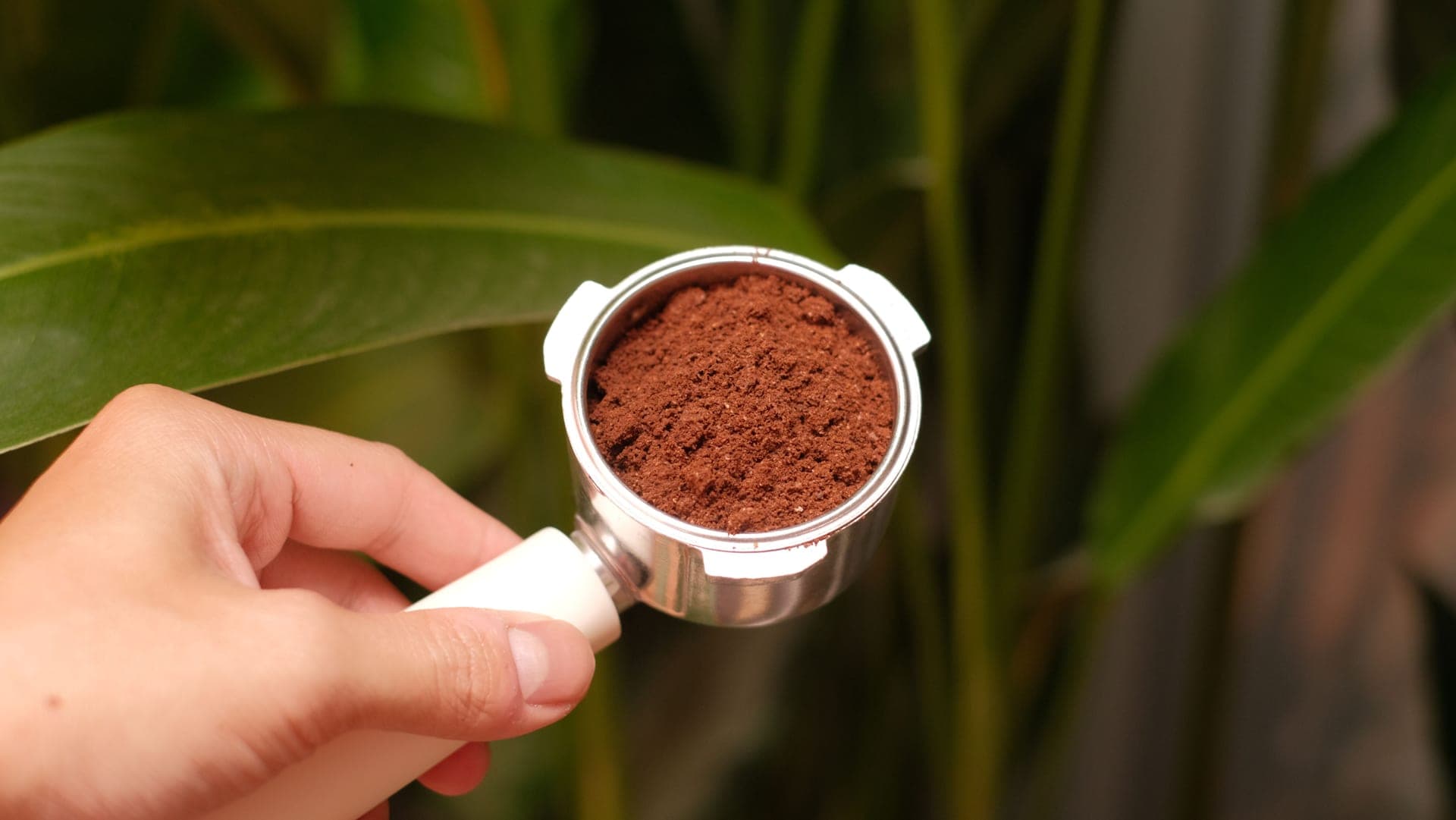
A blade grinder chops coffee by spinning a blade through it, producing fine dust and large chunks in the same batch. A burr grinder cuts coffee to a set gap between two burrs, producing particles of a consistent size. Consistent particles extract evenly; a mixture of dust and chunks extracts unevenly, which tastes bitter and weak at the same time.
What each one physically does
A blade grinder is a small blender. A blade spins at high speed and smashes whatever it hits. A particle that happens to be near the blade repeatedly becomes dust; one that sits at the edge stays a chunk. There is no mechanism controlling size - only how long you hold the button, which grinds everything for longer without making the sizes any more alike.
A burr grinder passes coffee through a gap between two abrasive surfaces. A particle exits when it is small enough to fit through the gap, and not before. That is a size filter, and it is why burrs produce a consistent grind.
Why consistency decides the cup
Extraction is a rate. Small particles have more surface area relative to volume, so they give up their soluble compounds quickly. Large particles do so slowly.
Brew a batch containing both and, at the moment you stop, the dust is over-extracted and the chunks are under-extracted. You cannot fix this by brewing longer or shorter, because whatever time suits one size is wrong for the other.
The result tastes bitter and weak simultaneously - bitterness from the over-extracted dust, thinness from the barely-touched chunks. It is the flavor signature of a blade grinder and it is not fixable downstream.
Quick picks
The answer first. Tap any row to jump to the full reasoning for that pick.
Prices shown are checked daily against the retailer, as of October 23, 2026. We never write a price into the text of a page.
| # | Product | Best for | Award | Price |
|---|---|---|---|---|
| 1 | 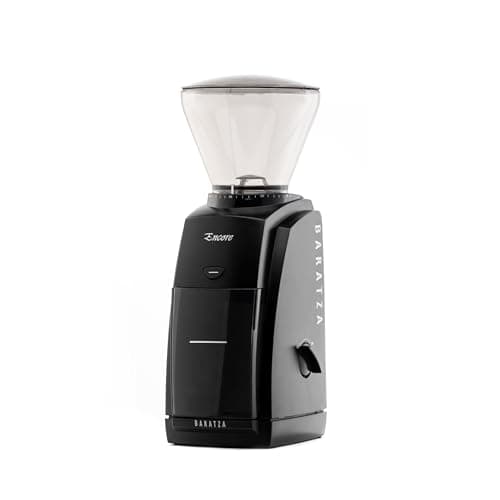 | Filter brewing - pour-over, drip, French press | The standard answer | |
| 2 | 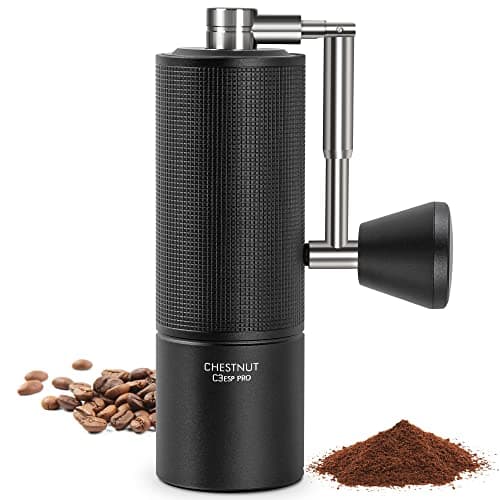 | Replacing a blade grinder on a small budget | The cheapest genuine upgrade | |
| 3 | 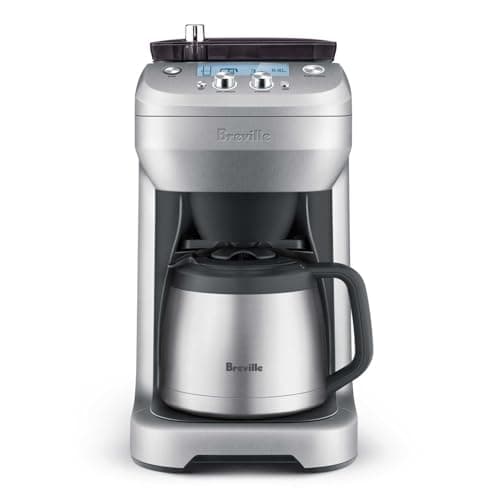 | One-machine convenience without a blade grinder | If you want it built in |
1. The standard answer
Baratza Encore
Entry tier · The standard entry burr grinder for filter brewing.
40 mm conical burrs, a published grind range, and parts sold for years.
The Encore is the grinder most commonly recommended to someone replacing a blade grinder, and the recommendation holds up.
It publishes 40 mm conical burrs made in Europe, 40 stepped settings, a grind range of 250 to 1200 microns, and burr speed limited to roughly 450 to 550 rpm to keep heat and static down.
That published range is the thing a blade grinder can never offer, because a blade has no setting at all - only how long you hold the button.
It is also serviceable, with parts sold individually for years, so it is repaired rather than replaced.
It does not reach espresso fineness - its range stops at 250 microns - which is the Encore ESP's job.
Specification
- Burrs
- 40 mm conical, made in Europe
- Settings
- 40 stepped
- Grind range
- 250-1200 microns
- Burr speed
- Roughly 450-550 rpm to limit heat and static
What it does well
- The reference answer for pour-over, drip and French press
- Fully serviceable, with parts sold individually for years
- Low burr speed keeps static and heat down
Where it gives ground
- Bottom of its range is too coarse for espresso - that is the ESP model job
- Stepped settings only
- Plastic body and a loud motor
Skip it if
Skip it if you make espresso. Buy the ESP version instead, which is the same burr platform re-geared.
2. The cheapest genuine upgrade
Timemore Chestnut C3
Manual tier · The budget hand grinder that made stainless conical burrs cheap.
A real burr grinder for around what a decent blade grinder costs.
If cost is the reason you are still using a blade grinder, this is the entry point that removes the excuse.
The Chestnut C3 publishes 38 mm S2C stainless conical burrs at 55-58 HRC, roughly 36 settings at about 0.0233 mm per click, a 25 g capacity, and an aluminum body with a double-bearing central axis and no plastic internal parts.
For filter brewing - pour-over, drip, French press, AeroPress - the grind quality is genuinely good rather than merely better than a blade.
The cost is effort: it is a hand grinder, and 25 g at a time.
Espresso is possible and slow. Thirty-eight millimeter burrs grinding a fine 18 g dose is real work.
Specification
- Burrs
- 38 mm S2C stainless conical, 55-58 HRC
- Settings
- Roughly 36, about 0.0233 mm per click
- Capacity
- 25 g
- Weight
- About 530 g
- Build
- Aluminum body, double-bearing axis, no plastic internals
What it does well
- Filter-grade grind quality at a genuinely low price
- Metal internals and double bearings, not a toy
- Small and light enough to travel with
Where it gives ground
- 38 mm burrs make an espresso dose slow work
- Espresso resolution is marginal
- 25 g capacity limits you to one brew at a time
Skip it if
Skip it as a daily espresso grinder. The resolution is there; the burr size makes it hard going.
3. If you want it built in
Breville Grind Control
Mid tier · A drip brewer with a burr grinder built into the case.
A burr grinder inside a drip machine, which is the specification to check for.
Grind-and-brew machines are where blade grinders most often hide, so it is worth naming one that does not.
The Grind Control publishes a built-in stainless steel burr grinder with 8 grind settings, 8 strength settings, a brew range of 5 to 60 oz into a 60 oz insulated stainless carafe, and a half-pound removable hopper with a locking system.
Eight grind settings is coarse by grinder standards and much less limiting for drip than it would be for espresso, where the useful window is narrow.
Check this specification before buying any grind-and-brew machine. Several popular models at gift prices use blades, and the listing does not always make it obvious.
Specification
- Grinder
- Built-in stainless steel burr, 8 grind settings
- Strength
- 8 settings
- Brew range
- 5-60 oz
- Carafe
- 60 oz insulated stainless
- Hopper
- Half a pound, removable with a locking system
What it does well
- Whole beans to brewed coffee with one button
- Brews a single cup or a full carafe from the same hopper
- Removable hopper means you can swap beans without emptying it
Where it gives ground
- Grinding and brewing in one box means cleaning two machines in one
- 8 grind settings is coarse control
- A separate grinder and brewer beats it on both counts for a similar total
Skip it if
Skip it if you already own a burr grinder. A separate grinder and brewer beats it on both counts.
The differences, listed
Scroll the table sideways to see every column.
Where blade grinders are genuinely fine
For spices. A blade grinder is a perfectly good spice grinder, and if you own one there is no reason to throw it away - reassign it.
For coffee there is one narrow case: a French press where you are content with a heavy, muddy cup and are not chasing clarity. Even then, a burr grinder is better.
Where blade grinders hide
The place people buy a blade grinder without realizing is inside a grind-and-brew machine. Several popular models at gift prices use a blade grinder rather than a burr, and the product listing does not always make it prominent.
Look for the word burr explicitly, and be suspicious when a listing describes the grinder only as powerful. Our grind-and-brew page covers which is which.
How much you need to spend
Less than most people assume. A hand grinder with real burrs costs around what a decent blade grinder costs, and it will out-grind electric burr grinders costing considerably more - because it spends its whole budget on burrs and an adjustment mechanism rather than on a motor and housing.
The cost is effort: a minute of cranking per dose. For filter brewing that is a small price. For daily espresso it is a real commitment, and an electric burr grinder is the better answer.