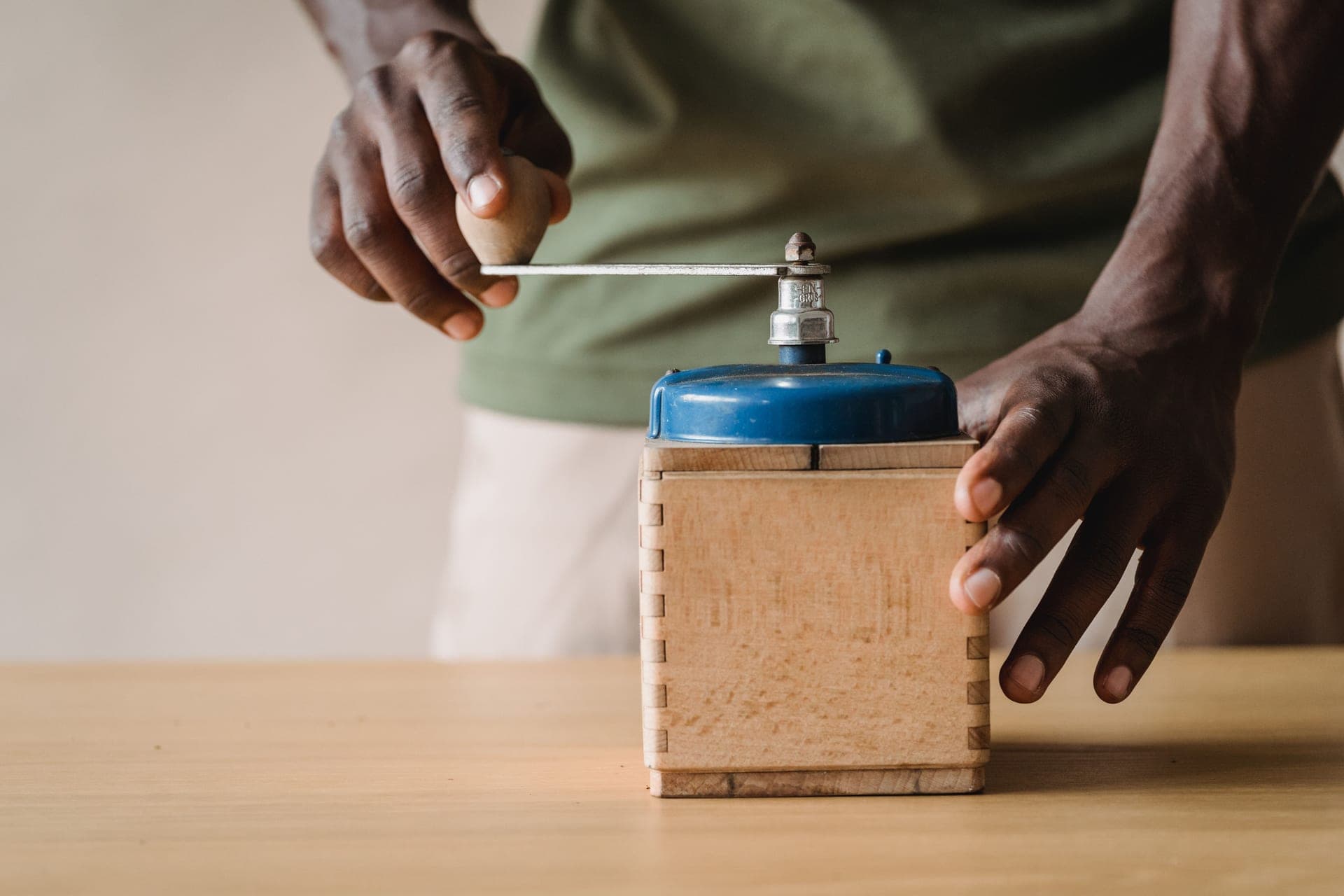
The short answer
Buy a hand grinder if you brew one or two cups at a time, want the most grind quality for your money, or travel. Buy an electric grinder if you grind for several people, want speed, or pull espresso every morning without the effort.
Side by side
Scroll the table sideways to see every column.
Quick picks
The answer first. Tap any row to jump to the full reasoning for that pick.
Prices shown are checked daily against the retailer, as of October 25, 2026. We never write a price into the text of a page.
| # | Product | Best for | Award | Price |
|---|---|---|---|---|
| 1 | 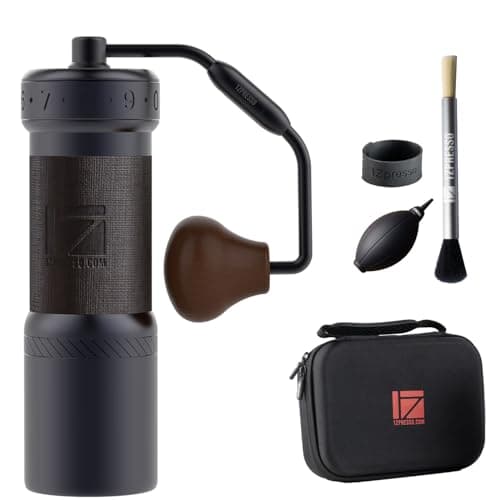 | One or two cups, espresso and filter | Hand: the all-rounder | |
| 2 | 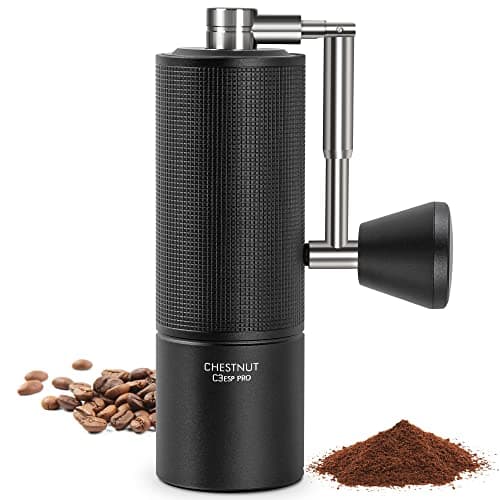 | A first grinder, or travel | Hand: compact | |
| 3 | 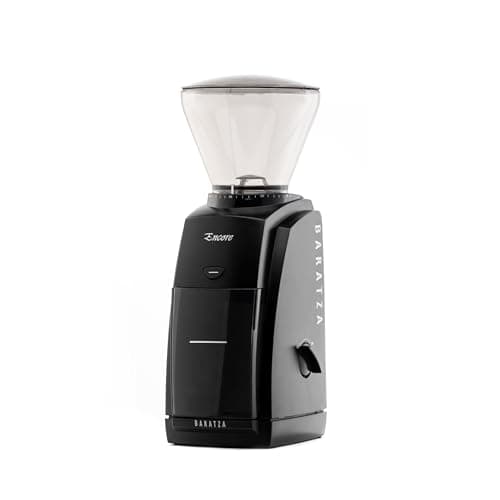 | A household's daily filter coffee | Electric: filter | |
| 4 | 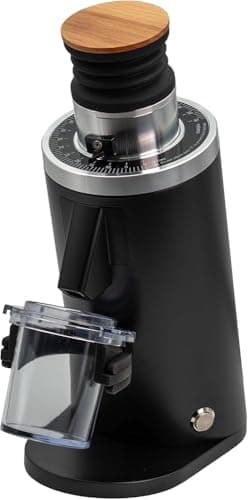 | Espresso at the press of a button | Electric: espresso |
1. Hand: the all-rounder
1Zpresso K-Ultra
Manual tier · A 48 mm hand grinder with external adjustment, built as an all-rounder.
48 mm burrs and external adjustment at 20 microns per click.
The K-Ultra uses 48 mm heptagonal stainless conical burrs with external adjustment at 20 microns per click.
It is genuinely good across espresso, filter and French press.
External adjustment means you change the grind without opening anything.
It weighs 685 g, which is heavy for travel.
Specification
- Burrs
- 48 mm heptagonal conical stainless (K burr)
- Adjustment
- External ring, 100 clicks per rotation
- Resolution
- 20 microns per click
- Weight
- 685 g
- Catch cup
- Magnetic, 35-40 g
What it does well
- External adjustment - you change grind without opening anything
- Seven cutting edges rather than six speeds the grind up noticeably
- Genuinely good across espresso, filter and French press
Where it gives ground
- 20 microns per click is coarser than the JX-Pro espresso resolution
- Heavier than a travel grinder should be
- Premium price for a hand grinder
Skip it if
Skip it if you grind for a household every morning. An electric grinder is faster.
2. Hand: compact
Timemore Chestnut C3
Manual tier · The budget hand grinder that made stainless conical burrs cheap.
38 mm steel burrs in a light, travel-friendly body.
The Chestnut C3 uses 38 mm S2C steel burrs in an aluminum alloy body, with roughly 36 settings at about 23 microns per click.
It is light and compact, which makes it an easy travel grinder.
No power, no static, nothing to plug in.
Its smaller burrs have less cutting surface than 48 mm grinders.
Specification
- Burrs
- 38 mm S2C stainless conical, 55-58 HRC
- Settings
- Roughly 36, about 0.0233 mm per click
- Capacity
- 25 g
- Weight
- About 530 g
- Build
- Aluminum body, double-bearing axis, no plastic internals
What it does well
- Filter-grade grind quality at a genuinely low price
- Metal internals and double bearings, not a toy
- Small and light enough to travel with
Where it gives ground
- 38 mm burrs make an espresso dose slow work
- Espresso resolution is marginal
- 25 g capacity limits you to one brew at a time
Skip it if
Skip it if you brew several cups at once. Grinding takes longer.
3. Electric: filter
Baratza Encore
Entry tier · The standard entry burr grinder for filter brewing.
The reference entry burr grinder for filter brewing.
The Encore uses 40 mm conical burrs made in Europe, with 40 stepped settings from 250 to 1200 microns.
It is the reference answer for pour-over, drip and French press.
It is fully serviceable, with parts sold individually for years.
The bottom of its range is too coarse for espresso.
Specification
- Burrs
- 40 mm conical, made in Europe
- Settings
- 40 stepped
- Grind range
- 250-1200 microns
- Burr speed
- Roughly 450-550 rpm to limit heat and static
What it does well
- The reference answer for pour-over, drip and French press
- Fully serviceable, with parts sold individually for years
- Low burr speed keeps static and heat down
Where it gives ground
- Bottom of its range is too coarse for espresso - that is the ESP model job
- Stepped settings only
- Plastic body and a loud motor
Skip it if
Skip it if espresso is your drink. It does not reach espresso fineness.
4. Electric: espresso
DF54
Upper-mid tier · A single-dose grinder with 54 mm flat burrs and stepless adjustment.
54 mm flat burrs, stepless adjustment and near-zero retention.
The DF54 has 54 mm flat burrs, stepless adjustment and retention under 0.1 g, on a 150 W motor at 1400 rpm.
It is single-dose, with a 25 g hopper and an ionizer in the exit chute.
Its footprint is small for a flat-burr grinder.
Stepless adjustment with no reference marks is fiddly until you make your own.
Specification
- Burrs
- 54 mm flat
- Adjustment
- Stepless
- Retention
- Under 0.1 g
- Motor
- 150 W, 1400 rpm
- Hopper
- 25 g single-dose
- Anti-static
- Ionizer in the exit chute
What it does well
- Flat burrs and stepless adjustment at a price that used to buy neither
- Near-zero retention means the dose you weigh is the dose you get
- Small footprint for a flat-burr grinder
Where it gives ground
- Stepless with no reference marks is fiddly until you make your own
- Single-dose only - no hopper workflow for a busy household
- Bellows and a dosing cup are part of the routine, not optional extras
Skip it if
Skip it if you want a hopper workflow. It is single-dose only.
Who each suits
- Hand if you brew for one, brew pour-over or AeroPress, or want a grinder for travel.
- Electric if you grind for a household, brew a full pot, or pull espresso daily.
- Both is common: an electric at home and a hand grinder for travel.