The short answer
The right espresso bean depends on what your equipment can resolve. A forgiving Robusta-containing blend suits a new setup or a coarse-stepped grinder. A specialty blend with a recent roast date suits a capable grinder and an unpressurized basket. Buying above your equipment's level wastes money.
Why this list is short
Coffee is seasonal, regional and enormously personal. A site that ranked fifty bags definitively would be pretending to a certainty that nobody in coffee actually has - crops change, roasters change their blends, and what tastes best to you is not a fact about the bean.
What we can do usefully is name a small number of bags that are consistently available, consistently competent, and matched to different equipment levels. That is the list below.
Quick picks
The answer first. Tap any row to jump to the full reasoning for that pick.
Prices shown are checked daily against the retailer, as of October 23, 2026. We never write a price into the text of a page.
| # | Product | Best for | Award | Price |
|---|---|---|---|---|
| 1 | 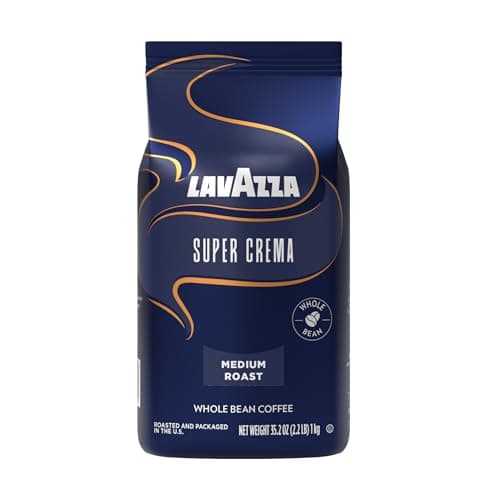 | Learning on a new machine | Best for a new setup | |
| 2 | 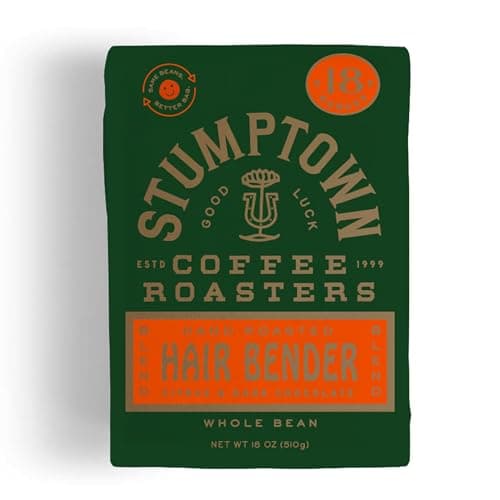 | A capable grinder and an unpressurized basket | Best once you can taste the difference | |
| 3 | 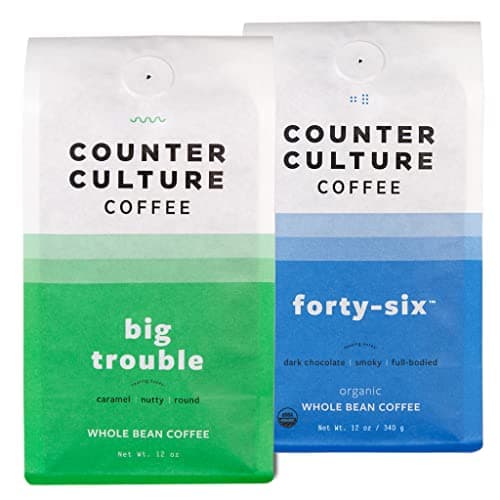 | Lattes, cappuccinos and flat whites | Best for milk drinks | |
| 4 | 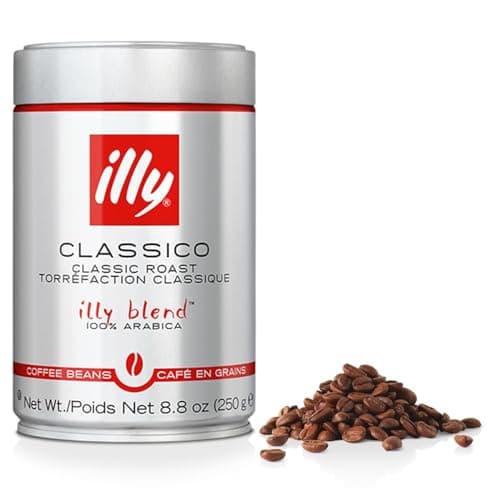 | Anyone who wants zero variation | Best for consistency | |
| 5 | 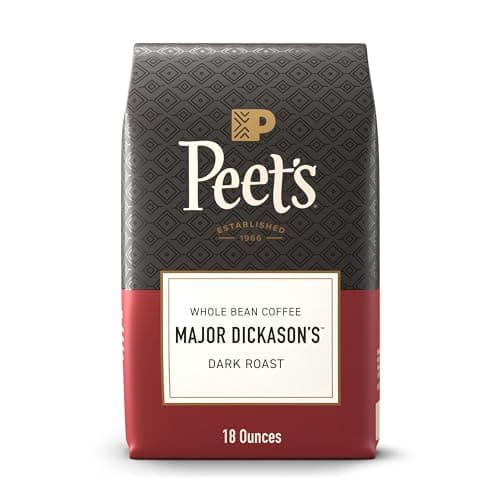 | Drip and French press | Skip this on an espresso grinder |
1. Best for a new setup
Lavazza Super Crema
Everyday tier · A medium-roast Arabica and Robusta espresso blend sold in 2.2 lb bags.
Forgiving, crema-heavy and cheap enough to waste while you dial in.
The first bag on a new machine should be one you do not mind wasting, because dialing in costs coffee.
Super Crema is a 60/40 Arabica and Robusta blend from Brazil, Central America and Indonesia, medium roast, with published notes of hazelnut and brown sugar, sold in 2.2 lb bags.
The Robusta produces thick, persistent crema, which is genuinely encouraging when you are learning - and it makes the shot look right while you work out the rest.
It is also very forgiving of a grind setting that is slightly off, which shortens the dialing-in process considerably.
Roast date is rarely recent on a supermarket kilo bag, and a kilo is more than a single person will finish while it is fresh.
Specification
- Blend
- 60/40 Arabica and Robusta
- Origins
- Brazil, Central America, Indonesia
- Roast
- Medium, full-bodied
- Notes
- Hazelnut, brown sugar
- Bag
- 2.2 lb / 1 kg
What it does well
- Robusta in the blend produces the thick crema beginners are chasing
- Very forgiving of a slightly-off grind setting
- Cheap per shot, and available everywhere
Where it gives ground
- Roast date is rarely recent by the time it reaches you
- A kilo is a lot of coffee to get through while fresh
- Not a bean for tasting origin character
Skip it if
Skip it once your setup is settled. It is a starting bag rather than a destination.
2. Best once you can taste the difference
Stumptown Hair Bender
Specialty tier · A medium-roast blend built to work as espresso and as filter.
Where to go when the setup is dialed and you want the coffee to be interesting.
This is the bag to move to once your grinder has real adjustment and your basket is unpressurized, because those are the conditions under which its qualities are visible.
Hair Bender is a medium roast blending Central and South American, East African and Indonesian coffees, 100 percent Arabica, with published notes of sweet citrus, dark chocolate and raisin.
It is designed to work as espresso and also brews well as filter, which is useful when one grinder serves both.
Specialty roasters print roast dates and ship close to roasting, and that freshness is worth more in the cup than any origin claim on a supermarket bag.
It costs several times a supermarket kilo bag, and 12 oz means ordering often.
Specification
- Roast
- Medium
- Origins
- Central and South America, East Africa, Indonesia
- Notes
- Sweet citrus, dark chocolate, raisin
- Beans
- 100 percent Arabica
What it does well
- One of the few blends that is genuinely good both as espresso and as pour-over
- Roast dates are recent and printed on the bag
- The fruit is present without being sour
Where it gives ground
- Costs multiples of a supermarket kilo bag
- 12 oz bags mean ordering often
- The acidity will surprise anyone coming from dark-roast blends
Skip it if
Skip it on a pressurized basket or a coarse-stepped grinder. You would be paying for detail you cannot resolve.
3. Best for milk drinks
Counter Culture Big Trouble
Specialty tier · A medium-dark specialty blend built around low acidity.
Low acidity and real sweetness, which is what survives being diluted with milk.
Milk flattens acidity and rewards sweetness, which makes a low-acid specialty blend the right direction for anyone drinking their espresso white.
Big Trouble is a medium-dark blend with published notes of caramel and nuts, described as round with low acidity, sourced from the roaster's single-origin partners.
It is sweet enough in milk that sugar becomes unnecessary, which is a genuine practical benefit rather than a tasting note.
It is also the least jarring step up from a supermarket dark roast, which makes it a good bag for a household where not everyone is enthusiastic about the hobby.
Deliberately low-acid, so it will bore anyone chasing fruit, and availability shifts seasonally by the roaster's own account.
Specification
- Roast
- Medium-dark
- Notes
- Caramel, nutty, round; low acidity
- Sourcing
- Blend, from the roaster single-origin partners
- Format
- Currently stocked as a two-pack of 12 oz bags, paired with another Counter Culture blend
What it does well
- Specialty sourcing without the bright acidity that puts people off
- Works for someone moving up from supermarket dark roast
- Sweet enough in milk that no sugar is needed
Where it gives ground
- Deliberately low-acid, so it will bore anyone chasing fruit
- Specialty pricing
- The single 12 oz bag comes and goes; the two-pack is what is reliably stocked
Skip it if
Skip it if you drink straight espresso and want brightness. This blend is built for the opposite.
4. Best for consistency
illy Classico Whole Bean
Everyday tier · A nine-origin all-Arabica medium roast in pressurized tins.
Nitrogen-pressurized tins mean the bag you buy next year tastes like this one.
There is a real case for a coffee that never changes, and this is the bag that delivers it.
illy Classico is nine Arabicas from South and Central America, India and Africa, medium roast, with published notes of caramel, orange blossom and jasmine, in 8.8 oz / 250 g tins.
The pressurized nitrogen packaging protects the beans far better than a valve bag, which is why the tins are so consistent over time.
Being all-Arabica it is cleaner than a Robusta blend and produces less crema - a trade rather than a fault.
Small tins mean a high price per pound, and the consistency is bought at the cost of much character.
Specification
- Blend
- Nine Arabicas, 100 percent Arabica
- Origins
- South and Central America, India, Africa
- Roast
- Medium
- Notes
- Caramel, orange blossom, jasmine
- Packaging
- Pressurized tin, nitrogen-flushed
- Size
- 8.8 oz / 250 g
What it does well
- The pressurized tin genuinely protects the beans in a way a valve bag does not
- Consistent from tin to tin, year after year
- All-Arabica, so it is far cleaner than a Robusta blend
Where it gives ground
- Small tin, high price per pound
- Consistency comes at the cost of any real character
- Less crema than a Robusta-containing blend
Skip it if
Skip it if you enjoy variety. Predictability is the entire product here.
5. Skip this on an espresso grinder
Peets Major Dickasons Blend
Everyday tier · A dark-roast blend of Latin American and Indo-Pacific beans.
Dark, oily beans coat burrs and go flat fast. Good coffee, wrong application.
This is a good bag being used in the wrong place, which is a different problem from a bad bag.
Major Dickason's is a dark roast blending Latin American and Indo-Pacific beans, 100 percent Arabica, with published notes of earth and spice, dark chocolate and toasted nuts.
The practical problem for espresso is oil. Dark roasts push oil to the surface of the bean, and that oil coats burrs, chutes and hoppers - increasing retention and demanding more frequent cleaning on a grinder with fine tolerances.
Dark roasts also go flat quickly once opened, so the window in which a bag is at its best is short.
For drip coffee and French press, where the grind is coarser and the machine less sensitive, it is genuinely good and we recommend it there.
Specification
- Roast
- Dark
- Origins
- Latin America and Indo-Pacific
- Notes
- Earth and spice; dark chocolate, toasted nuts
- Beans
- 100 percent Arabica
What it does well
- Dark, heavy and completely unambiguous - it is what it says
- Cuts through milk better than most medium roasts
- Widely stocked, so restocking is never a project
Where it gives ground
- Dark roasts go flat quickly once opened
- Oily beans are hard on grinder burrs and chutes
- No origin character to speak of - that is the point, but it is a limit
Skip it if
Skip it for espresso. It is a fine bag for a drip machine or a press.
Match the bean to what your setup can show you
Scroll the table sideways to see every column.
That first row is the one people resist and it saves the most money. A specialty single origin through a pressurized basket tastes like a generic espresso, because the basket is making the shot rather than the coffee.
The freshness rule, restated
A bag roasted two weeks ago from an unremarkable roaster will usually make better espresso than an exceptional bag roasted four months ago.
That is not a small effect. Stale coffee has lost the carbon dioxide that helps build resistance in the puck, so shots run fast and thin however fine you grind - and people spend weeks adjusting a grinder that was never the problem.
How much to buy at once
Enough to finish within two to three weeks of opening. For one person pulling two doubles a day - 36 g - that is roughly 500 to 750 g.
A 2.2 lb bag is excellent value per kilo and a poor idea for a single person unless you decant into airtight portions and open one at a time. The saving evaporates if half the bag is stale by the time you reach it.
What we deliberately do not do
We do not score coffees, rank them numerically, or claim to have tasted them side by side under controlled conditions. Every description above comes from the roaster's own published notes and composition, and the recommendations are about matching a bag to equipment rather than about which tastes best - which is not something we can decide for you.