The short answer
There is no such thing as an espresso bean. Coffee comes from the same plants regardless of how it will be brewed, and a bag labeled 'espresso' is telling you about the roaster's intent: usually a medium-to-dark roast, often a blend built for consistency, and sometimes robusta included for crema. Any coffee can be pulled as espresso, and espresso-labeled beans brew perfectly well in a filter.
What the word on the bag actually signals
- Roast level. Espresso blends skew medium to dark, because darker roasts are more soluble and more forgiving under 9 bar of pressure.
- Blend rather than single origin. Blends are built to taste the same batch after batch, which matters when you are dialing a shot to a recipe.
- Sometimes robusta. Italian-style blends include it for body and thick crema - Lavazza's Super Crema is 60/40 Arabica and Robusta.
- A degassing assumption. Espresso is more sensitive to fresh CO2 than filter, so espresso-labeled bags are often roasted a little further ahead.
Why darker roasts suit espresso
Espresso extracts a lot from very little coffee in about 25 to 30 seconds. That short, intense contact favors beans that give up their solubles readily, and roasting makes coffee more soluble by breaking down its cell structure.
A light roast in an espresso basket is harder work: it wants a finer grind, a higher temperature and often a longer ratio to avoid tasting sour. It can be superb - it is simply less forgiving, which is why it is not what most 'espresso' bags contain.
The same logic runs the other way. A dark espresso blend in a pour-over extracts quickly and can taste flat or ashy if you use a filter recipe designed for lighter coffee.
What actually matters more than the label
Roast date. Coffee is at its best in roughly the first two to four weeks after roasting. A bag with a printed roast date from ten days ago beats a bag labeled 'espresso' with no date at all.
Whole bean. Ground coffee stales in days because grinding multiplies exposed surface area. That is a bigger effect than any roast-level difference - see how to choose a coffee grinder.
Storage. Opaque, airtight, room temperature. The container does more for a bag of beans than the word on the front - see best coffee canisters.
Quick picks
The answer first. Tap any row to jump to the full reasoning for that pick.
| # | Product | Best for | Award | Price |
|---|---|---|---|---|
| 1 | 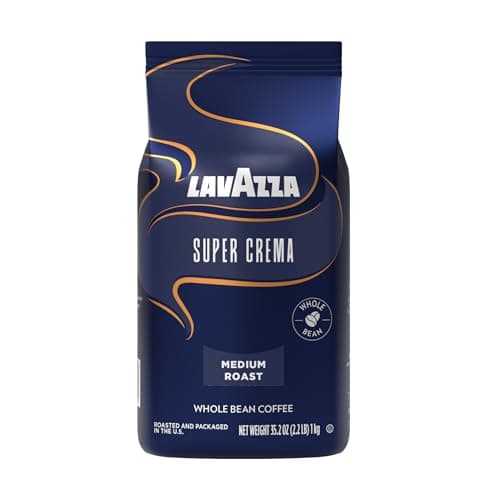 | Beginners chasing a thick crema | What an espresso blend usually means | |
| 2 | 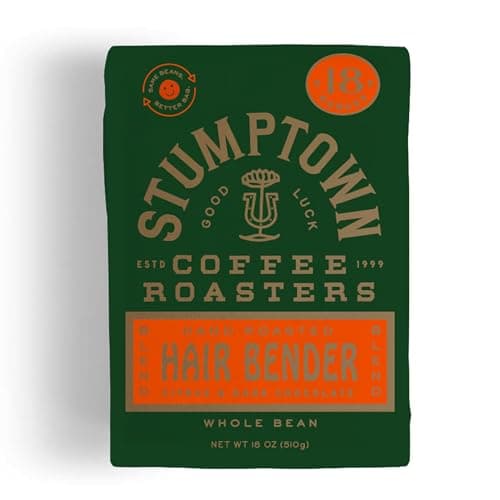 | One bag for both brewers | What the label does not decide | |
| 3 | 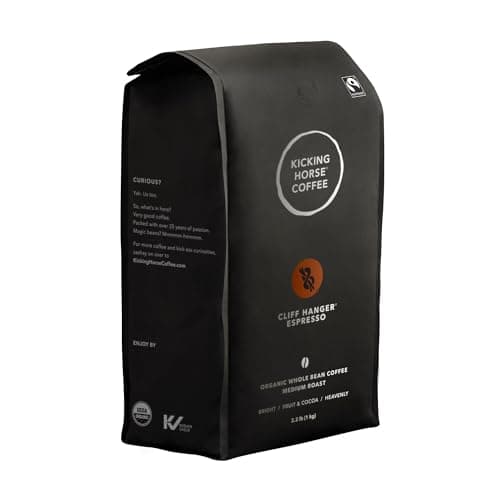 | Espresso and drip from the same 2.2 lb bag | The middle ground |
1. What an espresso blend usually means
Lavazza Super Crema
Everyday tier · A medium-roast Arabica and Robusta espresso blend sold in 2.2 lb bags.
60/40 Arabica and Robusta, medium roast, built for crema.
Super Crema is the clearest example of what 'espresso' on a bag can mean: a 60/40 Arabica and Robusta blend from Brazil, Central America and Indonesia, medium roasted.
Robusta is the part that matters here. It carries more soluble solids and produces thicker, longer-lasting crema than Arabica, which is why traditional Italian espresso blends include it.
The published notes are hazelnut and brown sugar - the sweet, low-acid profile most people picture when they think 'espresso'.
It is forgiving of a slightly-off grind, which makes it a sensible bean while you are learning to dial in.
It is sold in 2.2 lb bags, and roast dates are rarely recent by the time they reach you - a real trade against freshness.
Specification
- Blend
- 60/40 Arabica and Robusta
- Origins
- Brazil, Central America, Indonesia
- Roast
- Medium, full-bodied
- Notes
- Hazelnut, brown sugar
- Bag
- 2.2 lb / 1 kg
What it does well
- Robusta in the blend produces the thick crema beginners are chasing
- Very forgiving of a slightly-off grind setting
- Cheap per shot, and available everywhere
Where it gives ground
- Roast date is rarely recent by the time it reaches you
- A kilo is a lot of coffee to get through while fresh
- Not a bean for tasting origin character
Skip it if
Skip it if you want to taste origin character. This is a blend built for consistency.
2. What the label does not decide
Stumptown Hair Bender
Specialty tier · A medium-roast blend built to work as espresso and as filter.
A medium-roast Arabica blend that works as espresso and as filter.
Hair Bender is sold as a blend that works both ways, which is the practical rebuttal to the idea that espresso beans are a separate category.
It is 100 percent Arabica from Central and South America, East Africa and Indonesia, with published notes of sweet citrus, dark chocolate and raisin.
In an espresso basket those notes read as brightness and sweetness; in a pour-over the citrus comes forward. Same beans, different extraction.
Roast dates are recent and printed on the bag, which matters more to how it tastes than the word 'espresso' ever would.
It costs multiples of a supermarket kilo bag, and 12 oz means ordering often - see best espresso beans.
Specification
- Roast
- Medium
- Origins
- Central and South America, East Africa, Indonesia
- Notes
- Sweet citrus, dark chocolate, raisin
- Beans
- 100 percent Arabica
What it does well
- One of the few blends that is genuinely good both as espresso and as pour-over
- Roast dates are recent and printed on the bag
- The fruit is present without being sour
Where it gives ground
- Costs multiples of a supermarket kilo bag
- 12 oz bags mean ordering often
- The acidity will surprise anyone coming from dark-roast blends
Skip it if
Skip it if you are still dialing in daily. Learning on expensive fresh coffee is an expensive way to learn.
3. The middle ground
Kicking Horse Cliff Hanger Espresso
Everyday tier · An organic, fair-trade medium-roast espresso blend sold in 2.2 lb bags.
Organic, fair-trade medium roast in a bulk bag.
Cliff Hanger is a medium-roast blend from Africa, Indonesia and Central and South America, certified organic, fair trade and kosher.
A medium roast is the reason it survives both jobs: dark enough to be sweet under pressure, light enough to keep fruit in a filter brew.
Published notes are wild berry syrup with a cocoa finish, and the berry is noticeably clearer in filter than in espresso.
There are no flavorings, fillers or additives, which is not universal in bulk bags at this price.
A 2.2 lb bag will outlast its freshness in a one-person household, and retail roast dates are not always recent.
Specification
- Roast
- Medium
- Certifications
- Organic, fair trade, kosher
- Origins
- Africa, Indonesia, Central and South America
- Notes
- Wild berry syrup, cocoa finish
- Bag
- 2.2 lb
What it does well
- Certified organic and fair trade at a bulk-bag price
- Medium roast, so it survives both espresso and drip
- No flavoring, fillers or additives
Where it gives ground
- 2.2 lb will outlast its freshness for a one-person household
- Roast date is not always recent at retail
- Berry notes are much clearer in filter than in espresso
Skip it if
Skip it if you drink a bag a month. Buy 12 oz of something fresher instead.
Can you use regular coffee beans for espresso?
Yes. Any whole-bean coffee can be ground fine and pulled as espresso. The differences you will meet are practical: lighter roasts need a finer grind and often taste sharper, and single origins vary batch to batch in a way blends are designed not to.
The reverse is equally true. Espresso-labeled beans brew fine in a V60, a French press or a drip machine - they will simply taste like a medium-dark roast, because that is what they are.
What to buy, by situation
- Learning espresso: a medium-roast espresso blend in a size you will finish - forgiving and consistent.
- One bag for espresso and filter: a medium-roast blend built for both.
- Chasing flavor: a fresh single origin with a roast date, and accept that it will need re-dialing each time.
- A household that drinks drip all week: buy for the drip and pull the occasional shot from the same bag - see best coffee beans for espresso.