The short answer
Answer four questions in order. Will you ever pull espresso? Then buy a grinder with espresso resolution, because nothing else about the purchase matters as much. Do you want clarity or body? That is flat burrs against conical. How small are the adjustment steps? Under about 25 microns for espresso, anything sensible for filter. And how much do you grind at once? Match capacity to your actual dose, not to a hopper.
Question 1: is espresso ever coming?
This is the only question that can make a grinder purchase wrong rather than merely suboptimal. Espresso needs a grind fine enough and adjustable in small enough steps that shot time can be steered; filter brewing needs neither.
Grinders built for filter say so. Fellow states plainly that the Ode does not grind for espresso, and its range bottoms out around 250 to 300 microns. Baratza's standard Encore stops at 250 microns at its fine end, which is why the ESP model exists.
If espresso is a maybe, buy for it now. The upgrade path from a filter-only grinder is buying a second grinder, and that is the most expensive way to arrive at the right one.
Question 2: conical or flat?
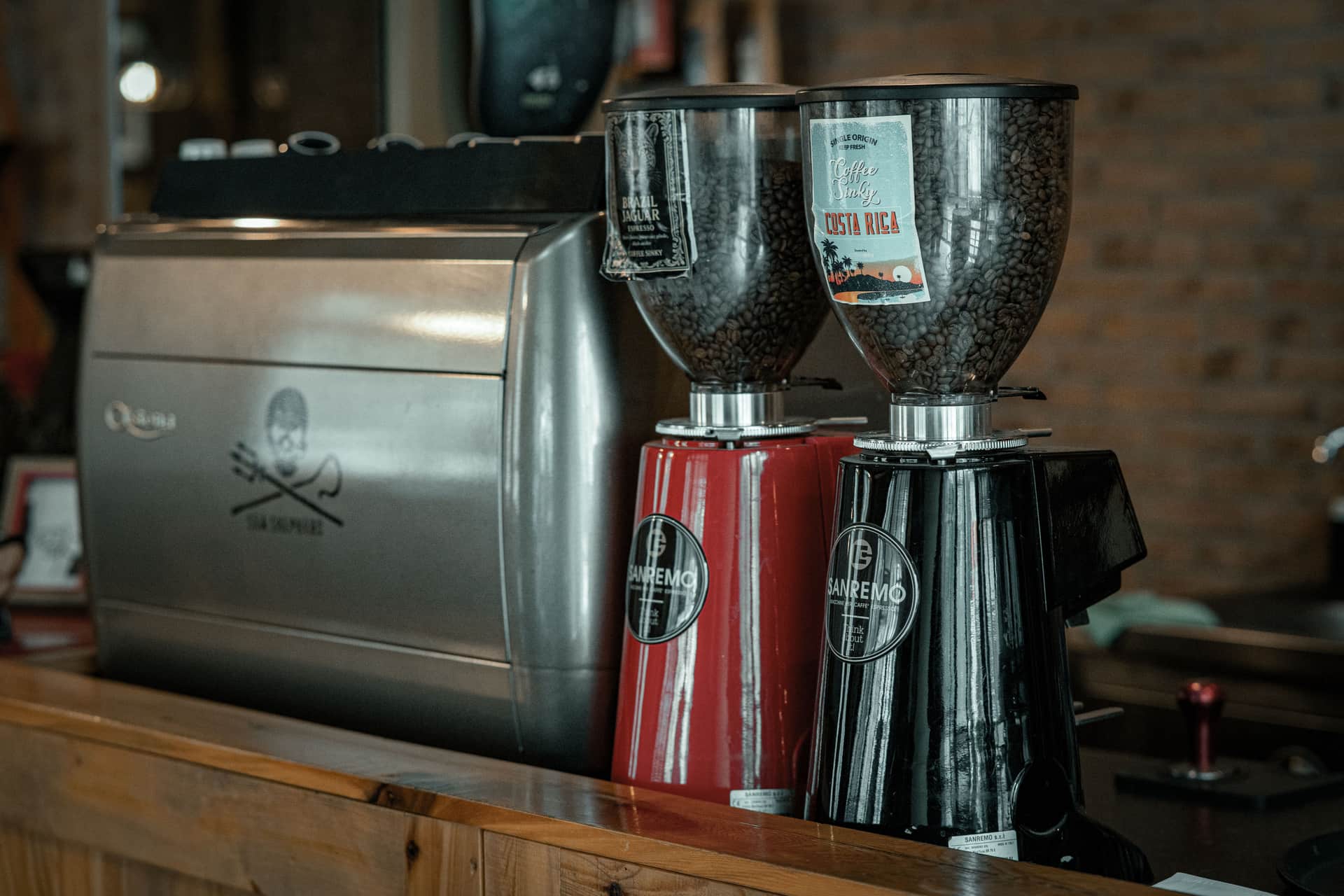
Flat burrs cut between two parallel discs and tend toward a narrower particle distribution - fewer boulders and fewer fines, which reads in the cup as clarity and separation. Conical burrs shear in a cone and tend toward a wider distribution, which reads as body and blend.
Neither is better in the abstract, and both cost more in larger diameters. At entry prices the choice is usually made for you: most sub-premium grinders are conical, and flat burrs start higher up the range - see conical vs flat burr.
Question 3: how small are the steps?
Adjustment resolution is quoted as microns per click. It is the specification that separates a grinder you can dial from one you can only set.
Scroll the table sideways to see every column.
For filter brewing, almost any burr grinder's steps are small enough. For espresso, aim for roughly 25 microns per click or finer; below about 10 microns you are in specialist territory.
Question 4: how much do you grind at once?
- One cup a day: a 25 to 40 g hand grinder is sized exactly right, and single-dosing is automatic.
- A carafe every morning: an electric grinder, because 60 g by hand is a chore rather than a ritual.
- Several people, several methods: an electric grinder with real range, and ideally a hopper you can empty.
- Changing beans often: single-dose loading, so yesterday's coffee is not in today's cup - see single dose vs hopper.
Quick picks
The answer first. Tap any row to jump to the full reasoning for that pick.
| # | Product | Best for | Award | Price |
|---|---|---|---|---|
| 1 | 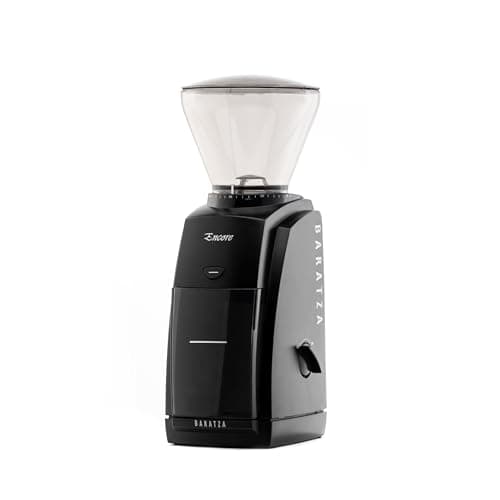 | Pour-over, drip and French press | If the answer is filter only | |
| 2 | 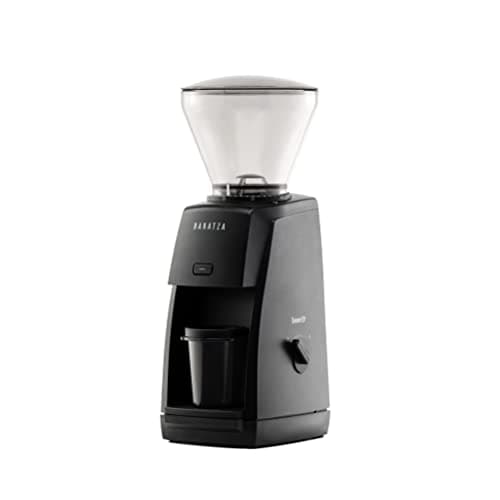 | A first grinder that will still be right after the machine arrives | If espresso is ever coming | |
| 3 | 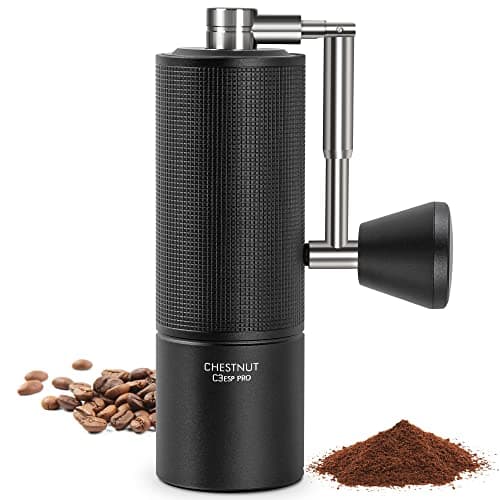 | One or two cups a day, by hand | If the budget is tight |
1. If the answer is filter only
Baratza Encore
Entry tier · The standard entry burr grinder for filter brewing.
40 mm conicals, 40 steps across 250 to 1200 microns, and parts sold for years.
The Encore covers the entire filter range - 250 to 1200 microns - on 40 mm conical burrs made in Europe, across 40 stepped settings.
Its burr speed of roughly 450 to 550 rpm keeps heat and static low, which is the difference between grounds in the basket and grounds on the counter.
Baratza sells parts individually and publishes repair guides, so this is a grinder that gets repaired rather than replaced. Over five years that changes what it costs.
There is no timer and no scale, so you weigh beans and grind all of them - the right workflow for filter anyway.
It cannot reach espresso, which is the single question you have to answer before buying it - see the Encore review.
Specification
- Burrs
- 40 mm conical, made in Europe
- Settings
- 40 stepped
- Grind range
- 250-1200 microns
- Burr speed
- Roughly 450-550 rpm to limit heat and static
What it does well
- The reference answer for pour-over, drip and French press
- Fully serviceable, with parts sold individually for years
- Low burr speed keeps static and heat down
Where it gives ground
- Bottom of its range is too coarse for espresso - that is the ESP model job
- Stepped settings only
- Plastic body and a loud motor
Skip it if
Skip it if espresso is in your plans within a year. Buy once, for the harder job.
2. If espresso is ever coming
Baratza Encore ESP
Entry tier · The Encore re-geared for espresso: the same 40 mm burrs on a dual-resolution collar.
The same burrs re-geared: 20 microns per click across the espresso half of the collar.
The Encore ESP uses 40 mm M2 steel conical burrs from Etzinger on a dual-resolution collar: steps 1 to 20 move about 20 microns per click, steps 21 to 40 about 90.
Twenty microns is genuine espresso resolution. It is fine enough that one click changes a shot rather than being lost in the day's variation.
The filter half is coarser per click than the standard Encore's even steps, so a filter-only household pays for range it will not use.
Its burr housing was redesigned for easy removal, and shims come in the box so the range can be shifted.
Retention is normal for the class and the body is the same plastic - see Encore vs Encore ESP.
Specification
- Burrs
- 40 mm M2 steel conical (Etzinger)
- Settings
- 40 stepped, dual resolution
- Espresso range
- Steps 1-20, 20 microns per click
- Filter range
- Steps 21-40, 90 microns per click
- Burr speed
- 550 rpm
What it does well
- 20 microns per click in the espresso range is real dialing resolution
- Redesigned burr housing makes cleaning and shimming easy
- Shims included in the box
Where it gives ground
- Still a stepped grinder - you cannot land between clicks
- Retention is normal-for-the-class, not low
- Same plastic body and noise as the Encore
Skip it if
Skip it if you are certain espresso will never happen. The standard Encore is the cheaper, better-spaced filter grinder.
3. If the budget is tight
Timemore Chestnut C3
Manual tier · The budget hand grinder that made stainless conical burrs cheap.
38 mm stainless conicals and metal internals for less than most electric grinders.
The C3's 38 mm S2C stainless burrs at 55 to 58 HRC and roughly 36 settings at about 23 microns per click make it a genuine burr grinder rather than a compromise.
Its aluminum body, double-bearing axis and absence of plastic internals are the reason it holds alignment - the thing cheap electric grinders fail at.
Capacity is 25 g, which is one pour-over or one AeroPress dose. Grinding that by hand takes under a minute.
Espresso is where it runs out: 38 mm burrs make a fine dose slow work and the resolution is marginal for dialing.
For anyone choosing between a cheap electric burr grinder and a good hand grinder, this is the honest answer - see hand vs electric.
Specification
- Burrs
- 38 mm S2C stainless conical, 55-58 HRC
- Settings
- Roughly 36, about 0.0233 mm per click
- Capacity
- 25 g
- Weight
- About 530 g
- Build
- Aluminum body, double-bearing axis, no plastic internals
What it does well
- Filter-grade grind quality at a genuinely low price
- Metal internals and double bearings, not a toy
- Small and light enough to travel with
Where it gives ground
- 38 mm burrs make an espresso dose slow work
- Espresso resolution is marginal
- 25 g capacity limits you to one brew at a time
Skip it if
Skip it if someone else in the house has to make coffee. Hand grinding is a preference, not a universal one.
What does not matter as much as you think
Number of settings. Sixty coarse settings are worth less than forty well-spaced ones. What matters is how far each one moves the burrs.
Hopper size. A large hopper holds stale beans. Unless you genuinely get through a half-pound a week, it is a liability dressed as convenience.
Timers. Timed dosing drifts as beans age and change density. A scale costs less and does not drift - see the best coffee scales.