The short answer
A grind-and-brew machine is worth it if counter space or morning convenience genuinely outweighs grind quality. Check one specification before buying: whether the internal grinder is a burr or a blade. A blade grinder chops rather than cuts, and no brewing can fix an uneven grind.
The one specification to check
Manufacturers in this category are not always prominent about it, so look for the word burr and be suspicious when you cannot find it.
Scroll the table sideways to see every column.
Quick picks
The answer first. Tap any row to jump to the full reasoning for that pick.
Prices shown are checked daily against the retailer, as of October 23, 2026. We never write a price into the text of a page.
| # | Product | Best for | Award | Price |
|---|---|---|---|---|
| 1 | 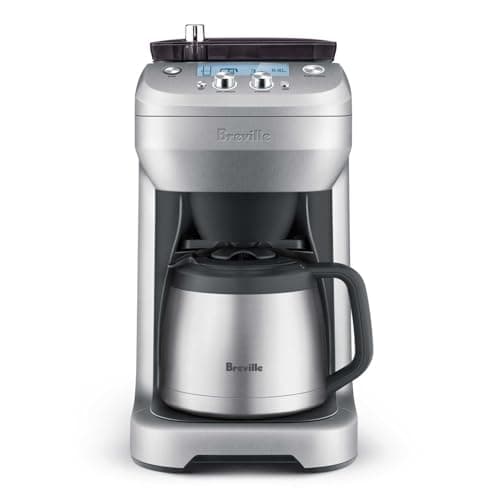 | Genuine one-machine convenience | Top pick | |
| 2 | 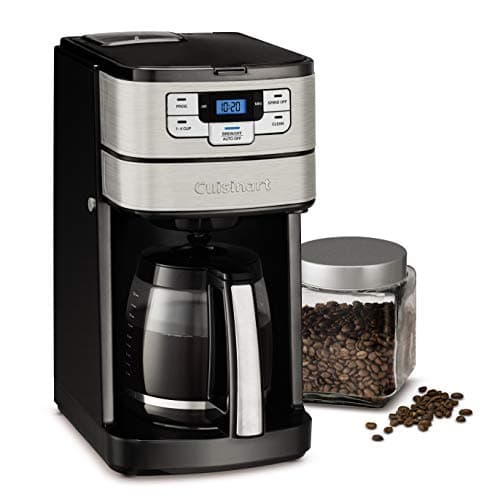 | Convenience at minimum outlay | Cheapest option, with a real caveat | |
| 3 | 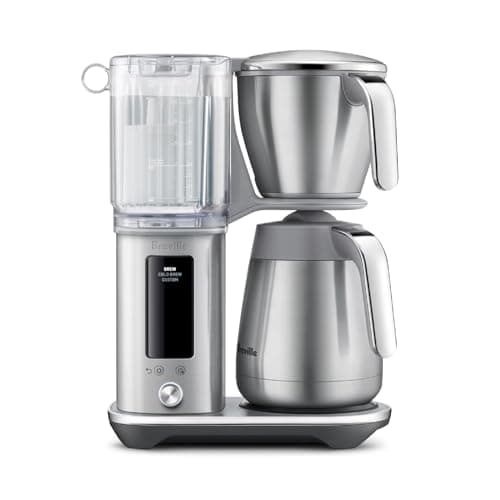 | Anyone reconsidering the whole category | The better separates half | |
| 4 | 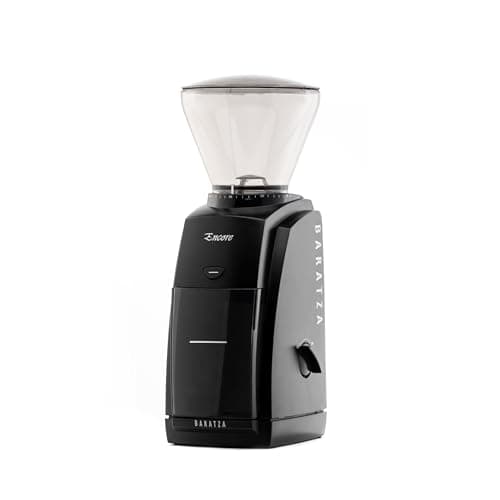 | Grinding for any drip machine | The better separates other half |
1. Top pick
Breville Grind Control
Mid tier · A drip brewer with a burr grinder built into the case.
A real burr grinder inside, which is the whole thing to check in this category.
The specification that matters in this category is whether the grinder inside is a burr or a blade, and the Grind Control uses a stainless steel burr set. That alone puts it ahead of most of the field.
There are eight grind settings and eight strength settings, and the machine brews anywhere from 5 to 60 oz into a 60 oz insulated stainless carafe - so it covers a single mug and a full pot from the same hopper.
The half-pound bean hopper is removable with a locking system, which means you can swap beans without emptying it into a bowl. Small feature, used constantly.
Eight grind settings is coarse control by grinder standards, and it is the ceiling here. For drip brewing, where the useful range is much wider than espresso's, that is far less limiting than the same number would be on an espresso machine.
Specification
- Grinder
- Built-in stainless steel burr, 8 grind settings
- Strength
- 8 settings
- Brew range
- 5-60 oz
- Carafe
- 60 oz insulated stainless
- Hopper
- Half a pound, removable with a locking system
What it does well
- Whole beans to brewed coffee with one button
- Brews a single cup or a full carafe from the same hopper
- Removable hopper means you can swap beans without emptying it
Where it gives ground
- Grinding and brewing in one box means cleaning two machines in one
- 8 grind settings is coarse control
- A separate grinder and brewer beats it on both counts for a similar total
Skip it if
Skip it if you already own a burr grinder. You would be buying a second, less adjustable one and paying for the integration.
2. Cheapest option, with a real caveat
Cuisinart Automatic Grind & Brew DGB-400
Budget tier · A 12-cup drip machine with a blade grinder built in - not a burr grinder.
Whole beans to coffee at the lowest price - using a blade grinder, which Cuisinart publishes plainly.
Cuisinart is clear in its own specification that this machine uses a blade grinder rather than a burr grinder, and that distinction is the reason this pick has a caveat attached rather than a recommendation.
A blade chops coffee by hitting it repeatedly, producing fine dust and large chunks in the same batch. A burr cuts to a set gap, producing particles of a consistent size. In the same brew, dust over-extracts and chunks under-extract, so the cup is bitter and weak at once.
The rest of the machine is sensible: 12 cups, a 24-hour programmable start, adjustable auto-off, a 1-4 cup setting, Brew Pause, and a grind-off mode so you can use pre-ground coffee, in a body 9.98 x 8.13 x 15.5 inches.
That grind-off mode is the escape hatch. Grind on a separate burr grinder, use this as a plain drip machine, and the machine gets considerably better.
Specification
- Capacity
- 12 cups
- Grinder
- Blade grinder, not burr
- Programming
- 24-hour brew start, adjustable auto-off, 1-4 cup setting
- Options
- Brew Pause; grind-off for pre-ground coffee
- Dimensions
- 9.98 in W x 8.13 in D x 15.5 in H
What it does well
- Whole beans to brewed coffee at the lowest price in the category
- Grind-off mode lets you use pre-ground coffee instead
- Compact for a machine with a grinder inside
Where it gives ground
- The grinder is a blade, which chops rather than cuts to a size
- Blade grinding produces dust and boulders together, which extract unevenly
- No published brew-temperature figure and no SCA certification
Skip it if
Skip it if grind quality matters to you at all. The blade grinder is the product, and it is the weak part.
3. The better separates half
Breville Luxe Brewer Thermal
Upper-mid tier · The Precision Brewer's successor: SCA-approved drip with a saved custom profile and a cold brew mode.
Buy a real brewer and a real grinder instead - here is the brewer.
The honest alternative to a grind-and-brew machine is a certified brewer plus a standalone grinder, and the Luxe Brewer is the brewer to pair.
Breville describes its Golden Standard mode as SCA approved, and Custom Brew exposes bloom volume, bloom time, brew temperature and flow rate - control no integrated machine offers.
It holds 60 fl oz / 12 cups, and its dual-wall thermal carafe keeps coffee above 150 F for up to four hours rather than cooking it on a plate.
A Cold Brew mode with a steep from 30 minutes to 36 hours covers iced coffee too, which no grind-and-brew machine does.
Specification
- Capacity
- 60 fl oz / 12 cups; 1.8 L reservoir
- Certification
- Golden Standard mode, SCA approved
- Modes
- Golden Standard, Cold Brew, Custom Brew
- Custom control
- Bloom volume, bloom time, brew temperature and flow rate
- Cold brew
- Up to 4 cups (600 ml), steep adjustable from 30 minutes to 36 hours
- Carafe
- Dual-wall thermal; above 150 F / 65 C for up to 4 hours
- Power
- 1650 W
- Size
- 16.1 x 10.2 x 6.8 in
What it does well
- The custom profile exposes bloom volume, bloom time, temperature and flow rate, and remembers them
- Cold brew in as little as 30 minutes, or up to 36 hours if you want a long steep
- A thermal carafe that holds above 150 F for up to four hours, so there is no hotplate
Where it gives ground
- Three modes rather than the longer preset list the Precision Brewer carried
- Breville no longer lists a pour-over adapter for this line
- All of that control is wasted if you only ever press the Golden Standard button
Skip it if
Skip it if the whole point of your purchase is one machine on the counter. This is explicitly the two-machine argument.
4. The better separates other half
Baratza Encore
Entry tier · The standard entry burr grinder for filter brewing.
Forty settings, 250-1200 microns, and it can be repaired for years.
This is the grinder half of the same argument, and it is why we keep making it: 40 mm conical burrs made in Europe, 40 stepped settings, and a published range of 250 to 1200 microns.
Compare that to the eight settings in the best integrated machine here, or the blade in the cheapest. Forty steps across a properly published range is a different order of control.
Burr speed sits at roughly 450 to 550 rpm to limit heat transfer and static.
It is also serviceable - Baratza sells parts individually and has for years - so it outlives brewers rather than dying with one.
Specification
- Burrs
- 40 mm conical, made in Europe
- Settings
- 40 stepped
- Grind range
- 250-1200 microns
- Burr speed
- Roughly 450-550 rpm to limit heat and static
What it does well
- The reference answer for pour-over, drip and French press
- Fully serviceable, with parts sold individually for years
- Low burr speed keeps static and heat down
Where it gives ground
- Bottom of its range is too coarse for espresso - that is the ESP model job
- Stepped settings only
- Plastic body and a loud motor
Skip it if
Skip it if you make espresso. The published range stops at 250 microns, which is filter-fine and not espresso-fine - that is the Encore ESP's job.
What integration costs you
- 1Adjustment range. Eight grind settings is normal here; a standalone grinder offers forty or more.
- 2Cleaning. A combined machine means cleaning a grinder and a brewer in one awkward assembly, and grinders need cleaning more often than brewers.
- 3Upgrade path. When one half becomes the limit, you replace both.
- 4Failure mode. A grinder fault takes the brewer out of service too.
What integration buys you
One appliance, one plug, one button, and beans that are ground seconds before brewing without you doing anything. That last part is genuinely valuable - coffee begins losing aromatics within minutes of grinding, and a machine that grinds into the basket removes the gap entirely.
For a household that would otherwise buy pre-ground coffee, a grind-and-brew machine with a burr grinder is a real upgrade rather than a compromise. That is the case for the category, and it is a fair one.
The separates comparison, done honestly
For roughly what a good grind-and-brew machine costs, you can buy an SCA-certified brewer and a standalone burr grinder. That setup wins on grind adjustment, on cleaning, on upgrade path and on brew temperature - and loses on counter space and on having two things to operate.
Which matters more is a genuine preference rather than a right answer. We would take the separates; plenty of sensible people would not.