The short answer
A standalone milk frother heats and aerates milk mechanically. That is not the same as steam texturing, which uses steam to introduce air and then roll the milk into microfoam. Frothed milk sits on top of coffee; microfoam folds into it. Buy a frother if your machine has no steam wand or if switching between brewing and steaming is the thing that frustrates you.
Frothing and texturing are different processes
Scroll the table sideways to see every column.
Neither is wrong. A cappuccino with a distinct foam layer is a legitimate drink, and plenty of people prefer it. The mistake is buying a frother expecting the milk a cafe pours, because that is steam-textured and no disc will replicate it.
Quick picks
The answer first. Tap any row to jump to the full reasoning for that pick.
Prices shown are checked daily against the retailer, as of October 23, 2026. We never write a price into the text of a page.
| # | Product | Best for | Award | Price |
|---|---|---|---|---|
| 1 | 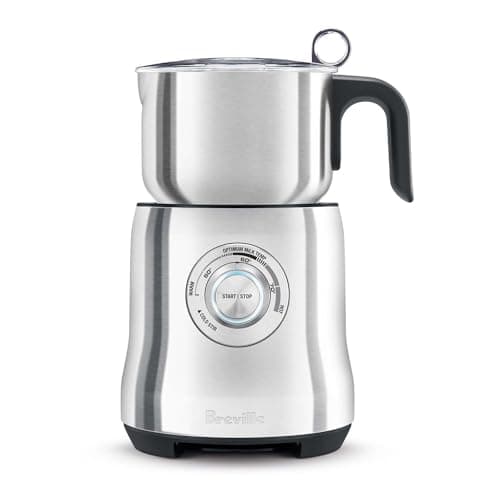 | Single-boiler owners tired of switching between brew and steam | Top pick | |
| 2 | 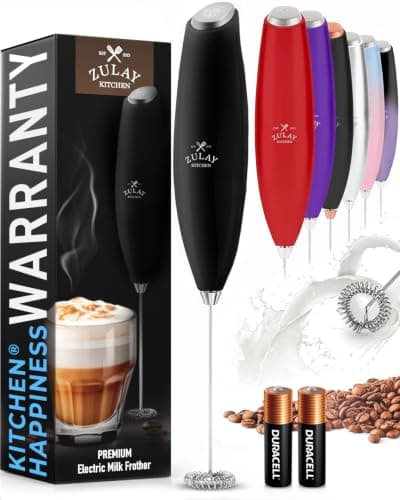 | Occasional milk drinks with no espresso machine | Best budget option | |
| 3 | 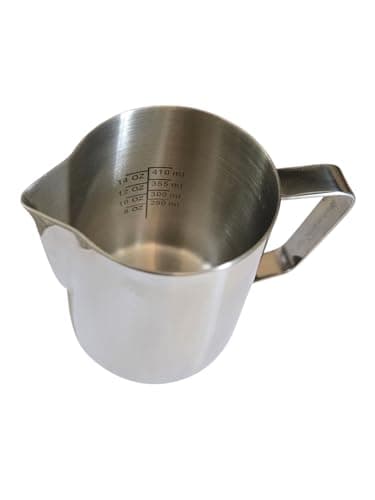 | Anyone with a steam wand and disappointing milk | Buy this if your machine has a wand | |
| 4 | 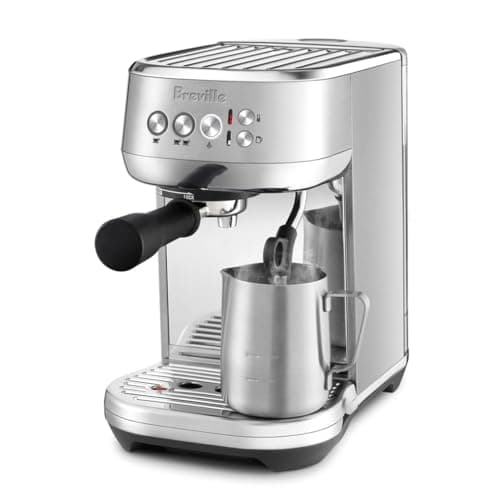 | Buyers still choosing a machine | Skip a frother if you are buying this |
1. Top pick
Breville Milk Cafe
Mid tier · A standalone induction milk frother with latte and cappuccino discs.
Induction heating with real temperature selection, and it makes three drinks at once.
The Milk Cafe holds 24 fl oz - up to three cups - and heats by induction at 500 W, with a temperature dial covering cold stir, warm, optimum and hot up to 160 F. It ships with separate latte and cappuccino frothing discs, in a 7.5 x 6.4 x 10.4 inch body.
The genuine use case is a single-boiler espresso machine. On those, making two milk drinks means brew, wait for the boiler to reach steam temperature, steam, brew again, wait again. A standalone frother removes that entirely - the milk is made while the machine stays at brew temperature.
Real temperature selection matters more than it looks. Milk scalds above about 160 F and loses its sweetness, and a frother with one hot setting will regularly overshoot.
Two discs is a genuine distinction: the cappuccino disc introduces more air for a stiffer foam, the latte disc less for a wetter texture.
Specification
- Capacity
- 24 fl oz, up to 3 cups
- Temperature
- Cold stir to hot, up to 160 F
- Discs
- Latte and cappuccino frothing discs
- Power
- 500 W, induction heating
- Size
- 7.5 x 6.4 x 10.4 in
What it does well
- Frees a single-boiler machine from switching between brew and steam
- Genuine temperature selection rather than one hot setting
- Makes three drinks worth of milk at once
Where it gives ground
- Disc-frothed milk is not steam-textured milk, and latte art is off the table
- Another appliance on the counter
- Pointless if your machine already steams well
Skip it if
Skip it if your machine steams well. You would be paying for an appliance that does a worse job than the wand you already own.
2. Best budget option
Zulay Handheld Milk Frother
Budget tier · A battery-powered handheld whisk that aerates milk in a jug or mug.
The cheapest way to get foam on a coffee, and honest about being exactly that.
A handheld frother is a battery-powered whisk with a stainless steel spiral head. The Zulay runs on two AA batteries, has a nylon body and comes with a metal stand; rechargeable versions are also sold.
It aerates but does not heat, so you warm the milk separately - microwave, saucepan, whatever - and then whisk it. That two-step workflow is the honest description of what you are buying.
It works in any vessel including the mug you are drinking from, and cleaning is rinsing the whisk under hot water and switching it on for a second.
The foam it makes is bubbly rather than microfoam. It sits on top of the coffee rather than folding into it, so latte art is not possible - but for a cappuccino-style drink it does the job for very little money.
Specification
- Power
- 2 AA batteries (included); rechargeable models also sold
- Whisk
- Stainless steel
- Body
- Nylon
- Accessories
- Metal stand included
What it does well
- The cheapest way to get foam on a coffee, by a wide margin
- Works in any vessel, including the mug you are drinking from
- Cleans by rinsing the whisk under hot water and switching it on
Where it gives ground
- Aerates but does not heat - you warm the milk separately
- Produces bubbly foam, not steam-textured microfoam
- Latte art is not possible with it
Skip it if
Skip it if you want microfoam or latte art. A whisk cannot produce the texture a steam wand does.
3. Buy this if your machine has a wand
Rattleware 20 oz Latte Art Pitcher
Entry tier · A 20 oz stainless steaming pitcher with etched graduations and a tapered spout.
If you own a steam wand, the pitcher is the upgrade - not a frother.
People buy frothers because their steam wand produces bad milk, and the problem is very often the pitcher rather than the wand.
The Rattleware 20 oz is stainless with etched graduations and a tapered spout engineered for pouring microfoam, sized for lattes, cappuccinos and flat whites, or two drinks at once.
Pitcher size decides whether the wand tip can sit at the right depth. Too much volume in too large a pitcher and the milk never rolls; too little in the same pitcher and the tip cannot submerge properly.
The etched graduations mean you can measure milk without a separate jug, which removes another guess from the routine.
Specification
- Capacity
- 20 oz
- Material
- Stainless steel
- Spout
- Tapered, engineered for pouring microfoam
- Markings
- Etched graduations
- Suits
- Latte, cappuccino, flat white; two drinks at once
What it does well
- Etched graduations mean you can measure milk without a separate jug
- Big enough for two drinks, small enough for one at a push
- The tapered spout is the reason latte art is possible at all
Where it gives ground
- Too large to texture a single small drink well
- Heavier to control than a 12 oz pitcher when pouring
- Gets hot - which is how you judge temperature, but still
Skip it if
Skip it if you make single small drinks only - the 12 oz size is the right one for those.
4. Skip a frother if you are buying this
Breville Bambino Plus
Entry tier · The Bambino with automatic milk texturing added.
Automatic milk texturing is built in, and adding a frother would be buying it twice.
If you have not yet bought an espresso machine and you are also shopping for a frother, look at machines with automatic texturing before buying both.
The Bambino Plus textures milk automatically and includes a 480 ml stainless jug, alongside a 54 mm portafilter taking an 18 g dose, ThermoJet heating in three seconds, a 15 bar pump delivering 9 bar and low-pressure pre-infusion, in a body 11.9 x 7.4 x 14.3 inches.
That automatic system produces a better texture than any disc frother, because it is steam rather than mechanical aeration.
The trade is that it makes the texture decisions for you and cannot be switched to manual, so latte art is off the table - see Bambino versus Bambino Plus.
Specification
- Portafilter
- 54 mm stainless, 18 g dose
- Heating
- ThermoJet, ready in 3 seconds
- Pump
- 15 bar Italian pump, 9 bar extraction
- Milk
- Automatic texturing, 16 fl oz / 480 ml jug
- Footprint
- 11.9 x 7.4 x 14.3 in
What it does well
- Automatic milk texturing gets a usable microfoam without practice
- Same three-second heat-up as the standard Bambino
- Fits a narrow counter with a grinder beside it
Where it gives ground
- You are paying for the milk automation, not better espresso
- Still no grinder
- Auto-steam removes the control an enthusiast eventually wants
Skip it if
Skip this pairing if you already own a machine. Then the frother question is a real one and this is not the answer to it.
Who genuinely benefits from a standalone frother
- 1Single-boiler espresso owners who make two or more milk drinks and resent the switching wait.
- 2People with no espresso machine who want milk drinks with drip coffee or instant.
- 3Households where one person makes the coffee and others want milk without learning to steam.
- 4Anyone whose machine has a Panarello sleeve rather than a bare wand - a frother is often better than what the machine can do.
Who should not buy one
If your machine has a bare steam wand with reasonable power, a frother is a step backwards. The wand can produce microfoam, and the frother cannot. What you probably need instead is a properly sized pitcher and a few weeks of practice.
Milk temperature matters
Milk scalds above roughly 160 F, at which point the proteins break down, the natural sweetness disappears and the texture collapses. A frother with a single hot setting will often overshoot; one with a temperature dial lets you stop at the right point.
That is the specification worth paying attention to, more than disc count or capacity.
Milk choice
Whole dairy milk textures most forgivingly because its fat and protein content stabilize the foam. Skimmed milk foams enthusiastically and collapses fast. Among plant milks, barista-formulated oat milks are formulated specifically to hold texture, and standard versions of most plant milks do not.