The short answer
Espresso cups need to be small - around 2.5 to 3 oz - and to hold heat. A double shot is roughly 36 grams of liquid, which has almost no thermal mass, so a cold or oversized cup will cool it within seconds. Double-walled glass and thick ceramic both work; a thin, large mug does not.
Why the size is not arbitrary
The traditional demitasse holds around 2 to 3 oz, and that is not tradition for its own sake. A double espresso is roughly 36 g of liquid. In a 3 oz cup it fills a reasonable proportion of the volume and stays hot; in a 10 oz mug it is a puddle at the bottom with a large volume of cold air above it.
Scroll the table sideways to see every column.
Quick picks
The answer first. Tap any row to jump to the full reasoning for that pick.
Prices shown are checked daily against the retailer, as of October 23, 2026. We never write a price into the text of a page.
| # | Product | Best for | Award | Price |
|---|---|---|---|---|
| 1 | 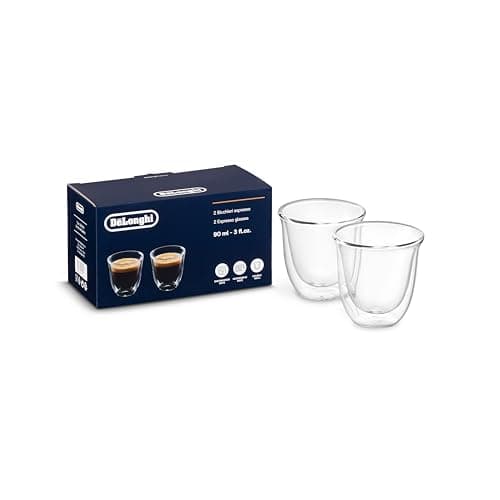 | Most espresso drinkers | Top pick | |
| 2 | 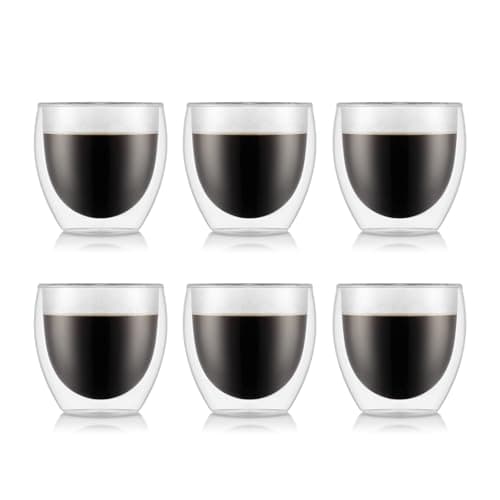 | Straight espresso, treated as an occasion | Best made | |
| 3 | 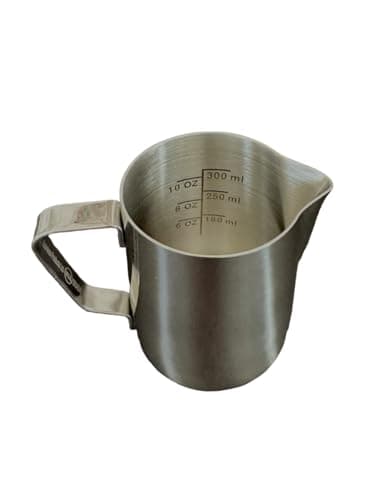 | Anyone making cappuccinos rather than straight shots | The thing to buy instead, if you drink milk | |
| 4 | 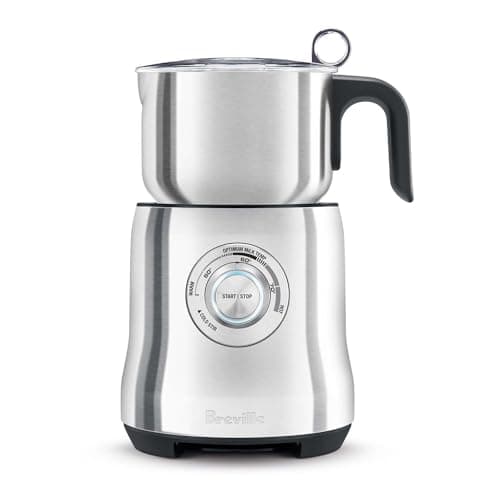 | Single-boiler owners who hate switching between brew and steam | Skip this if you came for cups |
1. Top pick
De Longhi Double Wall Espresso Glasses
Entry tier · Double-walled borosilicate espresso glasses in the standard 3 oz demitasse size.
Double-walled borosilicate at the standard 3 oz size, and you can see the crema.
The De Longhi double-wall glasses hold 3 oz - the standard demitasse volume - in double-walled borosilicate glass, sold in sets of two and six, and they are dishwasher safe.
Double walling does something genuinely useful with espresso specifically. A double shot is around 36 g of liquid, which has very little thermal mass, so it loses heat fast to a cold cup. A vacuum-insulated wall slows that dramatically.
Being glass, they let you see the crema - the color and thickness of which is one of the quickest reads on whether a shot went well. A ceramic cup hides it entirely.
The double wall also means no condensation and no hot outside surface. The downsides are that they are thin, they do break, and 3 oz is right for espresso and cramped for a cortado.
Specification
- Capacity
- 3 oz
- Material
- Borosilicate glass, double walled
- Sets
- Sold in twos and sixes
- Care
- Dishwasher safe
What it does well
- Double wall keeps a small shot hot far longer than a single-wall glass
- You can see the crema, which a ceramic cup hides
- No condensation and the outside stays touchable
Where it gives ground
- Glass is thin and these do break
- Double-walled glass is harder to warm through before pulling a shot
- 3 oz is right for espresso and too small for a cortado
Skip it if
Skip them if you drink cortados or long blacks. 3 oz is a shot glass, not a small-milk-drink glass.
2. Best made
Bodum Pavina Double Wall Espresso Glasses
Entry tier · Mouth-blown double-walled borosilicate espresso glasses at 2.5 oz.
Mouth-blown, with a proper vacuum layer and a vent that stops the glass stressing.
The Pavina glasses are 2.5 oz, mouth-blown from heat-resistant borosilicate glass using Bodum's glass-in-glass construction - two layers blown together with a vacuum layer between them.
The silicone vent at the base is the detail that shows the design was thought through: it equalizes air pressure between the layers as they heat and cool, which stops the seal stressing and prevents condensation forming inside.
The insulation is excellent. Almost no heat reaches your hand and the shot stays hot considerably longer than in a single-wall cup.
At 2.5 oz they are genuinely small - fine for a traditional double, tight for a long double shot. Mouth-blown glass is also fragile and priced accordingly.
Specification
- Capacity
- 2.5 oz
- Material
- Mouth-blown heat-resistant borosilicate glass
- Construction
- Glass-in-glass with a vacuum insulating layer
- Detail
- Silicone vent at the base equalizes air pressure
What it does well
- Genuinely well made - mouth-blown, with a proper vacuum layer
- Almost no heat reaches your hand and no condensation forms
- The silicone base vent stops the layers stressing with temperature
Where it gives ground
- 2.5 oz is tight for a long double shot
- Mouth-blown glass is fragile and priced accordingly
- Not suited to being warmed on a machine's cup rest for long periods
Skip it if
Skip them if you pull long shots or if your household is hard on glassware.
3. The thing to buy instead, if you drink milk
Rattleware 12 oz Latte Art Pitcher
Entry tier · A 12 oz stainless steaming pitcher with a tapered spout, sized for single drinks.
If your espresso goes into milk, the pitcher matters far more than the cup.
Worth saying plainly: if you drink your espresso with milk, a set of espresso cups is not the purchase that will improve your coffee. The pitcher is.
The Rattleware 12 oz is stainless with a tapered, drip-resistant spout, sized for a macchiato, cappuccino or small latte.
Pitcher size decides whether you can texture properly - too large a pitcher for a small volume of milk means the steam wand cannot sit at the right depth, and the milk never rolls.
The tapered spout is what makes a controlled pour possible at all. It is a commercial-grade tool at a domestic price and it changes your drink more than any cup will.
Specification
- Capacity
- 12 oz
- Material
- Stainless steel
- Spout
- Tapered, drip-resistant
- Suits
- Macchiato, cappuccino, small latte
What it does well
- Correct size for a single drink, which matters more than people expect
- Tapered spout is what makes a controlled pour possible
- Commercial-grade construction at a domestic price
Where it gives ground
- Too small for two drinks at once
- No etched graduations at this size
- Stainless conducts heat, so it gets hot in the hand
Skip it if
Skip it if you genuinely only drink straight espresso. Then the cup really is the right purchase.
4. Skip this if you came for cups
Breville Milk Cafe
Mid tier · A standalone induction milk frother with latte and cappuccino discs.
A useful appliance and completely unrelated to the problem cups solve.
This appears on espresso accessory lists constantly and it is worth separating out. The Milk Cafe is a standalone induction frother holding 24 fl oz - up to three cups - with a temperature dial from cold stir up to 160 F, latte and cappuccino discs, and 500 W of induction heating in a 7.5 x 6.4 x 10.4 inch body.
It solves a real problem for single-boiler owners: the wait between pulling a shot and steaming milk.
What it does not do is produce steam-textured microfoam. Disc frothing aerates milk mechanically, which is a different texture, and latte art is not possible with it.
It is a good appliance for a specific person, and it has nothing to do with whether your espresso stays hot in the cup.
Specification
- Capacity
- 24 fl oz, up to 3 cups
- Temperature
- Cold stir to hot, up to 160 F
- Discs
- Latte and cappuccino frothing discs
- Power
- 500 W, induction heating
- Size
- 7.5 x 6.4 x 10.4 in
What it does well
- Frees a single-boiler machine from switching between brew and steam
- Genuine temperature selection rather than one hot setting
- Makes three drinks worth of milk at once
Where it gives ground
- Disc-frothed milk is not steam-textured milk, and latte art is off the table
- Another appliance on the counter
- Pointless if your machine already steams well
Skip it if
Skip it if your machine already steams well. It is solving a problem you do not have.
Preheating matters more than the cup
Whatever cup you buy, a cold one will take heat out of the shot faster than any wall construction puts it back. Rinsing the cup with hot water before pulling, or leaving it on the machine's cup rest, does more for shot temperature than upgrading from a cheap cup to an expensive one.
This is worth knowing before spending money: the free step beats the paid one.
Glass or ceramic
- Double-walled glass insulates best, shows the crema, stays cool to hold, and breaks.
- Thick ceramic holds heat well once preheated, hides the crema, and survives a household.
- Thin ceramic or china looks traditional and cools a shot fast.
- Metal conducts heat straight out of the drink and into your hand. Avoid for espresso.
Being able to see the crema is a genuine practical benefit rather than aesthetics. Its color and thickness tell you quickly whether a shot ran fast, and a ceramic cup denies you that read.
What not to spend money on
Novelty sets, oversized mugs sold as espresso cups, and anything with a wall thin enough to be described as delicate. If a set does not state its volume, that is usually because it is larger than it should be.