The short answer
There is no universal descaling interval. It depends on your water hardness and how much you brew - a machine in a hard-water area used daily may need descaling every month or two, while the same machine on filtered water used at weekends may go far longer. Work out your own interval rather than copying a number.
What scale actually does
Scale is mineral deposit - mostly calcium carbonate - left behind when hard water is heated. It forms on the heating element, inside the boiler and in the pipework.
The damage it does is thermal before it is mechanical. Scale is an insulator, so a coated heating element transfers less heat into the water. A machine that brewed at the right temperature when new drifts downward, and it does so slowly enough that most people blame the coffee.
Eventually it becomes mechanical too: restricted flow, a solenoid that sticks, a pump working harder than it should. That is the point at which descaling stops being maintenance and becomes repair.
Working out your own interval
- 1Find out your water hardness. Your local water utility publishes it, and cheap test strips give a usable number. This is the single largest factor.
- 2Count your shots. Scale forms in proportion to the volume of water heated, so a machine pulling six shots a day scales far faster than one pulling two.
- 3Check your manual for a starting figure, then adjust it. Manufacturers assume moderate hardness - harder water means shorter, softer water means longer.
- 4Watch for the symptoms below and shorten the interval if they appear before your scheduled descale.
Signs it is overdue
- Slower flow. Shots take longer at a grind setting that used to work.
- Reduced steam pressure, or steam that runs out faster than it used to.
- Longer heat-up, because the element is working through an insulating layer.
- Visible deposit around the group head or in the tank.
- Coffee that tastes flat for no reason you can trace to the beans or the grind.
Quick picks
The answer first. Tap any row to jump to the full reasoning for that pick.
Prices shown are checked daily against the retailer, as of October 23, 2026. We never write a price into the text of a page.
| # | Product | Best for | Award | Price |
|---|---|---|---|---|
| 1 | 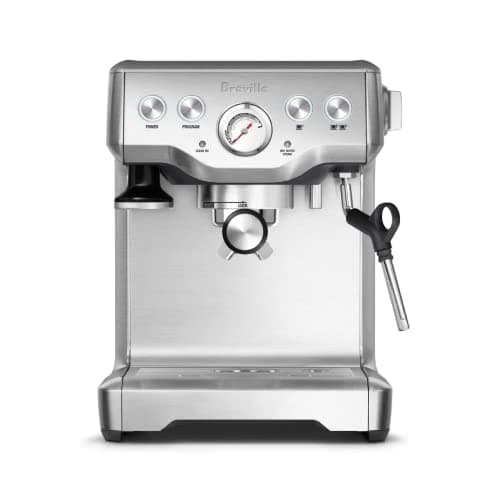 | Buyers who would rather prevent than treat | Machines with a water filter | |
| 2 | 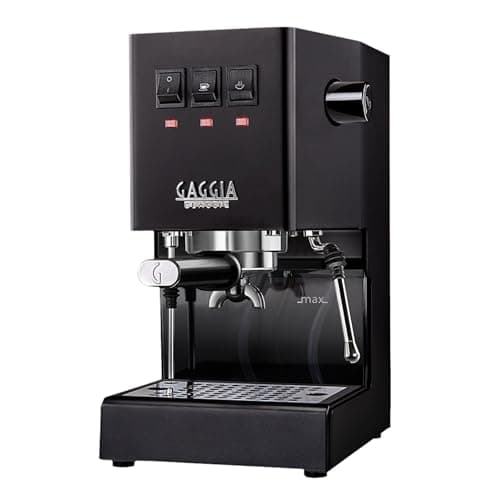 | Long-term ownership | Machines built to be serviced | |
| 3 | 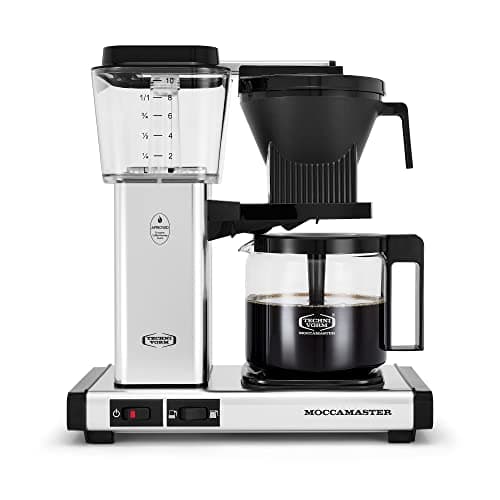 | Understanding why descaling matters beyond espresso | The same problem, on drip |
1. Machines with a water filter
Breville Infuser
Mid tier · A grinder-less 54 mm machine with PID and a larger tank than the Bambino line.
A filtered tank slows scale formation, which is easier than removing it.
Prevention is dramatically easier than descaling, and the specification to look for is a filtered water tank.
The Infuser publishes a 61 fl oz / 1.8 L removable water tank with a replaceable water filter, alongside a 54 mm stainless portafilter, a 1650 W thermocoil with electronic PID and low-pressure pre-infusion.
A filter in the tank reduces the mineral content of the water going in, which slows the rate at which scale forms on the heating element and in the boiler.
It does not eliminate descaling - no filter does - but it lengthens the interval, which on a machine used daily is a meaningful difference.
Specification
- Portafilter
- 54 mm stainless, commercial-style spouts
- Heating
- 1650 W thermocoil with electronic PID
- Water tank
- 61 fl oz / 1.8 L, removable, filtered
- Extraction
- Low-pressure pre-infusion
What it does well
- PID plus a big tank at a grinder-less price
- Auto-purge resets brew temperature after steaming
- Pairs well with a serious standalone grinder
Where it gives ground
- Slower to heat than the ThermoJet machines
- Older design; the Bambino line gets more attention
- Manual steam wand only
Skip it if
Skip it if you already have a machine. Bottled or filtered water in the tank achieves much of the same result.
2. Machines built to be serviced
Gaggia Classic Evo Pro
Mid tier · A 58 mm single-boiler machine with commercial parts and a large modification community.
If scale does get bad, a serviceable machine is one you can actually recover.
Scale is a maintenance problem, and a machine designed to be worked on is far more forgiving of a lapse than a sealed appliance.
The Classic Evo Pro publishes 1425 W total with 1375 W to a boiler of 140 ml maximum and about 105 ml operating capacity, a 2.1 L tank, a 3-way solenoid valve and a two-hole professional steam wand, on a 58 mm portafilter.
The reason it has such a large modification and repair community is that its components are accessible and replaceable - which extends to descaling and to replacing parts that scale eventually damages.
A small boiler heated hard is also more sensitive to scale than a large one, so it rewards keeping on top of the interval.
Specification
- Portafilter
- 58 mm
- Power
- 1425 W total; 1375 W to the boiler
- Boiler
- 140 ml max capacity, 105 ml operating
- Water tank
- 2.1 L / 72 fl oz
- Steam
- Two-hole professional wand
- Valve
- 3-way solenoid
What it does well
- 58 mm from the start - every basket, tamper and portafilter fits
- The 3-way solenoid gives a dry puck, which cheap machines do not
- Serviceable and heavily documented; parts are everywhere
Where it gives ground
- No PID as shipped; brew temperature drifts with the thermostat
- Long recovery between brewing and steaming
- The modification path is a hobby, not a feature
Skip it if
Skip it if you want an appliance rather than a machine. That is a legitimate preference and this is the wrong machine for it.
3. The same problem, on drip
Technivorm Moccamaster KBGV Select
Upper-mid tier · A hand-assembled drip brewer certified by the SCA, with a copper heating element.
Scale insulates a heating element, and drip machines are already marginal on temperature.
Descaling is not an espresso-only concern, and on a drip machine the consequence is more direct.
The Moccamaster publishes a copper heating element bringing water to 196 to 205 F and holding it there, brewing a 1.25 L carafe in four to six minutes, and it carries the SCA Certified Home Brewer mark.
Scale on a heating element is an insulating layer. A machine that reached 200 F when new will reach less as scale builds, and it does so gradually enough that people attribute the change to the beans.
A machine with published temperature figures is exactly the machine worth keeping descaled, because the specification you paid for degrades quietly.
Specification
- Certification
- SCA Certified Home Brewer
- Brew temperature
- 196-205 F
- Capacity
- 1.25 L / 40 oz / 10 cups
- Brew time
- 4-6 minutes for a full carafe
- Build
- Hand-assembled in the Netherlands, metal and glass
What it does well
- Reaches and holds real brewing temperature, which most drip machines do not
- Every part is replaceable - these get repaired, not landfilled
- Half-carafe setting adjusts saturation time rather than just volume
Where it gives ground
- No timer, no programming, no app
- Tall enough to be awkward under a low cabinet
- Costs more than several espresso machines
Skip it if
Skip it if you do not own a drip machine. The principle still applies to whatever heats your water.
How to descale
Step 1
Read your machine's manual first
Descaling procedures differ meaningfully between machines, and some have a dedicated descale mode that must be used. Some manufacturers also void warranty claims if a non-approved descaler is used. This step is not optional.
Step 2
Use a proper descaling solution
Use the descaler the manufacturer specifies, or a citric-acid-based product intended for coffee machines. Do not use vinegar unless your manual explicitly permits it - acetic acid attacks some seals and metals, and the smell is very difficult to flush out.
Step 3
Remove the water filter
If your tank has a filter cartridge, take it out before descaling. The solution will exhaust it, and a filter that is meant to soften water will also work against the descaler.
Step 4
Run the solution through every path
The group head and the steam wand are separate circuits on most machines, and both need treating. Running solution only through the group leaves the steam side untouched.
Step 5
Rinse thoroughly - more than you think
Run at least two full tanks of clean water through every path afterwards. Residual descaler tastes unmistakably wrong and will ruin several coffees before it clears.
Step 6
Refit the filter and note the date
Put the water filter back in and write down when you descaled. Without a record you are guessing at the interval, which is how machines end up descaled either far too often or not at all.
Prevention is cheaper than treatment
Filtered or bottled water in the tank slows scale formation substantially, and on a machine used daily that can double or triple the interval.
One caution: fully distilled or deionized water is not the answer. It has essentially no mineral content, which affects extraction - some minerals genuinely help coffee taste right - and some machines use water conductivity to detect the level in the tank, so distilled water can confuse them. Filtered water with moderate mineral content is the target, not zero.
Descaling is not the same as backflushing
Descaling removes mineral deposit from the water system. Backflushing - which only applies to machines with a three-way solenoid valve, such as the Gaggia Classic Evo Pro - removes coffee oils from the group head using a blind basket and a detergent.
They are different jobs on different schedules, and doing one does not cover the other. Backflushing with water is a weekly job on machines that support it; descaling is monthly to yearly depending on your water.