A dual boiler does exactly one thing that no single-boiler machine can do: brew and steam at the same time. Everything else it typically comes with - PID, programmable pre-infusion, a 58 mm basket, heavy construction - is available separately on cheaper machines. So the question is not whether dual boilers are better. It is whether that one capability is worth the premium in your kitchen.
The short answer
Buy a dual boiler if you regularly make two or more milk drinks back to back and the waiting is what frustrates you. If your complaint is inconsistency rather than waiting, a dual boiler will not fix it - that is a grinder and puck-preparation problem.
Quick picks
The answer first. Tap any row to jump to the full reasoning for that pick.
Prices shown are checked daily against the retailer, as of October 23, 2026. We never write a price into the text of a page.
| # | Product | Best for | Award | Price |
|---|---|---|---|---|
| 1 | 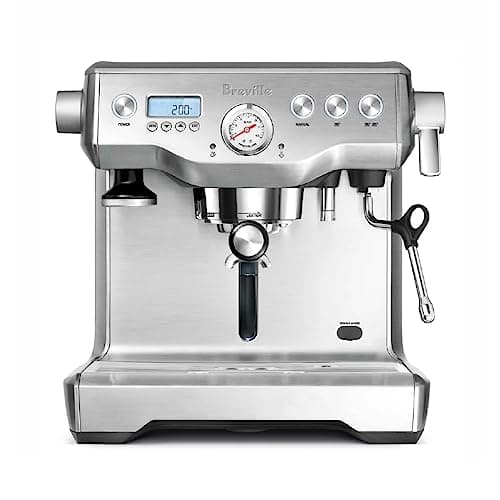 | Households making several milk drinks every morning | Top pick | |
| 2 | 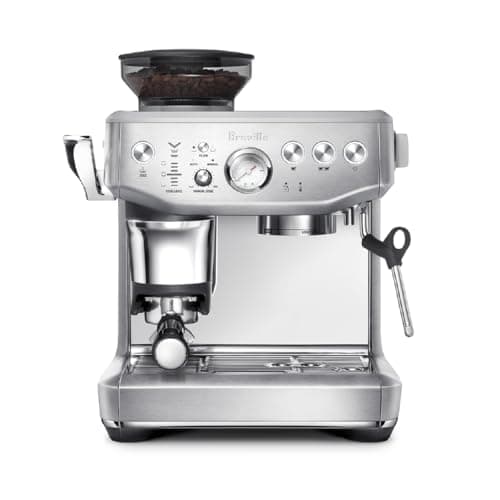 | People who think they want a dual boiler but actually want consistency | The cheaper answer for most people | |
| 3 | 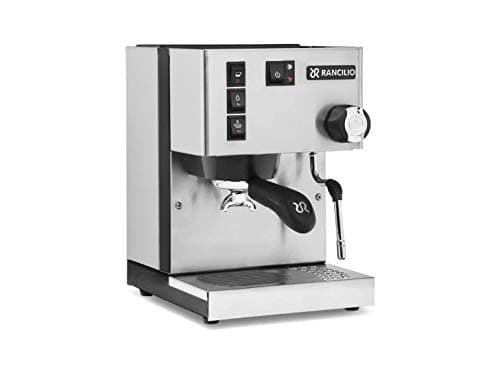 | One or two milk drinks a day, made without hurrying | Best single-boiler alternative | |
| 4 | 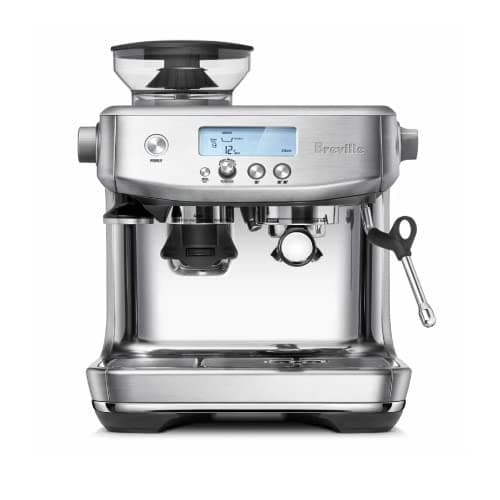 | A different question entirely | Skip this - it is not a dual boiler |
1. Top pick
Breville Dual Boiler
Prosumer tier · A true dual-boiler 58 mm machine: brew and steam at once, PID on the brew boiler.
The dual boiler most people can actually buy, and it is a good one.
The Breville Dual Boiler is the machine that made this architecture available outside specialist dealers, and it remains the practical answer for the great majority of home buyers. Two stainless boilers - one for espresso under PID control, one for steam - mean brewing and texturing happen at the same time rather than in sequence.
The 58 mm portafilter with a 22 g dose capacity is the second half of the value. Commercial basket size means the entire accessory market is open: any tamper, any distribution tool, any bottomless portafilter.
Low-pressure pre-infusion followed by 9 bar extraction is programmable, which is where the control genuinely exceeds the tier below. Pre-infusion length is one of the few variables that reliably improves a difficult coffee, and having it adjustable rather than fixed is a real advantage.
The published dimensions of 37.9 x 40.3 x 37.1 cm should be measured against your counter before ordering. Two boilers also mean a serious power draw and a longer initial heat-up than a thermoblock machine - this is a wake-up-and-switch-on machine, not a three-second one.
Specification
- Portafilter
- 58 mm stainless, 22 g dose
- Boilers
- Dual stainless steel, separate espresso and steam
- Control
- PID on the espresso boiler
- Extraction
- Low-pressure pre-infusion, then 9 bar
- Footprint
- 37.9 x 40.3 x 37.1 cm
What it does well
- Brew and steam simultaneously - the actual reason to buy dual boiler
- 58 mm commercial basket size opens the whole accessory market
- PID plus programmable pre-infusion
Where it gives ground
- Big, heavy and power-hungry
- Overkill if you drink one straight espresso a day
- Still needs a grinder at a matching level to be worth it
Skip it if
Skip it if you drink straight espresso, or make one milk drink at a time without hurrying. You would be paying a large premium for steam capacity that sits idle.
2. The cheaper answer for most people
Breville Barista Express Impress
Mid tier · The Barista Express with assisted tamping and dose correction added.
If the real problem is inconsistency rather than waiting, this fixes it for less.
A large share of the people shopping for a dual boiler are not actually frustrated by waiting. They are frustrated by shots that vary day to day, and they have concluded that a more serious machine is the answer. It usually is not.
The Impress automates the two steps that vary most: dosing, which adjusts grind time from the previous shot's puck depth, and tamping, which applies a consistent 10 kg with a 7-degree twist. Its grinder offers 25 settings feeding a double basket taking up to 19 g.
If your complaint is that the same beans produce a 20-second shot on Monday and a 40-second shot on Wednesday, that is a dosing and puck-preparation problem, and no second boiler will address it.
If your complaint is genuinely that you are standing around waiting to steam milk while your espresso cools, then the dual boiler is the right purchase and this is not.
Specification
- Grinder
- Conical burr, 25 settings
- Basket
- Double basket, up to 19 g
- Tamping
- Assisted lever, 10 kg / 22 lb, 7-degree twist
- Dosing
- Adjusts grind time from the previous shot puck depth
What it does well
- Removes tamp pressure as a variable, which is the hardest one to keep consistent
- 25 grind settings against the Barista Express 16
- Dose feedback on the front panel tells you when you are out of range
Where it gives ground
- Solves a problem a calibrated tamper also solves, for far less
- Same integrated-grinder ceiling as the Barista Express
- The automation is the product; the espresso hardware is unchanged
Skip it if
Skip it if you genuinely make three or more milk drinks in a sitting. The waiting is real and this machine does not remove it.
3. Best single-boiler alternative
Rancilio Silvia
Prosumer tier · A single-boiler 58 mm machine built from commercial-line parts.
Steam power that closes much of the gap, for a fraction of the money.
Before committing to two boilers, it is worth understanding what a good single boiler can do. The Silvia pairs a 12 oz brass boiler with a 1000 W element, and the steam it produces is well beyond what its price suggests - enough to texture a full pitcher properly rather than merely aerating it.
The limitation is the switch. Moving from brew temperature to steam temperature and back takes time, and it is time you spend standing at the machine. For one drink that is a minor inconvenience. For four it is the reason people buy dual boilers.
What you get in exchange is the commercial 58 mm group head and chrome-plated brass portafilter, and a machine with almost nothing in it that cannot be repaired.
For a household of one or two making a latte each in the morning, this closes most of the gap for a large saving - and the money left over buys the grinder that will actually improve your coffee.
Specification
- Group
- Brass brewing group, 58 mm commercial basket standard
- Portafilter
- Chrome-plated brass; takes filters up to 21 g
- Baskets
- 8/16 g and 14/18 g
- Boiler
- 0.3 L single boiler, brew and steam (Rancilio does not publish the material)
- Water tank
- 2 L
- Element
- 120 V, 950-1000 W
- Pump
- Single vibration pump
- Temperature
- Manual regulation by thermostat - no PID
- Dimensions
- 235 x 340 x 290 mm
- Weight
- 14 kg / 30.8 lb
What it does well
- A brass brewing group and chrome-plated brass portafilter hold heat like far more expensive machines
- Commercial parts and a repair path measured in decades
- Steam power well beyond its price class
Where it gives ground
- No PID; temperature surfing is part of the routine unless you add one
- Single boiler means waiting between brewing and steaming
- Unforgiving of a bad grinder - it will show you every flaw
Skip it if
Skip it if the waiting is the specific thing you are trying to solve, or if you want a machine that asks nothing of you.
4. Skip this - it is not a dual boiler
Breville Barista Pro
Mid tier · All-in-one with the fast ThermoJet heater and finer grind adjustment than the Express.
Frequently shopped alongside dual boilers, and architecturally it cannot do the job.
The Barista Pro appears constantly in dual-boiler shopping conversations, and it is worth being clear about why it does not belong in one. It is a single-thermoblock machine: a ThermoJet heater with a three-second heat-up, feeding one water circuit.
That architecture cannot brew and steam simultaneously, because there is one heater and it can only be at one temperature. Everything this page is about is unavailable here, whatever the rest of the specification says.
What it is instead is a good all-in-one - a Baratza-sourced burr set with 30 grind settings in a 16.1 inch wide body - and we recommend it on the main espresso machine list for the buyer that suits.
If a retailer or a listing implies otherwise, the question to ask is direct: how many independent boilers does it have? One heater switching between two temperatures is not a dual boiler, however fast it switches.
Specification
- Grinder
- Baratza European precision burrs, 30 settings
- Heating
- ThermoJet, 3-second heat-up
- Footprint
- 16.1 x 13.8 x 13.1 in
What it does well
- 30 grind settings - nearly double the Barista Express
- Three-second heat-up in an all-in-one body
- Burrs sourced from Baratza rather than a generic set
Where it gives ground
- Still a single thermoblock: no simultaneous brew and steam
- Large footprint
- Grinder is fixed to the machine lifespan
Skip it if
Skip it on this page specifically. It is a fine machine for someone who wants an all-in-one, and it is the wrong machine for anyone who came here to stop waiting between brewing and steaming.
How we picked
Picks come from published manufacturer specifications and from what large numbers of owners consistently report, not from testing - we do not run a lab and we do not pretend to. The full method is here.
This list is short because the category is genuinely small at the retailer we link to. Most dual-boiler and heat-exchanger machines - the Lelit, Profitec, ECM and Rocket range that enthusiast forums discuss - are sold through specialist dealers. We would rather publish four honest entries than pad the list with machines whose buy button cannot exist.
Dual boiler, heat exchanger, single boiler
Scroll the table sideways to see every column.
The mistake this category invites
Buying a dual boiler and pairing it with an entry-level grinder is the most expensive way to be disappointed in home espresso. A dual boiler improves temperature stability and removes the steam wait; it does nothing whatsoever about grind consistency, which is what decides whether a shot channels. If your budget is fixed and you are choosing between a dual boiler with a modest grinder and a single boiler with a serious one, take the second. Our espresso grinder picks are the other half of this purchase.
What to expect on day one
A dual boiler is not a fast machine to start. Two boilers of water need heating, and the machine wants time to stabilize before the first shot - a genuinely different rhythm from a three-second ThermoJet. Most owners put it on a timer or switch it on before showering. If your morning does not have room for that, the honest answer is that a ThermoJet machine plus a standalone milk frother may suit your life better than a dual boiler will.