The short answer
Latte art depends almost entirely on the steam wand, not on the espresso. You need a bare wand you control yourself, enough sustained steam to texture without stalling, and ideally no wait between pulling the shot and steaming. Automatic milk frothing rules a machine out, because it makes the texture decisions for you.
What actually decides whether you can pour art
- 1A bare wand, not a Panarello sleeve. A sleeved frother injects air on your behalf and produces stiff foam. You cannot pour a pattern with stiff foam - it sits on top rather than folding into the espresso.
- 2Enough steam to texture without stalling. If the wand loses power halfway through, the milk stops rolling and the microfoam never forms properly.
- 3Manual control, not automation. Texturing is the sequence of introducing air near the surface and then submerging to roll. An automatic system does that to a preset and does not let you adjust.
- 4A short gap between shot and pour. Textured milk has a working window of around thirty seconds. Anything that lengthens the gap works against you.
Quick picks
The answer first. Tap any row to jump to the full reasoning for that pick.
Prices shown are checked daily against the retailer, as of October 23, 2026. We never write a price into the text of a page.
| # | Product | Best for | Award | Price |
|---|---|---|---|---|
| 1 | 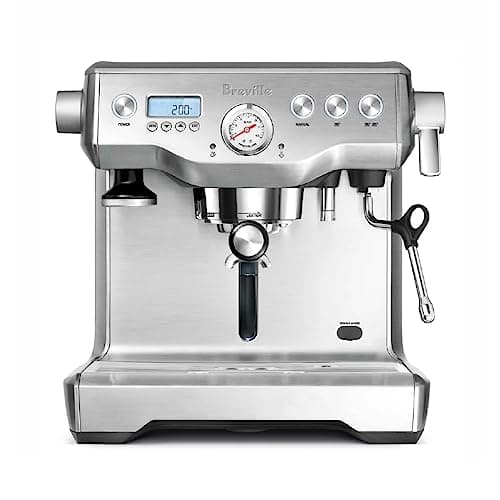 | Anyone serious about pouring patterns | Top pick | |
| 2 | 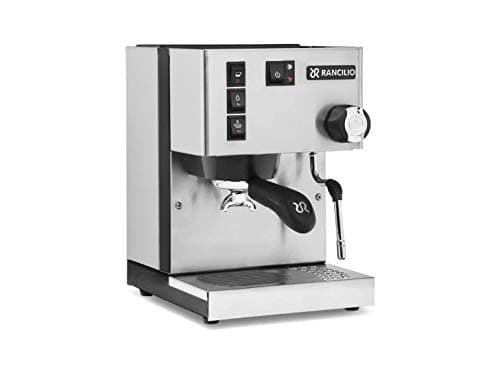 | Learning to texture properly without a dual-boiler budget | Best steam wand for the money | |
| 3 | 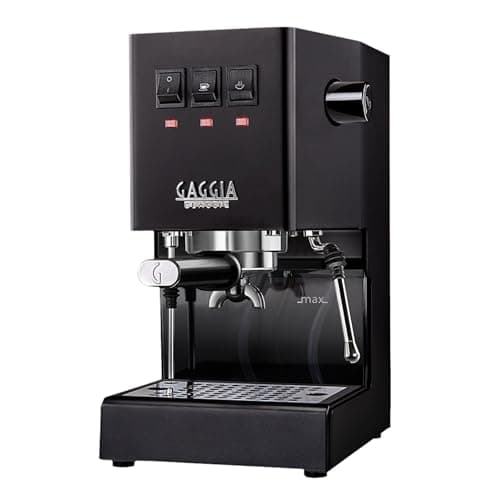 | Learning latte art on a budget | Best value | |
| 4 | 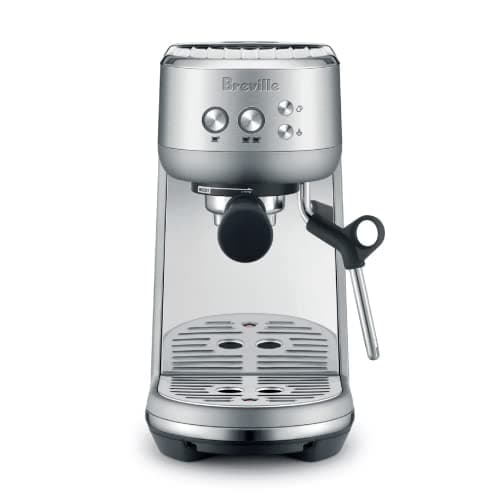 | Small kitchens where a dual boiler is not an option | Best compact | |
| 5 | 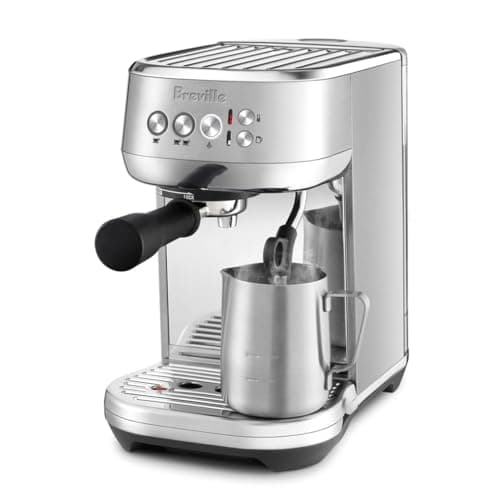 | Everything except latte art | Skip this |
1. Top pick
Breville Dual Boiler
Prosumer tier · A true dual-boiler 58 mm machine: brew and steam at once, PID on the brew boiler.
A dedicated steam boiler means the milk never has to wait for the espresso.
Latte art has one hardware prerequisite that nothing else substitutes for: steam that arrives on demand, at consistent power, for as long as the pitcher needs. A dedicated steam boiler delivers exactly that, and the Breville Dual Boiler is the machine most home buyers can actually get one in.
The practical benefit is not just power, it is timing. Textured milk has a working window of perhaps thirty seconds before the microfoam and liquid begin to separate. On a single-boiler machine you pull the shot, wait for the boiler to reach steam temperature, texture, and then pour - by which point the espresso has been sitting. Two boilers collapse that sequence, so you pour into a fresh shot with fresh milk.
The 58 mm portafilter with a 22 g dose also matters here indirectly: a larger dose gives a more forgiving base for milk, and commercial basket sizing means you can experiment with baskets freely.
The costs are the usual ones - size, power draw and a real warm-up period rather than a three-second one.
Specification
- Portafilter
- 58 mm stainless, 22 g dose
- Boilers
- Dual stainless steel, separate espresso and steam
- Control
- PID on the espresso boiler
- Extraction
- Low-pressure pre-infusion, then 9 bar
- Footprint
- 37.9 x 40.3 x 37.1 cm
What it does well
- Brew and steam simultaneously - the actual reason to buy dual boiler
- 58 mm commercial basket size opens the whole accessory market
- PID plus programmable pre-infusion
Where it gives ground
- Big, heavy and power-hungry
- Overkill if you drink one straight espresso a day
- Still needs a grinder at a matching level to be worth it
Skip it if
Skip it if you make one milk drink a day and are not in a hurry. A capable single boiler pours perfectly good art with a little patience.
2. Best steam wand for the money
Rancilio Silvia
Prosumer tier · A single-boiler 58 mm machine built from commercial-line parts.
A 12 oz brass boiler produces steam far beyond what the price suggests.
The Silvia's steam performance is the thing owners talk about most, and the reason is in the specification: a 12 oz brass boiler heated by a 1000 W element, feeding a bare commercial-style wand.
Bare is the operative word. A wand with an unrestricted tip lets you control the position of the tip in the milk, which is the entire technique of texturing - stretch near the surface to introduce air, then submerge to roll the milk and break the bubbles down into microfoam. A Panarello sleeve does the aerating for you and produces stiff foam you cannot pour with.
The single-boiler switch between brew and steam temperature is the cost. It takes real time, and you will develop a routine around it - typically pulling the shot first, switching to steam, and accepting that the espresso sits for a minute.
For someone learning, that pause is not actually a problem. Texturing is where the difficulty lies, and this machine gives you enough steam to practice properly.
Specification
- Group
- Brass brewing group, 58 mm commercial basket standard
- Portafilter
- Chrome-plated brass; takes filters up to 21 g
- Baskets
- 8/16 g and 14/18 g
- Boiler
- 0.3 L single boiler, brew and steam (Rancilio does not publish the material)
- Water tank
- 2 L
- Element
- 120 V, 950-1000 W
- Pump
- Single vibration pump
- Temperature
- Manual regulation by thermostat - no PID
- Dimensions
- 235 x 340 x 290 mm
- Weight
- 14 kg / 30.8 lb
What it does well
- A brass brewing group and chrome-plated brass portafilter hold heat like far more expensive machines
- Commercial parts and a repair path measured in decades
- Steam power well beyond its price class
Where it gives ground
- No PID; temperature surfing is part of the routine unless you add one
- Single boiler means waiting between brewing and steaming
- Unforgiving of a bad grinder - it will show you every flaw
Skip it if
Skip it if you need to make several drinks quickly. The switching wait scales badly past two.
3. Best value
Gaggia Classic Evo Pro
Mid tier · A 58 mm single-boiler machine with commercial parts and a large modification community.
A two-hole professional wand at a price where Panarello sleeves are the norm.
The specification that puts the Gaggia on this list is the steam wand: a two-hole professional design, of the kind found on commercial machines, rather than the sleeved Panarello frother that dominates this price bracket.
That distinction is the whole difference between milk you can pour with and milk you cannot. A Panarello injects air through a sleeve regardless of what you do, producing stiff, bubbly foam. A bare two-hole wand gives you position control, and position control is the technique.
The rest of the machine supports the goal reasonably: a 58 mm portafilter, a 2.1 L tank and a 3-way solenoid for a dry puck.
The limitation is the boiler. At 140 ml maximum capacity and around 105 ml operating, driven by a 1375 W element, steam is available but recovery between brewing and steaming takes patience. This is a machine for one or two drinks at a time.
Specification
- Portafilter
- 58 mm
- Power
- 1425 W total; 1375 W to the boiler
- Boiler
- 140 ml max capacity, 105 ml operating
- Water tank
- 2.1 L / 72 fl oz
- Steam
- Two-hole professional wand
- Valve
- 3-way solenoid
What it does well
- 58 mm from the start - every basket, tamper and portafilter fits
- The 3-way solenoid gives a dry puck, which cheap machines do not
- Serviceable and heavily documented; parts are everywhere
Where it gives ground
- No PID as shipped; brew temperature drifts with the thermostat
- Long recovery between brewing and steaming
- The modification path is a hobby, not a feature
Skip it if
Skip it if you want steam without a routine. This machine will make you wait, and it will make you time things.
4. Best compact
Breville Bambino
Entry tier · A compact 54 mm espresso machine with a manual steam wand and no grinder.
A manual wand in the smallest serious machine you can buy.
The standard Bambino - not the Plus - is the compact answer here, and the difference between the two models is exactly the point of this page. The Bambino has a manual steam wand you control; the Plus has automatic texturing that removes that control.
For latte art, manual is the only option. The wand is what you use to decide how much air goes in and when to stop adding it, and no automation exposes that decision.
The machine around it is capable: a 54 mm basket taking 18 g, ThermoJet heating in three seconds, low-pressure pre-infusion before 9 bar extraction, in a body 11.9 x 6.1 x 13.5 inches.
Steam power is the honest limitation. A compact thermoblock does not produce the sustained steam a brass boiler does, so texturing takes longer and small pitchers work better than large ones.
Specification
- Portafilter
- 54 mm, 18 g dose
- Heating
- ThermoJet, ready in 3 seconds
- Extraction
- Low-pressure pre-infusion, then 9 bar
- Footprint
- 11.9 x 6.1 x 13.5 in
- Grinder
- None - buy separately
What it does well
- Three-second heat-up means it is genuinely usable on a weekday
- The narrowest footprint of any machine here
- Real steam wand you control yourself
Where it gives ground
- No grinder, so the real budget is machine plus grinder
- Manual milk texturing has a learning curve
- Small tank means frequent refills if you pull several drinks
Skip it if
Skip it if you texture large pitchers or make several drinks at once. There is not enough sustained steam for that.
5. Skip this
Breville Bambino Plus
Entry tier · The Bambino with automatic milk texturing added.
The automatic milk texturing that makes it good elsewhere rules it out here.
This is a machine we recommend on several other pages, and it is genuinely disqualified from this one by its headline feature.
The Bambino Plus textures milk automatically. It heats and aerates to a preset, producing usable microfoam without any technique at all. That is a real benefit for a household that wants cappuccinos and does not want to learn.
It is the wrong purchase if you want to pour patterns, because latte art depends on controlling the texture yourself - how much air, introduced when, and how long you roll the milk afterwards. Automation makes those decisions and does not let you override them.
The espresso hardware is identical to the standard Bambino: 54 mm, 18 g, ThermoJet, 15 bar pump at 9 bar extraction. If latte art is the goal, buy the cheaper model and keep the control.
Specification
- Portafilter
- 54 mm stainless, 18 g dose
- Heating
- ThermoJet, ready in 3 seconds
- Pump
- 15 bar Italian pump, 9 bar extraction
- Milk
- Automatic texturing, 16 fl oz / 480 ml jug
- Footprint
- 11.9 x 7.4 x 14.3 in
What it does well
- Automatic milk texturing gets a usable microfoam without practice
- Same three-second heat-up as the standard Bambino
- Fits a narrow counter with a grinder beside it
Where it gives ground
- You are paying for the milk automation, not better espresso
- Still no grinder
- Auto-steam removes the control an enthusiast eventually wants
Skip it if
Skip it specifically for latte art. Buy it if you want good milk drinks without learning to steam - which is a perfectly reasonable thing to want, just not what this page is about.
The pitcher matters more than people expect
The single cheapest improvement to your latte art is not a machine at all - it is a pitcher the right size for the drink and with a spout shaped to pour a controlled stream. Texturing 5 oz of milk in a 20 oz pitcher does not work, because the wand tip cannot sit at the right depth. Our milk pitcher picks cover the sizes worth owning.
What no machine will fix
Latte art is a skill with a real learning curve, and the machine gets you to the starting line rather than across it. A dual boiler with a great wand in untrained hands produces the same bubbly milk as anything else. Expect weeks, expect to waste milk, and expect the first recognisable heart to arrive well before the first recognisable rosetta.
The espresso underneath matters too, though less than people assume. A shot with good crema gives the milk something to draw against; a thin, fast-running shot does not. If your shots are inconsistent, dial them in before blaming the milk.