The short answer
Choose the De'Longhi Magnifica Evo for the heaviest cup and the most grind adjustment. Choose the Philips 3200 LatteGo if you drink milk drinks daily and want a milk system you will actually clean. Choose the Gaggia Anima if simplicity matters more than presets.
What you are actually buying
A super-automatic is not a better espresso machine. It is a machine that trades the ceiling for the floor: it will never make a great shot, and it will also never make a terrible one. For a lot of households that is exactly the right trade.
Scroll the table sideways to see every column.
Quick picks
The answer first. Tap any row to jump to the full reasoning for that pick.
Prices shown are checked daily against the retailer, as of October 24, 2026. We never write a price into the text of a page.
| # | Product | Best for | Award | Price |
|---|---|---|---|---|
| 1 | 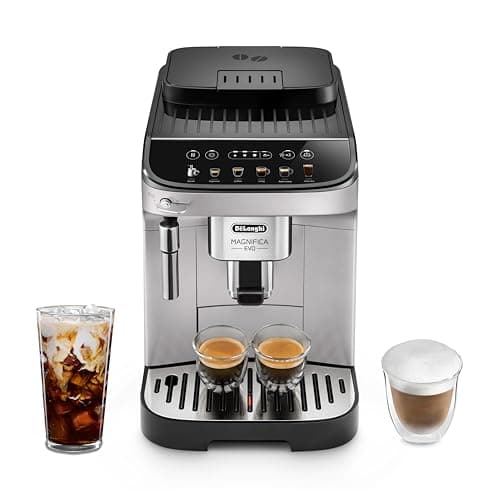 | Someone who wants espresso-style drinks with no process at all | Top pick | |
| 2 | 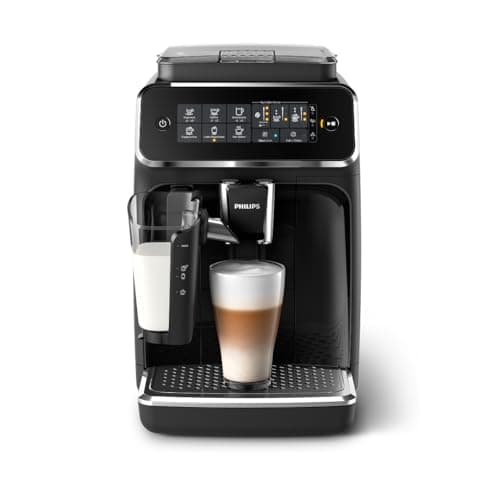 | Milk drinks, without the milk system becoming a chore | Easiest to live with | |
| 3 | 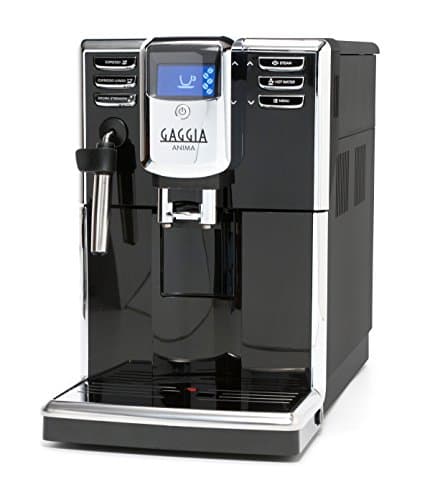 | A household where several people of varying interest use the machine | Simplest | |
| 4 | 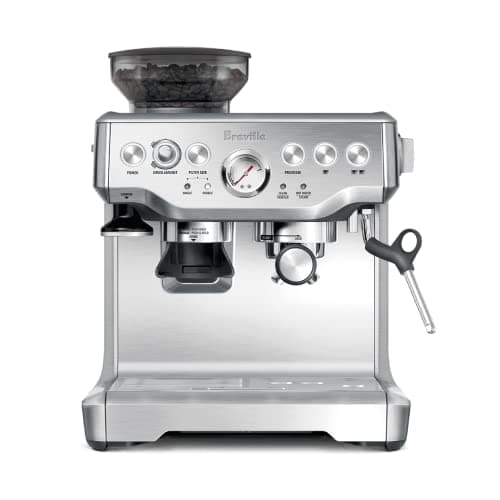 | Anyone who wants control without buying two appliances | Skip this - if you would enjoy the work |
1. Top pick
De Longhi Magnifica Evo
Upper-mid tier · A bean-to-cup machine that grinds, doses, tamps and brews at a button press.
13 grind settings and a small-hole brew basket give it more body than most of the class.
The Magnifica Evo grinds, doses, tamps, brews and ejects the puck without you touching anything. There is no portafilter, so there is nothing to lock in, nothing to level and nothing to knock out.
Its steel conical burr grinder runs 13 settings, which is more adjustment than most machines in this class offer. That matters because grind is the only extraction variable you are given - dose, pressure and yield are all decided by the machine.
In the cup it is on the heavier side for a super-automatic. Its brew unit uses a small-hole basket, which builds more resistance and therefore more body than the freer-flowing designs. If you are coming from a pressurized-basket machine, this will taste closer to familiar.
The maintenance is real and it is the part people skip. The brew unit comes out and needs rinsing, the grinder needs cleaning, and the steam wand needs purging and wiping after every milk drink. Neglect any of them and the cup degrades slowly enough that you will not notice until it is bad.
Specification
- Grinder
- Steel conical burr, 13 settings
- Format
- Super-automatic, bean to cup
- Milk
- Manual frother - a steam wand, not an automatic milk system
What it does well
- Genuinely one-touch - no portafilter, no tamping, no cleanup between drinks
- 13 grind settings is more adjustment than most super-automatics offer
- Its brew unit uses a small-hole basket, which builds more body than most machines in the class
Where it gives ground
- You cannot control dose, yield or shot time - the machine decides all three
- A sealed brew unit means the ceiling is fixed and cannot be raised
- Grinder and brew group both need regular cleaning or the cup degrades quietly
Skip it if
Skip it if you want to dial in a shot. You cannot set the dose, you cannot set the yield, and you cannot time the extraction - the machine decides all three, permanently.
2. Easiest to live with
Philips 3200 LatteGo
Upper-mid tier · A bean-to-cup machine whose milk system is two parts and rinses under a tap.
The two-part milk carafe rinses under a tap in seconds, which no tube-based system can match.
The reason most people fall out of love with a super-automatic is the milk system. Tubes, valves and internal channels carry milk, and milk in a warm tube becomes a problem quickly.
LatteGo is Philips' answer: the carafe is two parts and no tubes at all. It comes apart, goes under a tap, and goes back on. That is the whole routine, and after a year of ownership it is the difference between a machine you use and one you resent.
Its grinder uses ceramic conical burrs across 12 settings. Ceramic does not conduct heat into the grounds the way steel does and wears slowly, though 12 settings is coarser control than the De'Longhi offers.
The cup is lighter and cleaner than the Magnifica Evo's. Whether that reads as refined or as thin depends on what you are used to, and it is worth being honest that people coming from pressurized baskets often find it underwhelming at first.
Specification
- Grinder
- Ceramic conical burr, 12 settings
- Milk system
- LatteGo - two-part, no tubes
- Format
- Super-automatic, bean to cup
What it does well
- The two-part milk carafe is the easiest to clean in the category - no tubes to harbor milk
- Ceramic burrs do not transfer heat the way steel does and wear slowly
- Cleaner, lighter shot than the heavier-bodied machines in the class
Where it gives ground
- 12 settings, and as with all super-automatics you cannot set dose or yield
- Lighter body will disappoint anyone who came from a pressurized basket
- Milk drinks are built by the machine, so latte art is not on the table
Skip it if
Skip it if you want a heavy, syrupy shot. This machine's character is clean and light, and no setting on it will change that.
3. Simplest
Gaggia Anima
Upper-mid tier · A minimal push-button bean-to-cup machine with a ceramic burr grinder.
Ceramic burrs, an Ulka pump and almost no interface - a bean-to-cup machine with nothing to learn.
The Anima is the least complicated machine here, and in a shared kitchen that is a genuine feature. There are few buttons, few menus and correspondingly few ways for someone to leave the machine in a state you then have to fix.
Underneath it uses parts common across Italian machines: a ceramic burr grinder and a 15 bar Ulka vibration pump. Neither is exotic, both are well understood, and both are serviceable.
It is compact for a bean-to-cup machine, which is worth noting because this is a physically large category. A super-automatic has to hold beans, water, a brew unit and a grounds bin, and most of them are considerably bigger than an equivalent manual machine plus grinder.
It has fewer drink presets than the Philips or the De'Longhi. If your household wants one-touch cappuccinos with saved profiles per person, this is not that machine.
Specification
- Grinder
- Ceramic burr
- Pump
- Ulka 15 bar vibration pump
- Format
- Super-automatic, bean to cup
What it does well
- The simplest interface in the category - push a button, get a drink
- Ceramic burrs and an Ulka pump are the same parts used across Italian machines
- Compact for a bean-to-cup machine
Where it gives ground
- Fewer drink presets than the Philips or De Longhi
- Same fundamental limit as every super-automatic: no control over the shot
- Starts higher than the entry price of a good manual machine plus grinder
Skip it if
Skip it if you want programmable drink presets. The Anima's simplicity is exactly the thing that rules that out.
4. Skip this - if you would enjoy the work
Breville Barista Express
Mid tier · The all-in-one: espresso machine with a conical burr grinder built into the case.
Not a super-automatic. Grinds and doses for you, but leaves the shot in your hands.
The Barista Express is the machine people usually mean when they say they want a super-automatic but discover they do not. It has an integrated conical burr grinder, so it still grinds and doses on demand, but the portafilter is yours to tamp and lock in.
That single difference changes everything about the ceiling. You control the dose, you control the tamp, you time the shot, and you adjust based on what came out. When a shot runs fast you fix it, rather than accepting it.
It is also a manual steam wand rather than an automatic milk system, which means latte art is on the table. No super-automatic can pour art, because the machine builds the milk itself.
The cost is about ninety seconds of your morning and a puck to knock out. If that sounds like a pleasant ritual, this is the better buy. If it sounds like a chore, believe yourself and buy a super-automatic.
Specification
- Portafilter
- 54 mm stainless
- Grinder
- Integrated conical burr, 16 settings
- Heating
- Thermocoil, 200 F, PID controlled
- Footprint
- 15.9 x 13.1 x 12.4 in
What it does well
- One box, one price, one plug - nothing else to buy
- PID temperature control at this level is not a given
- Enormous owner base, so parts and answers are easy to find
Where it gives ground
- 16 grind settings is coarse resolution for espresso dialing
- The built-in grinder is the weakest component and cannot be upgraded
- Wide footprint for a single-boiler machine
Skip it if
Skip it if you genuinely want a button. Some people buy this, tire of the routine within a month, and would have been happier with the Magnifica Evo - see the full review.
The sealed brew unit is the whole design
Inside every machine here is a brew unit: a small chamber that receives the grounds, compresses them, passes water through and ejects the puck. It is the reason there is no portafilter, and it is the reason you cannot change the dose.
The chamber has a fixed volume. The machine can put slightly more or slightly less coffee into it, but it cannot use a bigger basket or a finer basket, and you cannot fit an aftermarket one. This is the ceiling, and it is structural rather than a matter of settings.
Maintenance is higher, not lower
This surprises people. A super-automatic looks like less work, and day to day it is. Over a year it is more, because there are more paths for coffee and milk to sit in.
- The brew unit comes out and gets rinsed regularly. Coffee oils build up on it.
- The milk system needs flushing after every session and a proper clean weekly.
- The grinder holds stale grounds in its chute, which taint the next shot.
- The boiler scales like any other, and needs descaling on your water's schedule.
Where the money goes
A super-automatic costs more than a semi-automatic of equivalent cup quality, because it is two appliances and a robot in one box. If you compare on price alone, a manual machine plus a good grinder will beat any bean-to-cup machine on what lands in the cup.
That comparison is only useful if you would actually do the work. A machine you use every day beats a better machine you stopped using in March.