The short answer
A semi-automatic espresso machine controls pressure and temperature and leaves grinding, dosing, tamping and shot length to you. It is the format almost every serious home setup uses, because the variables it hands you are the ones that decide how the coffee tastes.
The three formats, briefly
Scroll the table sideways to see every column.
Quick picks
The answer first. Tap any row to jump to the full reasoning for that pick.
Prices shown are checked daily against the retailer, as of October 23, 2026. We never write a price into the text of a page.
| # | Product | Best for | Award | Price |
|---|---|---|---|---|
| 1 | 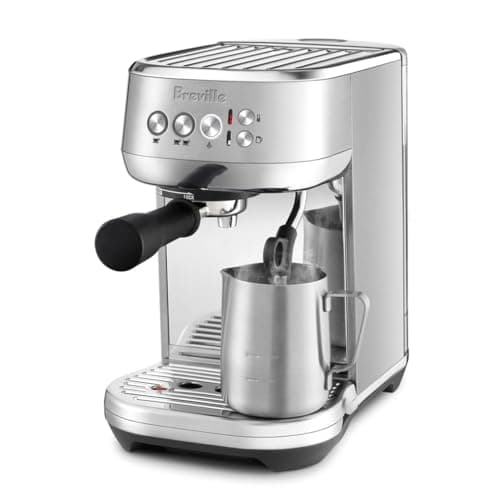 | Most home buyers | Top pick | |
| 2 | 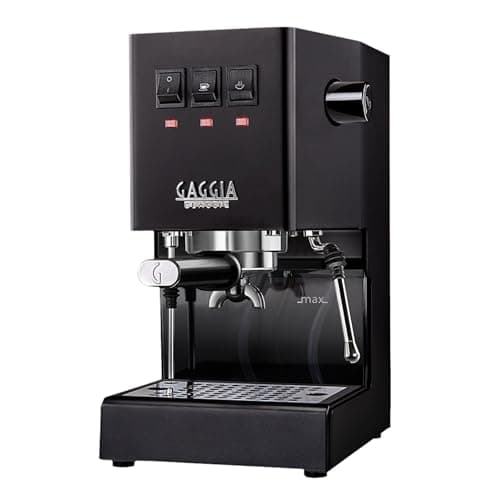 | Someone who wants to understand what they are doing | Most control | |
| 3 | 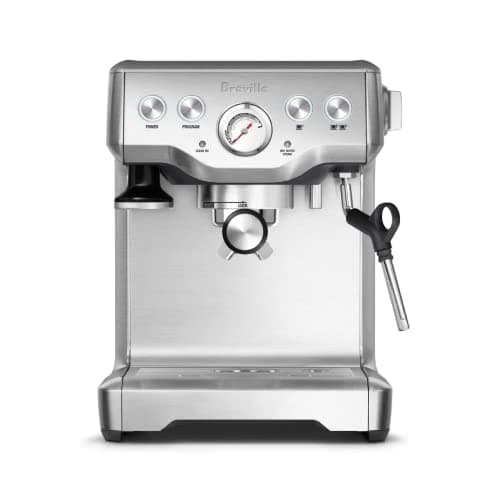 | Households that pull several shots a session | Best for a big tank | |
| 4 | 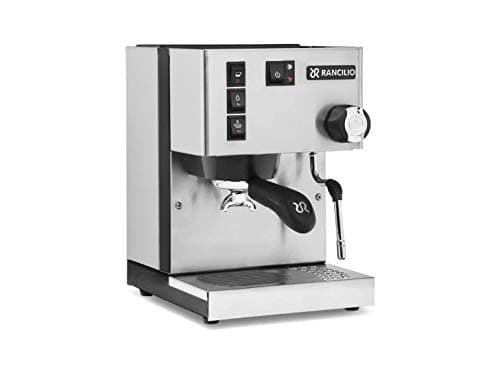 | A decade-long ownership plan | Best build | |
| 5 | 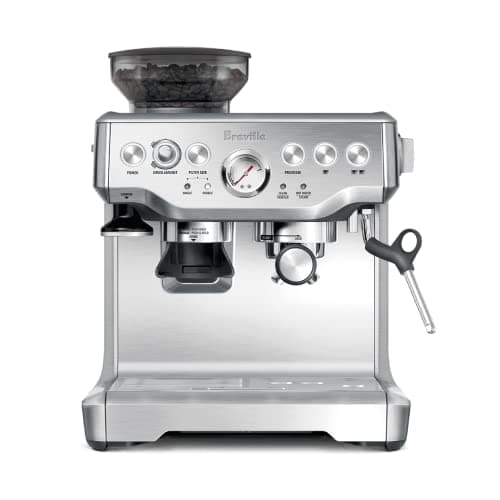 | Buyers who want one purchase | Best with a grinder included | |
| 6 | 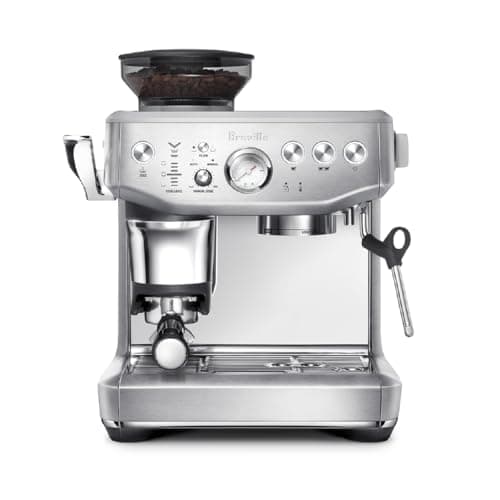 | Multi-user households, not solo learners | Skip this if you are learning |
1. Top pick
Breville Bambino Plus
Entry tier · The Bambino with automatic milk texturing added.
Semi-automatic done at its simplest, and none the worse for it.
The Bambino Plus is semi-automatic in the strict sense: you grind, dose, tamp and start the pump; the machine handles pressure and temperature. The ThermoJet heater reaches extraction temperature in three seconds, low-pressure pre-infusion runs before the 15 bar pump settles to 9 bar at the puck, and the 54 mm basket takes an 18 g dose.
The only automation beyond that is the milk texturing, which is a genuine convenience rather than a compromise on the espresso side.
Because there is no grinder, this machine sits at the center of a setup rather than trying to be the whole setup - and that is the correct shape for a home espresso rig that you intend to improve.
At 11.9 x 7.4 x 14.3 inches it also leaves room on the counter for the grinder that has to go next to it.
Specification
- Portafilter
- 54 mm stainless, 18 g dose
- Heating
- ThermoJet, ready in 3 seconds
- Pump
- 15 bar Italian pump, 9 bar extraction
- Milk
- Automatic texturing, 16 fl oz / 480 ml jug
- Footprint
- 11.9 x 7.4 x 14.3 in
What it does well
- Automatic milk texturing gets a usable microfoam without practice
- Same three-second heat-up as the standard Bambino
- Fits a narrow counter with a grinder beside it
Where it gives ground
- You are paying for the milk automation, not better espresso
- Still no grinder
- Auto-steam removes the control an enthusiast eventually wants
Skip it if
Skip it if you have no grinder and no plan to get one. Semi-automatic assumes you control the grind, and without that control the format has no advantage.
2. Most control
Gaggia Classic Evo Pro
Mid tier · A 58 mm single-boiler machine with commercial parts and a large modification community.
The least automated machine here, and the one that teaches you the most.
The Gaggia is semi-automatic in the oldest sense: a switch starts the pump and another switch stops it. Shot length is entirely yours. There is no volumetric programming, no shot timer, and no PID - the thermostat runs the boiler and you time your shot against the heating light.
That sounds like a burden and it is genuinely educational. Watching the extraction and stopping it yourself teaches you what a 25-second shot looks like in a way a preset never will.
The hardware is serious for the price: a 58 mm portafilter, a 3-way solenoid valve leaving a dry puck, a 2.1 L tank and a two-hole professional steam wand rather than a Panarello sleeve.
The published boiler figures - 140 ml maximum capacity, roughly 105 ml operating, 1375 W element - explain the trade-off honestly. Small boiler, heated hard, so temperature moves and steam recovery takes time.
Specification
- Portafilter
- 58 mm
- Power
- 1425 W total; 1375 W to the boiler
- Boiler
- 140 ml max capacity, 105 ml operating
- Water tank
- 2.1 L / 72 fl oz
- Steam
- Two-hole professional wand
- Valve
- 3-way solenoid
What it does well
- 58 mm from the start - every basket, tamper and portafilter fits
- The 3-way solenoid gives a dry puck, which cheap machines do not
- Serviceable and heavily documented; parts are everywhere
Where it gives ground
- No PID as shipped; brew temperature drifts with the thermostat
- Long recovery between brewing and steaming
- The modification path is a hobby, not a feature
Skip it if
Skip it if you want reproducibility without attention. Everything this machine does well, it does because you are watching it.
3. Best for a big tank
Breville Infuser
Mid tier · A grinder-less 54 mm machine with PID and a larger tank than the Bambino line.
PID and 1.8 liters, in a machine that expects you to bring your own grinder.
The Infuser is the least-discussed Breville and it fits a real gap: a grinder-less 54 mm machine with electronic PID temperature control on a 1650 W thermocoil, and a 61 fl oz (1.8 L) removable tank with a filter.
That tank is the specification that matters here. The Bambino line's smaller reservoir is fine for two drinks and irritating for six, and if your household drinks coffee in volume the difference is felt every day.
Low-pressure pre-infusion is standard, and auto-purge resets brew temperature after steaming so the next shot is not pulled through overheated water - a genuinely useful automation on a single-boiler machine.
The trade against the Bambino line is speed: a thermocoil takes real time to come up where a ThermoJet does not.
Specification
- Portafilter
- 54 mm stainless, commercial-style spouts
- Heating
- 1650 W thermocoil with electronic PID
- Water tank
- 61 fl oz / 1.8 L, removable, filtered
- Extraction
- Low-pressure pre-infusion
What it does well
- PID plus a big tank at a grinder-less price
- Auto-purge resets brew temperature after steaming
- Pairs well with a serious standalone grinder
Where it gives ground
- Slower to heat than the ThermoJet machines
- Older design; the Bambino line gets more attention
- Manual steam wand only
Skip it if
Skip it if you want a machine ready in seconds. The Bambino line is the answer to that question, not this.
4. Best build
Rancilio Silvia
Prosumer tier · A single-boiler 58 mm machine built from commercial-line parts.
Semi-automatic with commercial internals and no electronic help at all.
The Silvia is the machine on this list most likely to outlive everything else in your kitchen. A 58 mm commercial group head, a chrome-plated brass portafilter, a 12 oz brass boiler and a 1000 W element, with a 2 L tank.
Semi-automatic here means genuinely manual control over shot length, with the machine handling only pressure and a thermostat-governed temperature. Every extraction decision is yours.
Brass thermal mass is what makes that workable. The group holds temperature through the shot, which is exactly what a machine with no PID needs in order to be repeatable.
Steam power is the pleasant surprise - well beyond the class - and the single-boiler wait between brewing and steaming is the corresponding cost.
Specification
- Group
- Brass brewing group, 58 mm commercial basket standard
- Portafilter
- Chrome-plated brass; takes filters up to 21 g
- Baskets
- 8/16 g and 14/18 g
- Boiler
- 0.3 L single boiler, brew and steam (Rancilio does not publish the material)
- Water tank
- 2 L
- Element
- 120 V, 950-1000 W
- Pump
- Single vibration pump
- Temperature
- Manual regulation by thermostat - no PID
- Dimensions
- 235 x 340 x 290 mm
- Weight
- 14 kg / 30.8 lb
What it does well
- A brass brewing group and chrome-plated brass portafilter hold heat like far more expensive machines
- Commercial parts and a repair path measured in decades
- Steam power well beyond its price class
Where it gives ground
- No PID; temperature surfing is part of the routine unless you add one
- Single boiler means waiting between brewing and steaming
- Unforgiving of a bad grinder - it will show you every flaw
Skip it if
Skip it if your grinder is not up to it. The Silvia does not smooth over grind problems; it displays them.
5. Best with a grinder included
Breville Barista Express
Mid tier · The all-in-one: espresso machine with a conical burr grinder built into the case.
Semi-automatic espresso with the grinder decision made for you.
The Barista Express is semi-automatic on the espresso side - you dose, tamp and control the shot - with the grinder integrated into the same case. PID temperature control at 200 F runs the thermocoil.
For a buyer who wants a single purchase and a single thing to learn, that combination is genuinely the right answer, and its enormous owner base means answers to your questions already exist.
The 16 grind settings are the constraint. Semi-automatic espresso assumes you can adjust the grind precisely, and sixteen steps across the whole range is coarse for that job. You will find a setting that works rather than the setting that is right.
It is 15.9 inches wide, which is the other specification worth checking before you order.
Specification
- Portafilter
- 54 mm stainless
- Grinder
- Integrated conical burr, 16 settings
- Heating
- Thermocoil, 200 F, PID controlled
- Footprint
- 15.9 x 13.1 x 12.4 in
What it does well
- One box, one price, one plug - nothing else to buy
- PID temperature control at this level is not a given
- Enormous owner base, so parts and answers are easy to find
Where it gives ground
- 16 grind settings is coarse resolution for espresso dialing
- The built-in grinder is the weakest component and cannot be upgraded
- Wide footprint for a single-boiler machine
Skip it if
Skip it if you already own a grinder, or if you expect to keep refining shots. The integrated grinder is a ceiling you cannot raise.
6. Skip this if you are learning
Breville Barista Express Impress
Mid tier · The Barista Express with assisted tamping and dose correction added.
It automates the two steps that teach you the most.
The Impress is a good machine and there is a real buyer for it - a household where several people make coffee and only one has practiced. Intelligent dosing adjusts grind time from the previous shot's puck depth, and assisted tamping applies a consistent 10 kg with a 7-degree twist.
But this page is about semi-automatic machines, and the reason to choose semi-automatic is to control the variables yourself. Automating dosing and tamping removes precisely the two steps whose feedback teaches you what a good puck feels like.
The grinder is genuinely better than the standard Express - 25 settings against 16, feeding a 19 g double basket - and if that is what you are buying, that is a reasonable purchase.
But a calibrated tamper delivers consistent tamp pressure for a small fraction of the premium, and it does not stop you learning what you are doing.
Specification
- Grinder
- Conical burr, 25 settings
- Basket
- Double basket, up to 19 g
- Tamping
- Assisted lever, 10 kg / 22 lb, 7-degree twist
- Dosing
- Adjusts grind time from the previous shot puck depth
What it does well
- Removes tamp pressure as a variable, which is the hardest one to keep consistent
- 25 grind settings against the Barista Express 16
- Dose feedback on the front panel tells you when you are out of range
Where it gives ground
- Solves a problem a calibrated tamper also solves, for far less
- Same integrated-grinder ceiling as the Barista Express
- The automation is the product; the espresso hardware is unchanged
Skip it if
Skip it if you are the only person using the machine and you want to get good. Buy a calibrated tamper and a scale instead.
How we picked
Picks come from published manufacturer specifications and from what large numbers of owners consistently report, not from testing - we do not run a lab and we do not pretend to. The full method is here.
Why semi-automatic is the right default
The variables that decide how espresso tastes are grind size, dose, distribution and shot length. A semi-automatic machine hands you all four and takes care of the two things that are tedious to do by hand - maintaining pressure and holding temperature. That is a sensible division of labour, and it is why the format has not been displaced despite decades of automation attempts.
Super-automatic machines take those variables away in exchange for pressing one button. They make consistent coffee and they cap how good it can be, because you cannot adjust what you cannot reach.
What you need alongside a semi-automatic machine
- 1A grinder with real adjustment resolution. This is not optional. See espresso grinders.
- 2A scale. You cannot control dose and yield without measuring them. Scale picks.
- 3A way to break up clumps. A WDT tool costs very little and prevents channeling.
- 4A method. How to dial in espresso is the process that turns those three into a repeatable shot.