The short answer
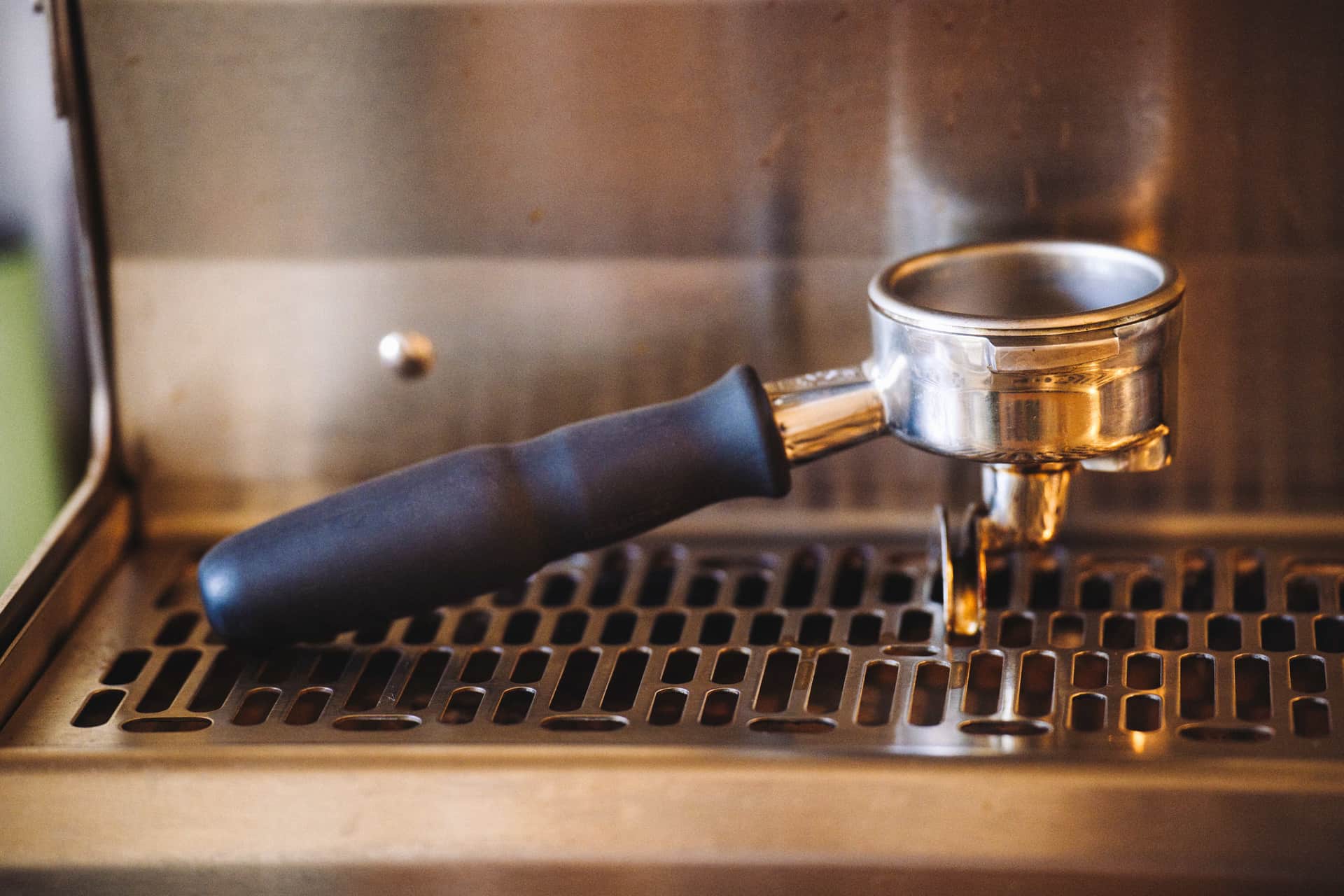
An E61 group head is a large brass casting with a thermosiphon that circulates hot water through it continuously, so the group is always at temperature. It buys thermal stability and a mechanical pre-infusion. Most E61 machines are sold through specialist espresso dealers rather than the retailer this site links to, so we cannot give you a buy button for one - and we would rather say that than pretend otherwise.
What the E61 group actually is
The E61 is a group head design first produced in 1961 and still made, largely unchanged, by many manufacturers. Its defining features are a heavy brass casting, a thermosiphon loop that circulates water from the boiler through the group continuously so the metal is always hot, and a three-position lever that gives a mechanical pre-infusion phase before full pump pressure arrives.
The consequence is that the group is at a stable, known temperature whenever you use it, without electronics. That stability is the reason the design has survived sixty years, and it is what people are really buying when they shop for an E61 machine.
Why this page has no E61 machines on it
We link to a single retailer, and the E61 machines that matter - the Lelit, Profitec, ECM, Rocket and Bezzera range - are largely not sold there. We could write a list of them anyway, but every buy button would be broken or would send you somewhere we have no relationship with. That is a worse outcome than telling you plainly that this is a specialist-dealer category and pointing you at what we can genuinely help with.
Quick picks
The answer first. Tap any row to jump to the full reasoning for that pick.
Prices shown are checked daily against the retailer, as of October 23, 2026. We never write a price into the text of a page.
| # | Product | Best for | Award | Price |
|---|---|---|---|---|
| 1 | 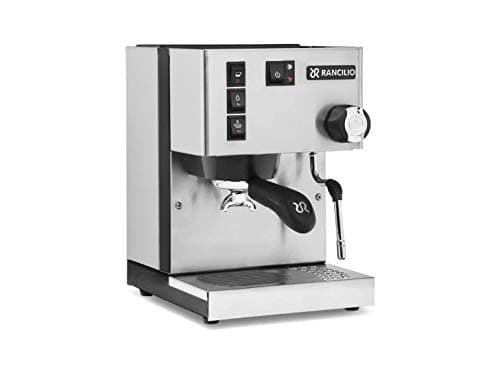 | Buyers whose real goal is temperature stability | Closest available alternative | |
| 2 | 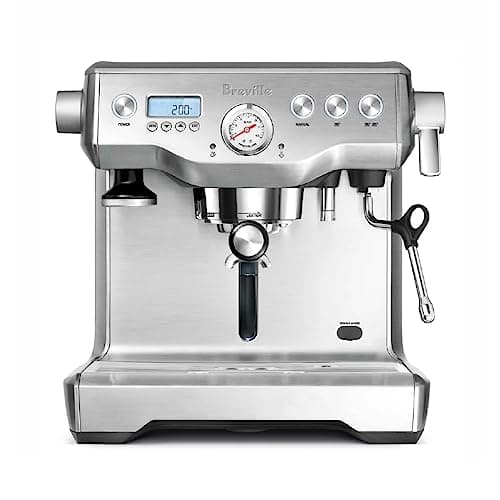 | Buyers who want stability without a warm-up ritual | Best modern alternative | |
| 3 | 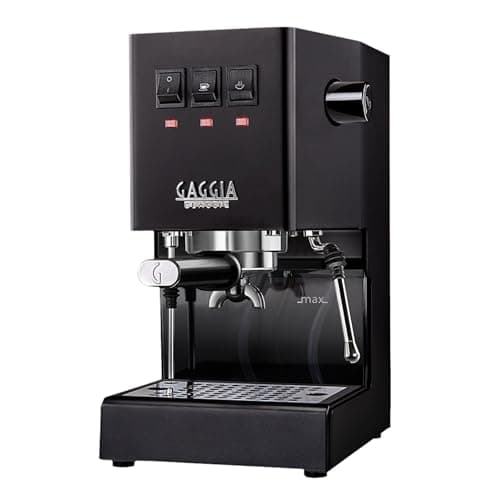 | Buyers who want commercial parts without the outlay | Best cheap route to 58 mm |
1. Closest available alternative
Rancilio Silvia
Prosumer tier · A single-boiler 58 mm machine built from commercial-line parts.
Thermal mass in brass, which is the actual mechanism people want from an E61.
Strip the E61 down to what it does, and the answer is thermal mass: a large lump of heated brass that the water passes through, arriving at the puck at a stable temperature regardless of how long the machine has been idle.
The Silvia is not an E61 machine and we are not going to pretend it is. But it achieves the same mechanism through the same material: a 58 mm commercial group head, a chrome-plated brass portafilter and a 12 oz brass boiler. Heat is stored in metal rather than managed by electronics.
If what you actually want is a shot that tastes the same on the fifth pull as on the first, this delivers that through the same physics, at a price the E61 category does not reach.
It shares the E61's demands too. There is no PID, and the machine wants a real warm-up before the first shot.
Specification
- Group
- Brass brewing group, 58 mm commercial basket standard
- Portafilter
- Chrome-plated brass; takes filters up to 21 g
- Baskets
- 8/16 g and 14/18 g
- Boiler
- 0.3 L single boiler, brew and steam (Rancilio does not publish the material)
- Water tank
- 2 L
- Element
- 120 V, 950-1000 W
- Pump
- Single vibration pump
- Temperature
- Manual regulation by thermostat - no PID
- Dimensions
- 235 x 340 x 290 mm
- Weight
- 14 kg / 30.8 lb
What it does well
- A brass brewing group and chrome-plated brass portafilter hold heat like far more expensive machines
- Commercial parts and a repair path measured in decades
- Steam power well beyond its price class
Where it gives ground
- No PID; temperature surfing is part of the routine unless you add one
- Single boiler means waiting between brewing and steaming
- Unforgiving of a bad grinder - it will show you every flaw
Skip it if
Skip it if you specifically want the E61 mechanism itself - the thermosiphon circulation and the classic lever paddle. That is a specialist-dealer purchase, not one we can help with.
2. Best modern alternative
Breville Dual Boiler
Prosumer tier · A true dual-boiler 58 mm machine: brew and steam at once, PID on the brew boiler.
Solves the same stability problem electronically instead of thermally.
The other route to a stable brew temperature is to measure and control it rather than to store it. The Breville Dual Boiler puts PID control on a dedicated stainless espresso boiler, which holds temperature within a tight band without needing a mass of brass to do it.
It also delivers the other thing E61 buyers usually want: simultaneous brewing and steaming, from a genuinely separate steam boiler.
The 58 mm portafilter with a 22 g dose keeps you in the same accessory ecosystem as any E61 machine, so a tamper or basket bought now carries forward.
The trade against a brass group is character rather than performance. An E61 machine is a mechanical object with visible working parts; this is an appliance that does the job well. Which of those you want is a real preference and not a specification.
Specification
- Portafilter
- 58 mm stainless, 22 g dose
- Boilers
- Dual stainless steel, separate espresso and steam
- Control
- PID on the espresso boiler
- Extraction
- Low-pressure pre-infusion, then 9 bar
- Footprint
- 37.9 x 40.3 x 37.1 cm
What it does well
- Brew and steam simultaneously - the actual reason to buy dual boiler
- 58 mm commercial basket size opens the whole accessory market
- PID plus programmable pre-infusion
Where it gives ground
- Big, heavy and power-hungry
- Overkill if you drink one straight espresso a day
- Still needs a grinder at a matching level to be worth it
Skip it if
Skip it if the appeal of E61 is the mechanism and the object rather than the result. No amount of PID scratches that itch.
3. Best cheap route to 58 mm
Gaggia Classic Evo Pro
Mid tier · A 58 mm single-boiler machine with commercial parts and a large modification community.
Not an E61, but it puts you in the same accessory ecosystem for far less.
A significant part of the E61 appeal is practical rather than thermal: these are 58 mm machines, and 58 mm is where the good accessories live.
The Gaggia Classic Evo Pro gets you there for a fraction of the price, with a 58 mm portafilter, a 3-way solenoid valve for a dry puck, a 2.1 L tank and a two-hole professional steam wand.
What it does not get you is thermal stability. The boiler is small - 140 ml maximum, about 105 ml operating, heated by a 1375 W element - which is nearly the opposite of the E61 approach, and it is why timing the shot against the heating light is part of owning one.
As a way to enter the 58 mm world and build an accessory kit that will carry forward to an E61 machine later, it is hard to beat.
Specification
- Portafilter
- 58 mm
- Power
- 1425 W total; 1375 W to the boiler
- Boiler
- 140 ml max capacity, 105 ml operating
- Water tank
- 2.1 L / 72 fl oz
- Steam
- Two-hole professional wand
- Valve
- 3-way solenoid
What it does well
- 58 mm from the start - every basket, tamper and portafilter fits
- The 3-way solenoid gives a dry puck, which cheap machines do not
- Serviceable and heavily documented; parts are everywhere
Where it gives ground
- No PID as shipped; brew temperature drifts with the thermostat
- Long recovery between brewing and steaming
- The modification path is a hobby, not a feature
Skip it if
Skip it if temperature stability is your actual complaint. This machine has less of it than almost anything else on this page.
If you want the E61 itself
Buy it from a specialist espresso dealer who will support it. That is not a limitation of the machines - it is how the category works, and it is a real advantage: these machines are serviceable for decades and having a dealer who knows them matters more than the purchase price. Ask about group gasket replacement intervals, whether the machine is plumbable, and what the boiler is made of.
The pre-infusion question
The E61's mechanical pre-infusion is often described as unique. It is not, any more. The Breville machines on this site publish low-pressure pre-infusion as a standard feature, and on the Dual Boiler it is programmable rather than fixed. The E61 does it with a lever and a spring rather than a controller, which is charming and mechanically satisfying, and the effect on the shot is broadly similar.
What to do next
- If you want thermal stability: look at machines under $1,000, where brass construction appears.
- If you want simultaneous brew and steam: the dual boiler page is the relevant one.
- If you want 58 mm accessories: start with the tamper picks and distribution tools - they will fit an E61 machine later.
- If you want to understand what temperature stability changes: how to dial in espresso.