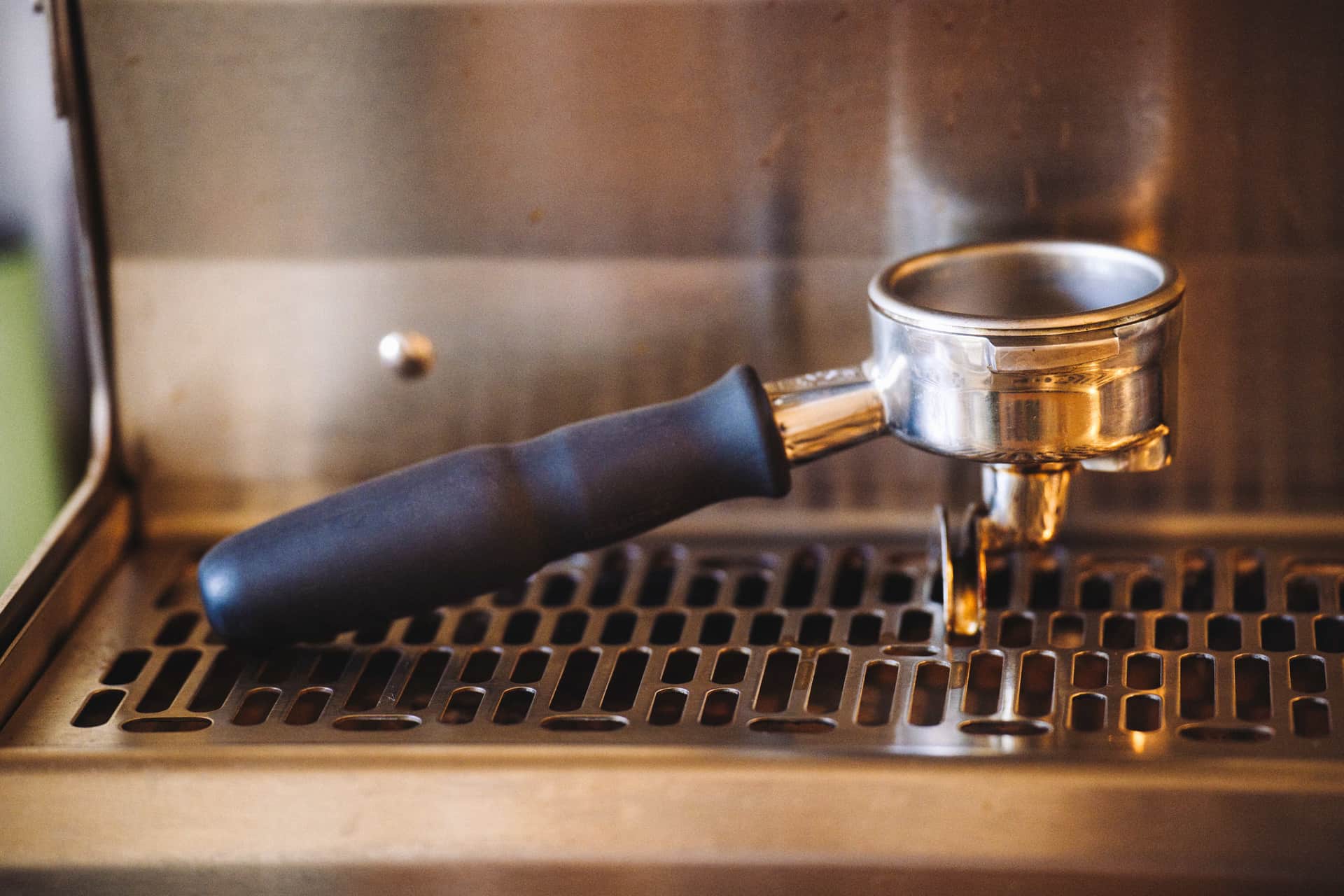
The short answer
A dual boiler brews and steams at the same time and holds brew temperature steadily; a single boiler switches between the two. If you make several milk drinks in a row, a dual boiler is worth it. If you drink espresso straight or one milk drink at a time, a single boiler or a heat-on-demand machine is enough.
Three layouts
Scroll the table sideways to see every column.
Quick picks
The answer first. Tap any row to jump to the full reasoning for that pick.
Prices shown are checked daily against the retailer, as of October 25, 2026. We never write a price into the text of a page.
| # | Product | Best for | Award | Price |
|---|---|---|---|---|
| 1 | 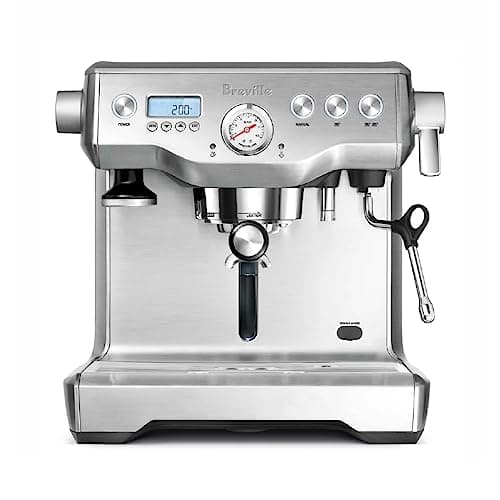 | Several milk drinks in a row | Dual boiler | |
| 2 | 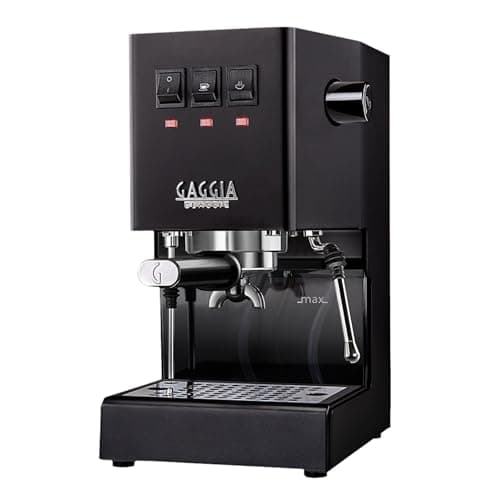 | Espresso first, the occasional milk drink | Single boiler | |
| 3 | 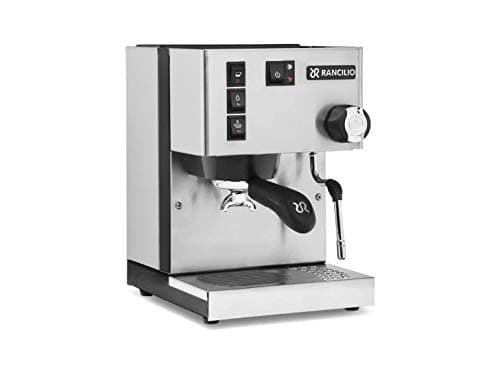 | Milk drinks from a single-boiler machine | Single boiler, larger | |
| 4 | 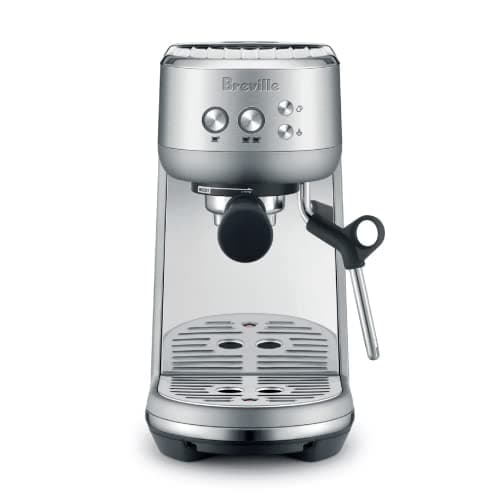 | One or two drinks, with no warm-up | Heat on demand |
1. Dual boiler
Breville Dual Boiler
Prosumer tier · A true dual-boiler 58 mm machine: brew and steam at once, PID on the brew boiler.
Separate espresso and steam boilers, with PID on the espresso side.
The Breville Dual Boiler has two stainless steel boilers - one for espresso, one for steam - with a PID on the espresso boiler, a 58 mm portafilter with a 22 g dose, and low-pressure pre-infusion before 9 bar extraction.
Two boilers mean you can brew and steam at the same time, which changes how a run of milk drinks feels.
A dedicated brew boiler under PID holds temperature steadily, shot after shot.
It is large - 37.9 x 40.3 x 37.1 cm - and the most expensive layout - see dual boiler machines.
Specification
- Portafilter
- 58 mm stainless, 22 g dose
- Boilers
- Dual stainless steel, separate espresso and steam
- Control
- PID on the espresso boiler
- Extraction
- Low-pressure pre-infusion, then 9 bar
- Footprint
- 37.9 x 40.3 x 37.1 cm
What it does well
- Brew and steam simultaneously - the actual reason to buy dual boiler
- 58 mm commercial basket size opens the whole accessory market
- PID plus programmable pre-infusion
Where it gives ground
- Big, heavy and power-hungry
- Overkill if you drink one straight espresso a day
- Still needs a grinder at a matching level to be worth it
Skip it if
Skip it if you drink espresso without milk. Most of the extra buys steam capability you would not use.
2. Single boiler
Gaggia Classic Evo Pro
Mid tier · A 58 mm single-boiler machine with commercial parts and a large modification community.
One small boiler for brewing and steaming, one at a time.
The Classic Evo Pro has a single boiler of 140 ml maximum, heated by a 1375 W element, with a 58 mm portafilter, a 3-way solenoid and a two-hole wand.
One boiler means you brew, then raise the temperature to steam - you cannot do both at once.
With no PID, brew temperature moves within the thermostat's band.
It is the classic entry point to 58 mm espresso - see the Gaggia review.
Specification
- Portafilter
- 58 mm
- Power
- 1425 W total; 1375 W to the boiler
- Boiler
- 140 ml max capacity, 105 ml operating
- Water tank
- 2.1 L / 72 fl oz
- Steam
- Two-hole professional wand
- Valve
- 3-way solenoid
What it does well
- 58 mm from the start - every basket, tamper and portafilter fits
- The 3-way solenoid gives a dry puck, which cheap machines do not
- Serviceable and heavily documented; parts are everywhere
Where it gives ground
- No PID as shipped; brew temperature drifts with the thermostat
- Long recovery between brewing and steaming
- The modification path is a hobby, not a feature
Skip it if
Skip it if you make several milk drinks back to back. The switching adds up.
3. Single boiler, larger
Rancilio Silvia
Prosumer tier · A single-boiler 58 mm machine built from commercial-line parts.
A 12 oz brass boiler with steam power beyond its price class.
The Silvia uses a 12 oz brass boiler with a 1000 W element, a 58 mm commercial group head and a 2 L tank.
Its brass group and boiler hold heat well, and its steam power is well beyond its price class.
It still brews and steams one at a time.
See Gaggia vs Silvia.
Specification
- Group
- Brass brewing group, 58 mm commercial basket standard
- Portafilter
- Chrome-plated brass; takes filters up to 21 g
- Baskets
- 8/16 g and 14/18 g
- Boiler
- 0.3 L single boiler, brew and steam (Rancilio does not publish the material)
- Water tank
- 2 L
- Element
- 120 V, 950-1000 W
- Pump
- Single vibration pump
- Temperature
- Manual regulation by thermostat - no PID
- Dimensions
- 235 x 340 x 290 mm
- Weight
- 14 kg / 30.8 lb
What it does well
- A brass brewing group and chrome-plated brass portafilter hold heat like far more expensive machines
- Commercial parts and a repair path measured in decades
- Steam power well beyond its price class
Where it gives ground
- No PID; temperature surfing is part of the routine unless you add one
- Single boiler means waiting between brewing and steaming
- Unforgiving of a bad grinder - it will show you every flaw
Skip it if
Skip it if you need to brew and steam simultaneously. Only a dual boiler does that.
4. Heat on demand
Breville Bambino
Entry tier · A compact 54 mm espresso machine with a manual steam wand and no grinder.
No boiler at all - a ThermoJet heater ready in about three seconds.
The Bambino heats water on demand with a ThermoJet heater, ready in about three seconds, rather than keeping a boiler hot.
It switches between brewing and steaming like a single boiler, but quickly and without a long warm-up.
It uses a 54 mm portafilter with an 18 g dose and a manual steam wand.
Specification
- Portafilter
- 54 mm, 18 g dose
- Heating
- ThermoJet, ready in 3 seconds
- Extraction
- Low-pressure pre-infusion, then 9 bar
- Footprint
- 11.9 x 6.1 x 13.5 in
- Grinder
- None - buy separately
What it does well
- Three-second heat-up means it is genuinely usable on a weekday
- The narrowest footprint of any machine here
- Real steam wand you control yourself
Where it gives ground
- No grinder, so the real budget is machine plus grinder
- Manual milk texturing has a learning curve
- Small tank means frequent refills if you pull several drinks
Skip it if
Skip it if you make several milk drinks at once. It cannot brew and steam simultaneously.
When a dual boiler matters
- Several milk drinks in a row, where waiting between brewing and steaming adds up.
- Steady temperature, from a dedicated brew boiler under PID.
- Entertaining, when four flat whites have to arrive together.
When it does not
- Straight espresso, where steam capacity is never used.
- One milk drink a day, where switching takes a minute you will not notice.
- A small counter, where a dual boiler's size is a real cost.