The short answer
Choose the Rancilio Silvia if milk drinks matter - its 12 oz brass boiler and commercial-style wand produce strong steam. Choose the Gaggia Classic Pro if you drink mostly espresso and want a solenoid valve and backflushing. Both are 58 mm, and both need a good grinder.
Side by side
Scroll the table sideways to see every column.
By the published figures, the Silvia's boiler holds roughly two and a half times the Gaggia's maximum volume - 12 oz is about 355 ml against 140 ml - while the Gaggia puts more power into less water.
Quick picks
The answer first. Tap any row to jump to the full reasoning for that pick.
Prices shown are checked daily against the retailer, as of October 25, 2026. We never write a price into the text of a page.
| # | Product | Best for | Award | Price |
|---|---|---|---|---|
| 1 | 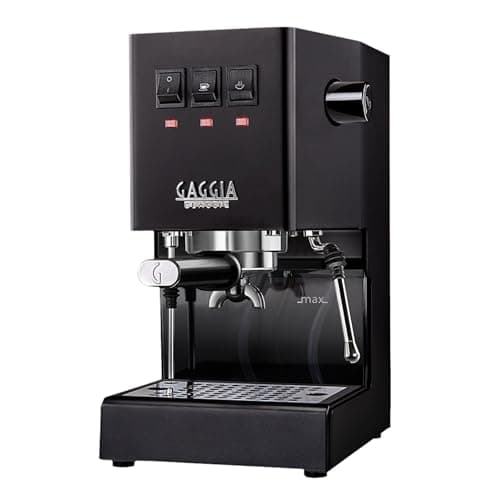 | Mostly espresso, with the occasional milk drink | Choose this for espresso first | |
| 2 | 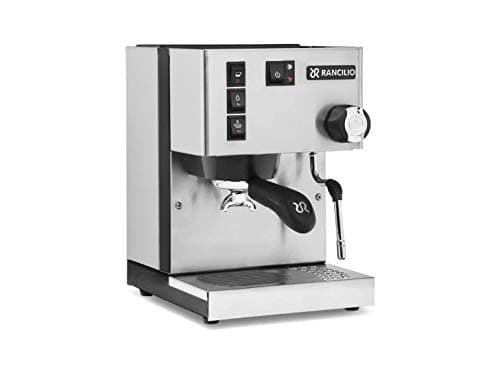 | Milk drinks, and a machine built to last | Choose this for milk |
1. Choose this for espresso first
Gaggia Classic Evo Pro
Mid tier · A 58 mm single-boiler machine with commercial parts and a large modification community.
A smaller boiler with a bigger element, a solenoid valve and a two-hole wand.
The Classic Evo Pro is a 58 mm single-boiler machine: 1425 W in total, 1375 W to a boiler of 140 ml maximum and around 105 ml operating, a 2.1 L tank, a 3-way solenoid valve and a two-hole professional steam wand.
By the published figures, it puts more heating power into less water than the Silvia.
The solenoid releases pressure after the shot so the puck comes out dry, and it allows backflushing.
There is no PID, so brew temperature moves within the thermostat's band and owners learn to time shots against the heating cycle.
Specification
- Portafilter
- 58 mm
- Power
- 1425 W total; 1375 W to the boiler
- Boiler
- 140 ml max capacity, 105 ml operating
- Water tank
- 2.1 L / 72 fl oz
- Steam
- Two-hole professional wand
- Valve
- 3-way solenoid
What it does well
- 58 mm from the start - every basket, tamper and portafilter fits
- The 3-way solenoid gives a dry puck, which cheap machines do not
- Serviceable and heavily documented; parts are everywhere
Where it gives ground
- No PID as shipped; brew temperature drifts with the thermostat
- Long recovery between brewing and steaming
- The modification path is a hobby, not a feature
Skip it if
Skip it if milk drinks for several people are the priority. The Silvia's larger boiler is built for steam - see the Gaggia review.
2. Choose this for milk
Rancilio Silvia
Prosumer tier · A single-boiler 58 mm machine built from commercial-line parts.
A 12 oz brass boiler whose steam goes well beyond its price.
The Silvia pairs a 58 mm commercial group head and a chrome-plated brass portafilter with a 12 oz brass boiler, a 1000 W element and a 2 L tank.
Its steam is what owners talk about most. The larger brass boiler feeds a bare commercial-style wand with enough steam to texture a full pitcher properly rather than merely aerate it.
Brass and a larger boiler also mean more thermal mass, which helps a single-boiler machine hold its temperature.
It does not smooth over grind problems; it displays them. That is a virtue with a good grinder and a problem without one.
Specification
- Group
- Brass brewing group, 58 mm commercial basket standard
- Portafilter
- Chrome-plated brass; takes filters up to 21 g
- Baskets
- 8/16 g and 14/18 g
- Boiler
- 0.3 L single boiler, brew and steam (Rancilio does not publish the material)
- Water tank
- 2 L
- Element
- 120 V, 950-1000 W
- Pump
- Single vibration pump
- Temperature
- Manual regulation by thermostat - no PID
- Dimensions
- 235 x 340 x 290 mm
- Weight
- 14 kg / 30.8 lb
What it does well
- A brass brewing group and chrome-plated brass portafilter hold heat like far more expensive machines
- Commercial parts and a repair path measured in decades
- Steam power well beyond its price class
Where it gives ground
- No PID; temperature surfing is part of the routine unless you add one
- Single boiler means waiting between brewing and steaming
- Unforgiving of a bad grinder - it will show you every flaw
Skip it if
Skip it if your grinder is not up to espresso. The Silvia shows every flaw - see espresso grinders, and the Silvia review for the PID question before you commit.
What the boiler difference means
A larger boiler holds more steam and more heat. That is why the Silvia is known for its steam: it can texture a full pitcher without running short. It also gives the machine more thermal mass, which steadies temperature.
The Gaggia's smaller boiler suits an espresso-first routine, and its two-hole wand is capable for the occasional milk drink. It simply has less steam in reserve.
What both ask of you
Both are single boilers, so you brew and then switch to steam. Both have 58 mm groups that take commercial accessories. And both show grind quality honestly, so budget for a capable grinder - see accessories for the Gaggia.