The short answer
The espresso hardware is identical. The only difference is that the Plus textures milk automatically and the standard Bambino gives you a manual wand. Buy the Plus if you want good milk drinks without learning to steam. Buy the standard model if you want to learn, want latte art, or drink your espresso straight.
What is actually the same
Scroll the table sideways to see every column.
Read that table again and note what is not on it: nothing about the espresso differs. Same basket, same dose, same heater, same pressure, same pre-infusion. Anybody telling you the Plus pulls a better shot is describing a difference that is not in the specification.
Quick picks
The answer first. Tap any row to jump to the full reasoning for that pick.
Prices shown are checked daily against the retailer, as of October 23, 2026. We never write a price into the text of a page.
| # | Product | Best for | Award | Price |
|---|---|---|---|---|
| 1 | 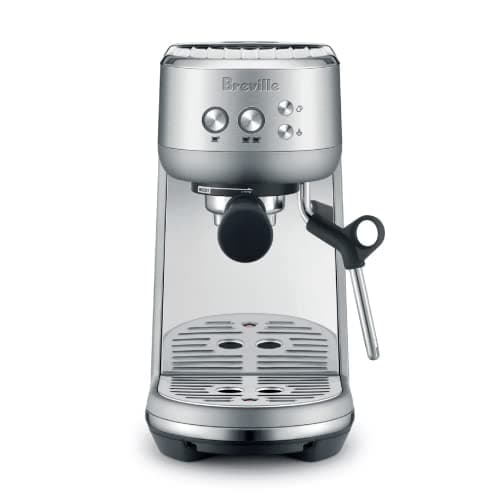 | Anyone who wants to pour latte art, or drinks espresso straight | Choose this to learn | |
| 2 | 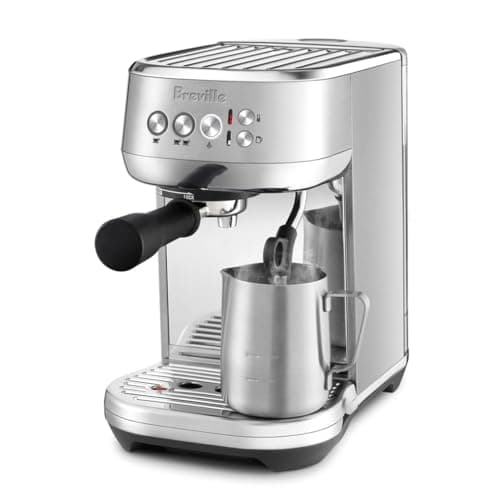 | Households where several people make milk drinks | Choose this for convenience |
1. Choose this to learn
Breville Bambino
Entry tier · A compact 54 mm espresso machine with a manual steam wand and no grinder.
The manual wand is a lower ceiling on day one and a higher one after a month.
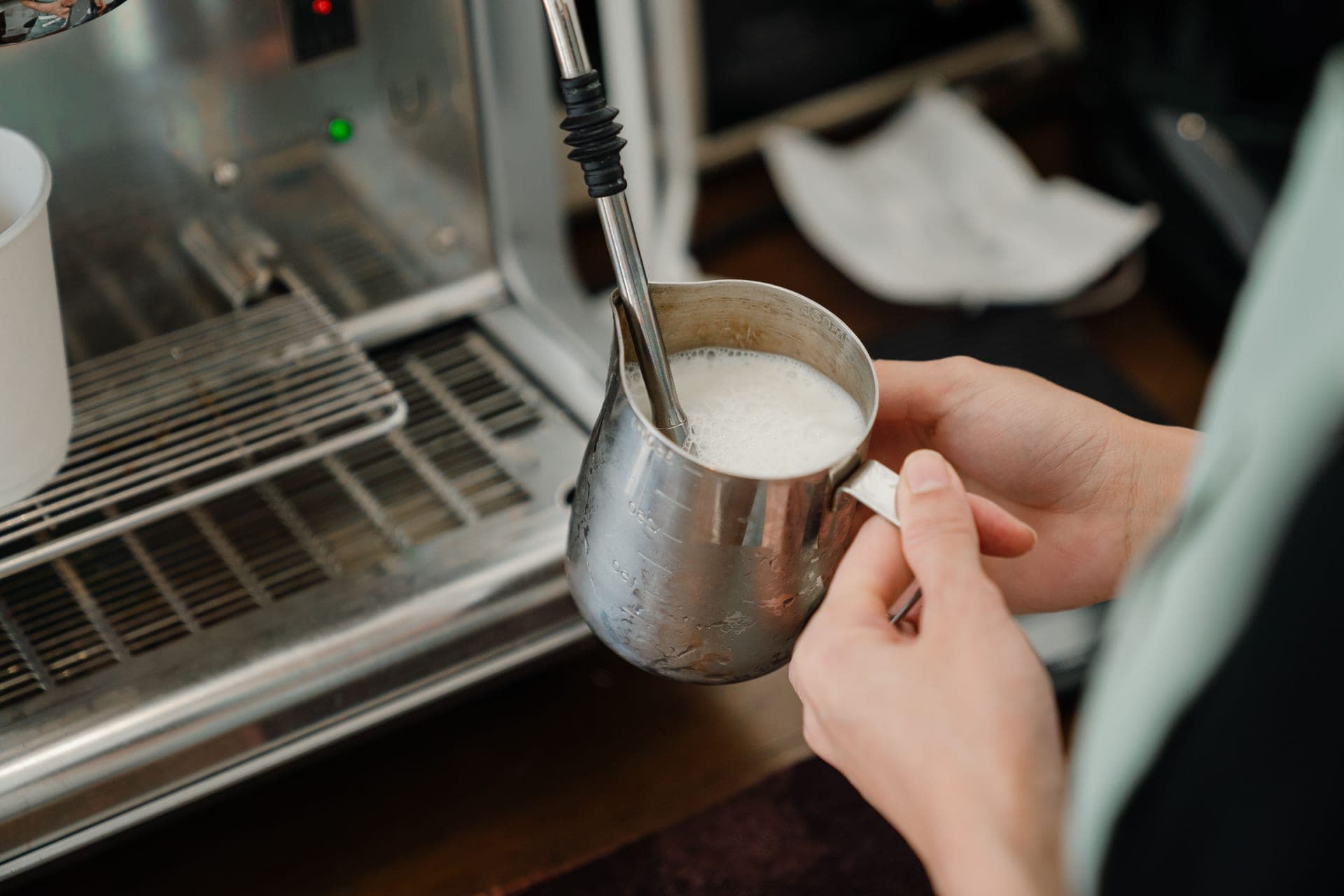
The standard Bambino gives you a manual steam wand, which means you decide how much air goes into the milk and when to stop adding it. That is the entire technique of texturing, and it is the reason this is the model to buy if latte art is anywhere in your future.
The espresso side is identical to the Plus: 54 mm portafilter, 18 g dose, ThermoJet heating in three seconds, low-pressure pre-infusion, 9 bar extraction.
It is also physically smaller at 11.9 x 6.1 x 13.5 inches against the Plus at 11.9 x 7.4 x 14.3 - not a large difference, but it exists.
If you drink your espresso straight, the entire premium of the Plus buys a feature you will never switch on.
Specification
- Portafilter
- 54 mm, 18 g dose
- Heating
- ThermoJet, ready in 3 seconds
- Extraction
- Low-pressure pre-infusion, then 9 bar
- Footprint
- 11.9 x 6.1 x 13.5 in
- Grinder
- None - buy separately
What it does well
- Three-second heat-up means it is genuinely usable on a weekday
- The narrowest footprint of any machine here
- Real steam wand you control yourself
Where it gives ground
- No grinder, so the real budget is machine plus grinder
- Manual milk texturing has a learning curve
- Small tank means frequent refills if you pull several drinks
Skip it if
Skip it if nobody in the household wants to learn to steam milk and everyone wants a cappuccino. That is exactly the Plus's job.
2. Choose this for convenience
Breville Bambino Plus
Entry tier · The Bambino with automatic milk texturing added.
Usable microfoam with no technique at all, and no way to override it.
The Plus adds automatic milk texturing and a 480 ml stainless jug. You set the temperature and texture level, drop the wand in, and the machine heats and aerates to that preset.
The result is genuinely usable microfoam without any practice, which solves a real problem: in most households only one person is willing to learn to steam, and everyone else wants a drink.
The espresso hardware is unchanged - same 54 mm basket, same 18 g dose, same three-second ThermoJet heat-up, same 15 bar pump delivering 9 bar.
The limitation is that the automation is the feature. It makes the texture decisions and does not let you take them back, so latte art is off the table and there is no path from automatic to manual on this machine.
Specification
- Portafilter
- 54 mm stainless, 18 g dose
- Heating
- ThermoJet, ready in 3 seconds
- Pump
- 15 bar Italian pump, 9 bar extraction
- Milk
- Automatic texturing, 16 fl oz / 480 ml jug
- Footprint
- 11.9 x 7.4 x 14.3 in
What it does well
- Automatic milk texturing gets a usable microfoam without practice
- Same three-second heat-up as the standard Bambino
- Fits a narrow counter with a grinder beside it
Where it gives ground
- You are paying for the milk automation, not better espresso
- Still no grinder
- Auto-steam removes the control an enthusiast eventually wants
Skip it if
Skip it if you want to learn milk texturing, or if you drink espresso without milk. In both cases you are paying for something you will not use.
Why automatic milk is a one-way door
Texturing milk properly is a sequence: hold the wand tip near the surface for a couple of seconds so air is drawn in, then submerge it so the milk rolls and the large bubbles break down into microfoam. The skill is knowing how much air, and when to stop.
Automatic texturing performs that sequence to a preset. It produces a consistent, drinkable result and it does not let you intervene. There is no setting on the Plus that turns it back into a manual wand, so if you buy the Plus and later decide you want to pour patterns, the answer is a different machine.
That is a genuine argument for buying the cheaper model even if the price gap is affordable. The manual wand is harder for a month and better forever.
The case for the Plus, made properly
The Plus is not a compromise product, and the household it fits is common. If two or three people make coffee in the morning, and only one of them has any interest in learning, a manual wand means everyone else gets bad milk. Automatic texturing means everyone gets a good cappuccino. That is worth real money, and it is the reason the Plus outsells the standard model.
What neither one does
Neither has a grinder, and one is required. Neither brews and steams simultaneously - a single thermoblock switches between the two. Neither will make good coffee from stale supermarket beans through a poor grinder, and the temptation to blame the machine for that is why so many of these end up resold.