The short answer
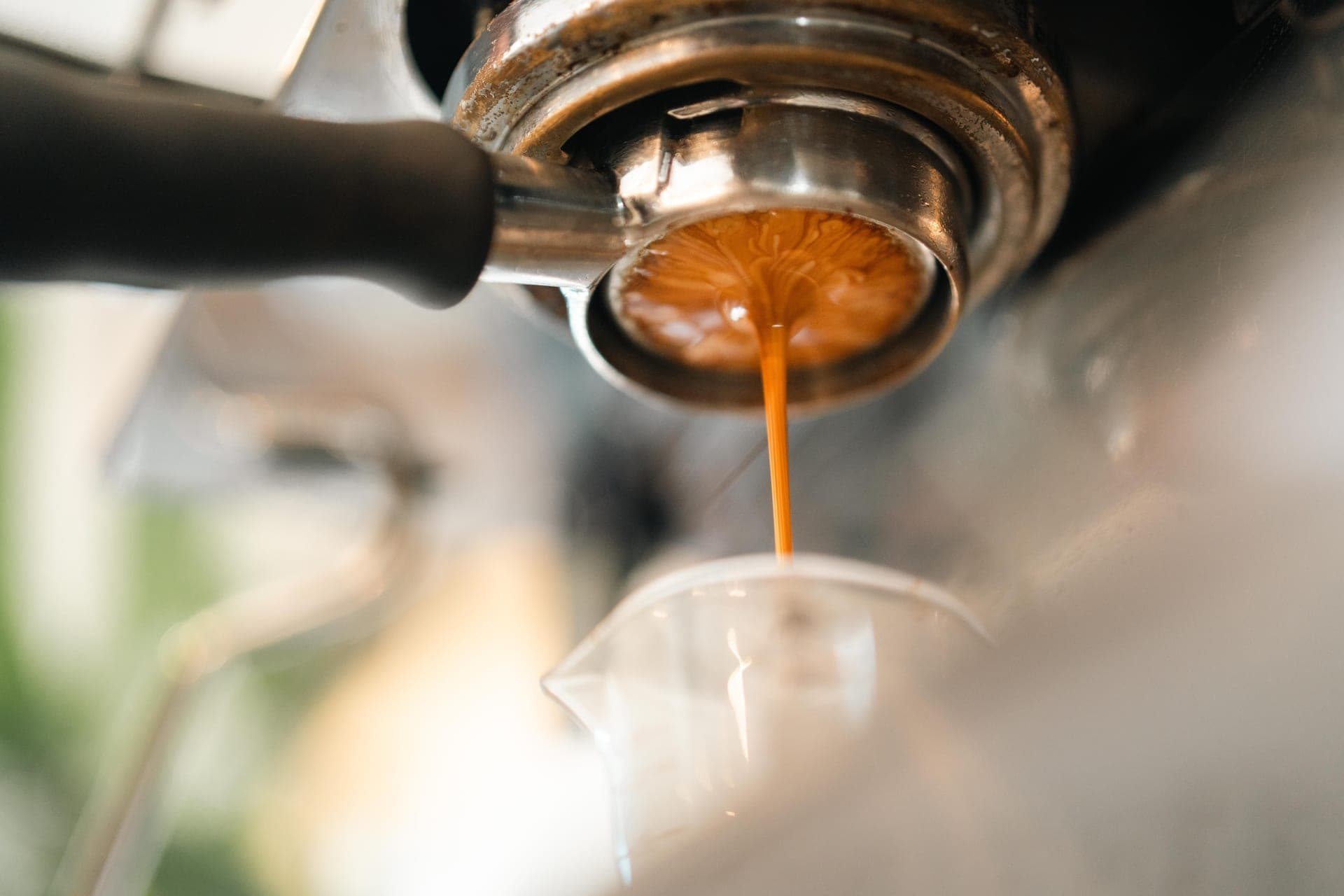
A ristretto is an espresso stopped early. Same dose, same grind, less liquid out - typically around a 1:1 ratio instead of espresso's 1:2. The result is more intense, sweeter and less bitter, because the later part of an extraction is where most of the bitterness arrives.
Side by side
Scroll the table sideways to see every column.
Why stopping early changes the flavor
Extraction is sequential. Different compounds dissolve at different rates, and the order is broadly consistent: acids first, then sugars, then the bitter compounds last.
Stop the shot at half the usual yield and you have taken most of the acids and sugars and left much of the bitterness in the puck. That is why a ristretto reads as sweeter and rounder rather than simply stronger.
It is also why a ristretto pulled from an under-extracted setup tastes aggressively sour - you have removed the later, sweeter part of an extraction that had not yet balanced itself.
Quick picks
The answer first. Tap any row to jump to the full reasoning for that pick.
Prices shown are checked daily against the retailer, as of October 23, 2026. We never write a price into the text of a page.
| # | Product | Best for | Award | Price |
|---|---|---|---|---|
| 1 | 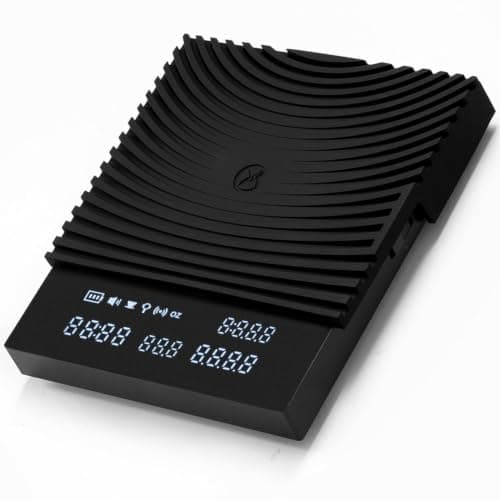 | Anyone wanting to pull a ristretto on purpose rather than by accident | How you pull one deliberately | |
| 2 | 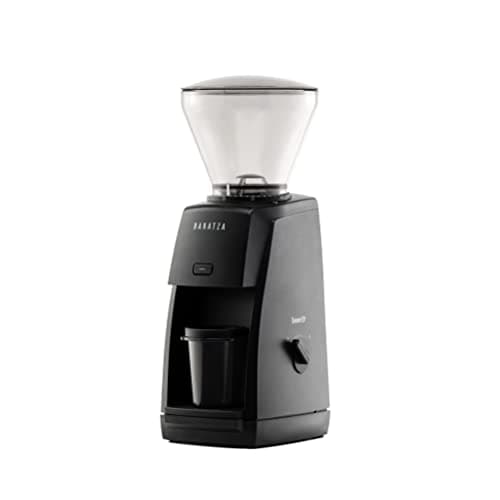 | Getting a short shot that is sweet rather than sour | The grinder that makes short shots work | |
| 3 | 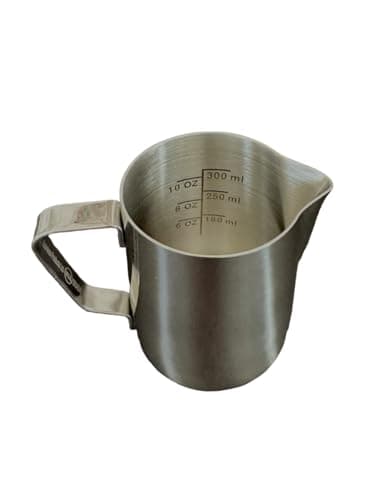 | Cappuccinos and flat whites built on a short shot | If the ristretto is going into milk |
1. How you pull one deliberately
Timemore Black Mirror Basic Plus
Mid tier · A rechargeable coffee scale with auto-timing and a flow-rate readout.
A ristretto is a ratio, and a ratio needs weighing.
The difference between a ristretto and a badly-stopped espresso is that one was measured. Without a scale you are guessing at the yield, which is the only variable that defines the drink.
The Black Mirror Basic Plus publishes 2000 g capacity with 0.1 g resolution and a 0.5 g minimum detectable weight, plus automatic timing and a flow-rate readout on the current version.
It measures 152 x 130 x 26 mm, which fits on most espresso drip trays with a cup on top, and charges over USB-C.
Automatic timing is genuinely useful here: for a short shot you want to be watching the scale rather than a separate timer.
Specification
- Capacity
- 2000 g
- Resolution
- 0.1 g; minimum detectable 0.5 g
- Timer
- Automatic timing
- Battery
- 1600 mAh, up to 10 hours, USB-C
- Size
- 152 x 130 x 26 mm, about 380 g
What it does well
- Auto-timing and flow rate at a fraction of an Acaia
- USB-C rechargeable rather than a drawer full of coin cells
- Small enough for a drip tray, big enough for a dripper
Where it gives ground
- Not waterproof
- Response is quick but not espresso-instant
- The mirrored top shows every fingerprint
Skip it if
Skip it if you already own a 0.1 g scale. Any accurate scale does this.
2. The grinder that makes short shots work
Baratza Encore ESP
Entry tier · The Encore re-geared for espresso: the same 40 mm burrs on a dual-resolution collar.
Ristretto is more sensitive to grind than a normal shot, so resolution matters more.
Stopping a shot early means less of the coffee has been extracted, which makes an already-fine grind setting more critical - a slightly coarse grind that a normal shot survives will produce a sour ristretto.
The Encore ESP publishes about 20 microns per click across steps 1 to 20 for espresso, and roughly 90 microns per click across steps 21 to 40 for filter, on 40 mm M2 steel conical burrs made by Etzinger at 550 rpm.
That resolution is what lets you make the small correction a short shot needs rather than the large one your grinder allows.
Its conical burrs also lean toward body and sweetness, which suits the ristretto's character.
Specification
- Burrs
- 40 mm M2 steel conical (Etzinger)
- Settings
- 40 stepped, dual resolution
- Espresso range
- Steps 1-20, 20 microns per click
- Filter range
- Steps 21-40, 90 microns per click
- Burr speed
- 550 rpm
What it does well
- 20 microns per click in the espresso range is real dialing resolution
- Redesigned burr housing makes cleaning and shimming easy
- Shims included in the box
Where it gives ground
- Still a stepped grinder - you cannot land between clicks
- Retention is normal-for-the-class, not low
- Same plastic body and noise as the Encore
Skip it if
Skip it if your grinder already adjusts finely. This is about resolution rather than brand.
3. If the ristretto is going into milk
Rattleware 12 oz Latte Art Pitcher
Entry tier · A 12 oz stainless steaming pitcher with a tapered spout, sized for single drinks.
Short shots are usually milk drinks, and the pitcher decides how the milk turns out.
A large share of ristrettos end up under milk, because the intensity stands up to it. In that case the milk matters as much as the shot.
The Rattleware 12 oz is stainless with a tapered, drip-resistant spout, sized for a macchiato, cappuccino or small latte.
Pitcher size decides whether the steam tip can reach the depth it needs. Too little milk in too large a pitcher is the most common reason home milk never textures properly.
The tapered spout is what makes a controlled pour possible rather than a dump that breaks the crema.
Specification
- Capacity
- 12 oz
- Material
- Stainless steel
- Spout
- Tapered, drip-resistant
- Suits
- Macchiato, cappuccino, small latte
What it does well
- Correct size for a single drink, which matters more than people expect
- Tapered spout is what makes a controlled pour possible
- Commercial-grade construction at a domestic price
Where it gives ground
- Too small for two drinks at once
- No etched graduations at this size
- Stainless conducts heat, so it gets hot in the hand
Skip it if
Skip it if you drink your ristretto straight. Then the cup matters and the pitcher does not.
How to pull one
- 1Start from a dialed-in espresso. Get a normal shot right first - a ristretto amplifies whatever is already wrong.
- 2Keep the dose identical. The dose is not what changes.
- 3Stop at roughly the dose weight. 18 g in, 18 to 27 g out.
- 4Taste. If it is sour, your grind needs to be finer. If it is heavy and cloying, extend the yield slightly toward 1:1.5.
Some people grind finer for a ristretto so the shot still takes a reasonable time at the shorter yield. That works, and it is a second variable - change it after the ratio, not at the same time.
What a ristretto is not
It is not a shot that ran short by accident. A shot that stops early because the puck choked is not a ristretto - it is a channeled or over-tamped shot, and it will taste like one.
It is also not automatically better. The ristretto has a reputation as the connoisseur's choice, and it is simply a different point on the same ratio scale. Plenty of coffees are more interesting at 1:2, and some are best at 1:2.5.
When to use one
Ristrettos work particularly well under milk, because the extra intensity survives dilution where a longer shot can disappear. That is why many cafes pull short for flat whites.
They also flatter darker roasts, which turn bitter easily in the later stages of an extraction. On a light roast, a longer ratio is often the better choice.