
The short answer
A cappuccino is espresso, steamed milk and milk foam in roughly equal thirds - traditionally about 6 oz in total. A latte uses the same espresso with substantially more steamed milk and only a thin layer of foam. The difference is proportion and foam thickness, not the coffee.
The milk drinks, laid out
Scroll the table sideways to see every column.
These are conventions rather than laws, and they vary between countries and cafes. What is consistent is the direction: as you go down the list, the proportion of milk rises and the foam gets thinner.
Foam thickness is the real distinction
The cappuccino-latte difference is often described purely as volume, and that misses the more important half.
A cappuccino has a distinct, thick foam layer sitting on top - traditionally deep enough to hold sugar on its surface. A latte has a thin veil of microfoam integrated into the milk, which is what allows latte art.
That means they are textured differently at the wand: a cappuccino gets more air introduced during stretching, a latte gets less and more rolling. Same equipment, different technique.
Quick picks
The answer first. Tap any row to jump to the full reasoning for that pick.
Prices shown are checked daily against the retailer, as of October 23, 2026. We never write a price into the text of a page.
| # | Product | Best for | Award | Price |
|---|---|---|---|---|
| 1 | 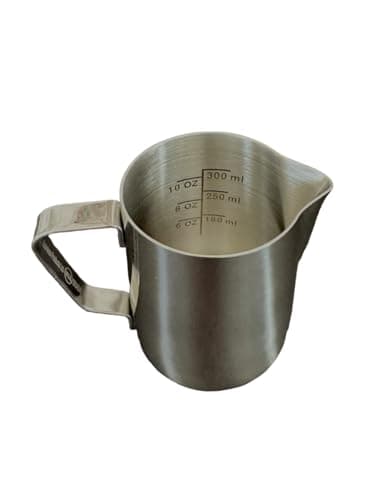 | Making a single cappuccino properly | The pitcher this drink needs | |
| 2 | 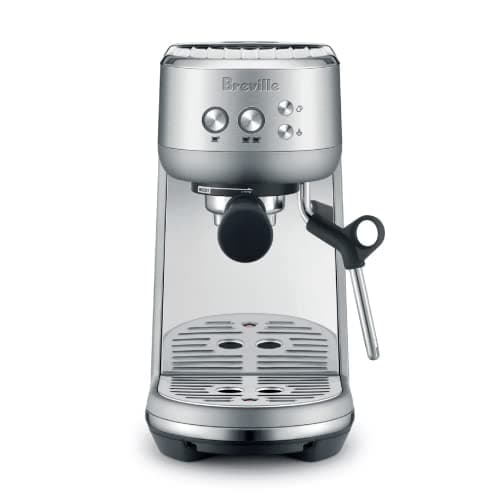 | Learning to make cappuccinos properly | The machine, with a manual wand | |
| 3 | 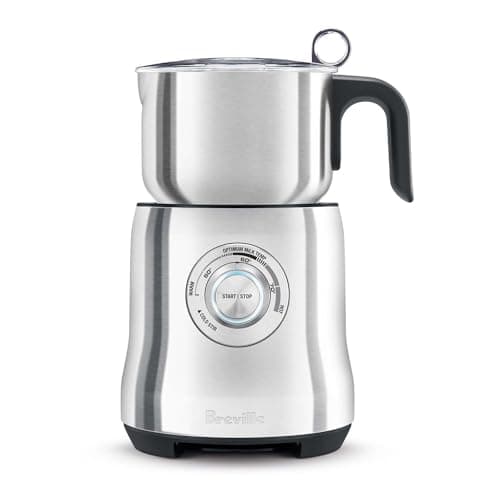 | Cappuccinos specifically, without technique | If nobody wants to learn |
1. The pitcher this drink needs
Rattleware 12 oz Latte Art Pitcher
Entry tier · A 12 oz stainless steaming pitcher with a tapered spout, sized for single drinks.
A cappuccino uses a small volume of milk, and a large pitcher makes that impossible to texture.
A cappuccino uses roughly four to five ounces of milk. Texturing that in a 20 oz pitcher is the single most common reason home cappuccinos have bubbly, unusable foam.
The Rattleware 12 oz is stainless with a tapered, drip-resistant spout, sized for exactly this drink - macchiato, cappuccino or small latte.
Texturing depends on the steam tip reaching two positions relative to the milk surface. Too little milk in too large a pitcher and neither position is available.
The tapered spout is what lets you pour the foam rather than dumping it, which matters more on a cappuccino than on a latte because the foam layer is thicker.
Specification
- Capacity
- 12 oz
- Material
- Stainless steel
- Spout
- Tapered, drip-resistant
- Suits
- Macchiato, cappuccino, small latte
What it does well
- Correct size for a single drink, which matters more than people expect
- Tapered spout is what makes a controlled pour possible
- Commercial-grade construction at a domestic price
Where it gives ground
- Too small for two drinks at once
- No etched graduations at this size
- Stainless conducts heat, so it gets hot in the hand
Skip it if
Skip it if you routinely make two drinks at once. The 20 oz is the right size then.
2. The machine, with a manual wand
Breville Bambino
Entry tier · A compact 54 mm espresso machine with a manual steam wand and no grinder.
A cappuccino's foam is a texture you control, which needs a bare steam wand.
A cappuccino has a thicker foam layer than a latte, and getting there means deliberately introducing more air - a decision you make with the wand.
The Bambino has a manual steam wand alongside a 54 mm portafilter taking an 18 g dose, ThermoJet heating in three seconds, low-pressure pre-infusion and 9 bar extraction, in an 11.9 x 6.1 x 13.5 inch body.
Manual control is the difference between choosing your foam thickness and accepting a preset one.
There is no grinder, and one is required.
Specification
- Portafilter
- 54 mm, 18 g dose
- Heating
- ThermoJet, ready in 3 seconds
- Extraction
- Low-pressure pre-infusion, then 9 bar
- Footprint
- 11.9 x 6.1 x 13.5 in
- Grinder
- None - buy separately
What it does well
- Three-second heat-up means it is genuinely usable on a weekday
- The narrowest footprint of any machine here
- Real steam wand you control yourself
Where it gives ground
- No grinder, so the real budget is machine plus grinder
- Manual milk texturing has a learning curve
- Small tank means frequent refills if you pull several drinks
Skip it if
Skip it if nobody wants to learn to steam. The Bambino Plus textures automatically instead.
3. If nobody wants to learn
Breville Milk Cafe
Mid tier · A standalone induction milk frother with latte and cappuccino discs.
Disc frothing makes exactly the kind of foam a cappuccino wants, which is unusual.
This is the one drink where a standalone frother is a defensible choice rather than a compromise, because a cappuccino's foam layer is thicker and less integrated than a latte's.
The Milk Cafe holds 24 fl oz - up to three cups - heats by induction at 500 W with a temperature dial from cold stir to hot up to 160 F, and ships with separate latte and cappuccino frothing discs.
The cappuccino disc introduces more air for a stiffer foam, which is genuinely what this drink calls for.
It will not pour latte art and it is not microfoam, so a flat white or a latte is beyond it.
Specification
- Capacity
- 24 fl oz, up to 3 cups
- Temperature
- Cold stir to hot, up to 160 F
- Discs
- Latte and cappuccino frothing discs
- Power
- 500 W, induction heating
- Size
- 7.5 x 6.4 x 10.4 in
What it does well
- Frees a single-boiler machine from switching between brew and steam
- Genuine temperature selection rather than one hot setting
- Makes three drinks worth of milk at once
Where it gives ground
- Disc-frothed milk is not steam-textured milk, and latte art is off the table
- Another appliance on the counter
- Pointless if your machine already steams well
Skip it if
Skip it if you also want to make lattes or flat whites. Those need microfoam and this does not produce it.
Why the espresso matters more in a cappuccino than a latte
There is less milk to hide behind. A latte at 10 oz dilutes a shot substantially; a cappuccino at 6 oz does not.
A sour, under-extracted shot is noticeable in a cappuccino and often invisible in a latte. If your milk drinks taste thin and sharp, dial in the espresso before adjusting the milk.
How to texture for a cappuccino
- 1Use a pitcher matched to the drink - around 12 oz for a single cappuccino. This is the step most people get wrong.
- 2Fill to around the base of the spout. Milk expands as air is introduced.
- 3Stretch a little longer than for a latte. Keep the tip just below the surface for a few seconds so more air goes in.
- 4Then submerge and roll so the large bubbles break down. You want thick foam, not bubbly foam - those are different things.
- 5Stop when the pitcher is uncomfortable to hold. Milk scalds above about 160 F and loses its sweetness.
A common misconception
Thick foam is not the same as dry, bubbly foam. A well-made cappuccino's foam is dense and glossy, with bubbles too small to see individually - it just has more of it than a latte does.
Foam full of visible bubbles is a texturing fault rather than a cappuccino, and it is what a standalone frother produces. That is fine if it is what you want, and it is not what a cafe pours.