The short answer
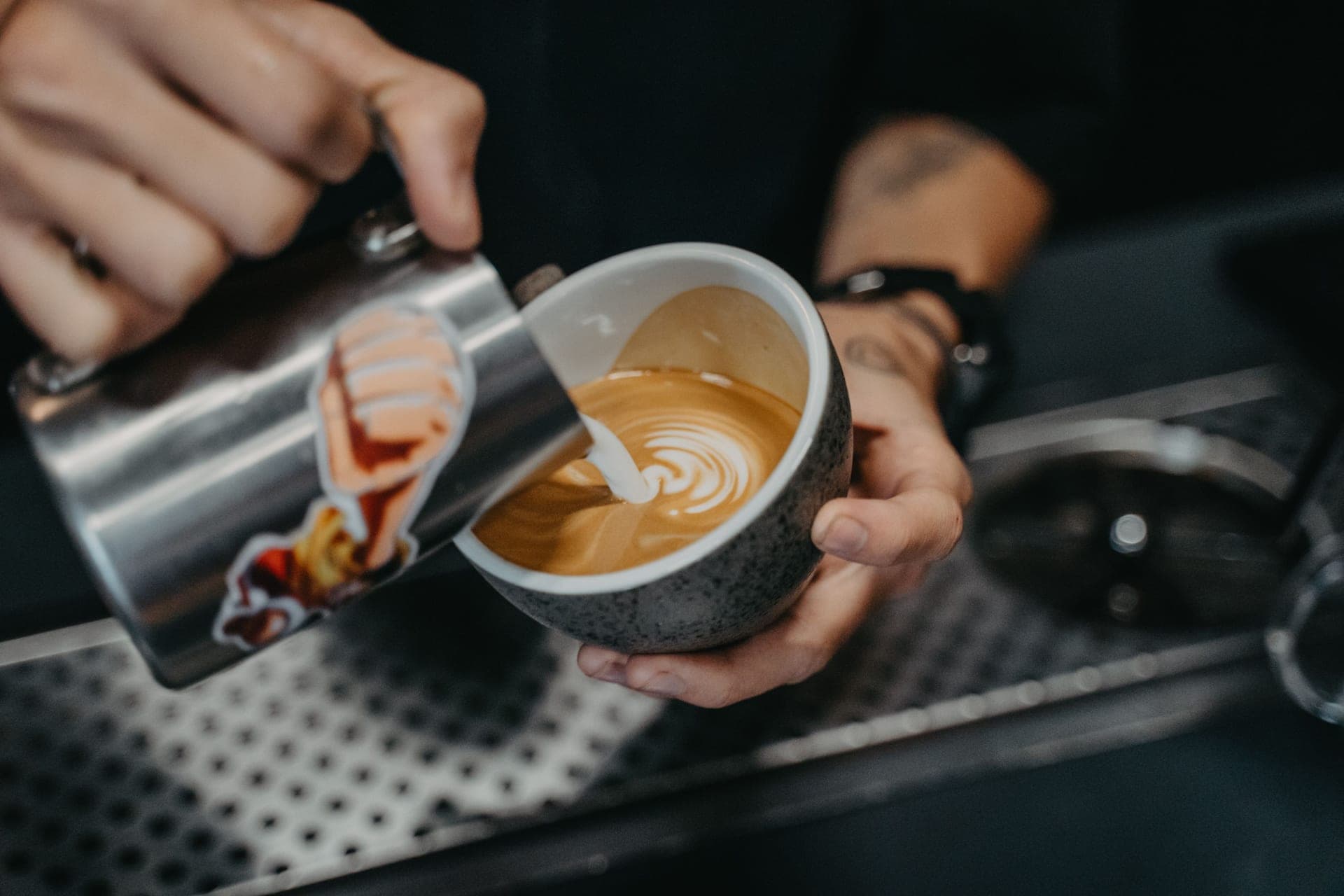
A latte is one or two shots of espresso with 8 to 12 oz of steamed milk and a thin layer of microfoam on top. Because the drink is mostly milk, the milk texture decides how good it is far more than the shot does - which is the opposite of what most people assume.
The proportions
Scroll the table sideways to see every column.
Why the milk matters more
In a latte the espresso is perhaps a sixth of the volume. That does not make it irrelevant - a genuinely bad shot will still come through - but it does mean that dilution smooths over a lot.
Milk texture, by contrast, is the whole mouthfeel of the drink. Well-textured milk is glossy and dense with bubbles too small to see, and it makes the drink feel rich and integrated. Badly textured milk is thin underneath with a bubbly cap, and no espresso rescues it.
So if your lattes are disappointing, look at the milk first. That is the opposite of where people usually look, which is why the disappointment persists.
Quick picks
The answer first. Tap any row to jump to the full reasoning for that pick.
Prices shown are checked daily against the retailer, as of October 23, 2026. We never write a price into the text of a page.
| # | Product | Best for | Award | Price |
|---|---|---|---|---|
| 1 | 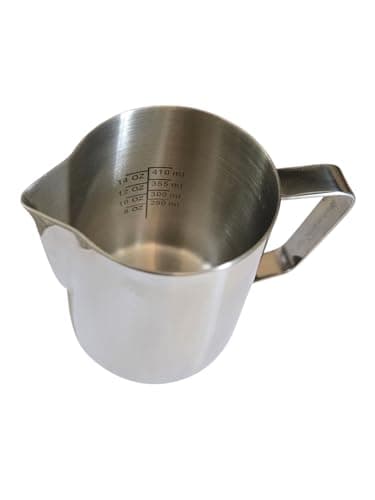 | Making one large latte or two smaller drinks | The right size for a latte | |
| 2 | 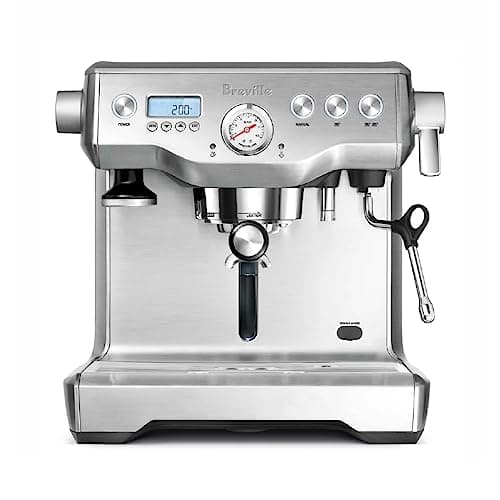 | Households making more than one milk drink a morning | The machine for making several | |
| 3 | 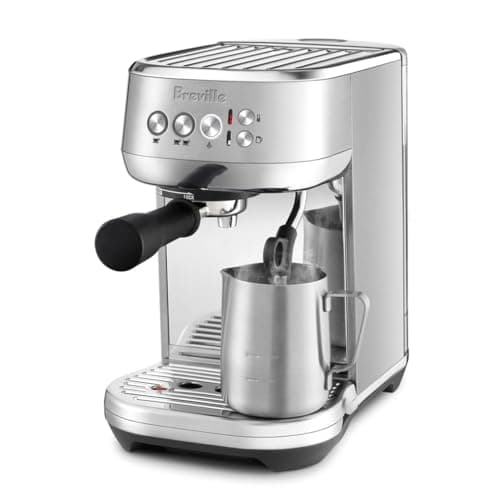 | Households where nobody wants to learn to steam | If you want lattes without learning |
1. The right size for a latte
Rattleware 20 oz Latte Art Pitcher
Entry tier · A 20 oz stainless steaming pitcher with etched graduations and a tapered spout.
A latte uses a lot of milk, and a 12 oz pitcher will not hold it.
A latte at 8 to 12 oz uses considerably more milk than a cappuccino, and a small pitcher simply will not take it.
The Rattleware 20 oz is stainless with etched graduations and a tapered spout engineered for pouring microfoam, sized for lattes, cappuccinos and flat whites, or two drinks at once.
The etched graduations let you measure milk in the pitcher rather than in a separate jug, which removes a step and a guess from a drink that is mostly milk.
It is heavier when full, which makes a controlled pour harder until you are used to it.
Specification
- Capacity
- 20 oz
- Material
- Stainless steel
- Spout
- Tapered, engineered for pouring microfoam
- Markings
- Etched graduations
- Suits
- Latte, cappuccino, flat white; two drinks at once
What it does well
- Etched graduations mean you can measure milk without a separate jug
- Big enough for two drinks, small enough for one at a push
- The tapered spout is the reason latte art is possible at all
Where it gives ground
- Too large to texture a single small drink well
- Heavier to control than a 12 oz pitcher when pouring
- Gets hot - which is how you judge temperature, but still
Skip it if
Skip it if you only make single small drinks. A 12 oz pitcher textures those better.
2. The machine for making several
Breville Dual Boiler
Prosumer tier · A true dual-boiler 58 mm machine: brew and steam at once, PID on the brew boiler.
Two lattes on a single boiler means waiting; two boilers means not.
A latte's milk requires sustained steam, and making two in sequence on a single-boiler machine means brewing, waiting for steam temperature, texturing, and repeating.
The Dual Boiler publishes a dedicated stainless espresso boiler under PID control and a separate steam boiler, low-pressure pre-infusion followed by 9 bar extraction, and a 58 mm portafilter taking a 22 g dose.
Two boilers collapse that sequence, so you pour fresh milk into a fresh shot rather than into one that has been sitting.
That timing matters: textured milk has a working window of perhaps thirty seconds before the foam and liquid begin separating.
Specification
- Portafilter
- 58 mm stainless, 22 g dose
- Boilers
- Dual stainless steel, separate espresso and steam
- Control
- PID on the espresso boiler
- Extraction
- Low-pressure pre-infusion, then 9 bar
- Footprint
- 37.9 x 40.3 x 37.1 cm
What it does well
- Brew and steam simultaneously - the actual reason to buy dual boiler
- 58 mm commercial basket size opens the whole accessory market
- PID plus programmable pre-infusion
Where it gives ground
- Big, heavy and power-hungry
- Overkill if you drink one straight espresso a day
- Still needs a grinder at a matching level to be worth it
Skip it if
Skip it if you make one latte a day without hurrying. A single boiler handles that comfortably.
3. If you want lattes without learning
Breville Bambino Plus
Entry tier · The Bambino with automatic milk texturing added.
Automatic texturing produces usable microfoam with no practice at all.
Texturing milk well takes weeks of practice, and not everybody wants to spend them. This machine removes that requirement.
The Bambino Plus textures milk automatically and includes a 480 ml stainless jug, alongside a 54 mm portafilter taking an 18 g dose, ThermoJet heating in three seconds, a 15 bar pump delivering 9 bar and low-pressure pre-infusion.
The result is genuinely usable microfoam without technique, which for a household where several people make drinks is worth real money.
The trade is permanent: automatic means the machine makes the texture decisions, so latte art is not available and there is no manual mode.
Specification
- Portafilter
- 54 mm stainless, 18 g dose
- Heating
- ThermoJet, ready in 3 seconds
- Pump
- 15 bar Italian pump, 9 bar extraction
- Milk
- Automatic texturing, 16 fl oz / 480 ml jug
- Footprint
- 11.9 x 7.4 x 14.3 in
What it does well
- Automatic milk texturing gets a usable microfoam without practice
- Same three-second heat-up as the standard Bambino
- Fits a narrow counter with a grinder beside it
Where it gives ground
- You are paying for the milk automation, not better espresso
- Still no grinder
- Auto-steam removes the control an enthusiast eventually wants
Skip it if
Skip it if you want to pour patterns. Buy the standard Bambino and its manual wand.
What microfoam actually is
Microfoam is milk with air incorporated so finely that the bubbles are invisible individually. It behaves like liquid rather than foam - it pours, it swirls, and it holds a pattern.
It is made in two stages. Stretching: the steam tip sits just below the surface for a few seconds so air is drawn in. Rolling: the tip submerges so the milk spins in the pitcher, breaking the large bubbles down into small ones.
Skip the rolling stage and you have bubbly foam. Skip the stretching stage and you have hot milk with no texture at all. The skill is in the balance and it takes practice.
Why milk choice matters here
Whole dairy milk textures most forgivingly because its fat and protein content stabilize the foam structure. Skimmed milk foams enthusiastically and collapses quickly, producing a stiff cap over thin milk.
Among plant milks, barista-formulated oat milks are formulated specifically to hold texture - they contain added fats and stabilizers for exactly this reason. Standard versions of most plant milks texture poorly and separate.
Temperature
Stop before the pitcher becomes too hot to hold comfortably. Milk scalds above roughly 160 F, at which point the proteins break down, the natural sweetness disappears and the texture collapses.
Overheated milk is the second most common home fault after under-rolled foam, and it is completely avoidable - the pitcher tells you, which is why stainless is the material for the job.
Latte, flat white, cortado
These sit on a continuum of milk volume with the same espresso underneath. A cortado is roughly equal parts espresso and milk at around 4 oz. A flat white is 5 to 6 oz with a thin microfoam. A latte is 8 to 12 oz with the same thin foam.
The coffee is identical in all three. What changes is how much milk is diluting it, which is also why a flat white tastes noticeably more of coffee than a latte does. Cappuccinos sit slightly apart, because their distinction is foam thickness rather than volume.