The short answer
A first coffee maker should have as few variables as possible and, ideally, SCA certification so you can rule out brew temperature when something tastes wrong. But the largest single improvement available to a beginner is grinding fresh whole beans on burrs - that changes more than any brewer upgrade.
The order that actually matters
- 1Fresh beans with a printed roast date. Free to change, and the largest difference of all.
- 2A burr grinder. Second largest, and it outlives every brewer you will own.
- 3A brewer that reaches temperature. SCA certification is the shortcut to knowing.
- 4A scale. Removes the last unmeasured variable.
- 5Everything else. Water filters, fancy carafes, pour-over kettles - all real, all smaller.
The common beginner mistake is to start at three and skip one and two. A certified machine brewing week-old pre-ground coffee will make ordinary coffee, and the machine will get the blame.
Quick picks
The answer first. Tap any row to jump to the full reasoning for that pick.
Prices shown are checked daily against the retailer, as of October 22, 2026. We never write a price into the text of a page.
| # | Product | Best for | Award | Price |
|---|---|---|---|---|
| 1 | 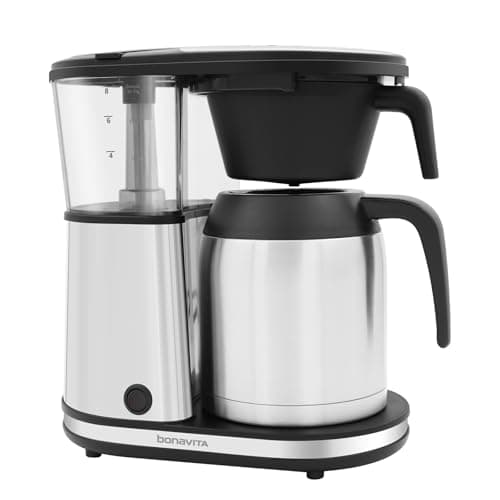 | A first machine with no learning curve | Top pick | |
| 2 | 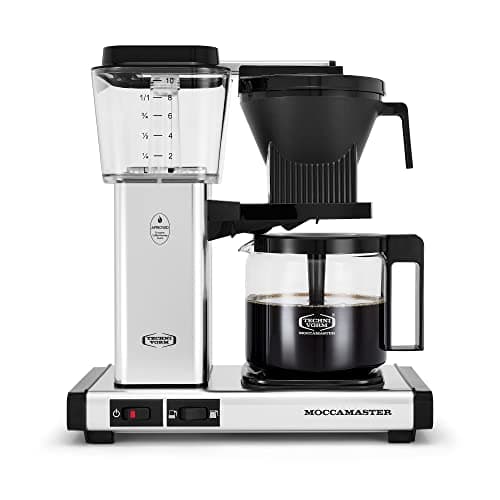 | A beginner who does not want to upgrade later | Best machine to only ever buy once | |
| 3 | 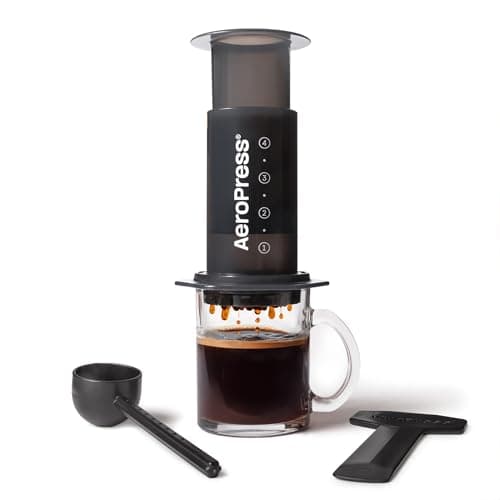 | One or two cups, and understanding why coffee tastes how it does | Best for learning what coffee can taste like | |
| 4 | 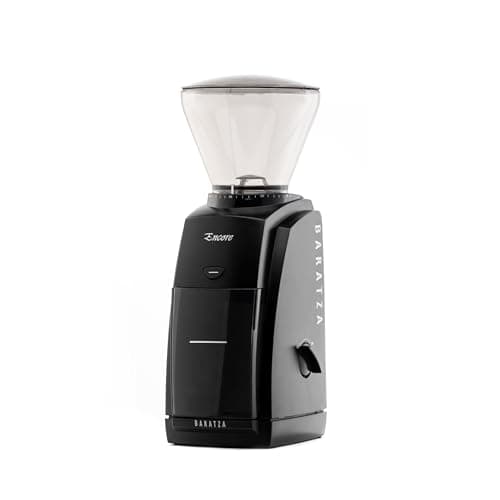 | Anyone currently using pre-ground coffee | The purchase that matters more than the machine | |
| 5 | 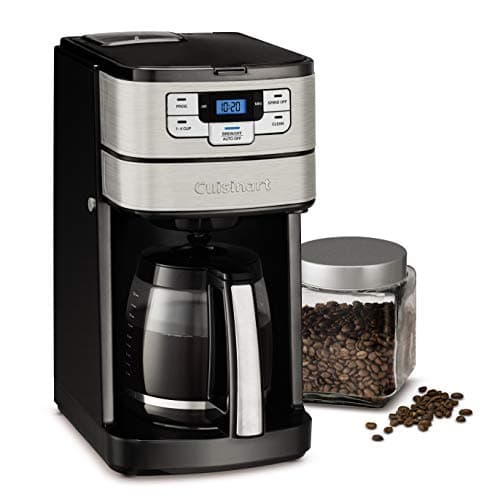 | Convenience, at a real cost to the cup | Skip this |
1. Top pick
Bonavita Connoisseur 8-Cup
Mid tier · A one-button SCA-certified brewer with a flat-bottom basket and an optional bloom.
SCA certified, one button, and nothing at all to get wrong.
For a beginner, the ideal machine removes decisions rather than offering them, and the Connoisseur removes almost all of them. There is one button.
Underneath that button is a machine that is SCA certified to the Golden Cup standard, with a 1500 W heater holding 195 to 205 F and a full brew taking about six minutes into a 1.3 L stainless thermal carafe.
That certification matters more for a beginner than for anyone else. When your coffee tastes wrong and you do not yet know why, being able to eliminate brew temperature as a cause is genuinely valuable - it means the answer is in the beans, the grind or the dose, all of which you can change.
The hanging flat-bottom filter basket wets more evenly than a cone, and the optional pre-infusion mode helps with fresh beans. There is no clock and no programming, so brewing starts when you press the button.
Specification
- Certification
- SCA Certified, Golden Cup standard
- Heater
- 1500 W, 195-205 F
- Basket
- Hanging flat-bottom
- Carafe
- 1.3 L stainless thermal
- Brew time
- About 6 minutes
What it does well
- One button - the whole interface is one button
- Optional pre-infusion mode for fresher beans
- Flat-bottom basket is more forgiving than a cone
Where it gives ground
- No timer or programming at all
- The lid and basket are more fiddly to clean than they look
- Plainest-looking machine in its class
Skip it if
Skip it if you want coffee waiting when you wake up. Without a timer, that is not possible.
2. Best machine to only ever buy once
Technivorm Moccamaster KBGV Select
Upper-mid tier · A hand-assembled drip brewer certified by the SCA, with a copper heating element.
Expensive for a first machine and cheap over twenty years.
The counter-argument to buying cheap first is worth taking seriously: the Moccamaster is SCA certified, publishes 196 to 205 F, brews a 1.25 L carafe in four to six minutes, and is repairable for decades.
It is also as simple as the Bonavita - a switch, a carafe, and a half-carafe selector that adjusts saturation time rather than just volume.
The reason it belongs on a beginner list is that a lot of people buy a cheap machine, dislike the coffee, buy a better one, and end up spending more in total. If you already know coffee matters to you, starting here is not extravagant.
There is no timer and no programming, and it is tall enough to be awkward under a low cabinet - measure first.
Specification
- Certification
- SCA Certified Home Brewer
- Brew temperature
- 196-205 F
- Capacity
- 1.25 L / 40 oz / 10 cups
- Brew time
- 4-6 minutes for a full carafe
- Build
- Hand-assembled in the Netherlands, metal and glass
What it does well
- Reaches and holds real brewing temperature, which most drip machines do not
- Every part is replaceable - these get repaired, not landfilled
- Half-carafe setting adjusts saturation time rather than just volume
Where it gives ground
- No timer, no programming, no app
- Tall enough to be awkward under a low cabinet
- Costs more than several espresso machines
Skip it if
Skip it if you are not yet sure how much you care. It is a lot of money to discover you drink one cup a week.
3. Best for learning what coffee can taste like
AeroPress Original
Manual tier · A hand-pressed immersion brewer using a paper or metal filter.
Nearly impossible to get wrong, and it teaches you the variables that matter.
An AeroPress is the best teaching tool in coffee, and it costs less than any machine here. You control the dose, the water temperature and the steep time, and you can change one at a time and taste the result.
It brews up to 10 oz, makes 1 to 3 cups, weighs about 6.5 oz, brews in under two minutes and cleans in about ten seconds.
Because it is immersion, it is very forgiving of an inconsistent grinder - which is exactly the condition of a beginner's setup. A pour-over would expose that grinder; this averages it out.
It cannot brew unattended and it cannot make a carafe for four. If that is your requirement, buy a drip machine.
Specification
- Capacity
- 10 oz, 1-3 cups
- Weight
- About 6.5 oz
- Filters
- Paper or metal mesh
What it does well
- Almost impossible to brew a bad cup with
- Forgiving of grinder inconsistency in a way pour-over is not
- Cleans up in about ten seconds
Where it gives ground
- Not espresso, whatever the marketing around it says
- One or two cups at a time
- Plunging takes real hand pressure
Skip it if
Skip it if you need coffee ready without standing there. It requires two minutes of attention.
4. The purchase that matters more than the machine
Baratza Encore
Entry tier · The standard entry burr grinder for filter brewing.
Buy this before you upgrade the brewer. It changes more.
The single largest improvement available to a beginner is not a better brewer. It is grinding whole beans, fresh, on burrs rather than blades.
The Encore offers 40 mm conical burrs made in Europe, 40 stepped settings and a published grind range of 250 to 1200 microns, with burr speed limited to roughly 450 to 550 rpm to keep heat and static down.
Pre-ground coffee begins losing aromatics within minutes of grinding, and by the time a bag has been open a week the difference from fresh is not subtle.
It is also serviceable, with parts sold individually for years, so it outlives brewers rather than being replaced alongside them.
Specification
- Burrs
- 40 mm conical, made in Europe
- Settings
- 40 stepped
- Grind range
- 250-1200 microns
- Burr speed
- Roughly 450-550 rpm to limit heat and static
What it does well
- The reference answer for pour-over, drip and French press
- Fully serviceable, with parts sold individually for years
- Low burr speed keeps static and heat down
Where it gives ground
- Bottom of its range is too coarse for espresso - that is the ESP model job
- Stepped settings only
- Plastic body and a loud motor
Skip it if
Skip it if you make espresso. Its published range stops at 250 microns - filter-fine, not espresso-fine.
5. Skip this
Cuisinart Automatic Grind & Brew DGB-400
Budget tier · A 12-cup drip machine with a blade grinder built in - not a burr grinder.
It looks like the beginner-friendly answer and the blade grinder undermines it.
A grind-and-brew machine seems like the obvious beginner purchase: whole beans, one button, no separate grinder to research. That logic is sound and this machine is the wrong execution of it.
Cuisinart publishes that the DGB-400 uses a blade grinder rather than a burr grinder. Blades chop coffee into dust and boulders together, and those extract at completely different rates in the same brew.
For a beginner specifically, that is the worst possible problem to have, because it produces coffee that tastes wrong for a reason you cannot see or adjust. You will change the dose, change the beans, change the water, and none of it will help.
The grind-off mode is the redeeming feature: grind on a burr grinder, use this as a plain drip machine, and it becomes a reasonable object.
Specification
- Capacity
- 12 cups
- Grinder
- Blade grinder, not burr
- Programming
- 24-hour brew start, adjustable auto-off, 1-4 cup setting
- Options
- Brew Pause; grind-off for pre-ground coffee
- Dimensions
- 9.98 in W x 8.13 in D x 15.5 in H
What it does well
- Whole beans to brewed coffee at the lowest price in the category
- Grind-off mode lets you use pre-ground coffee instead
- Compact for a machine with a grinder inside
Where it gives ground
- The grinder is a blade, which chops rather than cuts to a size
- Blade grinding produces dust and boulders together, which extract unevenly
- No published brew-temperature figure and no SCA certification
Skip it if
Skip it as a first machine. If you want grind-and-brew, buy one with a burr grinder - see our grind-and-brew picks.
What to look for in a first machine
Scroll the table sideways to see every column.
Diagnosing your first bad cup
Two flavors cover most beginner problems. Sour, thin, faintly salty means under-extraction: grind finer, use hotter water, or brew longer. Bitter and drying means over-extraction: grind coarser or brew for less time.
If you get both at once - sour and bitter in the same mouthful - the water is not passing through the bed evenly. On a drip machine, that usually means the bed is not being wetted properly or the grind is too fine and the bed is choking.
How much coffee to use
A common starting point is around 1 gram of coffee to 16 grams of water, which for a 40 oz carafe is roughly 70 g of coffee. Adjust from there to taste. What matters more than the exact ratio is measuring it the same way each time, so that when you change something you know what you changed.