The short answer
Buy the County Line Kitchen jar if you drink cold brew regularly - two quarts at a time, with a steel filter and nothing to replace. Buy the OXO for concentrate in smaller batches with an easier drain. Buy the Hario Mizudashi for ready-to-drink cold brew, or if you are trying cold brew for the first time.
Concentrate or ready-to-drink
This is the only decision that really matters, and most buying advice skips past it. The two approaches use different amounts of coffee, keep for different lengths of time, and suit different habits.
Scroll the table sideways to see every column.
Quick picks
The answer first. Tap any row to jump to the full reasoning for that pick.
Prices shown are checked daily against the retailer, as of October 24, 2026. We never write a price into the text of a page.
| # | Product | Best for | Award | Price |
|---|---|---|---|---|
| 1 | 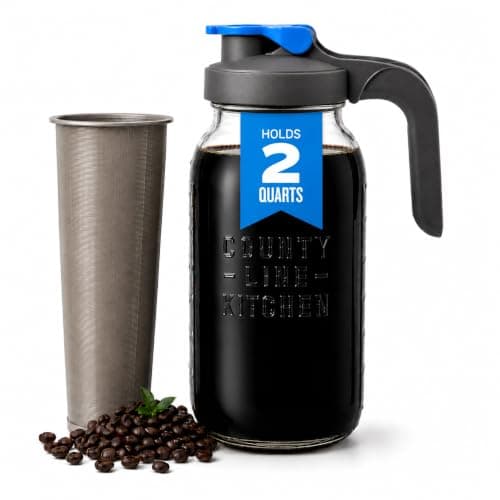 | Anyone who drinks cold brew regularly rather than occasionally | Top pick | |
| 2 | 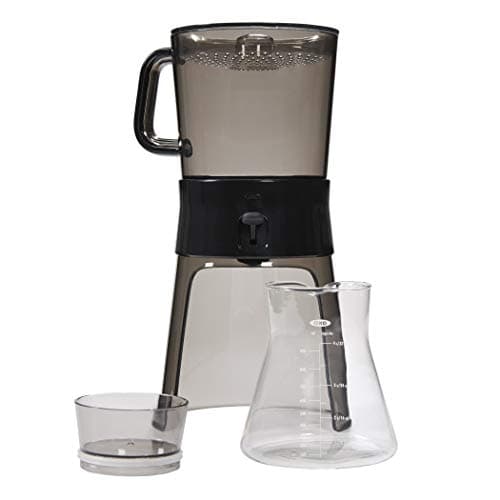 | Cold brew concentrate in smaller, easier batches | Easiest concentrate | |
| 3 | 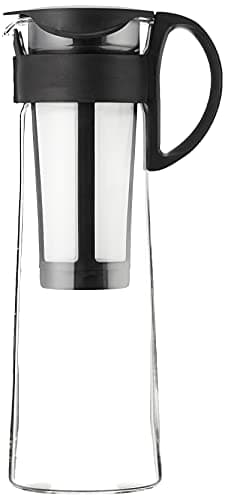 | Finding out whether you like cold brew before spending on it | Best value | |
| 4 | 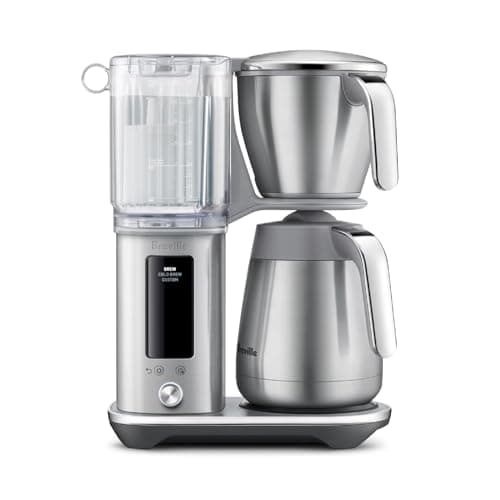 | A counter that cannot hold another single-purpose device | Best if you also want hot coffee | |
| 5 | 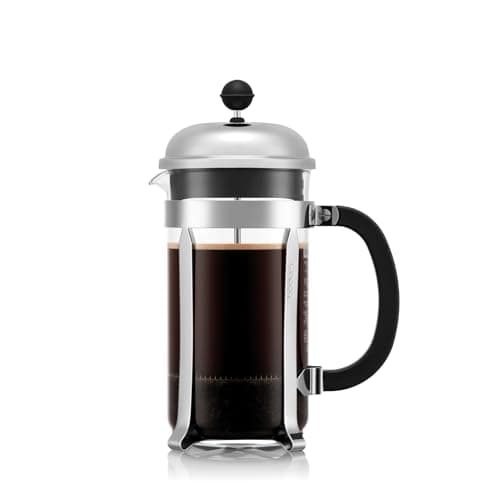 | Trying cold brew once with something you already own | Skip this |
1. Top pick
County Line Kitchen Cold Brew Maker 64 oz
Budget tier · A 64 oz wide-mouth mason jar with a stainless mesh filter basket, for immersion cold brew you steep and lift.
A 64 oz jar and a steel basket - the biggest simple batch here.
The County Line Kitchen brewer is a 64 oz - two quart - wide-mouth mason jar with a heavy-gauge food-grade stainless mesh basket for the grounds.
Two quarts is the point. Steep 24 to 48 hours, lift the basket out, and you have about 1.5 qt in the jar - several days of drinks from one session rather than a brew every other day.
Because strength is set by your ratio rather than by the hardware, you choose: a heavy dose gives concentrate to cut with milk or water, a lighter one gives cold brew you drink as it pours.
The lid is leak-proof with a flip-cap spout, so it brews, stores and pours in the same vessel, and the steel filter means no paper or cloth to buy.
It is glass, in a fridge, among other glass - and the wet basket has to go somewhere when you lift it out.
Specification
- Capacity
- 64 oz / 2 quarts
- Filter
- Heavy-gauge food-grade stainless steel mesh basket
- Jar
- Wide-mouth soda-lime glass mason jar
- Lid
- Leak-proof, with a flip-cap pour spout
- Steep
- 24-48 hours; removing the basket leaves about 1.5 qt
- Size
- 6.25 x 4.25 x 10.25 in
What it does well
- A two-quart batch for a fraction of what engineered cold brewers cost
- The filter basket lifts straight out, so there is no draining step to wait for
- Nothing to break but the jar, and nothing proprietary to replace
Where it gives ground
- Glass, in a fridge, around other glass
- No brew-release valve - you lift a wet basket out and find somewhere to put it
- Strength is entirely down to your ratio; there is no concentrate setting to follow
Skip it if
Skip it if you drink cold brew occasionally. A two-quart batch for two glasses is a waste of coffee, and the OXO's smaller brew suits that better.
2. Easiest concentrate
OXO Good Grips Cold Brew Coffee Maker
Mid tier · A concentrate cold brewer with a rainmaker lid, a brew-release switch and a glass carafe.
A smaller concentrate batch with a one-touch drain and a glass carafe.
The OXO is a concentrate brewer too: 10 oz of coarsely ground coffee steeps for 12 to 24 hours and yields up to 32 oz of concentrate - enough for up to 14 drinks, diluted per glass.
Its rainmaker lid is a genuine design improvement rather than a marketing one. Cold water poured into a bed of grounds tends to punch through in one spot and leave dry pockets; a distributing lid wets the bed evenly, which is most of what separates good cold brew from flat cold brew.
The controlled drain matters too. Straining cold brew through a cloth is messy and squeezes fines through; a switch that opens a filtered valve is cleaner in both senses.
The trade-off is batch size. Up to 32 oz of concentrate is half what the 64 oz jar holds, so a daily cold brew drinker brews more often. It drains into a borosilicate glass carafe with measurement markings, which makes diluting to a consistent strength easy.
Specification
- Type
- Concentrate
- Yield
- Up to 32 oz of concentrate from 10 oz of coarse coffee - up to 14 drinks
- Steep time
- 12-24 hours
- Carafe
- Borosilicate glass with measurement markings
What it does well
- The rainmaker top distributes water evenly for balanced extraction
- A brew-release switch drains the concentrate with one touch - no straining through cloth
- A smaller batch than the Toddy, which suits less frequent cold brew drinkers
Where it gives ground
- Concentrate means diluting every glass - it is not pour-and-drink
- Up to 32 oz of concentrate is a smaller batch than a Toddy's
- More parts to wash than a single-vessel brewer
Skip it if
Skip it if you want the biggest possible batch. The 64 oz jar brews twice as much at a time.
3. Best value
Hario Mizudashi Cold Brew Pot
Budget tier · A one-piece fridge jug with a mesh basket - the simplest cold brewer that works.
A fridge jug with a mesh basket, and honestly most of what the expensive ones do.
The Mizudashi is three parts: a 1,000 ml glass jug, a lid, and a tall mesh filter basket. You put up to 80 g of coarsely ground coffee in the basket, fill with water, and leave it 8 to 12 hours.
It is by a wide margin the cheapest good cold brewer, and the gap in the cup between this and the expensive systems is much smaller than the gap in price. Cold brew is a forgiving method: long steeping at low temperature does most of the work.
It brews and pours from the same vessel, and it fits in a fridge door, which is a bigger practical advantage than it sounds when the alternative is a bucket occupying a shelf.
The mesh is fine but it is mesh, so a grinder producing lots of dust will put that dust in your cup. And 1 L is a day or two of iced coffee, not a week.
Specification
- Capacity
- 1,000 ml
- Dose
- Up to 80 g of coarsely ground coffee
- Steep time
- 8-12 hours
- Type
- Ready to drink
What it does well
- Cheapest genuinely good cold brewer, by a wide margin
- Fits in a fridge door and pours from the same vessel it brews in
- Three parts total - jug, lid, filter basket
Where it gives ground
- Fine mesh only, so a grinder producing lots of fines will show in the cup
- 1 L is one or two days of iced coffee, not a week
- Glass, in a fridge, among other things
Skip it if
Skip it if you drink a lot of cold brew. Refilling a 1 L jug every other day gets tedious, and a concentrate system solves exactly that.
4. Best if you also want hot coffee
Breville Luxe Brewer Thermal
Upper-mid tier · The Precision Brewer's successor: SCA-approved drip with a saved custom profile and a cold brew mode.
A full drip machine with a genuine cold brew mode, so one appliance covers both.
Most cold brew makers do one thing. The Luxe Brewer is a 60 oz drip machine with a dedicated Cold Brew mode alongside its SCA-approved Golden Standard setting and a saveable Custom Brew profile.
Its cold brew is the reason it is here rather than a novelty inclusion: the steep is adjustable from 30 minutes to 36 hours for up to 4 cups, so it covers both a weekday iced coffee and an overnight batch.
For a kitchen where the real constraint is counter space and outlets, replacing a drip machine and a cold brew jug with one device is a genuine argument, and it makes very good hot coffee.
It is far more expensive than any dedicated cold brewer, and its cold brew is good rather than exceptional. Judged only on cold brew this is not the right purchase.
Specification
- Capacity
- 60 fl oz / 12 cups; 1.8 L reservoir
- Certification
- Golden Standard mode, SCA approved
- Modes
- Golden Standard, Cold Brew, Custom Brew
- Custom control
- Bloom volume, bloom time, brew temperature and flow rate
- Cold brew
- Up to 4 cups (600 ml), steep adjustable from 30 minutes to 36 hours
- Carafe
- Dual-wall thermal; above 150 F / 65 C for up to 4 hours
- Power
- 1650 W
- Size
- 16.1 x 10.2 x 6.8 in
What it does well
- The custom profile exposes bloom volume, bloom time, temperature and flow rate, and remembers them
- Cold brew in as little as 30 minutes, or up to 36 hours if you want a long steep
- A thermal carafe that holds above 150 F for up to four hours, so there is no hotplate
Where it gives ground
- Three modes rather than the longer preset list the Precision Brewer carried
- Breville no longer lists a pour-over adapter for this line
- All of that control is wasted if you only ever press the Golden Standard button
Skip it if
Skip it if you only want cold brew. You are paying for a full drip machine you did not ask for - see drip coffee makers.
5. Skip this
Bodum Chambord French Press
Budget tier · The classic 34 oz French press: borosilicate carafe in a chrome-plated steel frame.
It works, and it ties up your French press for eighteen hours.
A French press does make cold brew. Coarse grounds, cold water, twelve hours in the fridge, then plunge. As a way of finding out whether you like the drink at all, it is free if you already own one.
The problems are practical rather than fundamental. The press is occupied for the whole steep, so you cannot make hot coffee in it. If it is your only brewer, that is half a day without coffee.
Its screen is coarse and there is no lip seal, so fines get into the cup and continue extracting in the fridge. Cold brew's appeal is smoothness, and this works against exactly that.
Volume is the last issue. A press makes one batch of finished cold brew - not concentrate - so you are back at it constantly.
Specification
- Capacity
- 34 oz, 3-4 cups
- Carafe
- Borosilicate glass
- Filter
- Stainless steel mesh plunger
- Frame
- Chrome-plated steel, made in Portugal
What it does well
- No paper, no capsules, no consumables at all
- Full-bodied cup that no paper filter can produce
- Every part is replaceable and cheap
Where it gives ground
- Metal mesh lets fines and oils through - that is the trade, not a defect
- Punishes an inconsistent grinder harder than any other brewer
- Glass carafe in a household with a tile floor
Skip it if
Skip the workaround if you have decided you like cold brew. A dedicated brewer frees your press and filters better.
Why cold brew tastes different
Cold water extracts differently from hot water, not just more slowly. Many of the compounds responsible for perceived acidity and bitterness are considerably less soluble at low temperature, so they largely stay in the grounds.
That is why cold brew tastes smooth, round and low in acidity regardless of the beans, and also why it tastes flatter - the bright, distinct notes that make a good pour-over interesting are among the things left behind. Cold brew is a forgiving method that narrows the range of what you can taste.
Grind coarse, and mean it
Every brewer here separates coffee from water with a mesh or a cloth after a long steep. Fine particles pass through both, and once they are in the jug they keep extracting for as long as the coffee sits in the fridge.
That is why cold brew made with a blade grinder turns harsh after a couple of days while the same beans from a burr grinder stay smooth. Grind coarse, and grind evenly - the second matters more.
Step 1
Grind coarse
Coarser than French press. You are extracting for twelve hours, not four minutes.
Step 2
Wet the whole bed
Add water gradually rather than in one pour. Dry pockets stay dry for the entire steep.
Step 3
Steep in the fridge
Room temperature works and extracts faster, but the fridge is more predictable and safer over a long steep.
Step 4
Separate completely
Get the grounds out at the end. Coffee left on the bed keeps extracting and turns bitter over the following days.
Step 5
Store sealed
Cold brew picks up fridge smells readily. A sealed container matters more than it does for hot coffee.
How long it keeps
Concentrate keeps roughly two weeks because its high dissolved solids content is a hostile environment for spoilage and because you are diluting fresh each time. Ready-to-drink is finished coffee and behaves like it - good for a few days, tired after that.
If you find yourself throwing cold brew away, you bought the wrong type rather than the wrong brewer.