The short answer
Buy the AeroPress Go if you are carrying your kit any distance. Buy the GSI JavaPress for two people at a car campsite. Buy the Stanley for a big insulated batch at a car campsite, and a moka pot if you want strong coffee off a camp stove.
Three questions decide this
- 1How far are you carrying it? Backpacking and car camping have almost nothing in common here.
- 2How are you heating water? A brewer that boils and brews saves you an item; one that needs a separate kettle does not.
- 3How many people? A one-cup brewer is perfect solo and tedious for four.
Scroll the table sideways to see every column.
Quick picks
The answer first. Tap any row to jump to the full reasoning for that pick.
Prices shown are checked daily against the retailer, as of October 25, 2026. We never write a price into the text of a page.
| # | Product | Best for | Award | Price |
|---|---|---|---|---|
| 1 | 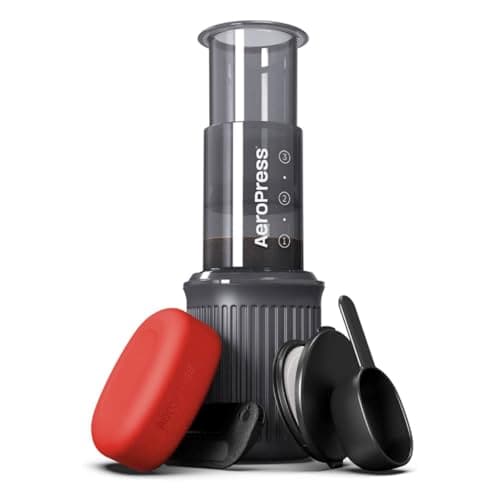 | Backpacking, or anyone counting grams | Top pick | |
| 2 | 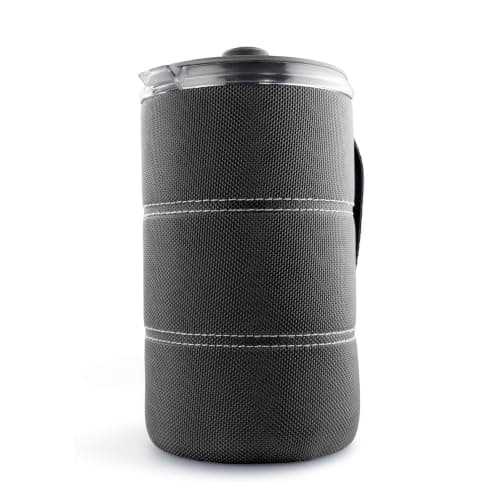 | Car camping and two-person trips | Best for two | |
| 3 | 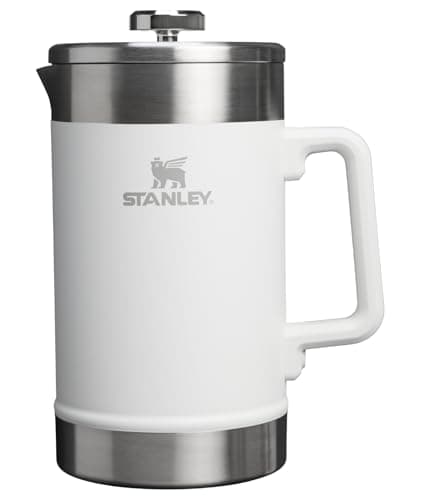 | Car camping with a group | Most rugged | |
| 4 | 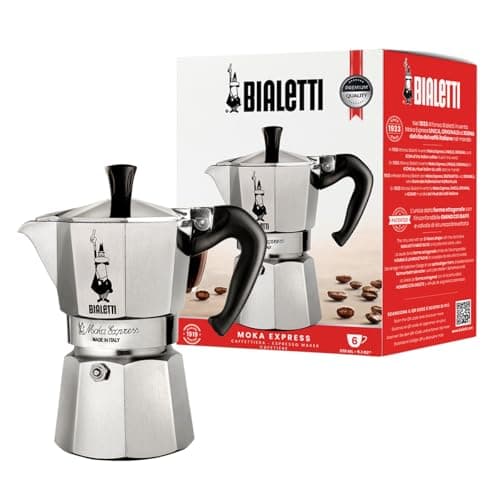 | Anyone who wants something stronger than filter coffee outdoors | Best on a camp stove | |
| 5 | 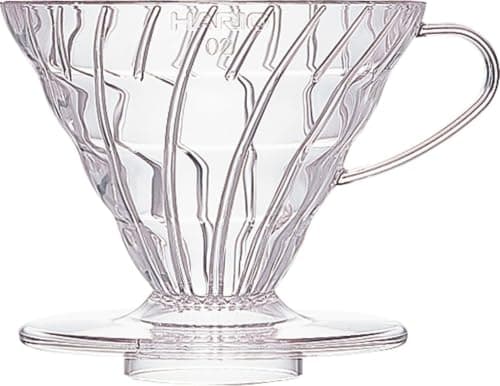 | Backpackers who already carry a pot and want real pour-over | Lightest | |
| 6 | 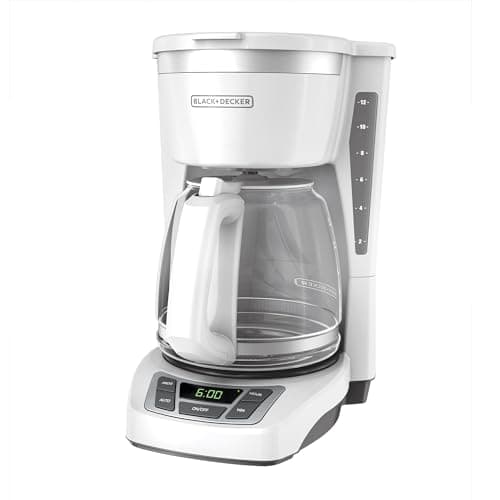 | A cabin with an outlet, and nothing else | Skip this |
1. Top pick
AeroPress Go
Manual tier · The travel AeroPress: smaller, and it packs inside its own mug.
Packs into its own mug, brews in a minute, and nothing on it can break.
The AeroPress Go is the travel version of the AeroPress, and it is close to the ideal camp brewer. Everything nests inside a mug that doubles as the carrying case, so it is one object in the pack rather than several.
It is plastic, so nothing shatters. It brews in about a minute, which matters more outdoors than in a kitchen because you are usually cold and often waiting on one stove for several things.
Cleanup is the underrated part. You eject the puck as a compact dry disc straight into a bag, and the brewer wipes clean. At a campsite where water is carried and washing up is a chore, that is a genuine daily advantage.
It makes one cup at a time, which is the limitation. For a solo trip that is perfect; for a tent of four it means four rounds, and something bigger makes more sense.
Specification
- Capacity
- 8 oz, one cup
- Weight
- About 5.6 oz
- Size
- 4.5 in H x 3.6 in W
What it does well
- The whole kit nests into the mug it comes with
- Lightest way to make genuinely good coffee away from home
- Brews the same way as the Original
Where it gives ground
- One cup only
- Shorter chamber limits some published recipes
- The bundled mug is the point; at home it is dead weight
Skip it if
Skip it if you brew for a group. One cup per cycle does not scale - see the full AeroPress comparison.
2. Best for two
GSI Outdoors JavaPress
Budget tier · A 30 oz shatter-resistant French press wrapped in an insulating nylon sleeve.
A 30 oz press built for a pack, wrapped in nylon so it neither breaks nor cools.
The JavaPress is a French press designed from the outset for outdoor use rather than a kitchen press marketed at campers. The body is shatter-resistant plastic and it sits inside a ballistic nylon cozy with a handle.
That cozy does two jobs: it insulates, so a 30 oz brew stays hot in cold air, and it protects, so the press survives a pack. Its double-walled lid slows heat loss from the top, which is where most of it goes.
The silicone-ringed plunger seals better against the wall than most camp presses manage, which means fewer grounds slipping past the edge and into the cup.
It is bulkier than an AeroPress and cannot go over a flame, so you still need a pot or a kettle to boil water. And plastic stains and holds odors over time.
Specification
- Capacity
- 30 fl oz
- Body
- Shatter-resistant plastic in a ballistic nylon cozy
- Insulation
- Double-walled lid and a water-resistant nylon sleeve with handle
- Plunger
- Silicone-ringed
What it does well
- Purpose-built for packing - light, and nothing in it can shatter
- The silicone plunger ring seals better than most camp presses
- 30 oz serves a tent of two comfortably
Where it gives ground
- Plastic body will stain and hold odors over time
- Cannot go over a flame - you boil water separately
- Bulkier than an AeroPress Go for solo trips
Skip it if
Skip it if you are counting grams. It is a car-camping brewer, and an AeroPress Go weighs a fraction of it.
3. Most rugged
Stanley Stay-Hot French Press 48 oz
Budget tier · A 48 oz vacuum-insulated stainless press built for camp and for pouring hot hours later.
48 oz of vacuum-insulated steel that is still pouring hot coffee hours later.
The Stanley Stay-Hot is a 48 oz press, so one brew serves a group, and it is vacuum insulated - its listing states up to 4 hours hot and 9 hours cold.
It is heavy stainless, insulated, and built to be thrown in the back of a truck rather than looked after. Nothing on it is going to break, ever.
The insulation matters outdoors more than indoors. A brew in cold air goes lukewarm quickly in an uninsulated vessel, and lukewarm camp coffee is a genuinely miserable thing. Being vacuum insulated, it is not for the flame - heat water separately.
It is bulky and heavy, and its mesh screen lets some sediment through. As a kitchen press it is out-classed by everything; as a camp press it is close to unkillable.
Specification
- Capacity
- 48 oz
- Construction
- Double-wall vacuum-insulated stainless steel
- Filter
- Stainless steel mesh
- Heat
- The listing states up to 4 hours hot and 9 hours cold
- Stovetop
- No - vacuum insulated, so heat water separately
What it does well
- 48 oz serves a group from one brew
- Vacuum insulated, so coffee stays hot at a cold campsite
- Built to be thrown in a truck rather than looked after
Where it gives ground
- Heavy and bulky next to purpose-built backpacking brewers
- Not for the flame - you still need a way to heat water
- Coffee left in it keeps extracting, so decant what you will not drink soon
Skip it if
Skip it if weight matters at all. This is a car-camping and cabin brewer, not something to carry any distance.
4. Best on a camp stove
Bialetti Moka Express
Budget tier · The octagonal aluminum stovetop pot that defines the category.
Strong coffee straight off the flame, with no filters and nothing to run out of.
A moka pot is a natural camp brewer and it is under-considered as one. It sits directly on a camp stove, needs no paper, no power and no separate kettle, and makes a strong concentrated cup that stands up to being drunk cold five minutes later.
It is sold from 1 cup to 12 cup, so you can match it to the size of your group - though remember a moka pot must be brewed at its rated volume, so pick the size you will actually use.
There is essentially nothing to break. Aluminum, a gasket and a filter plate, all of which are cheap and available everywhere.
Two cautions outdoors. It wants medium heat rather than a roaring flame, which is harder to manage on a camp stove than on a kitchen cooktop, and aluminum will not work on the induction plate in a camper van without an adapter.
Specification
- Material
- Cast aluminum (a stainless line is also sold)
- Sizes
- 1 to 12 cup
- Cooktops
- Gas and electric; needs an adapter plate for induction
What it does well
- Sizes from 1 to 12 cup - by far the widest range in the category
- No paper, no capsules, no electronics, and almost nothing to break
- Parts and gaskets are stocked everywhere and cost very little
Where it gives ground
- Aluminum will not work on an induction cooktop without a separate adapter
- You must fill the basket and boiler properly, so a big pot cannot make a small brew
- Produces little or no crema - it is not espresso
Skip it if
Skip it on a stove you cannot turn down. Moka pots scorch on high heat, and a blasting burner is exactly the condition that produces burnt camp coffee - see moka pots.
5. Lightest
Hario V60 Plastic Dripper 02
Budget tier · The same 60-degree cone geometry in plastic.
Weighs almost nothing, costs almost nothing, and makes genuinely good coffee.
The plastic V60 is the lightest real brewer on this page by a wide margin. It has the same 60-degree cone, spiral ribs and single large hole as the ceramic version, so it brews identically.
Plastic is the right material outdoors for once. It needs no preheating, which matters when your hot water is finite, and it is effectively unbreakable in a pack.
It sits straight on a camp mug and it costs so little that taking it into the backcountry involves no anxiety at all.
You need papers, which is one more thing to keep dry, and you need to pour with some control - which without a gooseneck means pouring slowly from whatever you have. It is the most technique-dependent brewer here.
Specification
- Geometry
- 60-degree cone, single large hole
- Ribs
- Inner spiral ribs
- Capacity
- 1-4 cups
- Material
- Plastic
What it does well
- Same brewing geometry as the ceramic for a fraction of the outlay
- Does not need preheating the way ceramic does
- Effectively unbreakable, so it travels
Where it gives ground
- Feels cheap next to ceramic or glass
- Plastic will stain over time
- No thermal mass, though that matters less than people claim
Skip it if
Skip it if you will be pouring from a wide-lipped pot in wind. Flow control is most of the V60's technique and outdoors you often have none.
6. Skip this
BLACK+DECKER CM1160W 12-Cup
Budget tier · The plainest programmable 12-cup drip machine in wide distribution, in white and stainless.
An electric drip machine at a campsite, which is a plan that depends entirely on a socket.
This is here because 'camping coffee maker' searches return electric drip machines, and it is worth being direct: an electric brewer is not a camping brewer.
A drip machine draws a substantial current for the length of its brew cycle. That is straightforward at a powered site or in a cabin and impossible in a tent, on a trail, or off a portable battery of any reasonable size.
It is also the most fragile thing you could pack. Glass carafe, a control board, and a heating element, none of which enjoys being bounced along a track.
In a cabin with a kitchen it is a perfectly good machine and this criticism does not apply. That is not camping, and if that is your situation you want the drip roundup instead.
Specification
- Capacity
- 12-cup Duralife glass carafe
- Power
- 120 V / 60 Hz
- Programming
- QuickTouch 24-hour auto brew
- Basket
- Washable brew basket
- Shutoff
- 2-hour auto shutoff; 1-hour keep-hot plate
What it does well
- About as cheap as a programmable drip machine gets
- Washable basket means no ongoing filter cost is forced on you
- Carafe is marked for accurate filling
Where it gives ground
- No published brew-temperature figure and no SCA certification
- Hotplate carafe, which degrades coffee within about twenty minutes
- No bloom or pre-infusion of any kind
Skip it if
Skip it for anything without an outlet, which is most camping. If you have a socket and a counter, buy it as a kitchen machine rather than a camp one.
The grinder problem outdoors
Coffee ground before a trip is stale by the second morning, and the difference is more obvious outdoors than at home because everything else about camp coffee is already working against you.
A hand grinder is the answer, and it pairs naturally with camping for the same reason it pairs with manual brewing: no power, no fragility, and it works anywhere. A compact one adds modest weight and changes the coffee more than any other single item you could pack.
Cold weather changes the arithmetic
Every brewer here loses heat far faster in cold air than in a kitchen, and a brewer that drops temperature mid-brew under-extracts - which is why so much camp coffee tastes thin and sour rather than bitter.
Preheating helps more outdoors than anywhere: rinse the brewer and the mug with hot water first. Insulated brewers like the JavaPress and the Stanley exist precisely because of this, and in genuinely cold conditions they are worth their weight.
What to leave at home
Anything glass, anything with a control board, and anything that needs a socket. That rules out drip machines, glass carafes, and every electric grinder.
It also, for most trips, rules out a scale - which is why pre-portioning matters. The kit that works outdoors is the kit that does not care about being dropped, rained on, or packed badly.