The short answer
Buy the Baratza Encore for most cold brew: 40 steps up to 1200 microns and a design built to be repaired. Buy the Breville Smart Grinder Pro for large concentrate batches, the OXO for value, or the Fellow Ode Gen 2 to grind a jug at a time. Avoid blade grinders.
What cold brew needs from a grinder
- 1A coarse, even grind. Even particles extract evenly over a long steep; fines keep extracting.
- 2Capacity for your brewer. Concentrate systems use a lot of coffee per batch.
- 3Few fines. Fine-mesh brewers like the Mizudashi let fines through into the glass.
- 4Consistency over fine adjustment. You will rarely change the setting; each batch should grind the same.
Scroll the table sideways to see every column.
Quick picks
The answer first. Tap any row to jump to the full reasoning for that pick.
Prices shown are checked daily against the retailer, as of October 26, 2026. We never write a price into the text of a page.
| # | Product | Best for | Award | Price |
|---|---|---|---|---|
| 1 | 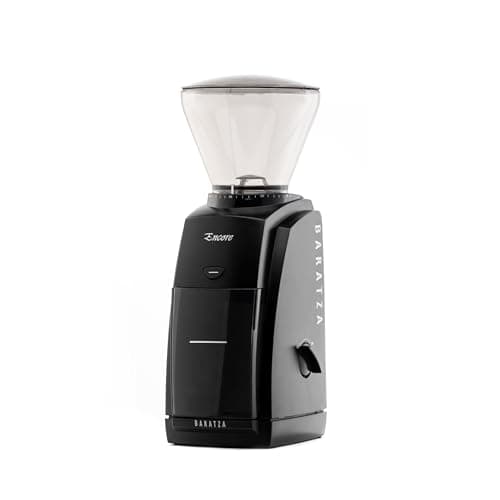 | Most cold brew drinkers | Top pick | |
| 2 | 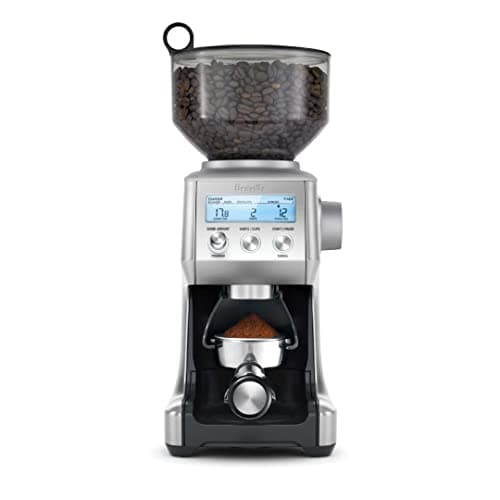 | Big-batch concentrate and weekly brewing | For big batches | |
| 3 | 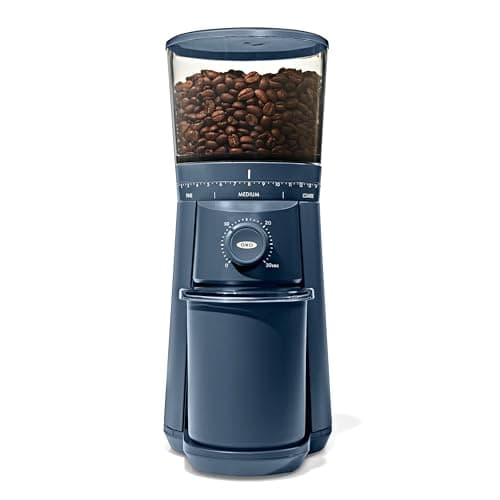 | Cold brew on a budget | Best value | |
| 4 | 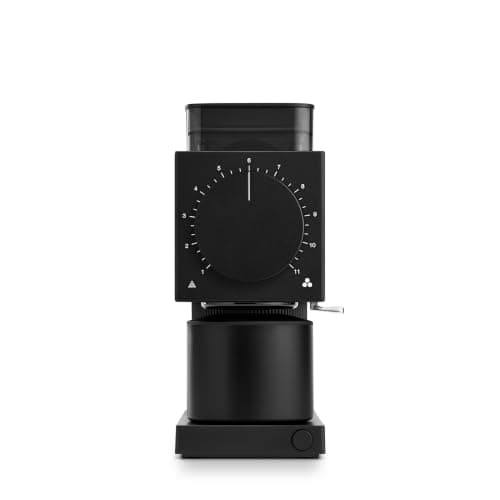 | Ready-to-drink cold brew, one jug at a time | For a jug at a time | |
| 5 | 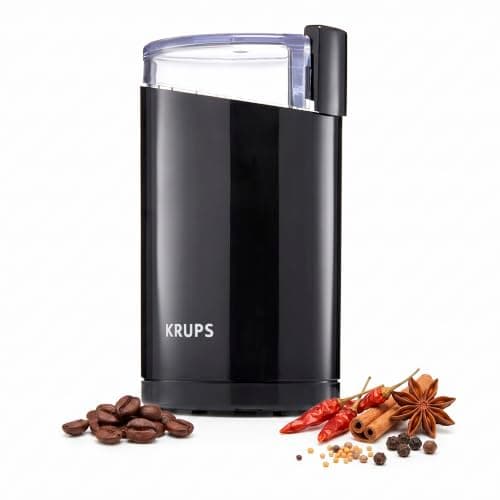 | Spices, not coffee | Skip this - blade grinders |
1. Top pick
Baratza Encore
Entry tier · The standard entry burr grinder for filter brewing.
The reference coarse grinder: 40 steps up to 1200 microns, and parts sold for years.
The Encore uses 40 mm conical burrs made in Europe across 40 stepped settings, with a listed range of 250 to 1200 microns.
Cold brew sits at the coarse end of that range. The Encore is the site's reference grinder for coarse filter methods, French press included.
Its burrs turn at roughly 450 to 550 rpm, which keeps static and heat down.
It is fully serviceable, with parts sold individually, so a worn burr is a small repair rather than a new grinder.
Specification
- Burrs
- 40 mm conical, made in Europe
- Settings
- 40 stepped
- Grind range
- 250-1200 microns
- Burr speed
- Roughly 450-550 rpm to limit heat and static
What it does well
- The reference answer for pour-over, drip and French press
- Fully serviceable, with parts sold individually for years
- Low burr speed keeps static and heat down
Where it gives ground
- Bottom of its range is too coarse for espresso - that is the ESP model job
- Stepped settings only
- Plastic body and a loud motor
Skip it if
Skip it if you want to set a dose and walk away. It has no timer - the OXO below does.
2. For big batches
Breville Smart Grinder Pro
Mid tier · A hopper-fed conical grinder that doses straight into a portafilter cradle.
A 450 g hopper and a timer, for concentrate brewers that use a lot of coffee.
Big-batch concentrate brewers use a lot of coffee per brew, which suits the Smart Grinder Pro's 450 g hopper.
It has 60 settings from espresso through French press, and a digital timer in 0.2-second increments.
The large hopper is also its weakness if you brew occasionally: beans left in it go stale.
Timed dosing drifts as beans age, so check a batch against a scale now and then.
Specification
- Burrs
- Stainless steel conical, adjustable upper burr
- Settings
- 60
- Dosing
- Digital timer in 0.2-second increments
- Hopper
- 450 g
- Cradles
- 50-54 mm and 58 mm portafilter
What it does well
- Hands-free grinding into the portafilter
- 60 settings covers espresso through French press in one machine
- Big hopper suits a household that drinks a lot of coffee
Where it gives ground
- Large hopper means stale beans unless you actually get through them
- Timed dosing drifts as beans age
- Espresso end is usable rather than precise
Skip it if
Skip it if you brew a small jug at a time. A smaller grinder does the job without the bulk.
3. Best value
OXO Brew Conical Burr Grinder
Entry tier · A 40 mm conical burr grinder with a timer and a UV-blocking hopper.
40 mm burrs, 15 settings plus 29 micro-adjustments, and a 12 oz UV-blocking hopper.
The OXO uses 40 mm stainless conical burrs with 15 main settings and 29 micro-adjustments, and a one-touch timer that remembers your last setting.
Its hopper holds up to 12 oz in UV-blocking plastic.
Cold brew lives at the coarse end, well inside its range; espresso is the end where it struggles.
Static makes grounds cling to the bin, the usual complaint.
Specification
- Burrs
- 40 mm stainless steel conical
- Settings
- 15 main settings plus 29 micro-adjustments
- Hopper
- Up to 12 oz, UV-blocking
- Dosing
- One-touch timer, remembers the last setting
What it does well
- Real 40 mm burrs at a price where blade grinders still dominate
- The micro-adjustments give far finer control than 15 settings suggests
- UV-blocking hopper is a genuinely thoughtful detail at this price
Where it gives ground
- Espresso is at the very edge of its range rather than inside it
- Timed dosing drifts as beans age
- Static means grounds cling to the bin
Skip it if
Skip it if you want a grinder you can repair for a decade. The Encore's parts support is the stronger case - see Encore vs OXO.
4. For a jug at a time
Fellow Ode Brew Grinder Gen 2
Upper-mid tier · A 64 mm flat-burr grinder built only for filter coffee - it does not do espresso.
64 mm flat burrs and a 100 g single-dose bin.
The Ode Gen 2 uses 64 mm flat burrs with 31 settings, built only for filter coffee, and loads up to 100 g at a time.
That covers a 1 L Hario Mizudashi, which takes up to 80 g of coarse coffee, in one load.
It is one of the quietest electric grinders you can buy, with a magnetic catch cup and a knocker to clear retention.
It cannot grind for espresso, by design.
Specification
- Burrs
- 64 mm uncoated stainless flat
- Settings
- 31
- Load bin
- Single dose, up to 100 g
- Motor
- PID-held 1400 rpm
- Size
- 9.4 x 4.1 x 9.8 in
- Espresso
- No - bottoms out around 250-300 microns
What it does well
- 64 mm flats aimed squarely at clarity in filter brewing
- Single-dose bin, magnetic catch cup and a knocker to clear retention
- One of the quietest electric grinders you can buy
Where it gives ground
- Cannot grind fine enough for espresso, by design
- 31 settings is modest if you brew many methods
- Buying it and then wanting espresso means buying a second grinder
Skip it if
Skip it if you brew concentrate in large batches. Its bin loads 100 g at a time.
5. Skip this - blade grinders
KRUPS F203 Blade Grinder
Budget tier · A 200 W blade grinder that chops rather than grinds - fine for spices, poor for coffee.
Chops rather than grinds, and the dust turns cold brew harsh.
This is here because plenty of kitchens already own a blade grinder.
A blade chops beans into a mix of dust and chunks, and there is no grind setting - particle size depends on how long you hold the button.
Over a long steep the dust keeps extracting, which is why cold brew from a blade grinder tends to turn harsh within a couple of days.
It is fine for spices, nuts and seeds.
Specification
- Type
- Blade, not burr
- Power
- 200 W
- Capacity
- 3 oz
- Blades
- Stainless steel
- Safety
- Lid-activated switch
What it does well
- Fast and inexpensive
- Handles spices, nuts and seeds as well as coffee
- Compact and simple to clean
Where it gives ground
- Chops beans into a mix of dust and chunks rather than an even grind
- No grind setting - particle size depends on how long you hold the button
- The dust it makes passes straight through a French press screen
Skip it if
Skip it for coffee. Any burr grinder above makes a more even coarse grind - see burr vs blade.
Why burrs matter more for cold brew
A long steep magnifies whatever the grind does. Fines keep extracting for hours, and in a fine-mesh brewer they end up in the glass. A burr grinder's even particles are what keep a batch smooth for days - see cold brew makers for the brewers themselves.