The short answer
Buy the OXO if you want one electric grinder for drip, pour-over and press. Buy the Timemore C3 if you brew one or two cups and want the best grind quality at this price. Buy the Bodum Bistro if counter space and static are your concerns.
Why burrs matter and blades do not
A blade grinder is a propeller in a cup. It chops whatever it hits, so what comes out is a mixture of dust and chunks with everything in between - and it is different every time you run it.
That mixture is the problem. The dust over-extracts and turns bitter while the chunks under-extract and turn sour, in the same brew. Coffee that tastes bitter and thin at once is almost always a grinder problem rather than a beans problem.
Burrs crush beans between two surfaces set a fixed distance apart, so particles come out at a controlled size. Everything above this line depends on that, which is why a cheap burr grinder improves your coffee more than expensive beans will.
Quick picks
The answer first. Tap any row to jump to the full reasoning for that pick.
Prices shown are checked daily against the retailer, as of October 24, 2026. We never write a price into the text of a page.
| # | Product | Best for | Award | Price |
|---|---|---|---|---|
| 1 | 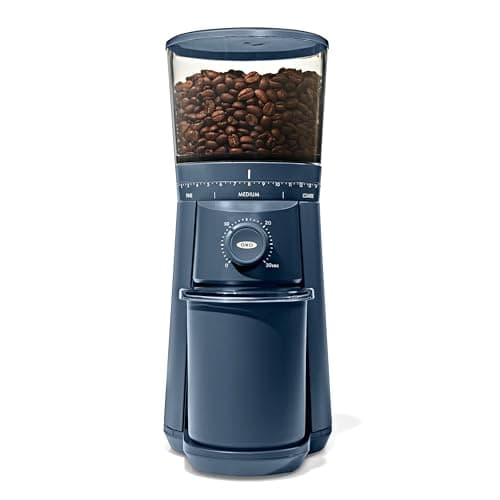 | Drip, pour-over and French press in one grinder | Top pick | |
| 2 | 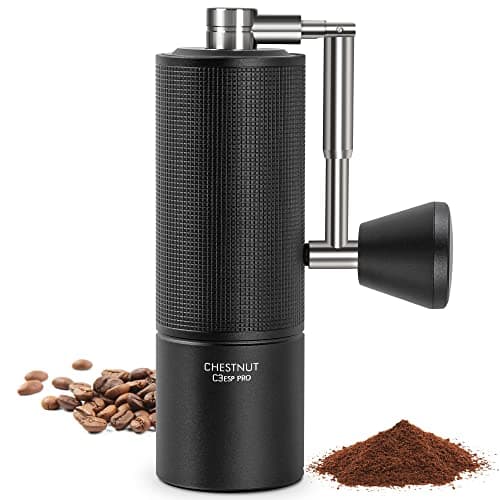 | Anyone brewing one or two cups who will turn a handle | Best cup per dollar | |
| 3 | 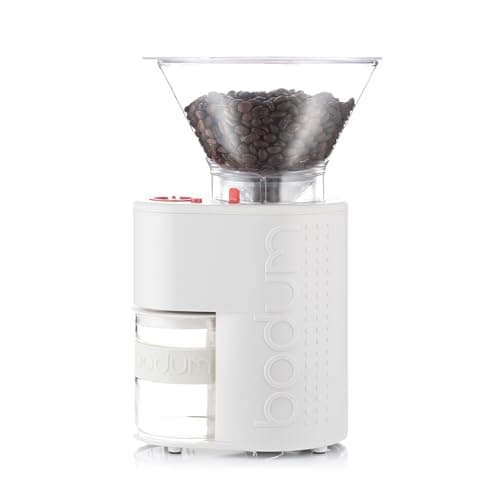 | A crowded counter, brewing drip or press | Best compact | |
| 4 | 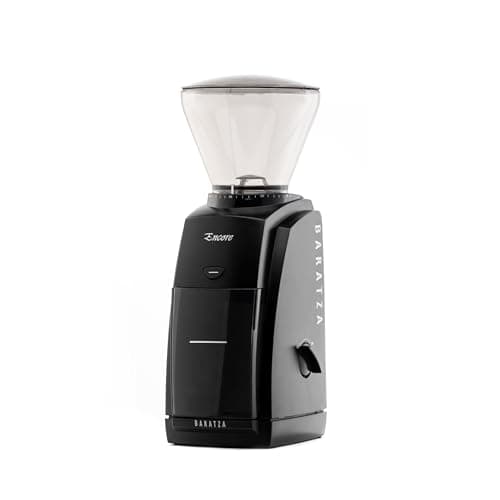 | Anyone who can wait | Skip this bracket - and stretch to here |
1. Top pick
OXO Brew Conical Burr Grinder
Entry tier · A 40 mm conical burr grinder with a timer and a UV-blocking hopper.
40 mm steel conical burrs and 44 effective settings, at a price where blade grinders still sell.
The OXO is the best electric burr grinder most people can buy in this bracket, and the specification that matters is the 40 mm stainless conical burr set. That is a real burr grinder rather than a token one.
Its adjustment is better than the headline suggests. There are 15 main settings, but 29 micro-adjustments sit between them, which gives genuinely fine control across the filter range - enough to dial a pour-over rather than pick an approximation.
A one-touch timer remembers your last setting, so the daily routine is a single button. The 12 oz hopper is UV-blocking, which is a thoughtful detail at this price because light degrades beans faster than most people realize.
Its limits are the usual ones for the bracket. Espresso is at the very edge of its range rather than inside it, timed dosing drifts as beans age and change density, and static makes grounds cling to the bin.
Specification
- Burrs
- 40 mm stainless steel conical
- Settings
- 15 main settings plus 29 micro-adjustments
- Hopper
- Up to 12 oz, UV-blocking
- Dosing
- One-touch timer, remembers the last setting
What it does well
- Real 40 mm burrs at a price where blade grinders still dominate
- The micro-adjustments give far finer control than 15 settings suggests
- UV-blocking hopper is a genuinely thoughtful detail at this price
Where it gives ground
- Espresso is at the very edge of its range rather than inside it
- Timed dosing drifts as beans age
- Static means grounds cling to the bin
Skip it if
Skip it if you want espresso. It cannot hold a fine grind consistently enough, and no setting on it changes that - see espresso grinders.
2. Best cup per dollar
Timemore Chestnut C3
Manual tier · The budget hand grinder that made stainless conical burrs cheap.
Hand grinding gets you burrs and consistency that no electric grinder at this price can touch.
The uncomfortable truth about this bracket is that a hand grinder beats an electric one on grind quality, and it is not close. A manual grinder has no motor to pay for, so nearly the whole budget goes into burrs and the bearings that hold them steady.
The C3 has stainless steel burrs and a stepped adjustment that is repeatable - you can count clicks back to a setting rather than eyeballing a dial. Its grind consistency across the filter range is better than any electric grinder here.
It is small, it needs no power, and it makes almost no noise, which matters more than expected if anyone else in the house is asleep when you make coffee.
The cost is your arm. Around a minute of grinding for a single cup is fine; for a full French press it becomes a chore, and for a household making four cups it is genuinely impractical.
Specification
- Burrs
- 38 mm S2C stainless conical, 55-58 HRC
- Settings
- Roughly 36, about 0.0233 mm per click
- Capacity
- 25 g
- Weight
- About 530 g
- Build
- Aluminum body, double-bearing axis, no plastic internals
What it does well
- Filter-grade grind quality at a genuinely low price
- Metal internals and double bearings, not a toy
- Small and light enough to travel with
Where it gives ground
- 38 mm burrs make an espresso dose slow work
- Espresso resolution is marginal
- 25 g capacity limits you to one brew at a time
Skip it if
Skip it if you brew a full pot. Hand grinding scales badly, and grinding for eight cups every morning will end the relationship quickly.
3. Best compact
Bodum Bistro Burr Grinder
Budget tier · A compact conical burr grinder with a glass grounds catcher and a preset timer.
A glass catcher that genuinely reduces static, in the smallest footprint here.
The Bistro's borosilicate glass grounds catcher is not a styling decision. Static is a real nuisance with plastic bins - grounds cling to the walls, jump out when you remove the container, and end up on the counter rather than in the brewer. Glass reduces that noticeably.
It has conical burrs, a detachable 220 g hopper that makes swapping between beans easy, and a preset timer. It is compact and looks considerably better than most grinders at this price.
Twelve grind settings across the whole range is coarse control, which is the main compromise against the OXO. For drip and French press that is workable; for pour-over, where small adjustments matter, it is limiting.
Espresso is out of reach in practice. The range does not extend fine enough with the consistency espresso needs.
Specification
- Burrs
- Conical
- Settings
- 12
- Hopper
- 220 g, detachable
- Catcher
- Borosilicate glass with a rubberized grip
What it does well
- The glass catcher genuinely reduces static compared with a plastic bin
- Compact and better looking than anything else in the bracket
- Detachable hopper makes swapping beans easy
Where it gives ground
- Smaller burr set and fewer settings than the OXO at a similar price
- 12 settings across the whole range is coarse control
- Espresso is out of reach in practice
Skip it if
Skip it if you brew pour-over seriously. Twelve settings is not enough resolution to dial a cone dripper properly.
4. Skip this bracket - and stretch to here
Baratza Encore
Entry tier · The standard entry burr grinder for filter brewing.
Above the price, and the grinder that stops the upgrade cycle.
The Encore sits above this bracket and it is here because the most useful advice about sub-$100 grinders is often to spend a little more once rather than twice.
What it adds is not a longer feature list but a better one of everything: 40 settings across a wider range, more consistent particle distribution, and a motor and gearbox designed to be repaired rather than replaced.
That last point is the real argument. Baratza sells parts and publishes repair guides, so a worn burr set or a failed gear is a small part rather than a new grinder. Grinders in this bracket are disposable by design.
It still is not an espresso grinder in its standard form, so if espresso is the goal the stretch needs to be larger. For every filter method, it is the grinder most people end up with eventually.
Specification
- Burrs
- 40 mm conical, made in Europe
- Settings
- 40 stepped
- Grind range
- 250-1200 microns
- Burr speed
- Roughly 450-550 rpm to limit heat and static
What it does well
- The reference answer for pour-over, drip and French press
- Fully serviceable, with parts sold individually for years
- Low burr speed keeps static and heat down
Where it gives ground
- Bottom of its range is too coarse for espresso - that is the ESP model job
- Stepped settings only
- Plastic body and a loud motor
Skip it if
Skip the stretch if the budget is fixed. The OXO is a real burr grinder and this page is not pretending otherwise - see coffee grinders in full.
What this bracket cannot do
Espresso. It is worth stating plainly because it is the most common disappointment in this price range, and the marketing does not help.
Espresso needs a very fine grind held to a tight tolerance, adjusted in small steps. Grinders here either do not reach that fineness or cannot hold it consistently once they do, because the burr alignment and bearing rigidity needed are the expensive parts.
Scroll the table sideways to see every column.
Hand or electric
At this price the honest ranking is that a good hand grinder produces a better, more even grind than any electric grinder you can buy, because none of the money went into a motor.
The counter-argument is volume and habit. Hand grinding one cup takes about a minute and is pleasant; hand grinding a full pot is a workout you will resent by the second week. Choose on how much coffee you make, not on which produces the better grind - see hand grinders.
Where to spend next
If you outgrow this bracket, the next meaningful step for filter brewing is a grinder with a wider range and a repairable design rather than one with more settings on the dial.
If espresso is where you are heading, the jump is larger and there is no gentle version of it. A grinder that genuinely handles espresso costs several times anything on this page - see espresso grinders under $300 for where that actually starts.