The short answer
Buy the 1Zpresso K-Ultra if you brew one or two cups and switch daily. Buy the Fellow Opus 2 for an electric grinder that covers both. Buy the Baratza Encore ESP if you want a dual-resolution collar built for exactly this. Avoid the Fellow Ode for espresso - it cannot grind fine enough.
What 'both' actually requires
Espresso needs a very fine grind adjusted in small steps. Pour-over needs a medium grind with few fines. A grinder covering both has to reach the fine end at all, and then let you travel between the two without an afternoon of clicking.
Scroll the table sideways to see every column.
Quick picks
The answer first. Tap any row to jump to the full reasoning for that pick.
Prices shown are checked daily against the retailer, as of October 27, 2026. We never write a price into the text of a page.
| # | Product | Best for | Award | Price |
|---|---|---|---|---|
| 1 | 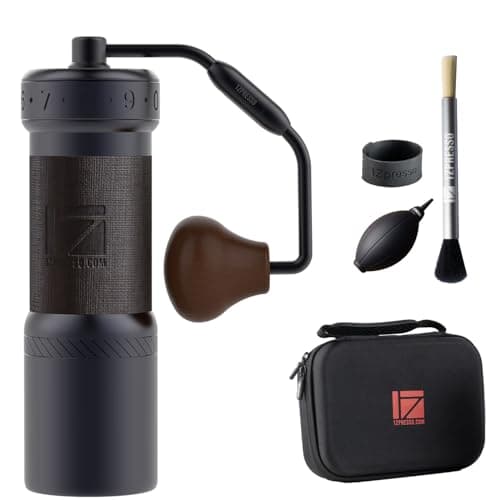 | Daily switching, one or two cups at a time | Top pick | |
| 2 | 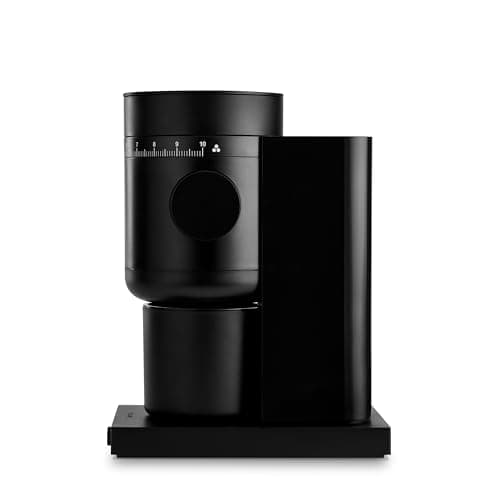 | An electric grinder that covers every method | Best electric | |
| 3 | 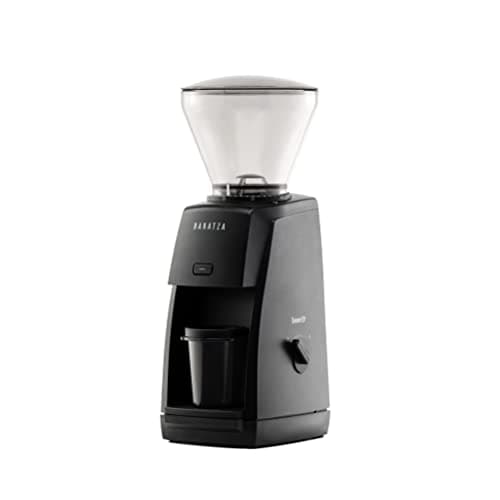 | A household that switches methods often | Built for both | |
| 4 | 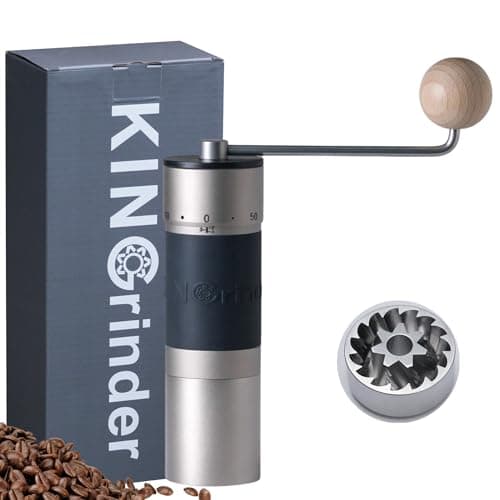 | Someone who wants finer espresso steps from a hand grinder | Finer steps | |
| 5 | 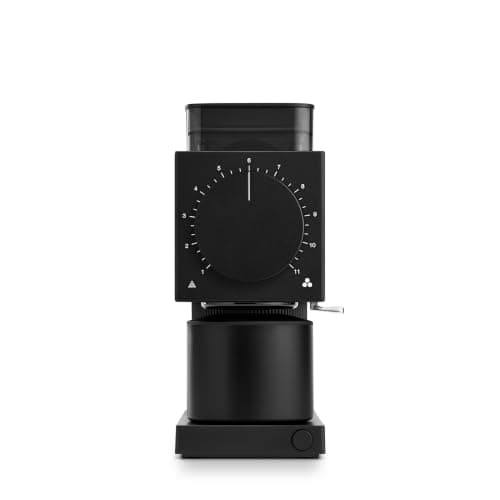 | Filter-only brewers | Skip this - for espresso |
1. Top pick
1Zpresso K-Ultra
Manual tier · A 48 mm hand grinder with external adjustment, built as an all-rounder.
An external 100-click ring that travels from espresso to pour-over in a short turn.
The K-Ultra uses a 48 mm heptagonal conical stainless burr with an external adjustment ring divided into 100 clicks per rotation, listed at 20 microns per click. It weighs 685 g and uses a magnetic catch cup holding 35 to 40 g.
The arithmetic is the reason it tops this page: 100 clicks at 20 microns moves the burrs about 2,000 microns per full turn, so the trip from an espresso setting to a pour-over setting is short.
Because the ring is on the outside, you change settings with the grinder assembled and beans loaded.
It is a hand grinder, so it suits one or two cups rather than a household's batch - see the full review.
Specification
- Burrs
- 48 mm heptagonal conical stainless (K burr)
- Adjustment
- External ring, 100 clicks per rotation
- Resolution
- 20 microns per click
- Weight
- 685 g
- Catch cup
- Magnetic, 35-40 g
What it does well
- External adjustment - you change grind without opening anything
- Seven cutting edges rather than six speeds the grind up noticeably
- Genuinely good across espresso, filter and French press
Where it gives ground
- 20 microns per click is coarser than the JX-Pro espresso resolution
- Heavier than a travel grinder should be
- Premium price for a hand grinder
Skip it if
Skip it if you grind for several people every morning. Hand grinding scales badly, and the Opus does the same job electrically.
2. Best electric
Fellow Opus 2
Mid tier · The Opus rebuilt around 48 mm burrs and a stepless dial, with espresso in range.
Published from espresso through cold brew, on a stepless marked dial.
The Opus 2 uses a 48 mm stainless conical burr set with a stepless marked dial, a 300 W motor that clears an espresso dose in about nine seconds, and a 100 g single-dose load bin.
Fellow lists its range as espresso through cold brew. That reaches espresso, which most filter-first electric grinders do not.
The stepless dial is what makes the espresso end usable: the printed marks get you close and you fine-tune between them.
A grinder spanning that range is not optimized at either end, so it is neither the equal of a dedicated espresso grinder nor of a filter specialist.
Specification
- Burrs
- 48 mm stainless steel conical
- Adjustment
- Stepless side dial, marked, about 48 settings
- Grind range
- Espresso through cold brew
- Motor
- 300 W; about 9 seconds for an espresso shot
- Capacity
- 100 g single-dose load bin; 100 g catch cup, 30 g espresso cup
- Retention
- Near-zero, with an internal impeller
- Size
- 206 x 130 x 267 mm (8.1 x 5.1 x 10.5 in), 2.3 kg
- Warranty
- 2 years, extendable
What it does well
- 48 mm burrs and a stepless dial at a price where stepped 40 mm is the norm
- Automatic shutoff and near-zero retention make single dosing genuinely clean
- Ships with an espresso dosing cup that fits 54 mm and 58 mm portafilters
Where it gives ground
- Conical burrs, so it trades some clarity for body against a flat-burr grinder
- Stepless with markings still means keeping your own notes for each brew method
- No weight-based dosing - a scale is still part of the routine
Skip it if
Skip it if espresso is your main drink. A dedicated espresso grinder does that end better - see espresso grinders.
3. Built for both
Baratza Encore ESP
Entry tier · The Encore re-geared for espresso: the same 40 mm burrs on a dual-resolution collar.
Two resolutions on one collar - fine steps for espresso, coarse ones for filter.
The Encore ESP is designed around exactly this problem. Its collar has two resolutions: steps 1 to 20 cover espresso at 20 microns per click, and steps 21 to 40 cover filter at 90 microns per click.
That means fine steps where espresso needs them and large ones where filter does not, so the whole range sits on one collar without endless clicking.
It uses 40 mm M2 steel conical burrs at 550 rpm and is designed to be repaired, with parts sold individually.
It is a hopper grinder, which suits a daily batch; it also means some beans sit in it between brews.
Specification
- Burrs
- 40 mm M2 steel conical (Etzinger)
- Settings
- 40 stepped, dual resolution
- Espresso range
- Steps 1-20, 20 microns per click
- Filter range
- Steps 21-40, 90 microns per click
- Burr speed
- 550 rpm
What it does well
- 20 microns per click in the espresso range is real dialing resolution
- Redesigned burr housing makes cleaning and shimming easy
- Shims included in the box
Where it gives ground
- Still a stepped grinder - you cannot land between clicks
- Retention is normal-for-the-class, not low
- Same plastic body and noise as the Encore
Skip it if
Skip it if pour-over clarity is your top priority. A filter-specific flat-burr grinder does that better - see grinders for pour-over.
4. Finer steps
Kingrinder K6
Manual tier · A 48 mm hand grinder with external adjustment and a hex shaft you can drive with a drill.
External adjustment at 16 microns per click.
The K6 uses a 48 mm heptagonal stainless conical burr with external adjustment at 60 clicks per rotation, listed at 16 microns per click. It holds 30 to 35 g and weighs 630 g.
Sixteen microns per click is finer than the K-Ultra's 20, which gives slightly more precise espresso corrections.
Fewer clicks per turn means more turning to travel between espresso and pour-over - about 960 microns per full rotation, by the same arithmetic.
The full head to head is here.
Specification
- Burrs
- 48 mm heptagonal stainless conical
- Adjustment
- External, 60 clicks per rotation
- Resolution
- 16 microns per click
- Capacity
- 30-35 g
- Weight
- 630 g
- Shaft
- Quarter-inch hex drive
What it does well
- Big burrs and external adjustment for a fraction of the premium options
- The hex shaft turns it into an electric grinder with any cordless drill
- 16 microns per click is genuine espresso resolution
Where it gives ground
- Fit and finish is a step below the premium Taiwanese and German grinders
- Aluminum body picks up marks
- Support and spare parts are thinner than Comandante or 1Zpresso
Skip it if
Skip it if you switch methods several times a day. The K-Ultra's faster travel is the better fit.
5. Skip this - for espresso
Fellow Ode Brew Grinder Gen 2
Upper-mid tier · A 64 mm flat-burr grinder built only for filter coffee - it does not do espresso.
Excellent for filter, and it cannot grind for espresso at all.
The Ode Gen 2 appears on 'both' lists surprisingly often, and it does not belong on one. It is a filter grinder, and a very good one.
It uses 64 mm uncoated stainless flat burrs across 31 settings, single-dose loading up to 100 g, and a PID-held 1400 rpm motor.
Its range bottoms out around 250 to 300 microns, which is above espresso fineness. No setting changes that.
If you only brew filter, it is a strong choice. If espresso is anywhere in your plans, it is the wrong grinder.
Specification
- Burrs
- 64 mm uncoated stainless flat
- Settings
- 31
- Load bin
- Single dose, up to 100 g
- Motor
- PID-held 1400 rpm
- Size
- 9.4 x 4.1 x 9.8 in
- Espresso
- No - bottoms out around 250-300 microns
What it does well
- 64 mm flats aimed squarely at clarity in filter brewing
- Single-dose bin, magnetic catch cup and a knocker to clear retention
- One of the quietest electric grinders you can buy
Where it gives ground
- Cannot grind fine enough for espresso, by design
- 31 settings is modest if you brew many methods
- Buying it and then wanting espresso means buying a second grinder
Skip it if
Skip it if you brew espresso. Buy it only for filter - see grinders for pour-over.
Switching is the hidden cost
Owning one grinder for both methods means moving between very different settings every time you change. External adjustment rings and dual-resolution collars make that quick; internal adjustment makes it slow.