The short answer
Buy the Baratza Encore for the best all-round press grinder with a repairable design. Buy the OXO Conical Burr for strong value in an electric burr grinder. Buy the Timemore C3 to grind by hand. Avoid blade grinders - the dust they make is what ruins press coffee.
Why fines matter most in a press
French press separates coffee from water with a mesh screen. A screen stops coarse particles and lets fine ones through, so any dust your grinder makes ends up in the cup, where it keeps extracting until you finish drinking.
That is why a French press punishes a poor grinder more than any other method, even though the grind is coarse. The goal is not just coarse, but consistently coarse, with as little dust as possible.
Scroll the table sideways to see every column.
Quick picks
The answer first. Tap any row to jump to the full reasoning for that pick.
Prices shown are checked daily against the retailer, as of October 25, 2026. We never write a price into the text of a page.
| # | Product | Best for | Award | Price |
|---|---|---|---|---|
| 1 | 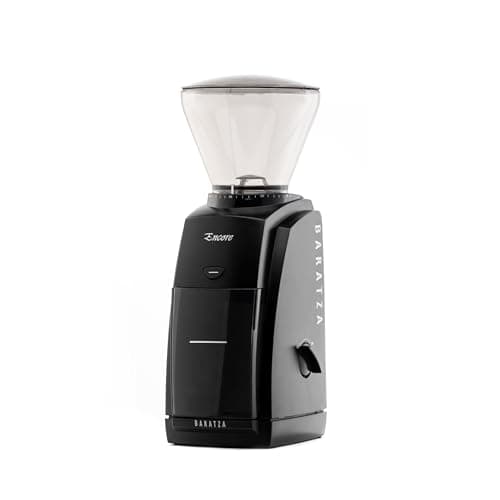 | Daily French press, and every other filter method | Top pick | |
| 2 | 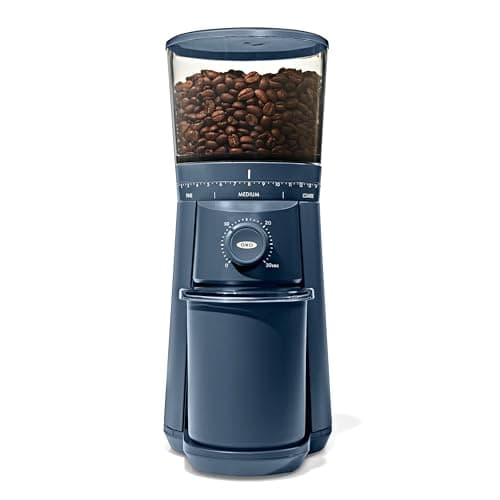 | An electric burr grinder for press and drip | Best value electric | |
| 3 | 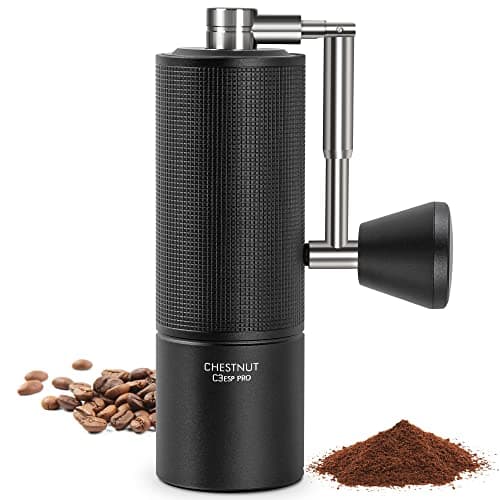 | One or two cups, or grinding while traveling | Best hand grinder | |
| 4 | 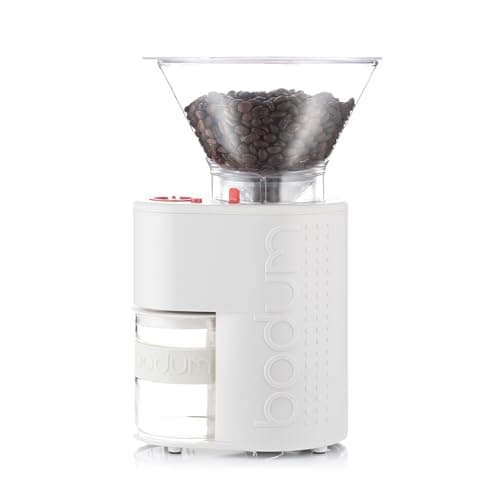 | A small counter, brewing press or drip | Best compact | |
| 5 | 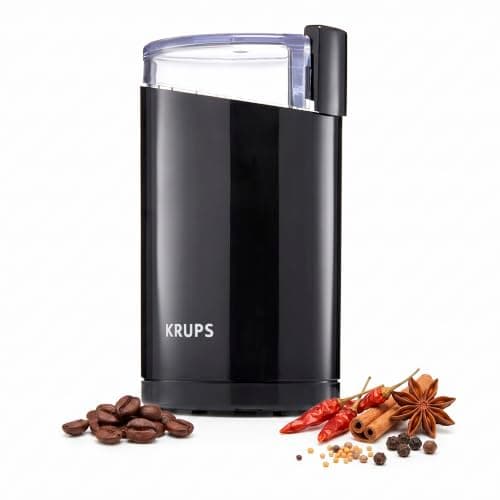 | Spices, and not much else | Skip this - the blade-grinder trap |
1. Top pick
Baratza Encore
Entry tier · The standard entry burr grinder for filter brewing.
A range reaching 1200 microns, 40 steps and a repairable design.
The Encore uses 40 mm conical burrs made in Europe, 40 stepped settings, and a listed range of 250 to 1200 microns. French press lives at the coarse end of that range, comfortably inside it.
Its burrs turn slowly - roughly 450 to 550 rpm - which limits heat and static.
It covers drip and pour-over as well, so it is not a single-purpose grinder.
Like every Baratza, it is designed to be repaired: parts are sold individually rather than the grinder being disposable.
Specification
- Burrs
- 40 mm conical, made in Europe
- Settings
- 40 stepped
- Grind range
- 250-1200 microns
- Burr speed
- Roughly 450-550 rpm to limit heat and static
What it does well
- The reference answer for pour-over, drip and French press
- Fully serviceable, with parts sold individually for years
- Low burr speed keeps static and heat down
Where it gives ground
- Bottom of its range is too coarse for espresso - that is the ESP model job
- Stepped settings only
- Plastic body and a loud motor
Skip it if
Skip it if you also want espresso. Its range stops above espresso fineness - see grinders for espresso and pour-over.
2. Best value electric
OXO Brew Conical Burr Grinder
Entry tier · A 40 mm conical burr grinder with a timer and a UV-blocking hopper.
40 mm steel conical burrs, 15 settings and 29 micro-adjustments.
The OXO uses 40 mm stainless conical burrs with 15 main settings and 29 micro-adjustments between them, which is plenty of control at the coarse end.
Its one-touch timer remembers the last setting, so a daily press is a single button, and the hopper holds up to 12 oz in UV-blocking plastic.
Static makes grounds cling to the bin, which is the usual complaint.
For press, drip and pour-over it is a real burr grinder at a price where blade grinders still dominate.
Specification
- Burrs
- 40 mm stainless steel conical
- Settings
- 15 main settings plus 29 micro-adjustments
- Hopper
- Up to 12 oz, UV-blocking
- Dosing
- One-touch timer, remembers the last setting
What it does well
- Real 40 mm burrs at a price where blade grinders still dominate
- The micro-adjustments give far finer control than 15 settings suggests
- UV-blocking hopper is a genuinely thoughtful detail at this price
Where it gives ground
- Espresso is at the very edge of its range rather than inside it
- Timed dosing drifts as beans age
- Static means grounds cling to the bin
Skip it if
Skip it if you want espresso. It does not hold a fine grind consistently enough.
3. Best hand grinder
Timemore Chestnut C3
Manual tier · The budget hand grinder that made stainless conical burrs cheap.
Even coarse grounds with no motor to pay for.
A hand grinder puts the whole budget into burrs and bearings, which is why a good one grinds more evenly than electric grinders at a similar price.
The Chestnut C3 uses S2C steel burrs with a stepped, repeatable adjustment, so you can count clicks back to your press setting.
It is small and close to silent, which matters in a quiet house early in the morning.
The cost is effort. A single mug is quick; a full press for four is a genuine workout.
Specification
- Burrs
- 38 mm S2C stainless conical, 55-58 HRC
- Settings
- Roughly 36, about 0.0233 mm per click
- Capacity
- 25 g
- Weight
- About 530 g
- Build
- Aluminum body, double-bearing axis, no plastic internals
What it does well
- Filter-grade grind quality at a genuinely low price
- Metal internals and double bearings, not a toy
- Small and light enough to travel with
Where it gives ground
- 38 mm burrs make an espresso dose slow work
- Espresso resolution is marginal
- 25 g capacity limits you to one brew at a time
Skip it if
Skip it if you brew a full press every morning. Hand grinding a large batch daily wears thin.
4. Best compact
Bodum Bistro Burr Grinder
Budget tier · A compact conical burr grinder with a glass grounds catcher and a preset timer.
Conical burrs and a glass catcher that reduces static.
The Bistro uses conical burrs across 12 settings, with a detachable 220 g hopper and a borosilicate glass grounds catcher.
The glass catcher is the practical feature: it reduces the static that makes grounds cling and jump out of plastic bins.
Twelve settings is coarse control overall, but French press does not need fine resolution - it needs a consistent coarse grind, which this provides.
It pairs naturally with a Bodum press, and it takes up little counter space.
Specification
- Burrs
- Conical
- Settings
- 12
- Hopper
- 220 g, detachable
- Catcher
- Borosilicate glass with a rubberized grip
What it does well
- The glass catcher genuinely reduces static compared with a plastic bin
- Compact and better looking than anything else in the bracket
- Detachable hopper makes swapping beans easy
Where it gives ground
- Smaller burr set and fewer settings than the OXO at a similar price
- 12 settings across the whole range is coarse control
- Espresso is out of reach in practice
Skip it if
Skip it if you brew pour-over seriously. Twelve settings is too coarse a resolution to dial a cone dripper.
5. Skip this - the blade-grinder trap
KRUPS F203 Blade Grinder
Budget tier · A 200 W blade grinder that chops rather than grinds - fine for spices, poor for coffee.
Chops rather than grinds, and the dust it makes is exactly what a press cannot filter.
A blade grinder is a propeller in a cup. It chops whatever it hits, so the result is a mixture of dust and chunks, and it is different every time you run it.
That mixture is worst in a French press. The mesh screen has no answer for the dust, so it passes straight into the cup and keeps extracting there - the usual cause of muddy, bitter press coffee.
Blade grinders are cheap and quick, and for spices they are perfectly good.
For a press, a burr grinder is the single biggest improvement you can make - see burr grinder vs blade grinder.
Specification
- Type
- Blade, not burr
- Power
- 200 W
- Capacity
- 3 oz
- Blades
- Stainless steel
- Safety
- Lid-activated switch
What it does well
- Fast and inexpensive
- Handles spices, nuts and seeds as well as coffee
- Compact and simple to clean
Where it gives ground
- Chops beans into a mix of dust and chunks rather than an even grind
- No grind setting - particle size depends on how long you hold the button
- The dust it makes passes straight through a French press screen
Skip it if
Skip it for coffee. Keep it for spices, and buy any burr grinder on this page for your press.
How coarse
- Start coarse - roughly the texture of coarse sea salt.
- If the plunger fights you, the grind is too fine. Forcing it pushes fines through the screen.
- If the cup is thin and sour, go a step finer or steep a little longer.
- Keep everything else fixed while you change the grind, or you will not know what helped.