The short answer
A hand grinder is the genuinely silent option, and the Timemore C3 is the cheapest good one. Among electric grinders, the Fellow Ode Gen 2 is the quietest in common use, and the Eureka Mignon Specialita is the quiet choice for espresso. Quiet comes from three things: low burr speed, a body that damps rather than resonates, and a grind that finishes fast.
What makes a grinder quiet
Burr speed. A motor turning at 350 to 550 rpm is fundamentally quieter than one at 1600. Low speed also puts less heat into the grounds and throws less static, which is why the quiet grinders on this page tend to be good grinders.
Body material and damping. The same burr platform in plastic and in metal sounds different - the Encore and the Virtuoso+ are the clearest example on this site.
How long it runs. A grinder that gets through 18 g in ten seconds makes less total noise than a slower one, even at the same volume.
Whether there is a hopper. Beans cascading in a hopper add a rattle that single-dose grinders simply do not have.
What to look for
- A published burr speed under about 600 rpm on a conical grinder, or a PID-held motor on a flat-burr one.
- Metal or insulated bodies rather than thin plastic.
- Single-dose loading, which removes hopper noise entirely.
- Or no motor at all - a hand grinder is the only genuinely silent answer.
- Grind speed, because a fast grinder is a brief grinder.
Quick picks
The answer first. Tap any row to jump to the full reasoning for that pick.
| # | Product | Best for | Award | Price |
|---|---|---|---|---|
| 1 | 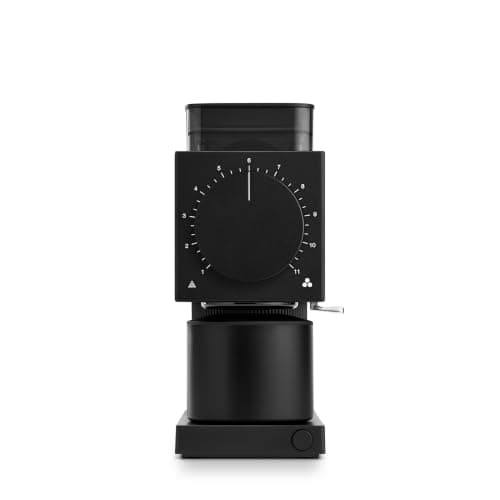 | Early mornings in a shared house | Quietest electric | |
| 2 | 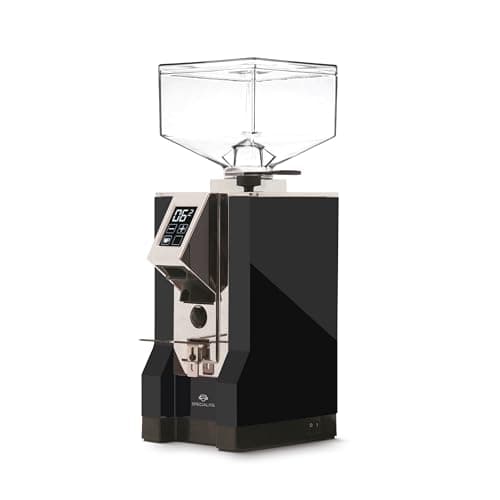 | Espresso without waking the house | Quietest espresso grinder | |
| 3 | 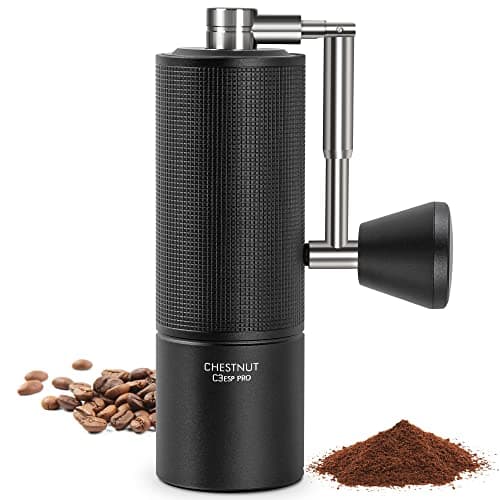 | Apartments with thin walls | Silent by design | |
| 4 | 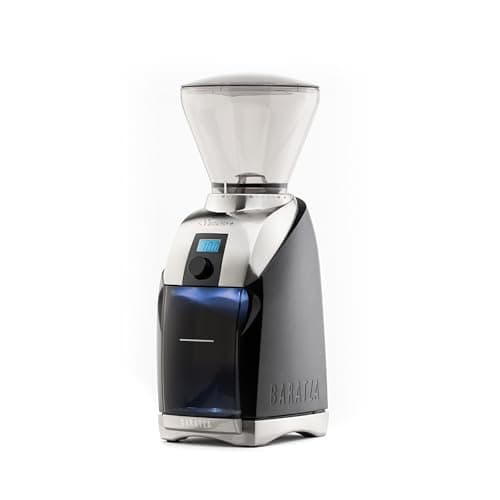 | A quieter electric that still doses for you | Quieter, with a timer | |
| 5 | 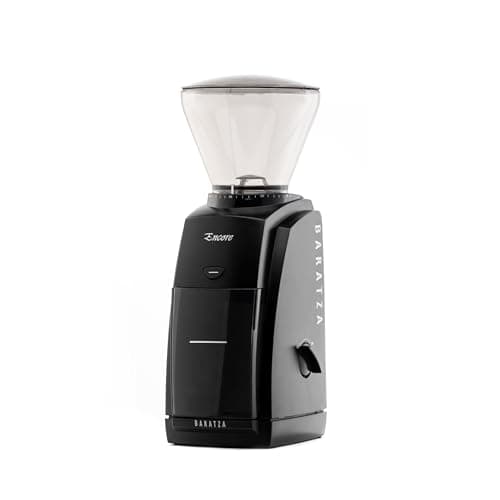 | Households where noise does not matter | Not this one, if noise is the constraint |
1. Quietest electric
Fellow Ode Brew Grinder Gen 2
Upper-mid tier · A 64 mm flat-burr grinder built only for filter coffee - it does not do espresso.
A PID-held 1400 rpm motor in a body built to damp it.
The Ode Gen 2 is the grinder owners name when the subject comes up. Its PID-held 1400 rpm motor and 64 mm flat burrs produce a lower, shorter noise than a typical grinder's rising whine.
Two things make it quiet: the motor holds a constant speed under load rather than surging, and the grind is fast, so the noise is brief.
Single-dose loading helps in a way that is easy to miss - there is no hopper rattling and no beans cascading, just the dose you loaded.
Its 31 filter settings and up to 100 g bin make it a genuine pour-over grinder, not a quiet compromise.
It does not grind espresso - Fellow says so - and 31 settings is modest if you brew many methods. See the Ode Gen 2 review.
Specification
- Burrs
- 64 mm uncoated stainless flat
- Settings
- 31
- Load bin
- Single dose, up to 100 g
- Motor
- PID-held 1400 rpm
- Size
- 9.4 x 4.1 x 9.8 in
- Espresso
- No - bottoms out around 250-300 microns
What it does well
- 64 mm flats aimed squarely at clarity in filter brewing
- Single-dose bin, magnetic catch cup and a knocker to clear retention
- One of the quietest electric grinders you can buy
Where it gives ground
- Cannot grind fine enough for espresso, by design
- 31 settings is modest if you brew many methods
- Buying it and then wanting espresso means buying a second grinder
Skip it if
Skip it if espresso is in the plan. Quiet does not compensate for a range that stops short.
2. Quietest espresso grinder
Eureka Mignon Specialita
Upper-mid tier · An Italian 55 mm flat-burr espresso grinder with stepless micrometric adjustment.
55 mm Italian flats in a body whose sound insulation is a design feature.
Eureka builds sound insulation into the Specialita, and it is not marketing: it is consistently described as one of the quietest espresso grinders available.
Speed helps here too. At up to 1.8 g per second an 18 g dose is a ten-second event rather than a thirty-second one.
Its stepless micrometric adjustment holds its setting through a strip-down clean, so quiet does not come at the cost of precision.
Digital timed dosing in tenths of a second makes the routine a single button press.
It is hopper-fed by design, there is no weight dosing, and its coarse end is not its strength.
Specification
- Burrs
- 55 mm flat hardened steel, made in Italy
- Adjustment
- Stepless micrometric on the lower burr
- Output
- Up to 1.8 g per second
- Dosing
- Digital timed, adjustable in tenths of a second
What it does well
- Genuinely quiet - the sound insulation is not marketing
- Micrometric adjustment holds its setting through a strip-down clean
- Fast enough that an 18 g dose is a ten-second job
Where it gives ground
- Hopper-fed by design; single dosing it is a workaround
- No weight-based dosing
- Espresso-focused - the coarse end is not its strength
Skip it if
Skip it if you brew mostly filter. This is an espresso grinder that tolerates filter.
3. Silent by design
Timemore Chestnut C3
Manual tier · The budget hand grinder that made stainless conical burrs cheap.
No motor, no noise - 38 mm stainless burrs and a crank.
A hand grinder makes essentially no noise beyond the sound of beans cracking. No motor means nothing to insulate, and nothing a neighbor can hear through a wall.
The C3's 38 mm S2C stainless burrs at 55 to 58 HRC and roughly 36 settings cover filter brewing properly, so silence is not a downgrade in the cup.
Its aluminum body, double-bearing axis and metal internals are why it holds alignment over years of cranking.
Capacity is 25 g - one pour-over or AeroPress dose - and that dose takes under a minute by hand.
Espresso is marginal, and it is a poor fit for a household where someone else makes the coffee.
Specification
- Burrs
- 38 mm S2C stainless conical, 55-58 HRC
- Settings
- Roughly 36, about 0.0233 mm per click
- Capacity
- 25 g
- Weight
- About 530 g
- Build
- Aluminum body, double-bearing axis, no plastic internals
What it does well
- Filter-grade grind quality at a genuinely low price
- Metal internals and double bearings, not a toy
- Small and light enough to travel with
Where it gives ground
- 38 mm burrs make an espresso dose slow work
- Espresso resolution is marginal
- 25 g capacity limits you to one brew at a time
Skip it if
Skip it if you grind for a carafe. Sixty grams by hand every morning is a chore, not a ritual.
4. Quieter, with a timer
Baratza Virtuoso+
Mid tier · The Encore chassis upgraded with a metal body and a digital dosing timer.
The Encore platform in a metal body that runs noticeably quieter.
The Virtuoso+ keeps Baratza's 40 mm conical burrs and 40 stepped settings across 200 to 1200 microns, in a metal body that runs noticeably quieter than the plastic Encore.
Its 550 rpm burr speed is low by mainstream standards, which is part of why it is calmer as well as cooler-running.
A 40-second digital timer adjustable in tenths of a second means the same dose daily without a scale in the loop.
Baratza's parts-and-guides model applies, so this is a quiet grinder you can keep running.
Timed dosing drifts as beans age, and it is a filter grinder - espresso is not in its range.
Specification
- Burrs
- 40 mm conical
- Settings
- 40 stepped, 200-1200 microns
- Timer
- 40-second digital, adjustable to 0.1 s
- Burr speed
- 550 rpm
What it does well
- Repeatable dosing without a scale in the loop
- Metal body and a noticeably quieter run than the Encore
- Grind range starts finer than the standard Encore
Where it gives ground
- Built for filter brewing, not espresso
- Timed dosing is not weight dosing - beans age and the dose drifts
- Same 40 mm burr set as grinders costing much less
Skip it if
Skip it if you want the quietest option. The Ode is a clear step further.
5. Not this one, if noise is the constraint
Baratza Encore
Entry tier · The standard entry burr grinder for filter brewing.
An excellent first grinder with a plastic body and a loud motor.
The Encore is the grinder this site recommends most often, and on this particular criterion it is the wrong choice: owners describe it as loud, and the plastic body does nothing to damp it.
Its 40 mm conical burrs, 40 settings and 250 to 1200 micron range are all genuinely good, and its slow 450 to 550 rpm burrs keep heat and static down.
The noise is a body and housing issue rather than a mechanism one - the Virtuoso+ uses the same burr platform in metal and is quieter for it.
If your constraint is a sleeping baby or a shared wall, the honest advice is to spend the difference on the Virtuoso+ or the Ode.
If it is not, the Encore remains the better-value grinder - see the Baratza Encore review.
Specification
- Burrs
- 40 mm conical, made in Europe
- Settings
- 40 stepped
- Grind range
- 250-1200 microns
- Burr speed
- Roughly 450-550 rpm to limit heat and static
What it does well
- The reference answer for pour-over, drip and French press
- Fully serviceable, with parts sold individually for years
- Low burr speed keeps static and heat down
Where it gives ground
- Bottom of its range is too coarse for espresso - that is the ESP model job
- Stepped settings only
- Plastic body and a loud motor
Skip it if
Skip it only on noise grounds. On value and repairability it beats most of this list.
Why we do not publish decibel figures
Nobody selling these grinders publishes a decibel rating, and measurements taken on kitchen counters with phone apps are not comparable between reviewers - the microphone, the distance, the counter material and the beans all change the number.
What is verifiable is the mechanism: published burr speed, body material, whether the motor is speed-held, and what large numbers of owners consistently report. That is the basis for every ranking on this page, and it is stated rather than implied - see our method.
Hopper rattle is half the noise
Two sounds come out of an electric grinder: the motor and burrs cutting, and beans moving. A full hopper feeding a grinder adds a continuous clatter of beans against plastic that people mistake for motor noise.
Single-dose grinders remove it entirely. You drop in 18 g, it grinds, and the only sound is the cutting - which is part of why the Ode and the single-dose flat-burr grinders read as quiet even at similar motor speeds.
If you own a hopper grinder and cannot replace it, running the hopper near-empty and dosing by weight gets you part of the way there for nothing.
Espresso is noisier than filter, whatever the grinder
Grinding fine takes longer and loads the motor harder, so the same grinder is louder dialing espresso than it is making a pour-over dose. That is why the quiet espresso recommendation on this page is a fast grinder: at up to 1.8 g per second, the Specialita's noise is over in about ten seconds.
It also means a grinder that sounds acceptable in a shop demo on a coarse setting can be a different object at home on setting 4 - see how to dial in espresso for why that setting is where you will spend your time.
The workaround that costs nothing
Put the grinder on a folded towel or a silicone mat. A hard counter couples vibration into the whole worktop and turns it into a soundboard; a soft layer under the feet audibly reduces what carries through the kitchen.
Grinding into a dosing cup rather than a hard plastic bin helps too, and both tricks work on a grinder you already own.
Timing helps as well, unglamorously. Grinding the night before is the one thing not to do - ground coffee stales within days - but moving the grind from 5:45 to 6:30, or into a room with a door, solves more household friction than any purchase.