The short answer
Buy the Ode Gen 2 if you brew filter coffee only and want cafe-size flat burrs on a home counter: 64 mm flats, 31 settings, single-dose loading and a genuinely quiet motor. Do not buy it as a first grinder in a household that might want espresso, because it bottoms out around 250 to 300 microns and Fellow says so itself.
What 64 mm flat burrs actually buy
Burr geometry changes the shape of the grind, not just its average size. Flat burrs cut particles between two parallel discs, which tends to produce a narrower distribution - fewer boulders and fewer fines around the target size. Conical burrs crush and shear in a cone, which tends to produce a wider distribution.
In a cup that difference reads as clarity against body. A narrow distribution extracts more evenly, so individual flavors separate; a wider one blends them and gives more texture. Neither is better in the abstract - see conical vs flat burr for the full argument.
Sixty-four millimeters is a large burr for a home grinder. Bigger burrs cut a dose in fewer rotations, which keeps heat down, and they hold alignment better than small ones because the tolerances are proportionally tighter.
The refusal to do espresso is the design
Most grinders in this bracket advertise range. The Ode advertises the opposite: Fellow states it does not grind for espresso, and its adjustment stops around 250 to 300 microns.
That is not a missing feature so much as a choice about where to spend the burr. An espresso-capable grinder has to hold its alignment at very fine settings, which constrains burr design; a filter-only grinder can optimize the whole geometry for the range people actually brew in.
The cost is obvious and it is worth stating plainly: if espresso arrives later, the Ode is not part of that plan. Buying it and then wanting espresso means buying a second grinder.
Single-dosing, quietly
The Ode loads up to 100 g in a bin rather than sitting under a hopper of stale beans. You weigh what you are about to brew, grind it, and the magnetic catch cup takes the output.
A knocker clears the chamber between doses. That is the mechanical answer to retention on a single-dose grinder, and it matters if you change beans often - see single dose vs hopper grinders.
The PID-held 1400 rpm motor is the other daily difference. This is one of the quietest electric grinders you can buy, which is not a specification anybody shops for and is the thing owners mention most.
Quick picks
The answer first. Tap any row to jump to the full reasoning for that pick.
| # | Product | Best for | Award | Price |
|---|---|---|---|---|
| 1 | 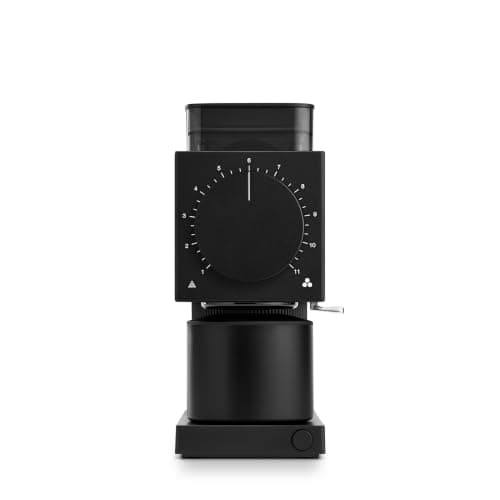 | Pour-over and drip, taken seriously | The grinder reviewed | |
| 2 | 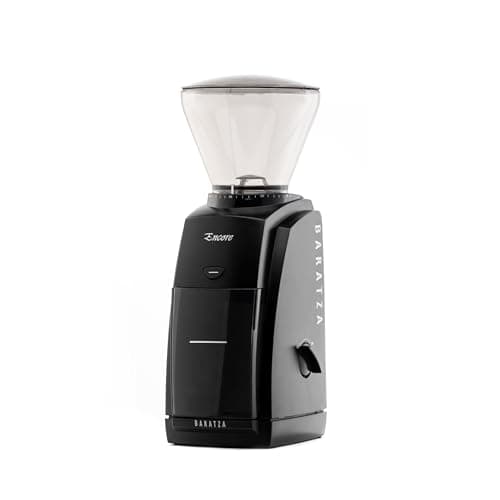 | Filter coffee without the flat-burr premium | The cheaper filter answer | |
| 3 | 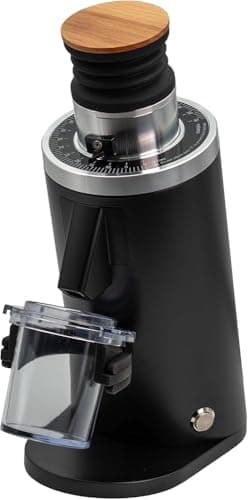 | One grinder for filter and espresso | The flat-burr alternative |
1. The grinder reviewed
Fellow Ode Brew Grinder Gen 2
Upper-mid tier · A 64 mm flat-burr grinder built only for filter coffee - it does not do espresso.
64 mm flat burrs and single-dosing for filter coffee, with espresso deliberately off the menu.
The Ode Gen 2 runs 64 mm uncoated stainless flat burrs. Sixty-four millimeters is a size normally found in cafe equipment, and flats are the geometry associated with clarity - a narrower particle distribution that separates the flavors in a light roast rather than blending them.
It has 31 settings across a range that bottoms out around 250 to 300 microns. That is the whole filter world and nothing below it: Fellow states plainly that the Ode does not grind for espresso.
The workflow is single-dose. You load up to 100 g in the bin, grind it all, and a magnetic catch cup takes the output. A knocker clears what is left in the chamber, which is how a grinder with no hopper stays honest about retention.
The motor is PID-held at 1400 rpm and the machine is one of the quietest electric grinders on sale. That is a real quality-of-life difference at 6 a.m. in a house with other people asleep in it.
Its footprint is 9.4 x 4.1 x 9.8 in - narrow rather than small, and designed to sit in a row of kitchen objects rather than dominate a counter.
Specification
- Burrs
- 64 mm uncoated stainless flat
- Settings
- 31
- Load bin
- Single dose, up to 100 g
- Motor
- PID-held 1400 rpm
- Size
- 9.4 x 4.1 x 9.8 in
- Espresso
- No - bottoms out around 250-300 microns
What it does well
- 64 mm flats aimed squarely at clarity in filter brewing
- Single-dose bin, magnetic catch cup and a knocker to clear retention
- One of the quietest electric grinders you can buy
Where it gives ground
- Cannot grind fine enough for espresso, by design
- 31 settings is modest if you brew many methods
- Buying it and then wanting espresso means buying a second grinder
Skip it if
Skip it if espresso is even a maybe. It cannot be made to grind fine enough, and no setting or modification changes that.
2. The cheaper filter answer
Baratza Encore
Entry tier · The standard entry burr grinder for filter brewing.
40 mm conicals across 250 to 1200 microns, with a repair path most grinders lack.
The Encore covers the same brewing methods with 40 mm conical burrs across 40 stepped settings and a published 250 to 1200 micron range.
Conical burrs at this size trade some clarity for body. In a drip basket or a French press that difference is small; in a light-roast pour-over it is the thing the Ode is charging you for.
Baratza sells Encore parts individually and publishes repair guides, so a worn burr set or a stripped gear is a repair rather than a replacement.
It has no timer, no dose control and a plastic body, and its motor is loud where the Ode is quiet.
For most households the Encore is the sane purchase and the Ode is the upgrade - see the Baratza Encore review.
Specification
- Burrs
- 40 mm conical, made in Europe
- Settings
- 40 stepped
- Grind range
- 250-1200 microns
- Burr speed
- Roughly 450-550 rpm to limit heat and static
What it does well
- The reference answer for pour-over, drip and French press
- Fully serviceable, with parts sold individually for years
- Low burr speed keeps static and heat down
Where it gives ground
- Bottom of its range is too coarse for espresso - that is the ESP model job
- Stepped settings only
- Plastic body and a loud motor
Skip it if
Skip it if you are chasing clarity in light roasts. That is what the bigger flat burrs buy.
3. The flat-burr alternative
DF54
Upper-mid tier · A single-dose grinder with 54 mm flat burrs and stepless adjustment.
54 mm flats, stepless adjustment and under 0.1 g retention - and it does do espresso.
The DF54 uses 54 mm flat burrs with stepless adjustment, which means it can land anywhere rather than on the nearest of 31 stops.
Retention is under 0.1 g and there is an ionizer in the exit chute, so single-dosing is clean - the dose you weigh is the dose you brew.
Crucially it grinds fine enough for espresso, so it answers the question the Ode refuses to.
Stepless with no reference marks is fiddly until you mark your own, and bellows and a dosing cup are part of the routine rather than optional.
Its burrs are smaller than the Ode's 64 mm, so in filter brewing specifically the Ode has the advantage it was built for.
Specification
- Burrs
- 54 mm flat
- Adjustment
- Stepless
- Retention
- Under 0.1 g
- Motor
- 150 W, 1400 rpm
- Hopper
- 25 g single-dose
- Anti-static
- Ionizer in the exit chute
What it does well
- Flat burrs and stepless adjustment at a price that used to buy neither
- Near-zero retention means the dose you weigh is the dose you get
- Small footprint for a flat-burr grinder
Where it gives ground
- Stepless with no reference marks is fiddly until you make your own
- Single-dose only - no hopper workflow for a busy household
- Bellows and a dosing cup are part of the routine, not optional extras
Skip it if
Skip it if you only brew filter and want to press one button. The Ode's workflow is simpler.
How it compares
Scroll the table sideways to see every column.
Who should buy it
- Pour-over drinkers chasing clarity, especially in light roasts, where large flat burrs earn their premium.
- Households where the grinder runs early, because the noise difference is real.
- People who change beans often, since single-dosing and a knocker keep yesterday's coffee out of today's cup.
Who should not
- Anyone who might want espresso. The DF54 or a conical all-rounder is the purchase instead.
- Anyone brewing several methods on a budget, where 31 filter-only settings is a narrow tool for the money.
- People who want a hopper and a button, because this is a weigh-and-load workflow.