The short answer
Buy the Opus 2 if you want one grinder that covers espresso through cold brew, single-doses cleanly and does not cost flat-burr money: 48 mm conical burrs, a stepless marked dial, near-zero retention and an automatic shutoff. Do not buy it if clarity in filter brewing is the goal - that is what the Ode's 64 mm flat burrs are for - and do not expect weight-based dosing, because there is none.
What the specification actually says
Fellow publishes the numbers that matter. The burrs are 48 mm stainless steel conical. The dial is stepless with printed markings across roughly 48 reference settings, spanning espresso to cold brew. The motor is 300 W, and an espresso dose takes about nine seconds.
The single-dose figures are equally specific: a 100 g load bin, a 100 g catch cup and a 30 g espresso dosing cup that fits 54 mm and 58 mm portafilters. Retention is described as near-zero, helped by an internal impeller, with an integrated ionizer to limit static.
Physically it is 206 x 130 x 267 mm and 2.3 kg, with a two-year warranty that can be extended. That footprint is narrow rather than small - it will sit beside a compact espresso machine without crowding it.
What changed from the original Opus
This is the question most people arrive with, and the two grinders differ in the specifications that decide how a grinder behaves.
Scroll the table sideways to see every column.
Two of those matter more than the rest. Bigger burrs cut a dose in fewer rotations, which is why the Opus 2 is quicker through a fine espresso grind where the original had to work. And stepless adjustment removes the ceiling stepped grinders hit: on the original, the useful espresso setting sometimes sits between two clicks, and the micro-adjustment ring is a workaround for exactly that.
The original Opus is no longer stocked at the retailer this site links to - it reports as unavailable - which is why every Opus recommendation here now points at the Opus 2. If you find the first-generation model elsewhere at a genuine discount it remains a capable filter grinder.
Stepless, but with markings
A fully stepless grinder with no reference marks - the DF54, for instance - is precise and initially maddening: nothing tells you where you were. Fellow's dial is stepless with printed guidance on the lid, which is the sensible middle.
In practice you still keep notes. "Just past 12" is a setting you can return to; "somewhere in the espresso zone" is not. Write the mark, the dose and the shot time down the first week and the grinder stops being a variable - the same discipline as how to dial in espresso.
Where it stops
Conical burrs, not flats. Conicals shear in a cone and produce a wider particle distribution, which reads as body and blend rather than separation. If light-roast clarity is what you are chasing, larger flat burrs are the tool - see conical vs flat burr.
No weight dosing. Auto-stop ends the grind when the bin is empty, which is not the same as delivering 18.0 g. You still weigh beans in, so a scale stays in the routine.
About 48 settings is guidance, not detents. The number describes the printed marks around a continuous dial. Treat it as a map rather than a list of positions.
Quick picks
The answer first. Tap any row to jump to the full reasoning for that pick.
| # | Product | Best for | Award | Price |
|---|---|---|---|---|
| 1 | 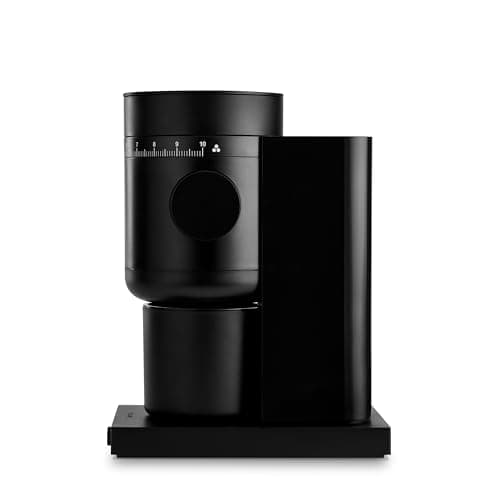 | One grinder for espresso and filter, single-dosed | The grinder reviewed | |
| 2 | Fellow Ode Brew Grinder Gen 264 mm flat burrs built for clarity - and it does not do espresso at all. | Pour-over and drip, taken seriously | The sibling, for filter only | |
| 3 | 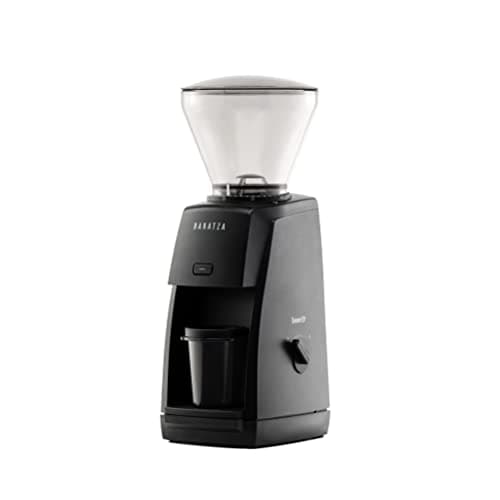 | Espresso dialing by numbers, and long-term repairs | The alternative at the same money |
1. The grinder reviewed
Fellow Opus 2
Mid tier · The Opus rebuilt around 48 mm burrs and a stepless dial, with espresso in range.
48 mm burrs and stepless adjustment at a price where stepped 40 mm is the norm.
The Opus 2 grinds on 48 mm stainless steel conical burrs - a full 8 mm larger than the original Opus. Burr diameter decides how much coffee each rotation cuts, which is why the same 300 W motor gets through an espresso dose in about nine seconds by Fellow's own figure.
Adjustment is a stepless side dial with printed markings, covering roughly 48 reference settings from espresso through cold brew. Stepless means you can land between the marks, which is the thing stepped grinders cannot do and the reason espresso dialing stops feeling like guesswork.
The workflow is single dose: a 100 g load bin, a 100 g catch cup for brewed coffee and a separate 30 g espresso dosing cup that fits both 54 mm and 58 mm portafilters. Automatic shutoff ends the grind when the beans are through, so there is no timer to set and nothing to stand over.
Retention is the quiet upgrade. Fellow describes near-zero grind retention with an internal impeller moving grounds out, and an integrated ionizer to hold static down - the two faults that make single dosing messy on cheaper grinders.
It stands 206 x 130 x 267 mm and weighs 2.3 kg, with a two-year warranty that can be extended. It is a counter appliance, not a small one.
Specification
- Burrs
- 48 mm stainless steel conical
- Adjustment
- Stepless side dial, marked, about 48 settings
- Grind range
- Espresso through cold brew
- Motor
- 300 W; about 9 seconds for an espresso shot
- Capacity
- 100 g single-dose load bin; 100 g catch cup, 30 g espresso cup
- Retention
- Near-zero, with an internal impeller
- Size
- 206 x 130 x 267 mm (8.1 x 5.1 x 10.5 in), 2.3 kg
- Warranty
- 2 years, extendable
What it does well
- 48 mm burrs and a stepless dial at a price where stepped 40 mm is the norm
- Automatic shutoff and near-zero retention make single dosing genuinely clean
- Ships with an espresso dosing cup that fits 54 mm and 58 mm portafilters
Where it gives ground
- Conical burrs, so it trades some clarity for body against a flat-burr grinder
- Stepless with markings still means keeping your own notes for each brew method
- No weight-based dosing - a scale is still part of the routine
Skip it if
Skip it if you only ever brew filter and want maximum clarity - flat burrs are the other direction, and the Ode is the one in this family.
2. The sibling, for filter only
Fellow Ode Brew Grinder Gen 2
Upper-mid tier · A 64 mm flat-burr grinder built only for filter coffee - it does not do espresso.
64 mm flat burrs built for clarity - and it does not do espresso at all.
The Ode Gen 2 runs 64 mm uncoated stainless flat burrs across 31 settings, with a PID-held 1400 rpm motor and single-dose loading up to 100 g.
Flat burrs tend toward a narrower particle distribution, which reads in the cup as clarity and separation rather than body. In a light-roast pour-over that difference is the whole reason to pay more.
It is one of the quietest electric grinders sold, which owners mention more often than any specification on the box.
Fellow states plainly that it does not grind for espresso: the range bottoms out around 250 to 300 microns, and no setting changes that.
Thirty-one settings is modest if you brew several ways - see the Ode Gen 2 review.
Specification
- Burrs
- 64 mm uncoated stainless flat
- Settings
- 31
- Load bin
- Single dose, up to 100 g
- Motor
- PID-held 1400 rpm
- Size
- 9.4 x 4.1 x 9.8 in
- Espresso
- No - bottoms out around 250-300 microns
What it does well
- 64 mm flats aimed squarely at clarity in filter brewing
- Single-dose bin, magnetic catch cup and a knocker to clear retention
- One of the quietest electric grinders you can buy
Where it gives ground
- Cannot grind fine enough for espresso, by design
- 31 settings is modest if you brew many methods
- Buying it and then wanting espresso means buying a second grinder
Skip it if
Skip it if espresso is even a maybe. Buying it and then wanting espresso means buying a second grinder.
3. The alternative at the same money
Baratza Encore ESP
Entry tier · The Encore re-geared for espresso: the same 40 mm burrs on a dual-resolution collar.
40 mm Etzinger burrs on a dual-resolution collar, with parts sold for years.
The Encore ESP puts 40 mm M2 steel conical burrs from Etzinger on a collar with two resolutions: about 20 microns per click across steps 1 to 20 for espresso, about 90 across 21 to 40 for filter.
Clicks are the advantage over a stepless dial for a beginner. A number you can write down and return to exactly is easier to learn on than a mark you estimate between.
Baratza sells parts individually and publishes repair guides, which makes this the grinder to buy if you expect to still own it in ten years.
Its burr housing was redesigned for easy removal and shims ship in the box, so cleaning and range-shifting are approachable jobs.
It is stepped, so you cannot land between clicks; retention is normal for the class rather than low; and the body is plastic and loud - see Fellow Opus vs Baratza Encore ESP.
Specification
- Burrs
- 40 mm M2 steel conical (Etzinger)
- Settings
- 40 stepped, dual resolution
- Espresso range
- Steps 1-20, 20 microns per click
- Filter range
- Steps 21-40, 90 microns per click
- Burr speed
- 550 rpm
What it does well
- 20 microns per click in the espresso range is real dialing resolution
- Redesigned burr housing makes cleaning and shimming easy
- Shims included in the box
Where it gives ground
- Still a stepped grinder - you cannot land between clicks
- Retention is normal-for-the-class, not low
- Same plastic body and noise as the Encore
Skip it if
Skip it if you want single-dose cleanliness. Its retention is ordinary and there is no auto-stop.
How it compares at the same money
Scroll the table sideways to see every column.
Who should buy it
- People buying one grinder for espresso and filter, who want stepless adjustment without paying flat-burr prices.
- Single-dosers who change beans often, because near-zero retention and an ionizer are what make that workflow clean.
- Anyone tired of timers. Auto-stop removes the most fiddly part of an electric grinder's routine.
- Owners of 54 mm or 58 mm machines, since the espresso dosing cup fits both without an adapter.
Who should not
- Filter-only drinkers chasing clarity - the Ode Gen 2 is the grinder in this family for that.
- Beginners who want to learn by numbers, where a clicked collar is easier than a marked dial.
- Anyone who keeps equipment for a decade and wants a published parts catalog - that is Baratza's strength.
- Households wanting a hopper and a button, because this is a weigh-and-load grinder.