The short answer
Buy the Encore ESP if espresso is the main job and you want to dial it in 20-micron steps with a grinder you can repair for years. Buy the Fellow Opus if you want one grinder that single-doses everything from espresso to cold brew, and you would rather have a micro-adjust ring and a quiet 350 rpm motor than legible clicks.
Both cross into espresso - differently
Most grinders at this price stop short of espresso. These two do not: the ESP through a dual-resolution collar, the Opus by reaching under 200 microns with a micro-adjustment ring on top of its 41 settings.
The difference is legibility. On the ESP you count clicks and write the number down. On the Opus you set a number and then nudge a ring, which works and is harder to record exactly - see how to dial in espresso for why that matters.
Workflow: hopper-ish or single dose
The Opus is built around single dosing: load what you are about to brew - up to 110 g - and a magnetic catch cup takes the output. That keeps stale beans out of the picture and makes changing coffees painless.
The ESP is a conventional hopper grinder with manual operation. There is no timer and no dose memory, so a scale is part of the routine either way - see best coffee scales for espresso.
Burr speed and what it buys
The Opus turns at 350 rpm with 6 Nm of torque. Slow, high-torque grinding puts less heat into the grounds and generates less static, which is why its output behaves in the cup and on the counter.
The ESP runs at 550 rpm - still slow by mainstream standards, and noisier. Neither speed is a problem; the Opus is simply the calmer machine.
Quick picks
The answer first. Tap any row to jump to the full reasoning for that pick.
| # | Product | Best for | Award | Price |
|---|---|---|---|---|
| 1 | 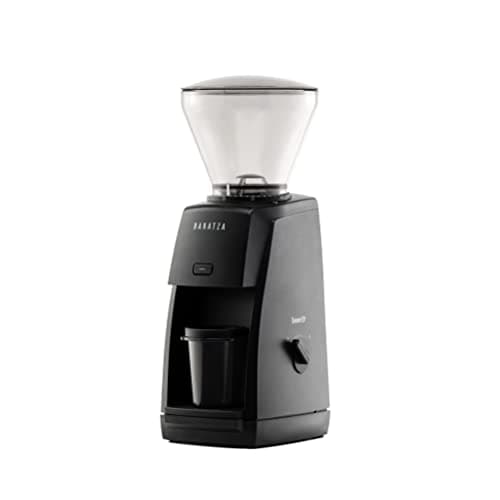 | Dialing shots in small, repeatable steps | If you want dialing resolution | |
| 2 | 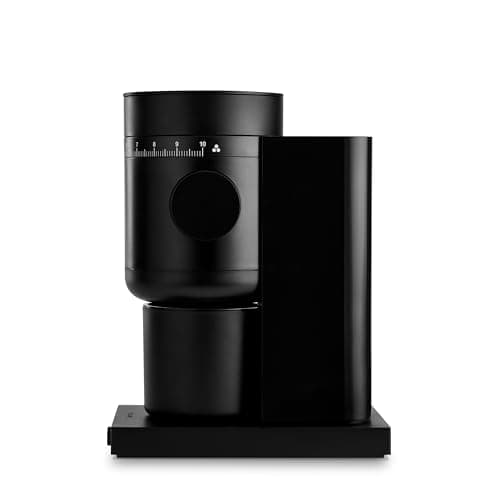 | One grinder for everything, loaded a dose at a time | If you want single-dose workflow |
1. If you want dialing resolution
Baratza Encore ESP
Entry tier · The Encore re-geared for espresso: the same 40 mm burrs on a dual-resolution collar.
40 mm Etzinger burrs on a dual-resolution collar - 20 microns per click for espresso.
The Encore ESP puts 40 mm M2 steel conical burrs made by Etzinger on a collar with two resolutions: steps 1 to 20 move about 20 microns each for espresso, steps 21 to 40 about 90 microns each for filter.
Twenty microns is real dialing resolution. You can chase a shot in one direction, taste the change, and go back to the number that worked.
Its burr housing was redesigned to come apart easily, and shims ship in the box so the whole range can be moved finer or coarser.
Baratza sells parts individually and publishes repair guides, so worn burrs or a stripped gear is a repair rather than a replacement.
It is stepped, so you cannot land between clicks; retention is normal for the class; and the body is the same plastic as the standard Encore, with the same noise.
Specification
- Burrs
- 40 mm M2 steel conical (Etzinger)
- Settings
- 40 stepped, dual resolution
- Espresso range
- Steps 1-20, 20 microns per click
- Filter range
- Steps 21-40, 90 microns per click
- Burr speed
- 550 rpm
What it does well
- 20 microns per click in the espresso range is real dialing resolution
- Redesigned burr housing makes cleaning and shimming easy
- Shims included in the box
Where it gives ground
- Still a stepped grinder - you cannot land between clicks
- Retention is normal-for-the-class, not low
- Same plastic body and noise as the Encore
Skip it if
Skip it if you brew filter in a carafe every day - the coarse half of its collar is 90 microns per click.
2. If you want single-dose workflow
Fellow Opus
Mid tier · An all-purpose conical grinder that does reach espresso-fine, unlike the Ode.
40 mm six-blade conical burrs at 350 rpm, 41 settings plus a micro-adjustment ring.
The Opus uses 40 mm six-blade conical burrs turning at just 350 rpm with 6 Nm of torque, across 41 settings plus a micro-adjustment ring - and its range runs from cold-brew coarse to under 200 microns.
Reaching under 200 microns is the specification that matters: most all-purpose grinders at this level do not get there, which is why the Opus is on this page at all.
Very low burr speed keeps heat and static down, and the workflow is single-dose: load 110 g or one dose, magnetic catch cup underneath.
Grinding is timed in fixed presses rather than continuous, and its espresso resolution is workable rather than precise - the micro-ring helps, it does not match a 20-micron step.
Conical burrs at this size trade some clarity for body in filter brewing - see Fellow Opus vs Fellow Ode.
Specification
- Burrs
- 40 mm six-blade conical
- Settings
- 41 plus a micro-adjustment ring
- Burr speed
- 350 rpm, 6 Nm torque
- Capacity
- 110 g, single-dose loading
- Grind range
- Cold brew coarse to under 200 microns
What it does well
- Actually reaches espresso range, which most all-rounders at this level do not
- Very low burr speed keeps heat and static down
- Single-dose workflow with a magnetic catch cup
Where it gives ground
- Espresso resolution is workable, not precise
- Timed grinding in fixed presses rather than continuous control
- Conical burrs at this size trade clarity for body in filter
Skip it if
Skip it if you want to dial espresso by numbers. Its adjustment is less legible than the ESP's clicks.
Side by side
Scroll the table sideways to see every column.
Retention, and why it matters here
Both grinders hold a small amount of coffee between doses. The ESP's retention is normal for its class rather than low, and the Opus - being single-dose with a magnetic catch cup - gives back most of what you put in.
For espresso that difference shows up as dose drift: weigh 18 g in, get 17.4 g out, and the shot you dialed yesterday is not the shot you pulled today. Grinding a couple of grams over and weighing the output is the standard workaround on either grinder.
The long-term argument
Baratza's parts-and-guides model is the strongest thing on this page. Grinders wear - burrs dull, gears strip - and a machine whose parts are sold individually has a different lifespan from one whose failure means a new purchase.
That is worth weighing against the Opus's nicer daily experience. One is the better object to own for a decade; the other is the better object to use this morning.
Which one is yours
- Espresso is 80 percent of what you make: the Encore ESP.
- You brew espresso, pour-over and cold brew in the same week: the Opus.
- You change beans constantly: the Opus's single-dose bin.
- You keep equipment for years and fix it: the Encore ESP.
- Noise matters: the Opus at 350 rpm - see best quiet coffee grinders.