The short answer
Buy the Encore ESP if you dial espresso and want 20-micron steps plus parts you can buy for years. Buy the Smart Grinder Pro if your priority is grinding hands-free into a portafilter with a timer, and you accept coarser effective resolution and a hopper full of beans. Both cost about the same; they are solving different problems.
Sixty settings is not more resolution
The count of settings on a box tells you nothing about how far each one moves the burrs. The Smart Grinder Pro's 60 settings cover espresso through French press - the whole range - so each step spans more ground than the ESP's espresso-half clicks.
The ESP splits the difference deliberately: fine steps where espresso needs them, coarse steps where filter does not care. That is a better design for shot dialing and a worse one for a carafe.
The practical test is the one in the grind size chart: can you change one click and taste it? At the espresso end, the ESP can.
Timed dosing against weighed dosing
A timer grinds for a set duration. That is repeatable only while the beans stay the same: as coffee ages it loses moisture and density, so the same seconds deliver a different weight.
For a household drinking the same bag over a week the drift is small and the convenience is real. For anyone chasing consistency shot to shot, a scale is the answer and the timer becomes decoration.
Cradles and the transfer step
Grinding into a portafilter sounds like a small convenience and is the most-used feature on the Breville. No dosing cup, no funnel, no transferring grounds that cling to plastic with static - the dose lands in the basket.
Against that, a transfer step is where a lot of people weigh, and weighing is more accurate than any timer. The ESP assumes you are doing that anyway - see best coffee scales for espresso.
The hopper question
A 450 g hopper holds most of a bag. If you drink that in a week, it is convenient; if you drink it in a month, the last third tastes noticeably flatter than the first.
Single-dosing avoids that entirely, at the cost of weighing beans every time - see single dose vs hopper grinders.
The Breville's hopper does at least come off with beans still in it, which makes swapping between two coffees practical rather than a pouring exercise.
Quick picks
The answer first. Tap any row to jump to the full reasoning for that pick.
| # | Product | Best for | Award | Price |
|---|---|---|---|---|
| 1 | 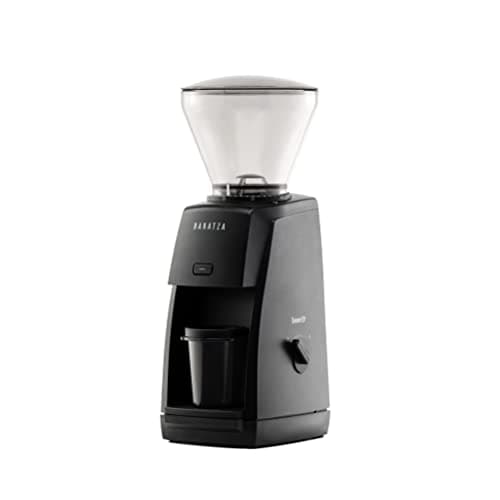 | Espresso you adjust deliberately | If you dial shots | |
| 2 | 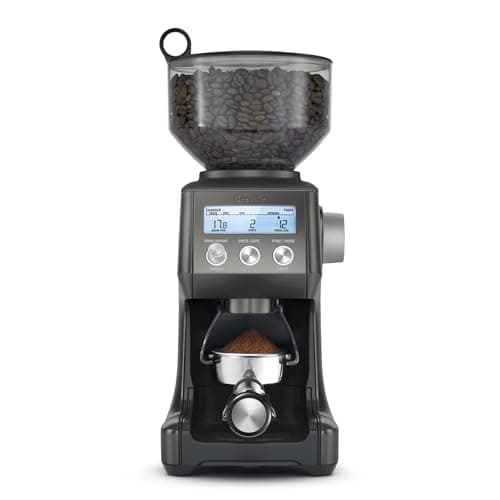 | Grinding straight into the basket, every morning | If you want hands-free dosing |
1. If you dial shots
Baratza Encore ESP
Entry tier · The Encore re-geared for espresso: the same 40 mm burrs on a dual-resolution collar.
20 microns per click across the espresso half of a dual-resolution collar.
The Encore ESP's 40 mm Etzinger M2 steel burrs sit on a collar with two resolutions: about 20 microns per click across steps 1 to 20, about 90 across steps 21 to 40.
Twenty microns is the number that makes espresso dialable. Below roughly 25 microns per step you can change one variable and taste the result; above it you are jumping past settings.
Its housing comes apart easily for cleaning and shims are included, so the range can be shifted rather than lived with.
Parts are sold individually with published repair guides, which is the difference between a five-year grinder and a fifteen-year one.
There is no timer, no dose memory and no portafilter cradle - you weigh, grind and transfer, and the body is plastic and loud.
Specification
- Burrs
- 40 mm M2 steel conical (Etzinger)
- Settings
- 40 stepped, dual resolution
- Espresso range
- Steps 1-20, 20 microns per click
- Filter range
- Steps 21-40, 90 microns per click
- Burr speed
- 550 rpm
What it does well
- 20 microns per click in the espresso range is real dialing resolution
- Redesigned burr housing makes cleaning and shimming easy
- Shims included in the box
Where it gives ground
- Still a stepped grinder - you cannot land between clicks
- Retention is normal-for-the-class, not low
- Same plastic body and noise as the Encore
Skip it if
Skip it if you want to press a button and walk away. It is a deliberately manual grinder.
2. If you want hands-free dosing
Breville Smart Grinder Pro
Mid tier · A hopper-fed conical grinder that doses straight into a portafilter cradle.
60 settings, a 0.2-second timer and cradles that hold the portafilter for you.
The Smart Grinder Pro grinds into a 50-54 mm or 58 mm portafilter cradle, so the dose goes where it is needed without a funnel, a cup or a transfer step.
Sixty settings span espresso through French press, with an adjustable upper burr, and its digital timer doses in 0.2-second increments.
For a household making the same drink daily, timed dosing into the basket is genuinely faster than weighing - which is why this grinder sells so well alongside Breville machines.
Its 450 g hopper is a liability unless you drink through it: beans sitting in a hopper go stale, and a big hopper encourages exactly that.
Timed dosing drifts as beans age and change density, and the espresso end is usable rather than precise - see best grinders for Breville espresso machines.
Specification
- Burrs
- Stainless steel conical, adjustable upper burr
- Settings
- 60
- Dosing
- Digital timer in 0.2-second increments
- Hopper
- 450 g
- Cradles
- 50-54 mm and 58 mm portafilter
What it does well
- Hands-free grinding into the portafilter
- 60 settings covers espresso through French press in one machine
- Big hopper suits a household that drinks a lot of coffee
Where it gives ground
- Large hopper means stale beans unless you actually get through them
- Timed dosing drifts as beans age
- Espresso end is usable rather than precise
Skip it if
Skip it if you weigh every dose. You would be paying for a timer you have already replaced with a scale.
Side by side
Scroll the table sideways to see every column.
Which one is yours
- You own a Breville machine and want the simplest workflow: the Smart Grinder Pro and its cradles.
- You are learning to dial espresso: the Encore ESP's 20-micron clicks.
- You keep gear for a decade: the ESP, for the parts catalog.
- Several people use the grinder: the Smart Grinder Pro - press a button, get a dose.
- You already own a scale and use it: the ESP, and ignore timers entirely.