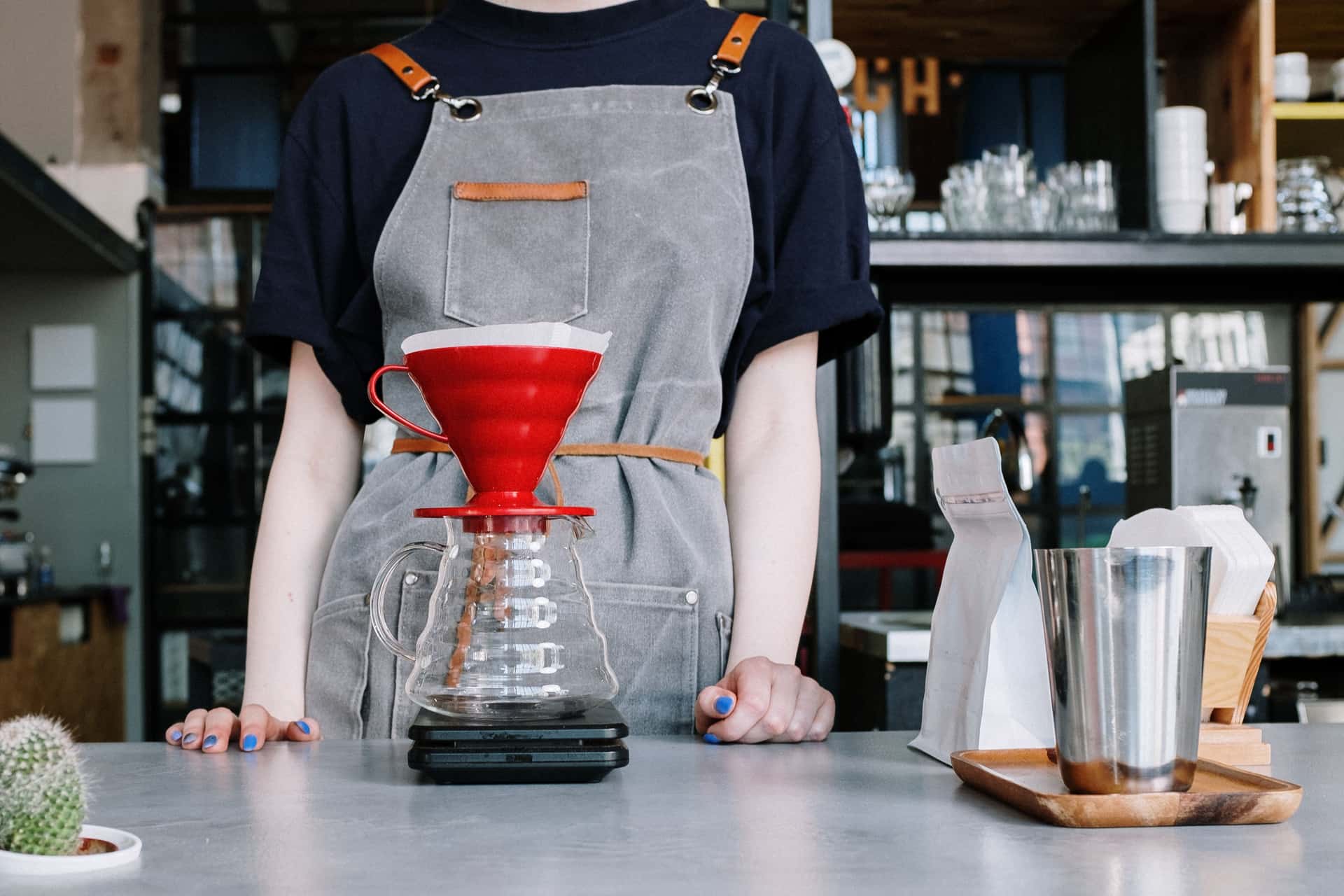
The short answer
Choose the Hario V60 if you want to control the brew with your pour and are willing to practice. Choose the Kalita Wave if you want consistent cups without technique. The V60 has the higher ceiling; the Wave has the higher floor.
The geometry decides
Scroll the table sideways to see every column.
Quick picks
The answer first. Tap any row to jump to the full reasoning for that pick.
Prices shown are checked daily against the retailer, as of October 25, 2026. We never write a price into the text of a page.
| # | Product | Best for | Award | Price |
|---|---|---|---|---|
| 1 | 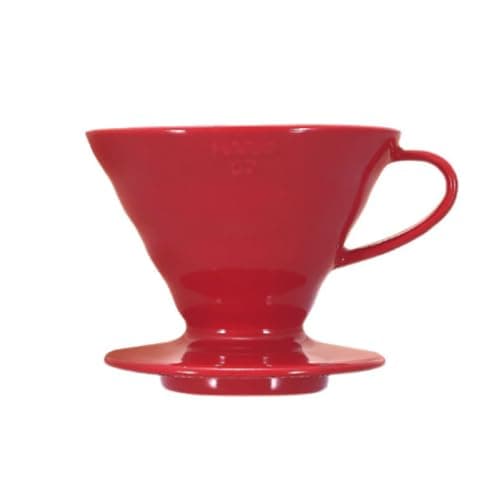 | Anyone who wants to get good at pour-over | Choose this for control | |
| 2 | 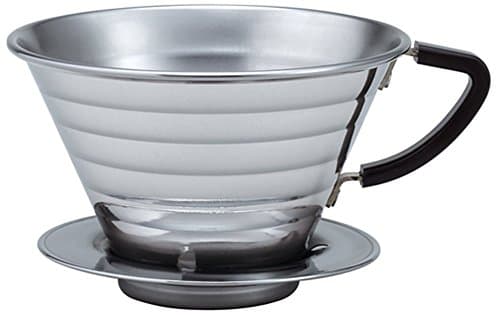 | Good pour-over on a busy morning | Choose this for consistency |
1. Choose this for control
Hario V60 Ceramic Dripper 02
Manual tier · The 60-degree cone dripper that defines modern pour-over.
One large hole, so the flow is set by your pour and your grind.
The V60 is a 60-degree cone with inner spiral ribs and one large hole at the bottom. The ceramic 02 is Arita-yaki, made in Japan, brewing 1 to 4 cups at W140 x D120 x H102 mm.
The single large hole does not restrict flow, so the dripper hands control to you. Pour faster for a lighter cup, slower for a deeper one.
That makes it the dripper with the highest ceiling - and the one that shows every inconsistency in your pour.
Ceramic holds heat well once preheated, which matters on a slow brew.
Specification
- Geometry
- 60-degree cone, single large hole
- Ribs
- Inner spiral ribs
- Capacity
- 1-4 cups
- Material
- Arita-yaki ceramic, made in Japan
- Size
- W140 x D120 x H102 mm
What it does well
- The single large hole hands flow control to you rather than the dripper
- Ceramic holds heat far better than plastic
- More published recipes exist for the V60 than for any other brewer
Where it gives ground
- Unforgiving: an uneven pour shows up in the cup
- Ceramic needs preheating and can chip
- Needs a gooseneck kettle to be worth owning
Skip it if
Skip it if you do not own a gooseneck kettle. Without flow control, the big hole becomes a liability - see gooseneck kettles.
2. Choose this for consistency
Kalita Wave 185
Manual tier · A flat-bottom dripper with three small holes and a wave filter that limits wall contact.
A flat bed and three small holes that regulate flow for you.
The Wave 185 has a flat bottom with three small extraction holes, brewing 16 to 26 oz - 2 to 4 cups - in stainless steel made in Japan, at 2.5 inches tall by 4.5 inches wide.
The three small holes regulate flow structurally, so an uneven pour matters far less than it does in a cone. The flat bed is easier to wet evenly than a deep cone.
Its wave filters have fluted sides that keep the paper off the walls, which helps the bed sit flat.
The trade-offs: wave filters are proprietary, and stainless sheds heat faster than ceramic.
Specification
- Geometry
- Flat bottom, three extraction holes
- Capacity
- 2-4 cups (a 16-26 oz brew, per Seattle Coffee Gear)
- Material
- Stainless steel, made in Japan
- Filters
- Kalita Wave 185
- Size
- About 2.75 in H x 4.4-4.5 in W
What it does well
- The flat bed is far more forgiving of a sloppy pour than a cone
- Three small holes regulate flow so your technique matters less
- Stainless does not chip and travels well
Where it gives ground
- Wave filters are proprietary and cost more than cone filters
- Stainless sheds heat quickly
- Ceiling is lower than a V60 in expert hands
Skip it if
Skip it if you enjoy the craft of pouring. The Wave deliberately takes control away, which frustrates some people.
What that means in the cup
Because the V60 lets water leave as fast as you pour it, small changes in your technique change the brew. Mastered, that means precise control over clarity and strength. Unmastered, it means inconsistent cups.
The Wave holds water in the bed and releases it at a pace set by its three holes. Your pour matters less, so the cup is more repeatable from day to day, at the cost of some of the V60's range.
Filters and running cost
V60 cone papers are sold everywhere. Kalita Wave filters are proprietary and cost more per brew, which is a small but permanent difference. Reusable options exist for both - see reusable coffee filters.